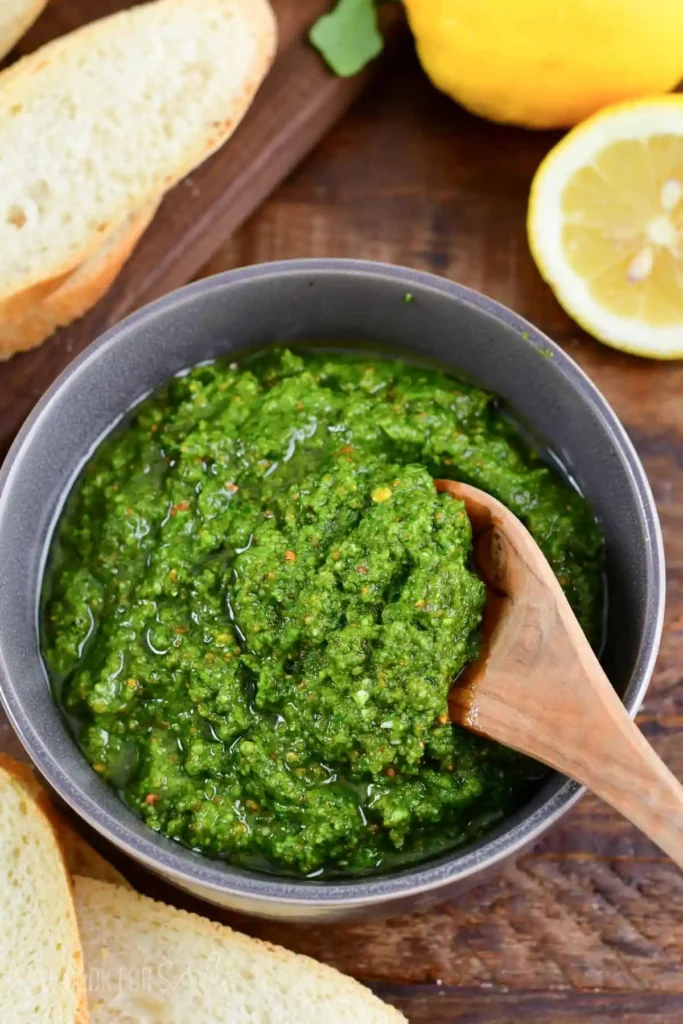
Forget everything you know about basil pesto for a second. This Lemon Pistachio Arugula Pesto is peppery, nutty, and bright enough to make your taste buds sit up straight. I make a batch almost every week, and it never lasts long.
I stumbled onto this combo by accident when I ran out of basil mid-recipe and grabbed arugula instead. One taste and I never looked back. This sauce just hits different.
Prep time: 10 minutes Cook time: none Total time: 10 minutes Servings: 8 (makes about 2 cups)
Why This Pesto Earns a Permanent Spot in Your Fridge
Basil pesto is great, IMO, but it can feel a little one-note after a while. Arugula brings a spicy, almost mustardy kick that basil simply can’t touch. Pistachios add richness without the heaviness of pine nuts.
Have you ever noticed how some pesto recipes taste flat no matter how much cheese you add? That usually means the acid balance is off. Lemon fixes that instantly, cutting through the richness and waking up every other flavor in the bowl.
I skip garlic in this version on purpose. It sounds wrong, I know, but garlic tends to bully the pistachios and mute their natural sweetness. Trust me on this one.
What You’ll Need
Here’s the full ingredient lineup for this Lemon Pistachio Arugula Pesto recipe:
- 2 cups fresh arugula, packed
- 1/2 cup shelled pistachios, unsalted
- 1/2 cup grated Parmesan cheese
- 1/4 cup fresh parsley leaves
- Zest of 1 lemon
- 3 tablespoons fresh lemon juice
- 1/2 cup avocado oil, divided
- Salt and black pepper, to taste
Nothing fancy, nothing hard to find. Every ingredient here is doing real work, and none of it is filler.
How to Make Lemon Pistachio Arugula Pesto
This part is where people overthink things. It’s genuinely just pulse, scrape, and taste. Let’s slow it down so nothing gets skipped.
Step 1: Pick Your Equipment Wisely
Reach for a blender or a small food processor instead of a full-size one. Why? A large processor’s blades sit too high above a small batch of ingredients and just spin uselessly in the air.
A blender or mini processor pulls everything toward the blade right away. That means a smoother, more even pesto with way less scraping down the sides.
Step 2: Layer the Oil First
Pour about a third of the avocado oil into the bottom of the blender before adding anything else. This sounds like a small detail, but it genuinely changes the outcome.
Oil at the bottom helps the blades catch and circulate everything above it. Skip this step and you’ll end up chasing dry arugula around the sides with a spatula for five extra minutes.
Step 3: Add the Greens, Nuts, and Cheese
Add the arugula, pistachios, parsley, and Parmesan on top of the oil. Press it down gently so it settles, but don’t cram it in like you’re packing a suitcase for a two-week trip.
Overpacking a small blender chokes the motor instead of helping it. Give the ingredients just enough room to move.
Step 4: Bring in the Lemon
Add the lemon zest and lemon juice next. This is the moment the whole pesto starts to smell incredible, so take a second to enjoy it. Seriously, lean in and take a whiff.
The zest carries aromatic citrus oils that juice alone can’t deliver. Both work together to keep that peppery arugula edge bright instead of bitter.
Step 5: Pour the Rest of the Oil and Blend
Add the remaining avocado oil, then blend in short bursts, scraping down as needed. Keep going until the mixture turns a deep, even green with zero visible flecks of arugula or nuts left behind.
Listen for the sound to shift from a chunky rattle to a smooth, steady whir. That shift is your real done signal, not some arbitrary timer on your phone.
Step 6: Taste, Adjust, Repeat
Stop and taste the pesto before calling it finished. Add a pinch of salt if it tastes flat, since salt sharpens every other flavor already in the bowl. Add a splash more oil if you want it thinner.
This step matters more than people think. A pesto that tastes slightly bland before adjusting can taste completely balanced with one small pinch of salt.
Pro Tips for a Better Batch
- Toast the pistachios first in a dry skillet over medium heat for a few minutes if you want a deeper, roastier flavor. Let them cool before blending, or you’ll end up with warm, oily pesto.
- Use fresh arugula, not wilted bagged greens that have been sitting around. Fresh arugula gives a crisper, peppier bite.
- Pack the arugula firmly when measuring it out. Loosely piled greens measure light and airy, and you’ll end up using less than the recipe actually calls for.
Ways to Use Lemon Pistachio Arugula Pesto
This sauce is stupidly versatile, and honestly, that’s the whole appeal. Once you have a jar in the fridge, dinner ideas basically write themselves.
- Toss it with warm pasta for a five-minute dinner that tastes way fancier than it actually is.
- Spread it on crostini or crackers as an easy appetizer.
- Spoon it over grilled chicken, salmon, or roasted vegetables.
- Stir a spoonful into scrambled eggs or a grain bowl for an instant flavor boost.
- Swirl it into soup or dip crusty bread straight into the jar. No judgment here.
Storing and Freezing Your Pesto
Store this pesto in a small glass jar with a tight lid. Pour a thin layer of oil over the top before sealing to help keep the green color vibrant. It keeps in the fridge for about 10 to 14 days.
Freezing works beautifully too, and honestly, I do this almost every time. Portion the pesto into ice cube trays, freeze until solid, then pop the cubes into a freezer bag. Grab one cube whenever a recipe needs a quick flavor boost.
Lemon Pistachio Arugula Pesto FAQs
Can I use a different nut instead of pistachios?
Yes, cashews or pine nuts both work well as substitutes if pistachios aren’t available. The flavor will shift slightly, but the texture stays smooth either way.
Is this pesto gluten free?
Yes, every ingredient in this recipe is naturally gluten free. Just double check your Parmesan label if you’re cooking for someone with a severe sensitivity.
Why does my arugula pesto taste bitter?
Bitterness usually means the arugula was older or the lemon juice wasn’t balanced enough against it. Adding a touch more lemon zest or a pinch of salt often fixes this instantly.
Do I have to toast the pistachios first?
No, toasting is optional and this recipe works fine without it. Toasting simply adds a deeper, nuttier flavor if you have a few extra minutes.
Can I make this pesto dairy free?
Yes, swap the Parmesan for a plant-based hard cheese alternative or nutritional yeast. The flavor changes slightly, but the pesto still holds together well.
How long does homemade pesto actually last?
Refrigerated pesto lasts about 10 to 14 days when stored properly with a layer of oil on top. Frozen pesto keeps well for up to 4 months in an airtight bag.
Final Thoughts
This Lemon Pistachio Arugula Pesto takes ten minutes and delivers way more flavor than that timeline suggests. It’s peppery, bright, nutty, and honestly a little addictive once you start using it on everything. FYI, once you make a batch, plain basil pesto might start to feel a little boring.
Give it a try this week and see what you think. Your pasta, your toast, and probably your future dinner guests will thank you.
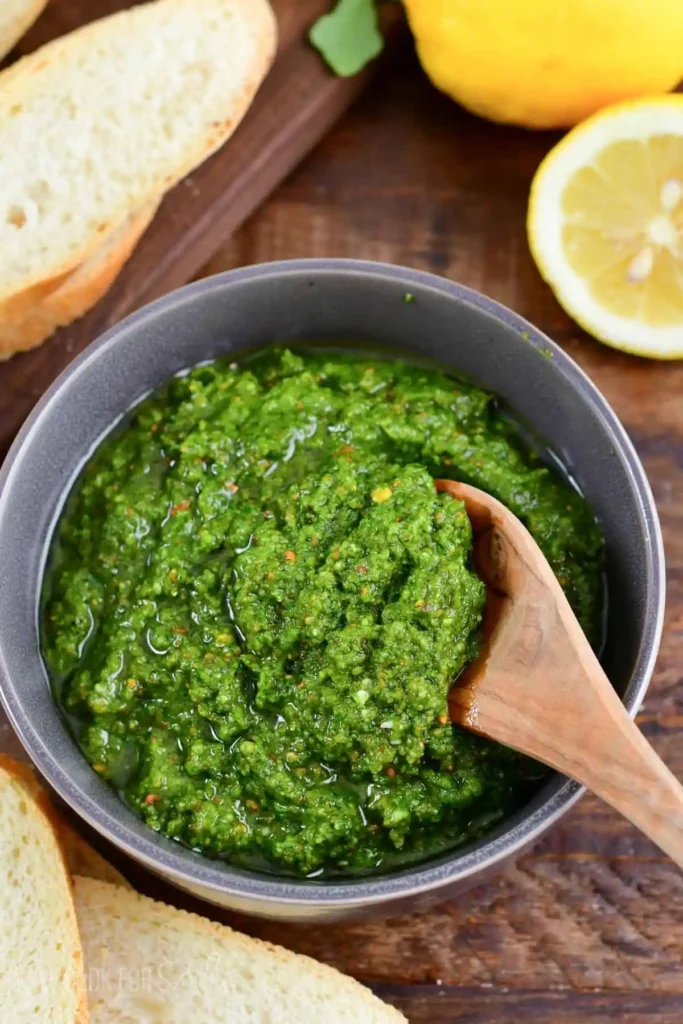
Lemon Pistachio Arugula Pesto
Ingredients
Method
- Choose a blender or small food processor to ensure proper blending without overpacking.
- Pour a third of the avocado oil into the bottom of the blender.
- Layer the arugula, pistachios, parsley, and Parmesan over the oil without packing tightly.
- Add the lemon zest and lemon juice to the mixture.
- Pour in the remaining avocado oil and blend in short bursts until smooth.
- Taste and adjust seasoning with salt or additional oil as needed.