Servings: 2 sandwiches | Prep time: 40 minutes (includes freezer time) | Cook time: 20 minutes | Total time: 1 hour
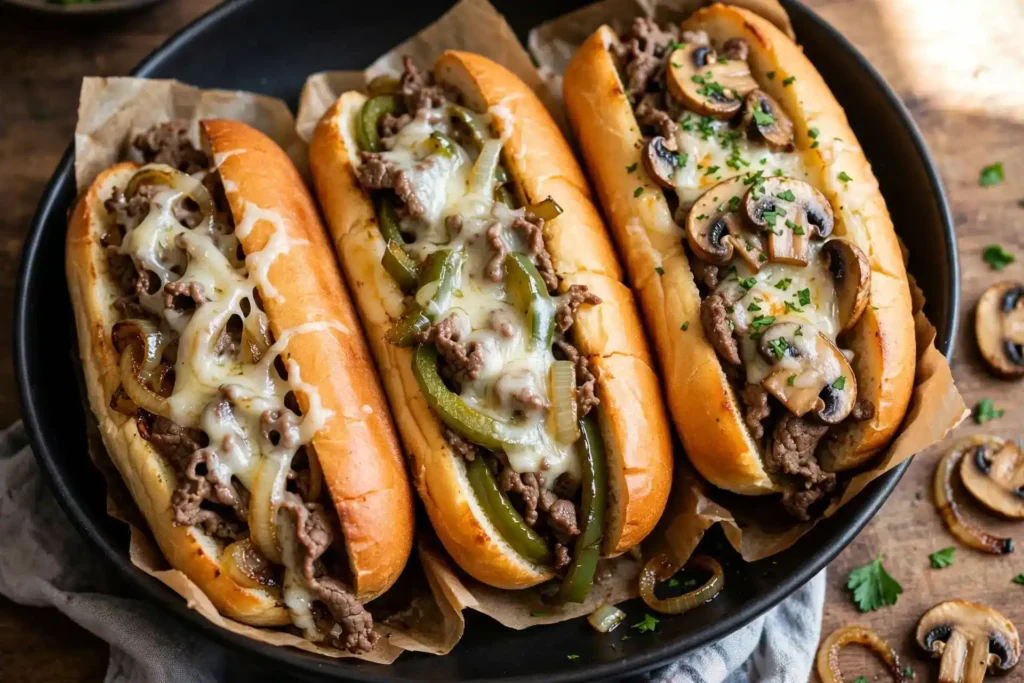
Craving a sandwich that’s melty, meaty, and dripping with caramelized onions? A homemade Philly cheesesteak delivers exactly that, and it takes way less effort than you’d think. I make this one whenever I want takeout-quality food without leaving my kitchen.
There’s something almost therapeutic about the sizzle of steak hitting a hot skillet. IMO, that sound alone should be its own genre of ASMR. Let’s break down why this Philly cheesesteak recipe works so well.
Why This Philly Cheesesteak Recipe Actually Works
A lot of homemade cheesesteaks fall flat because the steak turns out too thick or too chewy. This recipe skips that problem by freezing the steak first, which makes it easy to slice paper-thin.
Have you ever bitten into a cheesesteak and needed a jaw workout to chew it? Yeah, that’s a thin-slicing failure. This method fixes that completely, no dental appointment required.
The caramelized onions and melted provolone do the rest of the heavy lifting. Slow-cooked onions add sweetness, and gooey cheese ties the whole sandwich together into something genuinely craveable.
What You’ll Need for a Philly Cheesesteak
Round up these ingredients before you start cooking. Nothing exotic here, just quality steak, a few pantry staples, and good bread to hold it all together.
- 1 pound ribeye steak, round steak, or sirloin, thinly sliced
- 1/2 large white onion (or 1 small white onion), thinly sliced
- 1 tablespoon butter
- Salt and black pepper to taste
- 1 tablespoon olive oil
- 2 hoagie rolls
- 2 tablespoons garlic butter
- 3 ounces provolone cheese or American cheese, sliced
That’s the whole list. No fifteen-ingredient marinade, no obscure sauce hiding in the back of your fridge. Just simple stuff that turns into something seriously satisfying.
How to Make a Philly Cheesesteak, Step by Step
Let’s actually get cooking now. I’ll walk you through every step slowly, because rushing a cheesesteak is how you end up with rubbery meat and sad, unmelted cheese.
Step 1: Freeze the Steak First
Place your steak in the freezer for 30 to 60 minutes before you do anything else. This firms up the meat significantly, which makes thin slicing so much easier.
Skip this step and you’ll fight with a wobbly, slippery cut of meat the entire time. Trust me, the freezer step saves you a genuine headache later.
Step 2: Caramelize the Onions Low and Slow
While the steak chills, add the butter and sliced onions to a cast iron skillet over low heat. Stir occasionally and let them cook for 10 to 15 minutes.
Low heat matters here more than you’d think. Rushing this step with high heat burns the onions instead of caramelizing them, and burnt onions taste nothing like sweet, golden ones.
Once your onions turn soft, golden, and fragrant, transfer them to a bowl and set them aside. You’ll add them back to the pan once the steak is cooking.
Step 3: Slice the Steak Thin
Pull the steak out of the freezer once it’s firm but not rock solid. Using a sharp knife, slice it as thinly as you possibly can against the grain.
Thin slices cook fast and stay tender, which is the entire secret behind a proper cheesesteak texture. Thick chunks just don’t deliver that same melt-in-your-mouth bite.
Step 4: Toast the Hoagie Rolls
Heat your skillet over medium heat and spread garlic butter generously inside each hoagie roll. Place the rolls buttered-side down in the skillet until lightly golden and crisp.
Toasting the bread first prevents sogginess later, since the filling can get juicy. Set the toasted rolls aside once they’re golden, and get ready for the main event.
Step 5: Sear the Steak
Crank the skillet heat up to high and add the olive oil. Season your thin steak slices generously with salt and pepper before they hit the pan.
Add the steak to the hot skillet and cook for just 2 to 3 minutes until browned. High heat here creates a nice sear fast, without overcooking the thin slices into leather.
Step 6: Bring It All Together
Reduce the heat to medium-low and add your caramelized onions back into the skillet with the steak. Mix everything together so the flavors combine into one cohesive filling.
Have you ever tasted steak and onions cooked separately versus mixed together in the pan? The difference is huge. Mixing them here lets the flavors actually marry.
Step 7: Melt the Cheese
Lay the provolone or American cheese slices directly over the steak and onion mixture in the skillet. Let the cheese melt for about a minute, covering the pan if you want it faster.
FYI, this is the moment that makes or breaks a cheesesteak. Melted cheese should coat every bite, not sit in a sad, unmelted clump on top.
Step 8: Assemble and Serve
Place your toasted hoagie rolls face-down over the cheesy steak mixture right in the skillet. Use a spatula to scoop the filling directly into the rolls, flipping them upright.
Serve the sandwiches immediately while everything’s hot and the cheese is still stretchy. This is not a make-ahead moment, so gather your hungry people first.
Serving and Storage Tips
A fresh Philly cheesesteak tastes best the moment it’s assembled, but leftovers still work great with a little planning. Here’s how to serve and store this recipe properly.
- Serve immediately while the cheese is melted and the bread is warm.
- Pair with fries, potato wedges, coleslaw, or a fresh side salad for a full meal.
- Store leftover steak filling in an airtight container in the fridge for up to 3 days.
- Reheat the filling in a skillet over medium heat before adding it to fresh rolls.
- Avoid storing fully assembled sandwiches, since the bread turns soggy fast.
- Freeze cooked steak filling for up to 2 months and thaw before reheating.
Fun Variations to Try Next Time
Once you’ve nailed the classic version, why not switch things up? These variations keep the same easy process while changing the flavor profile entirely.
- Chicken Philly cheesesteak: swap the steak for thinly sliced chicken breast or thighs.
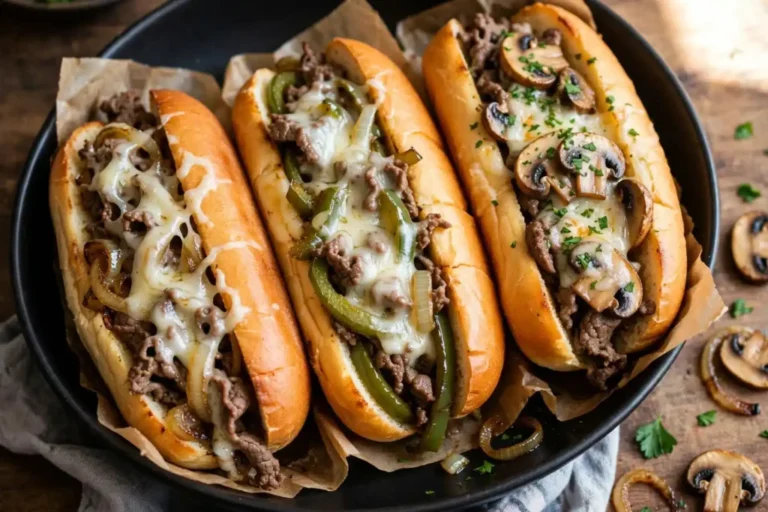
- Mushroom Philly cheesesteak: sauté mushrooms alongside the onions for an earthy depth.
- Pepper Philly cheesesteak: cook sliced bell peppers with the onions for sweetness and crunch.
- Spicy Philly cheesesteak: add jalapeños or crushed red pepper flakes for heat.
- Philly cheesesteak wraps: use tortillas instead of hoagie rolls for an easy handheld version.
IMO, the mushroom version deserves way more hype than it gets. Give it a shot before writing it off, because it’s genuinely delicious 🙂
Frequently Asked Questions About Philly Cheesesteak
What cut of meat is best for Philly cheesesteak?
Ribeye is the traditional choice because it stays tender and flavorful, though sirloin or round steak also work perfectly well if that’s what you’ve got on hand.
How do I slice steak thinly at home?
Freeze the steak for 30 to 60 minutes before slicing. This firms up the meat just enough to make cutting thin, even slices dramatically easier with a sharp knife.
What cheese works best for a Philly cheesesteak?
Provolone and American cheese are the most popular choices because they melt smoothly and evenly. Cheese sauce works too if you want that extra-gooey, dripping texture.
Can I make Philly cheesesteak ahead of time?
You can prepare the steak and onion filling in advance, then reheat it in a skillet and assemble fresh sandwiches right before serving for the best texture.
Can I use a different type of bread?
Yes, French rolls, baguette pieces, or any soft sandwich roll works well as a substitute for traditional hoagie rolls if that’s what’s available to you.
How do I keep the sandwich from getting soggy?
Toast the rolls thoroughly before adding the filling, and serve the sandwich right after assembling it. Waiting too long lets moisture soak into the bread.
Can I add vegetables to this recipe?
Absolutely. Mushrooms, bell peppers, and extra onions are common, delicious additions that add texture and flavor without complicating the cooking process at all.
Final Thoughts on This Philly Cheesesteak Recipe
So there you go, a Philly cheesesteak recipe that’s genuinely easy, packed with flavor, and totally doable on a weeknight. No complicated techniques, no rare ingredients, just melty, meaty satisfaction.
Give this one a try soon. Once that cheese melts over the steak and onions, you’ll understand exactly why this sandwich has stuck around as a classic for decades.
Philly Cheesesteak
Ingredients
Method
- Place the steak in the freezer for 30 to 60 minutes.
- While the steak chills, add the butter and sliced onions to a cast iron skillet over low heat. Cook for 10 to 15 minutes, stirring occasionally until soft and golden.
- Once onions are cooked, transfer them to a bowl and set aside.
- Pull the steak out of the freezer and slice thinly against the grain using a sharp knife.
- Heat your skillet over medium heat and spread garlic butter inside each hoagie roll. Toast the rolls buttered-side down until golden and crisp.
- Crank up the skillet heat to high, add olive oil, season the steak slices with salt and pepper, and sear for 2 to 3 minutes until browned.
- Reduce heat to medium-low, add the caramelized onions back into the skillet, and mix well.
- Lay cheese slices over the steak and onion mixture. Cover the skillet to help melt the cheese for about 1 minute.
- Assemble the sandwiches by placing the toasted hoagie rolls face-down over the filling in the skillet, then use a spatula to scoop the mixture into the rolls.
- Serve the sandwiches immediately while everything is hot.