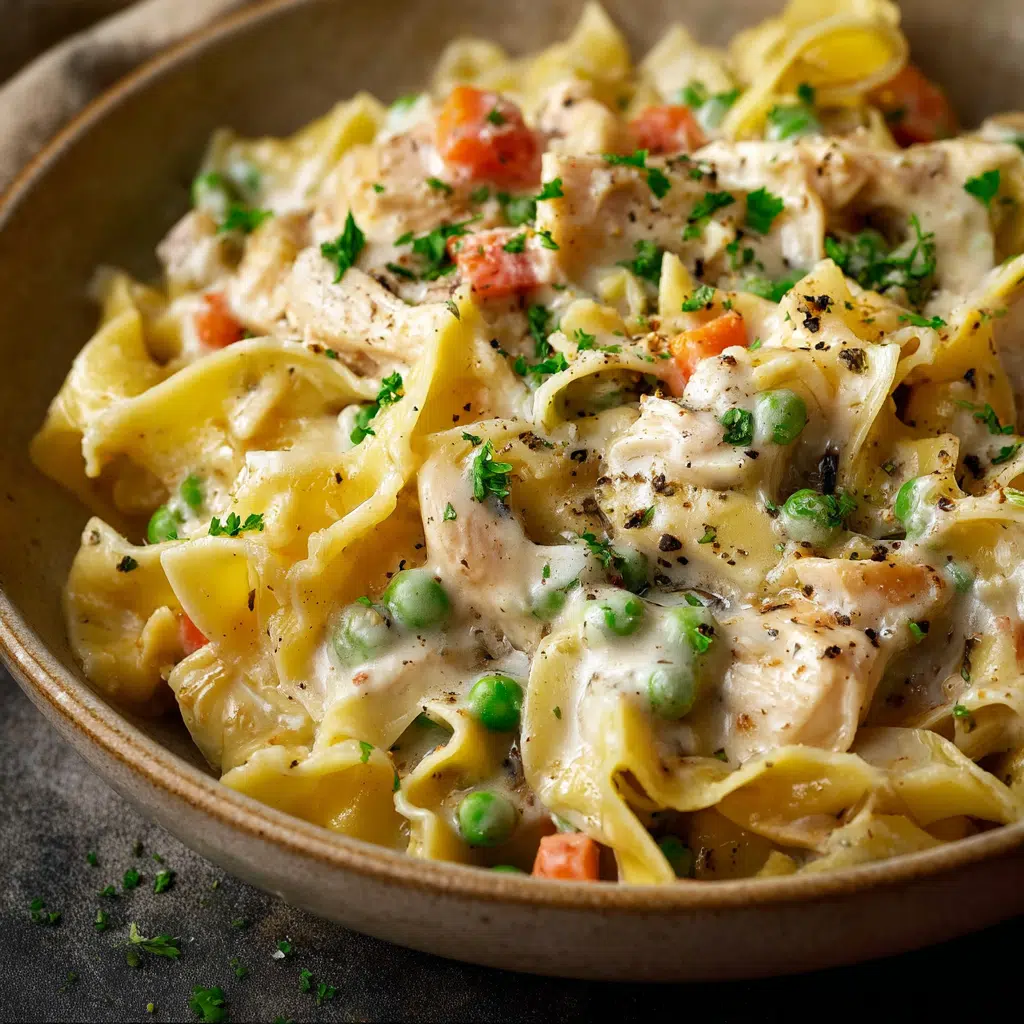
Servings: 4–6 Prep Time: 15 minutes Cook Time: 35 minutes Total Time: 50 minutes
Cold night. Empty stomach. You want something that hugs you back. That’s exactly what Creamy Chicken Pot Pie Pasta With Pappardelle does, and I’m not exaggerating for clicks.
I grew up on chicken pot pie, but let’s be honest, nobody wants to fuss with pie crust on a Tuesday. So I swapped the crust for pappardelle, and honestly? Game changer.
This dish takes everything you love about a classic pot pie and pours it over wide, silky ribbons of pasta. Rich sauce, tender chicken, soft veggies. One skillet. Minimal cleanup.
Why This Recipe Works So Well
Ever wonder why pot pie feels like a hug in food form? It’s the combination of cream, herbs, and slow-cooked vegetables. This recipe keeps that magic and just changes the vehicle.
Pappardelle isn’t a random choice here either. Its wide, flat shape holds onto creamy sauce way better than a skinny noodle ever could. IMO, that’s non-negotiable for a dish this rich.
The chicken gets seared first, then simmered gently in stock and herbs. That two-step process builds layers of flavor. Rushing it just gives you bland, boring bites.
What You’ll Need for Creamy Chicken Pot Pie Pasta With Pappardelle
Here’s your shopping list. Nothing fancy, nothing you can’t find at a regular grocery store.
- 8.8 ounces egg pappardelle pasta
- 3 to 4 tablespoons unsalted butter, divided
- 1 ½ pounds boneless, skinless chicken breasts
- Kosher salt, to taste
- Ground black pepper, to taste
- 3 medium carrots, diced
- 3 stalks celery, diced
- 1 yellow onion, diced
- 6 cloves garlic, finely chopped
- ¼ cup all-purpose flour
- 2 to 3 cups chicken stock
- 3 to 4 sprigs fresh rosemary
- 10 to 12 sprigs fresh thyme
- 2 sprigs fresh sage
- 1 cup frozen peas
- 1 cup heavy cream
- ½ cup grated parmesan cheese
That’s it. Fifteen-ish ingredients standing between you and a genuinely comforting dinner.
How to Make Creamy Chicken Pot Pie Pasta With Pappardelle
Step 1: Get Your Water Going
Fill a large pot with water, salt it generously, and set it to boil. You’ll cook the pasta later, but starting the water now saves time.
Salting the water properly matters more than people think. It’s your only real chance to season the noodles from the inside out.
Step 2: Sear the Chicken Until Golden
Melt about two tablespoons of butter in a large skillet over medium-high heat. Season your chicken breasts on both sides with kosher salt and black pepper, don’t be shy about it.
Cook the chicken for roughly two to three minutes per side, just until it turns a deep golden color. You’re not cooking it through yet, just building flavor on the surface.
Once it looks good, pull the chicken out and set it on a plate. It’ll finish cooking later in the simmering sauce, so no need to stress about doneness right now.
Step 3: Soften the Vegetables
Add a bit more butter to the same skillet if it looks dry. Toss in your diced carrots, celery, and onion, then season lightly with salt and pepper.
Let those vegetables cook for five to seven minutes, stirring occasionally, until they soften and start smelling amazing. Then stir in the garlic and cook for another minute or two, just until fragrant. Burnt garlic tastes bitter, so keep an eye on it.
Step 4: Build the Creamy Base
Turn the heat down to medium-low. Sprinkle the flour evenly over the softened vegetables and stir it in thoroughly.
Cook this mixture for a minute or two until the flour turns a light golden shade and loses its raw smell. This step is what thickens your sauce later, so don’t skip it.
Slowly pour in the chicken stock, scraping the bottom of the skillet as you go. Those browned bits stuck to the pan are pure flavor, so get every last one incorporated.
Step 5: Simmer With Herbs
Tie your rosemary, thyme, and sage together with kitchen twine, then drop the bundle right into the skillet. Return the seared chicken to the pan as well.
Partially cover the skillet and let everything simmer gently for twelve to fifteen minutes. The chicken should turn fully opaque and cooked through by the time you’re done. Have you ever noticed how fresh herbs completely transform a simple broth? This is exactly why.
Step 6: Cook the Pappardelle
While the chicken simmers, cook your pappardelle in that boiling salted water according to the package directions, aiming for al dente. Before draining, scoop out about one cup of the starchy pasta water and set it aside.
That pasta water is liquid gold for loosening the sauce later. Don’t pour it down the drain by accident, that would be a rookie move.
Step 7: Shred and Combine
Pull the herb bundle out of the skillet and toss it. Take the chicken out, shred it into bite-sized pieces using two forks, then return the shredded meat back into the sauce.
Stir in the frozen peas and heavy cream, then let everything simmer together for one to two minutes. Watch the sauce thicken slightly and turn a beautiful pale golden color.
Step 8: Bring It All Together
Add your cooked pappardelle directly into the skillet and toss everything to coat evenly. If the sauce feels too thick, splash in some of that reserved pasta water to loosen it up.
Want a thicker, richer finish? Stir in extra parmesan cheese. Cook for one more minute so the flavors marry properly, then it’s ready to serve.
Tips for Nailing This Recipe
- Don’t overcook the chicken during the initial sear, it finishes cooking in the sauce anyway.
- Reserve pasta water every single time. It’s the easiest sauce-fixer in your entire cooking arsenal.
- Use fresh herbs if possible. Dried herbs work in a pinch but lack that bright, fragrant punch.
- Grate your own parmesan. Pre-shredded stuff doesn’t melt the same way, trust me on this one.
Storage and Reheating
This pasta stores beautifully, which honestly surprised me the first time I tried it. Pop leftovers into an airtight container and refrigerate for up to four days.
When reheating, warm it gently on the stovetop or in the microwave with a splash of broth or cream. This loosens the sauce back up so it doesn’t turn gluey. Avoid blasting it on high heat, or you’ll end up with rubbery chicken.
Freezing works too. Portion it into freezer-safe containers for up to two months, then thaw overnight in the fridge before reheating.
Fun Variations to Try
Feeling adventurous? Here are a few twists worth trying:
- Turkey swap: Use shredded leftover turkey instead of chicken after the holidays.
- Mushroom lover’s version: Sauté sliced mushrooms with the vegetables for an earthier flavor.
- Spicy Cajun style: Season the chicken with Cajun spice and add red pepper flakes.
- Dairy-free route: Swap butter for olive oil and heavy cream for coconut cream.
- Shortcut method: Skip searing entirely and use shredded rotisserie chicken instead.
Frequently Asked Questions
Can I use a different pasta shape? Yes. Fettuccine, tagliatelle, or even rotini work fine if pappardelle isn’t available.
Can I make this ahead of time? Absolutely, prepare it up to a day ahead and reheat gently before serving.
What can replace heavy cream? Half-and-half or whole milk works, though the sauce won’t be quite as rich.
Can I use chicken thighs instead of breasts? Definitely. Boneless, skinless thighs actually add extra flavor and stay tender longer.
How do I thicken a sauce that’s too thin? Simmer it a bit longer or stir in extra parmesan cheese near the end.
Is this dish freezer-friendly? Yes, though the cream sauce may separate slightly once thawed and reheated.
Final Thoughts
Creamy Chicken Pot Pie Pasta With Pappardelle takes a nostalgic classic and turns it into a genuinely easy weeknight dinner. One skillet, one pot of boiling water, and about fifty minutes total.
FYI, this is the kind of recipe that tastes like way more effort went into it than actually did. So go ahead, take the credit. Nobody at your dinner table needs to know how simple it really was.