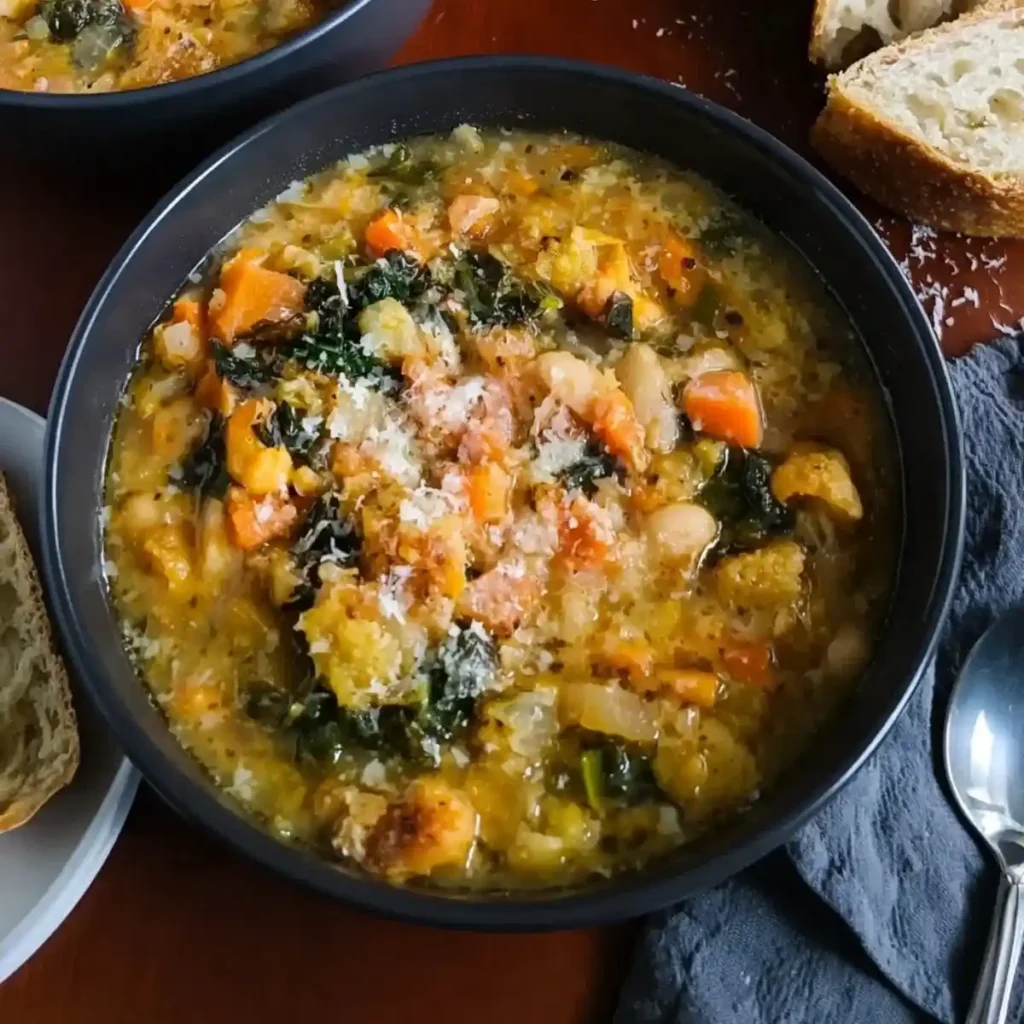
Stale bread sitting on your counter? Don’t toss it. This Ribollita Tuscan Bread Soup turns that forgotten loaf into the coziest meal you’ll make all season.
I first tried ribollita on a trip through Tuscany, and honestly, it changed how I think about leftovers forever. Turns out the Italians figured out zero-waste cooking centuries before it became trendy.
Servings: 6
Prep time: 20 minutes
Cook time: 55 minutes
Total time: About 1 hour 15 minutes
What Makes Ribollita So Special
Ever wonder how a soup made from vegetable scraps and old bread becomes a national treasure? That’s the beauty of Tuscan cooking. Nothing goes to waste, and everything tastes richer because of it.
Ribollita literally means “reboiled” in Italian. This dish traditionally started as leftover minestrone, reheated the next day with stale bread stirred in. The result? A thick, stew-like soup that’s far more satisfying than its humble origins suggest.
Everything You Need For This Recipe
Nothing exotic here, just honest Mediterranean ingredients. Most of these items probably already sit in your pantry or fridge right now, waiting for a good reason to get used.
Here’s your full ingredient list:
- Extra-virgin olive oil – 2 tablespoons
- Yellow onion – 1 large, diced
- Carrots – 2 medium, diced
- Celery – 2 stalks, diced
- Garlic – 3 cloves, minced
- Tuscan or lacinato kale – 1 bunch, chopped
- Savoy cabbage – 1/2 head, chopped
- Cannellini beans – 2 cans, drained and rinsed
- Crushed tomatoes – 1 can
- Vegetable stock – 6 cups
- Rustic Italian bread – 6 slices, preferably stale
- Fresh rosemary – 2 sprigs
- Fresh thyme – 2 sprigs
- Salt – to taste
- Black pepper – to taste
- Grated Parmesan cheese – optional, for topping
FYI, the stale bread isn’t optional here. It’s what makes ribollita, well, ribollita.
How To Make Ribollita Tuscan Bread Soup, Step By Step
Build Your Aromatic Base
Heat the olive oil in a large pot over medium heat until it shimmers slightly. Add the diced onion, carrots, and celery all at once, stirring occasionally so nothing sticks to the bottom.
Cook this mixture for about 8 to 10 minutes until everything softens and turns fragrant. This trio forms the flavor foundation for the entire soup, so don’t rush through it.
Add The Garlic And Herbs
Stir in the minced garlic along with the fresh rosemary and thyme sprigs. Cook for just 30 seconds, stirring constantly so the garlic doesn’t burn and turn bitter.
Have you ever burned garlic and ruined an entire dish? It happens fast, so keep your eyes on the pot during this quick step. The herbs should smell incredible almost instantly.
Bring In The Vegetables And Beans
Pour in the crushed tomatoes, then add the chopped kale and cabbage directly to the pot. Toss in both cans of cannellini beans, followed by the vegetable stock.
Stir everything together until well combined. The pot will look impossibly full at this stage, but the greens shrink down considerably as they cook, so don’t panic.
Bring The Soup To A Simmer
Turn the heat up slightly and bring the mixture to a gentle simmer, not a rolling boil. A hard boil can break down the vegetables too quickly and mute their individual flavors.
Once simmering, reduce the heat back down to maintain a steady, gentle bubble. This slower approach lets the flavors develop properly instead of just cooking fast and flat.
Let It Cook Low And Slow
Let the soup simmer uncovered for 30 to 40 minutes, stirring occasionally to prevent anything from sticking. The kale and cabbage need this time to turn fully tender and lose any bitterness.
This is genuinely the easiest part of the whole recipe. Set a timer, walk away, and let the pot do the actual work while you handle something else.
Season To Your Taste
Once the vegetables reach that tender, melt-in-your-mouth texture, season the soup with salt and black pepper. Taste as you go, since stock brands vary quite a bit in sodium content.
IMO, under-seasoned soup is one of the most common mistakes home cooks make. Don’t be shy here, but also don’t dump in salt all at once. Build the flavor gradually.
Stir In The Bread
Tear or cut your rustic bread into rough chunks and add them directly into the simmering soup. Stir gently but thoroughly so every piece gets coated in that flavorful broth.
Keep stirring for a minute or two as the bread starts breaking down and absorbing liquid. This step transforms a regular vegetable soup into true ribollita right before your eyes.
Simmer Until Thick And Stew-Like
Let the soup continue simmering for another 10 to 15 minutes. The bread will fully soften and thicken the broth into something closer to a stew than a traditional soup.
Stir occasionally so the bread integrates evenly instead of clumping in one spot. You’ll notice the texture transform from brothy to hearty, which is exactly the goal here.
Serve It Right
Ladle the finished Ribollita Tuscan Bread Soup into bowls while it’s still warm. Drizzle a little extra olive oil over the top for that authentic Tuscan finishing touch.
Sprinkle grated Parmesan cheese on top if you’re using it. That savory, salty layer takes this dish from great to genuinely unforgettable 🙂
Tips For The Best Ribollita
A few small details separate an average pot from a truly great one. These come from actual trial and error, not just theory.
- Use stale bread only – fresh bread turns to mush instead of holding texture
- Let it rest overnight – ribollita tastes even richer the next day
- Thin it out later – add extra stock when reheating if it thickens too much
- Swap the greens – Swiss chard or spinach work well instead of kale
Have you ever noticed how some soups taste better as leftovers? Ribollita might be the best example of that phenomenon. The flavors genuinely deepen overnight in the fridge.
What To Serve With This Soup
Ribollita stands strong as a complete meal on its own, but a few extras round out the experience nicely. Here’s what pairs well with it.
- A simple arugula salad with lemon dressing
- Extra crusty bread on the side
- A glass of dry Chianti
- Additional Parmesan for topping
Keep sides simple. This soup carries enough flavor and heartiness that it doesn’t need much competition on the table.
Storing And Reheating Leftovers
Store any leftover soup in an airtight container in the refrigerator for up to 4 days. Honestly, the flavor only improves as it sits, so don’t rush to finish it.
When reheating, add a splash of extra vegetable stock since the bread continues absorbing liquid over time. Warm it gently on the stove, stirring occasionally until heated through.
Frequently Asked Questions
What does ribollita mean in English?
It translates to “reboiled.” The dish traditionally reused leftover vegetable soup, reheated the next day with stale bread stirred in to thicken it.
Can I make this soup gluten-free?
Yes, simply use a gluten-free rustic bread instead of traditional Italian bread. Everything else in the recipe stays naturally gluten-free without any adjustments needed.
What can I substitute for kale?
Swiss chard or spinach both work well in place of kale. Either option keeps the earthy, leafy green quality that makes ribollita feel authentically Tuscan.
Why does my soup taste better the next day?
The flavors need time to meld and deepen. This is completely normal for ribollita and part of why Italians traditionally made it a day ahead.
Can I freeze ribollita?
It’s possible, though the bread’s texture changes slightly after thawing. If freezing, consider adding fresh bread when reheating instead of freezing it with bread already mixed in.
Wrapping Up This Ribollita Recipe
This soup delivers everything comfort food should: hearty texture, rich flavor, and a genuinely satisfying way to use up ingredients already sitting in your kitchen.
Give this recipe a try soon, and let it sit overnight before your first real bowl. Once you taste how the flavors deepen by day two, you’ll understand exactly why Tuscans built an entire tradition around leftovers.
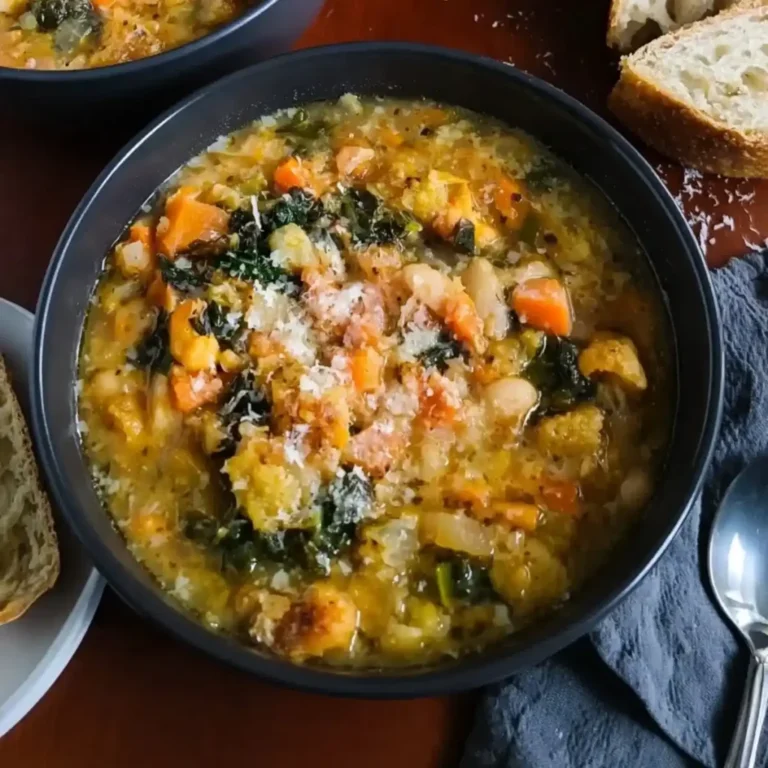
Ribollita Tuscan Bread Soup
Ingredients
Method
- Heat the olive oil in a large pot over medium heat until it shimmers slightly. Add the diced onion, carrots, and celery all at once, stirring occasionally.
- Cook for about 8 to 10 minutes until everything softens and turns fragrant.
- Stir in the minced garlic along with the fresh rosemary and thyme sprigs. Cook for just 30 seconds.
- Pour in the crushed tomatoes, then add the chopped kale and cabbage. Toss in both cans of cannellini beans and the vegetable stock.
- Stir everything together until well combined.
- Turn the heat up slightly and bring the mixture to a gentle simmer.
- Reduce the heat to maintain a steady, gentle bubble.
- Let the soup simmer uncovered for 30 to 40 minutes, stirring occasionally.
- Once the vegetables are tender, season the soup with salt and black pepper to taste.
- Tear or cut your rustic bread into rough chunks and add them to the simmering soup.
- Stir gently but thoroughly so every piece gets coated in the broth.
- Let the soup simmer for another 10 to 15 minutes until the bread fully softens.
- Ladle the finished soup into bowls while still warm and drizzle with extra olive oil.
- Sprinkle grated Parmesan cheese on top if using.