You know what ruins most home-cooked steaks? Overthinking. I’ve been there, nervously hovering over a hot pan, second-guessing every move. But here’s the truth—cooking a perfect steak is simpler than you think.
Prep Time: 10 minutes
Cook Time: 15 minutes
Rest Time: 5 minutes
Total Time: 30 minutes
Servings: 2 steaks
This juicy beef steak recipe delivers restaurant-quality results without the hefty price tag. Ready to impress yourself and everyone at your dinner table? Let’s get into it.
Why This Steak Recipe Works
Have you ever wondered why restaurant steaks taste so much better? It’s not magic or secret ingredients. They just nail the basics consistently. High heat, proper seasoning, and—this is crucial—not messing with the meat constantly.
I’ve tested countless beef steak recipe ideas over the years. Some were disasters. Others were just okay. This one? It’s become my go-to for a reason. It works every single time.
The secret lies in simplicity. No complicated techniques or fancy equipment needed. Just quality ingredients and proper timing. Trust me, your taste buds will thank you later.
Choosing Your Steak Cut
Not all steaks are created equal. Some cuts work better for quick cooking. Others need different approaches. Let me break down the best options for this recipe.
Best Cuts for This Recipe:
- Ribeye (my personal favorite for flavor)
- New York Strip (great balance of tenderness and taste)
- Sirloin (budget-friendly and delicious)
- Filet Mignon (super tender but less flavor)
- T-bone (best of both worlds)
For this boneless beef ribeye steak recipe approach, I recommend ribeye or strip. They’ve got excellent marbling, which means more flavor. That fat renders during cooking and creates incredible taste.
Thickness matters too. Aim for steaks about 1 to 1.5 inches thick. Thinner cuts cook too fast and dry out. Thicker cuts are harder to get right without special equipment.
Ingredients You’ll Need
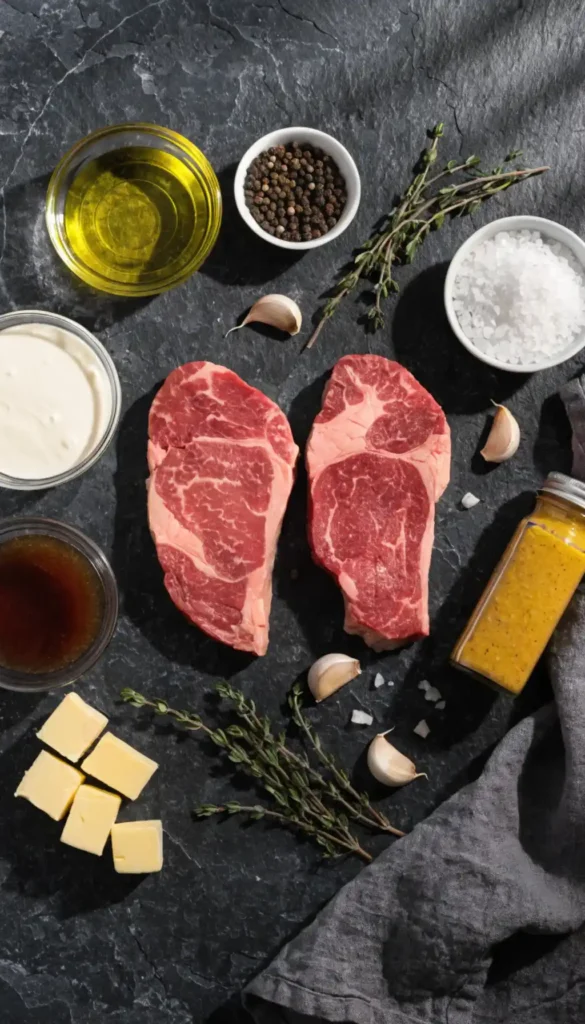
Let’s talk ingredients. Nothing fancy here. Just quality basics that create something spectacular. This is where many people go wrong—they compromise on steak quality.
For the Steak:
- 2 beef steaks (ribeye or strip, 1-inch thick, 8-10 ounces each)
- 2 tablespoons olive oil
- 2 teaspoons kosher salt
- 1 teaspoon black pepper
- 2 cloves garlic, smashed
- 2 sprigs fresh thyme
- 2 tablespoons butter
For the Creamy Garlic Sauce:
- 3 tablespoons butter
- 4 cloves garlic, minced
- 1 cup heavy cream
- 1/2 cup beef broth
- 1 teaspoon Dijon mustard
- Salt and pepper to taste
- Fresh parsley for garnish
See? Nothing complicated. The steak with garlic butter sauce combination is classic for good reason. It just works beautifully together.
Preparing Your Steak
Preparation determines success more than actual cooking. I learned this lesson after ruining expensive steaks early on. Now I always prep properly, and you should too.
Take your steaks out of the fridge 30 minutes before cooking. Room temperature meat cooks more evenly. Cold steaks develop a gray band of overcooked meat around the edges. Not ideal.
Pat them completely dry with paper towels. Moisture is the enemy of a good sear. You want that crust, that beautiful caramelization. Wet meat steams instead of sears.
Season generously with salt and pepper on both sides. Don’t be shy here. Most of it falls off during cooking anyway. Press the seasoning into the meat gently.
Getting Your Pan Ready
Pan selection matters more than most people realize. I’ve tried cooking steaks in various pans. Cast iron wins every time for this seasoned beef steak dinner approach.
Heat your cast iron skillet over high heat for 5 minutes. Yes, really that long. The pan needs to be screaming hot. This creates that restaurant-quality crust we’re after.
How do you know it’s ready? Hold your hand about 6 inches above the pan. You should feel intense heat radiating upward. Another test—add a drop of water. It should instantly sizzle and evaporate.
Add olive oil once the pan is hot. Swirl it around to coat the bottom. The oil should shimmer and almost smoke. Now you’re ready to cook.
Cooking the Perfect Steak
Here’s where confidence matters. Place your steak in the hot pan and don’t touch it. Seriously. New cooks always fiddle with their meat. Resist that urge completely.
Let it sear for 3-4 minutes on the first side. You’ll hear intense sizzling—that’s good. The steak is developing a beautiful crust. Check the underside by lifting one edge slightly.
When you see a deep brown crust, flip it once. Only once. Cook the second side for another 3-4 minutes for medium-rare. Add an extra minute per side for medium.
This beef sirloin steak recipes stove top method works perfectly for most cuts. The timing gives you that ideal pink center with a crusty exterior.
The Butter Basting Technique
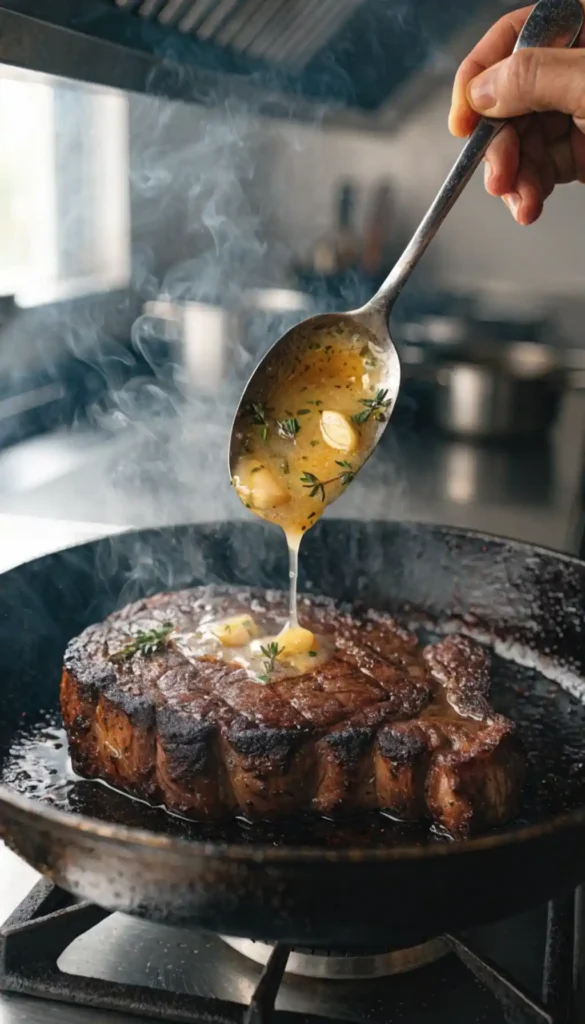
Now we elevate this from good to incredible. Add butter, smashed garlic, and thyme to the pan. Tilt the pan slightly so butter pools on one side.
Use a spoon to continuously baste the steak with melted butter. This technique adds flavor and helps cook the top surface. Keep basting for about 1-2 minutes.
The garlic and thyme infuse the butter with amazing flavor. That butter then coats your steak beautifully. It’s a simple technique with huge impact on taste.
Watch the butter carefully. It shouldn’t burn or turn brown. If it starts smoking excessively, reduce the heat slightly. Brown butter is okay; black butter ruins everything.
Checking for Doneness
Forget cutting into your steak to check doneness. That releases all those precious juices. Instead, use the touch method or a meat thermometer.
Temperature Guide:
- Rare: 120-125°F
- Medium-rare: 130-135°F (my recommendation)
- Medium: 135-145°F
- Medium-well: 145-155°F
- Well-done: 155°F+ (please don’t)
Insert the thermometer into the thickest part of the steak. Avoid touching bone or fat. Those give false readings and mess up your accuracy.
The touch method works too. Press the steak’s center gently. Rare feels soft and squishy. Medium-rare has slight resistance. Medium feels firmer. Practice makes perfect here.
The Crucial Resting Period
This step separates amateurs from pros. Remove your steak from the pan and let it rest for 5 minutes. I know it’s tempting to cut immediately. Don’t.
Resting allows juices to redistribute throughout the meat. Cut too early and those juices run all over your cutting board. That’s flavor you’re losing unnecessarily.
Place the steak on a cutting board or plate. Tent it loosely with foil if you want. The internal temperature actually rises a few degrees during resting.
Use this time to make your sauce. Perfect timing means everything comes together beautifully. Your homemade steak dinner will rival any restaurant, guaranteed.
Making the Creamy Garlic Sauce
While your steak rests, let’s whip up this incredible steak with garlic cream sauce. It takes minutes but tastes like you worked for hours.
Use the same pan you cooked the steak in. Don’t clean it. All those browned bits on the bottom? That’s flavor gold. We’re using it all.
Reduce heat to medium and add 3 tablespoons butter. Once melted, add minced garlic. Cook for 30 seconds until fragrant. Don’t let it burn—garlic turns bitter when overdone.
Pour in beef broth and scrape the pan bottom with a wooden spoon. This deglazing process releases all those stuck-on bits. They dissolve into your sauce beautifully.
Finishing the Sauce
Add heavy cream and Dijon mustard to the pan. Stir everything together thoroughly. The mixture should start bubbling gently within a minute or two.
Let the sauce simmer for 3-4 minutes. It’ll thicken as the cream reduces. Stir occasionally to prevent burning. You want it coating the back of a spoon.
Season with salt and pepper to taste. Start conservatively—you can always add more. The sauce should taste rich, garlicky, and slightly tangy from the mustard.
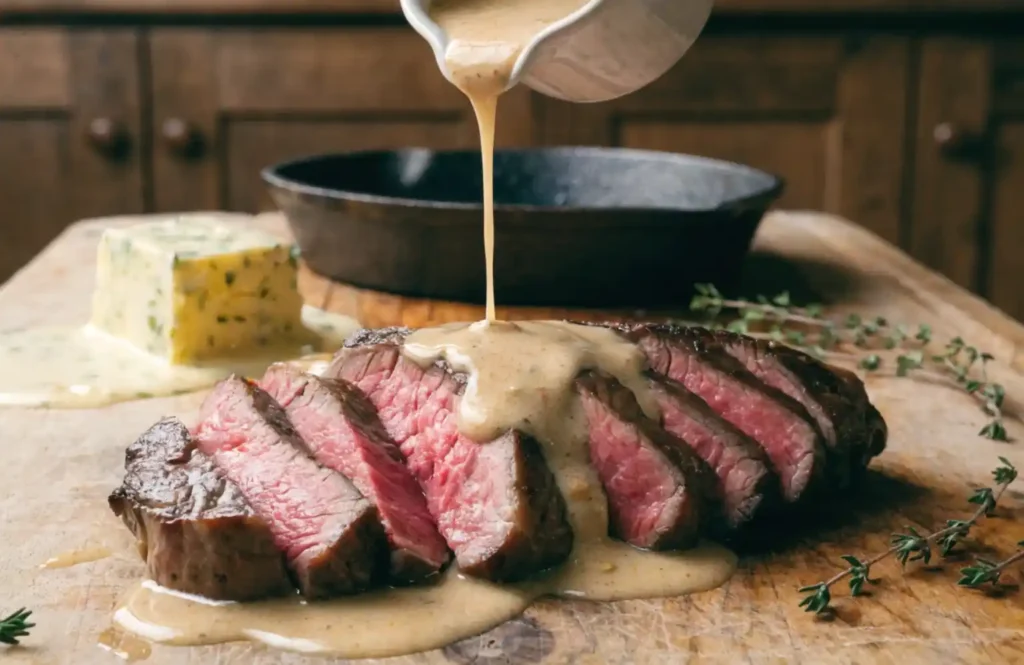
This creamy garlic butter sauce for steak transforms a simple piece of meat into something special. The sauce alone might make you famous among friends.
Slicing and Serving
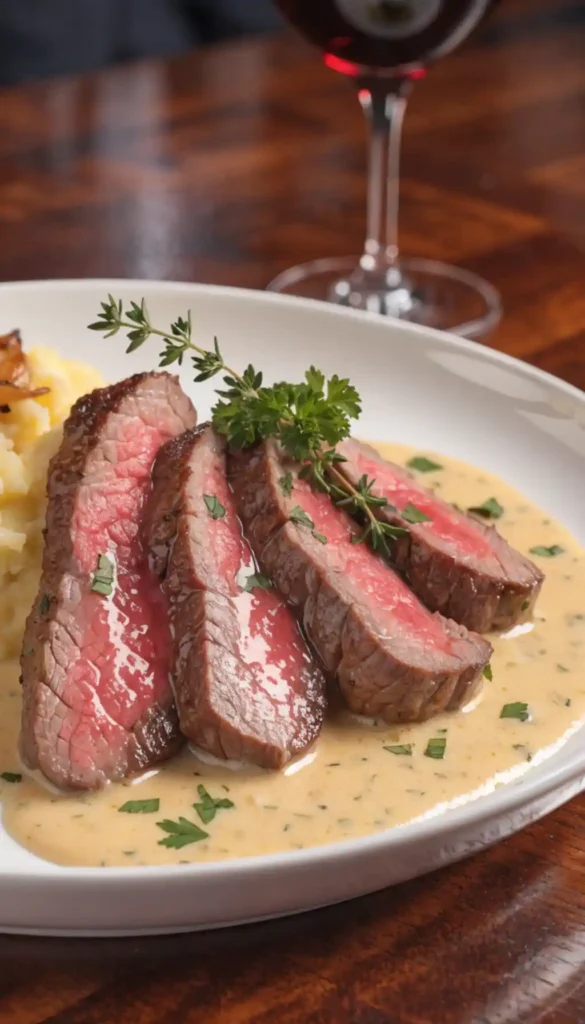
Time to slice your perfectly rested steak. Cut against the grain—this is important. Look at the muscle fibers and slice perpendicular to them.
Cutting against the grain shortens those muscle fibers. This makes every bite more tender. Cut with the grain and you’ll be chewing forever. Not fun.
Slice about half an inch thick. You want substantial pieces that showcase that perfect pink center. Arrange the sliced beef steak on warmed plates for presentation.
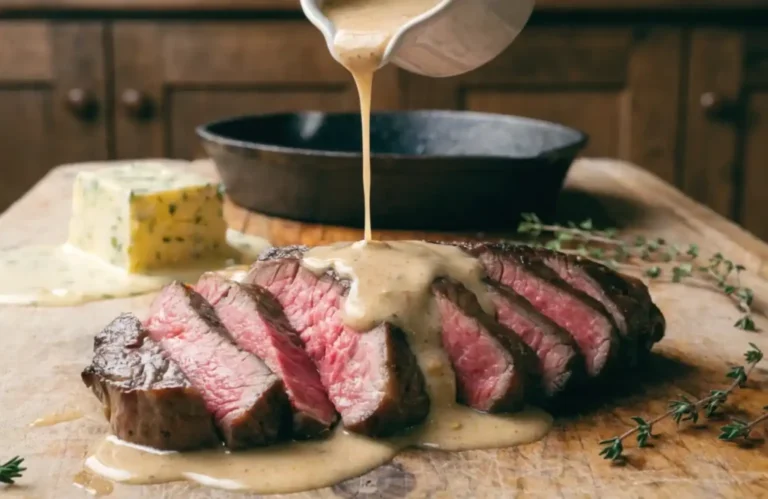
Spoon that gorgeous creamy garlic sauce for steak over the top. Let it pool around the meat. Garnish with fresh parsley if you’re feeling fancy.
Common Mistakes to Avoid
I’ve made every steak mistake imaginable. Learn from my failures and save yourself the frustration. These tips ensure your yummy steak turns out perfect.
Don’t use a cold pan. This causes sticking and prevents proper searing. Always preheat thoroughly. Your patience here pays off with better results.
Stop flipping constantly. Each flip releases heat and prevents crust formation. Flip once, maybe twice maximum. More than that and you’re just making trouble.
Never skip the resting period. I can’t stress this enough. Cutting immediately wastes all your effort. Those 5 minutes make the difference between good and great.
Using low-quality meat guarantees disappointing results. Splurge a little on good steak. The difference in taste justifies the extra cost completely.
Alternative Cooking Methods
While stovetop cooking works great, other methods produce excellent results too. Let me share some alternatives I’ve tested personally.
Oven-Finished Method
For thicker cuts, try these beef chuck steak recipes in oven approach. Sear both sides in a hot pan first. Then transfer the whole pan to a 400°F oven.
Cook for 5-7 minutes depending on thickness and desired doneness. This method ensures even cooking throughout. No gray bands, just perfect pink center.
Reverse Sear
Start your steak in a low oven at 275°F. Cook until it reaches 10 degrees below your target temperature. Then sear it hard in a smoking hot pan.
This chuck tender steak recipes technique gives incredible control. The steak cooks evenly, then gets that beautiful crust. Professional chefs love this method.
Sauce Variations
The basic creamy garlic steak sauce recipe is fantastic. But sometimes you want variety. These alternatives keep things interesting without extra work.
Mushroom Cream Sauce: Add sliced mushrooms with the garlic. Cook until softened before adding cream. Earthy and delicious.
Peppercorn Sauce: Crush 1 tablespoon whole peppercorns. Add with the garlic. Creates a bold, spicy kick.
Blue Cheese Cream: Stir in crumbled blue cheese after adding cream. Stir until melted. Rich and tangy perfection.
Herb Butter: Skip the cream entirely. Just compound butter with fresh herbs, garlic, and lemon zest. Simple but elegant.
Side Dish Pairings
Your juicy steak with creamy garlic sauce deserves worthy companions. I’ve found these sides complement the rich flavors perfectly without competing.
Perfect Pairings:
- Garlic mashed potatoes (double the garlic, why not)
- Roasted asparagus with lemon
- Simple arugula salad with vinaigrette
- Crispy roasted Brussels sprouts
- Loaded baked potato
Keep sides relatively simple. The steak and sauce are the stars here. Sides should support, not overshadow. Balance richness with some freshness or acidity.
Wine Pairing Suggestions
A good steak deserves good wine. I’m no sommelier, but I’ve learned what works through trial and error. FYI, these pairings never disappoint.
Full-bodied reds work best with beef. Cabernet Sauvignon is the classic choice for good reason. Its tannins cut through the richness beautifully.
Malbec offers fruit-forward flavor that complements the creamy garlic sauce. Syrah brings peppery notes that enhance the meat’s seasoning. Can’t go wrong with either.
Not a wine person? A good beer works too. Rich stouts or IPAs pair surprisingly well. Or just have whatever you enjoy drinking.
Storage and Reheating
Leftover steak rarely happens at my house. But if you’re meal prepping or have extras, here’s how to store it properly.
Store cooked steak and sauce separately in airtight containers. They’ll keep for 3-4 days refrigerated. The sauce might thicken when cold—that’s completely normal.
Reheat gently to avoid overcooking. I slice leftover steak thin and warm it in the sauce over low heat. This prevents it from drying out.
Alternatively, eat cold steak sliced thin in salads. It’s actually delicious this way. The sauce works great warmed separately for dipping.
Cost Breakdown
Let’s talk money because quality steak ain’t cheap. But making it at home still beats restaurant prices by a mile.
Two good ribeyes cost about $20-30 depending on quality. Sauce ingredients add maybe $5. Total cost for two servings? Around $30-35 maximum.
Compare that to restaurant prices. One steak dinner easily costs $40-60 per person. You’re saving serious money making this homemade steak dish yourself.
Plus, you control quality and portion sizes. Restaurant steaks might look fancy, but yours will taste just as good. Sometimes better, honestly.
Final Thoughts
There you have it—everything you need for the perfect homemade steak dinner. It’s not complicated once you understand the basics. High heat, good seasoning, proper timing.
This recipe has saved me countless times when I wanted to impress dinner guests. It never fails to wow people. They always ask how to cook beef steak perfectly.
The answer? You just learned it. Now stop reading and start cooking. Your kitchen is calling, and that steak won’t cook itself. Go create something delicious.
Remember, practice makes perfect. Your first attempt might not be flawless. That’s okay. Even a slightly overcooked homemade steak beats takeout any day. Enjoy the process!
Frequently Asked Questions
How do I know when my steak is done without a thermometer?
Use the touch test by comparing the steak’s firmness to your hand. Touch your thumb to your index finger—that’s rare. Thumb to middle finger is medium-rare. Thumb to ring finger is medium. Practice makes this method reliable over time.
Can I use a different type of pan if I don’t have cast iron?
Yes, stainless steel pans work well too. Avoid nonstick pans for high-heat searing—they can’t handle the temperature. Stainless steel develops a great crust and handles the heat beautifully for this cooking method.
Why is my creamy garlic sauce too thin?
Let it simmer longer to reduce and thicken. If it’s still thin after 5 minutes, mix 1 teaspoon cornstarch with 1 tablespoon cold water. Add this slurry to the sauce while stirring constantly.
Can I make the sauce ahead of time?
Absolutely! Make it up to 2 days ahead and refrigerate. Reheat gently over low heat, stirring constantly. You might need to add a splash of cream or broth to restore the consistency.
What’s the best way to tenderize a tougher cut of steak?
For tougher cuts, use a meat mallet to pound them slightly. You can also marinate for 2-4 hours in acidic ingredients like vinegar or lemon juice. These methods help break down muscle fibers before cooking.
Juicy Beef Steak
Ingredients
Method
- Take the steaks out of the fridge 30 minutes before cooking to bring them to room temperature.
- Pat the steaks dry with paper towels to ensure a good sear.
- Season both sides generously with salt and pepper.
- Heat a cast iron skillet over high heat for 5 minutes until hot.
- Add olive oil to the hot pan and swirl to coat the bottom.
- Place the steaks in the skillet and sear without moving them for 3-4 minutes.
- Flip the steaks once and cook the second side for another 3-4 minutes for medium-rare.
- Add butter, garlic, and thyme to the pan, tilting it to pool the butter and baste the steaks for 1-2 minutes.
- Remove the steaks from the pan and let them rest for 5 minutes before slicing.
- In the same pan used for the steak, reduce heat to medium and add butter.
- Once melted, add minced garlic and cook for 30 seconds until fragrant.
- Pour in beef broth, scraping the pan to deglaze it.
- Stir in heavy cream and Dijon mustard, simmering for 3-4 minutes until thickened.
- Season with salt and pepper to taste.
- Slice the rested steaks against the grain into half-inch thick pieces.
- Arrange on plates and pour the creamy garlic sauce over the top.
- Garnish with fresh parsley if desired.