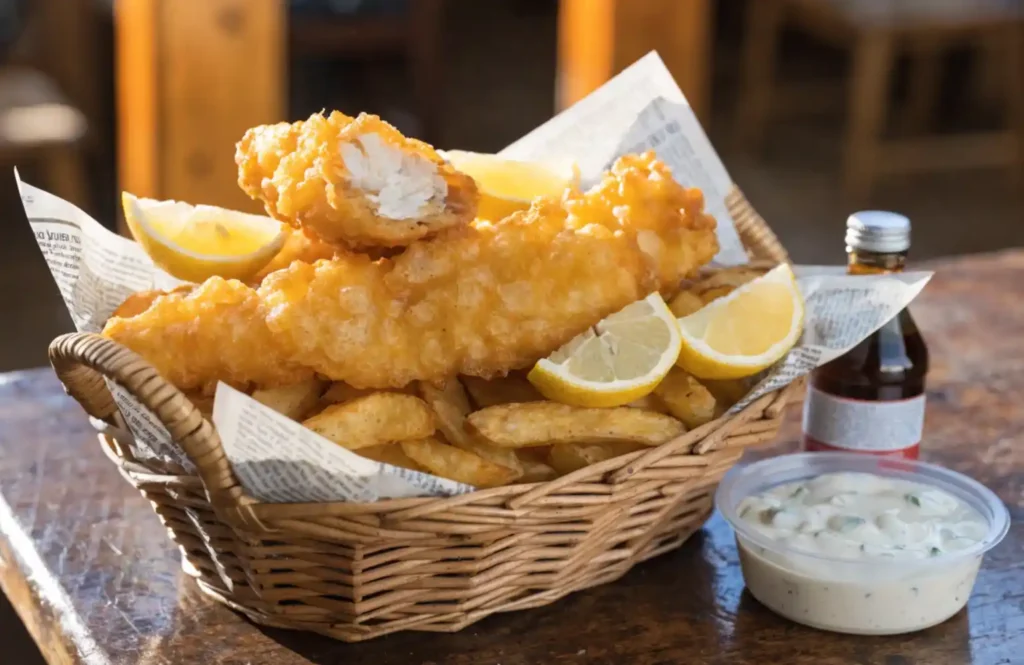
Crispy golden batter, flaky white fish, perfectly crispy chips – this fish and chips recipe delivers authentic pub-style results in your own kitchen. No greasy disappointment, just proper British comfort food.
I’m going to show you how to nail this iconic dish. Get ready for the best fish and chips you’ve ever made at home.
Prep Time: 20 minutes
Cook Time: 30 minutes
Total Time: 50 minutes
Servings: 4 servings
Why This Fish And Chips Recipe Works
Here’s what makes this homemade fish and chips absolutely brilliant. The beer batter creates incredibly light, crispy coating that stays crunchy.
The chips (that’s fries to Americans) get double-fried for perfect texture. Fluffy inside, crispy outside – exactly how they should be.
I spent years trying to recreate the fish and chips from my favorite London pub. This recipe finally cracked the code.
The secret is in the technique and timing. Follow these steps and you’ll get restaurant-quality results every single time.
The Essential Ingredients
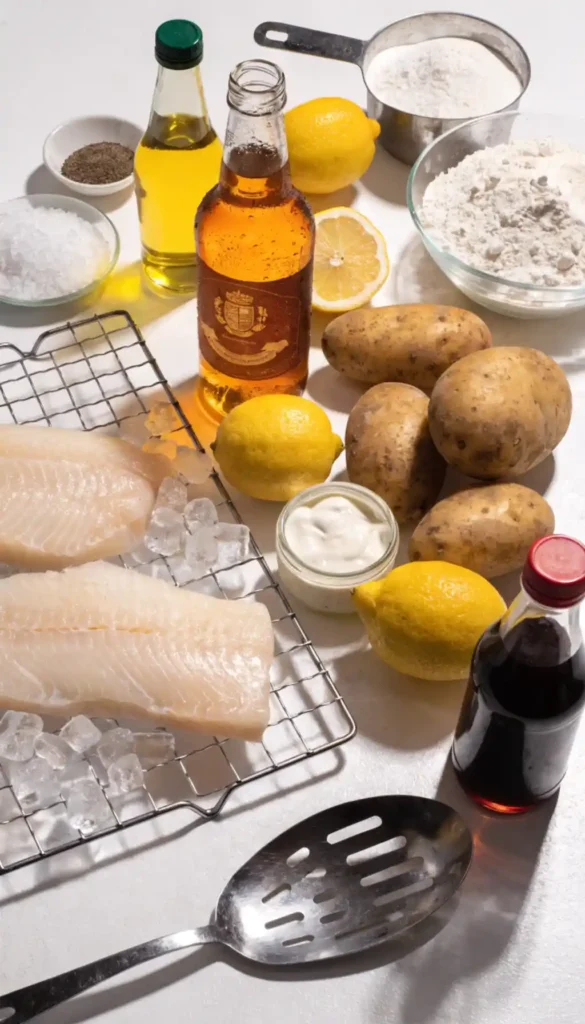
Let’s break down what you need for this british fish and chips classic. Quality ingredients make a noticeable difference here.
For the Fish:
- 4 firm white fish fillets (cod or haddock, 6 oz each)
- 1½ cups all-purpose flour (divided)
- 1 teaspoon baking powder
- 1 teaspoon salt
- ½ teaspoon black pepper
- 1 cup cold beer (lager works best)
- Vegetable oil for frying
For the Chips:
- 4 large russet potatoes
- Vegetable oil for frying
- Salt to taste
Now For Serving:
- Malt vinegar
- Tartar sauce
- Mushy peas (optional but traditional)
- Lemon wedges
Choosing the Right Fish
Cod is traditional and has perfect flaky texture. It’s mild and holds up beautifully to frying.
Haddock works equally well. Slightly sweeter than cod but similar texture.
Halibut creates a more premium version. It’s firmer and meatier.
Walleye fish and chips is popular in the Midwest. The fish is delicate and sweet.
Any firm white fish works honestly. Just avoid oily fish like salmon or mackerel.
Understanding Beer Batter
The beer creates the lightest, crispiest batter possible. The carbonation and yeast make it airy.
Use cold beer straight from the fridge. Temperature matters for texture.
Lager or pale ale works best. Dark beers can make the batter taste bitter.
Don’t overmix the batter. Lumps are fine – they create extra crispy bits.
Have you noticed how pub fish always has that signature light, golden coating? Beer batter is the secret.
Preparing Perfect Chips
Cut potatoes into thick fries, about ½ inch wide. Uniform size ensures even cooking.
Soak cut potatoes in cold water for at least 30 minutes. This removes excess starch.
Dry them thoroughly with paper towels. Water and hot oil are enemies. :/
The double-frying technique is non-negotiable. First fry cooks them through, second fry crisps them up.
Setting Up Your Frying Station
Use a large, heavy pot or Dutch oven for frying. Deep sides prevent oil splatter.
Fill with oil to about 3 inches deep. You need enough for fish to float.
A thermometer is essential for safety and results. Guessing oil temperature creates disasters.
Have a wire rack over a baking sheet ready. This drains excess oil.
Keep paper towels nearby for blotting. They help remove surface oil.
First Fry for the Chips
Heat oil to 325°F for the first fry. This lower temperature cooks potatoes through without browning.
Fry potatoes in batches for 4-5 minutes. They should be soft but still pale.
Don’t crowd the pot. Overcrowding drops oil temperature dramatically.
Remove with a slotted spoon or spider. Drain on the wire rack.
Let them cool completely. You can do this step hours ahead if you want.
Making the Beer Batter
Whisk together 1 cup flour, baking powder, salt, and pepper in a large bowl. Mix thoroughly.
Pour in cold beer gradually while whisking. The batter should be thick but pourable.
Let it rest for 10 minutes. This allows the flour to hydrate properly.
Meanwhile, pat fish fillets completely dry. Wet fish makes batter slide off.
Place remaining ½ cup flour in a shallow dish. This is your dredging flour.
Battering and Frying the Fish
Heat oil to 375°F for frying fish. This higher temperature creates crispy coating.
Dredge each fillet in plain flour first. Shake off excess.
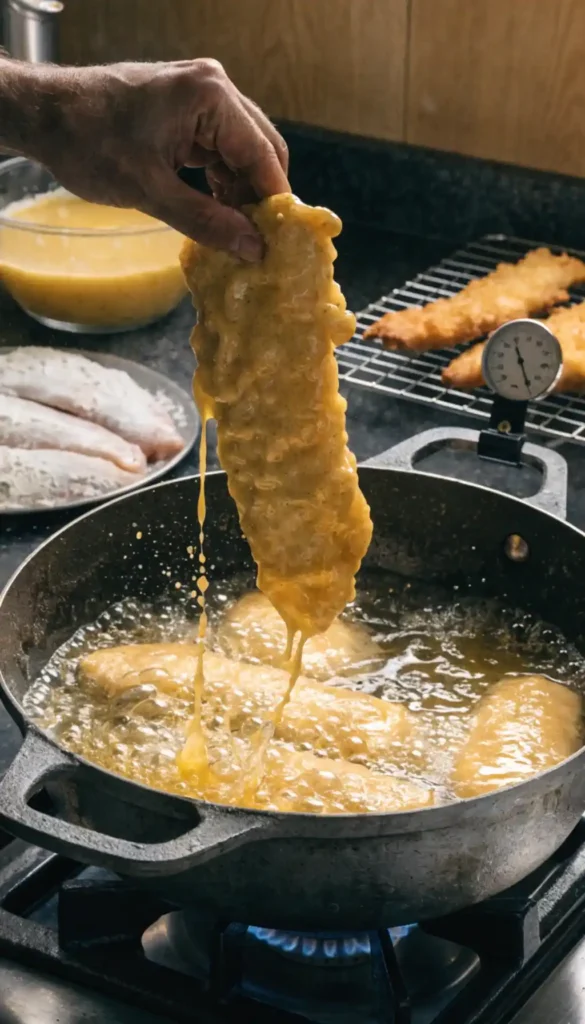
Dip floured fish into beer batter. Let excess drip back into the bowl.
Carefully lower fish into hot oil. Work gently to avoid splashing.
Fry 2 pieces at a time maximum. Overcrowding drops oil temperature too much.
Cook for 6-8 minutes until deep golden brown. Flip halfway through for even cooking.
Remove when the batter is crispy and golden. Drain on the wire rack.
Keep finished fish warm in a 200°F oven. Cover loosely with foil to prevent sogginess.
Second Fry for Maximum Crispiness
Heat oil back to 375°F for the second chip fry. High heat creates that essential crunch.
Fry the par-cooked chips in batches for 3-4 minutes. They should turn deep golden.
They’ll bubble vigorously as moisture evaporates. This is creating that crispy exterior.
Remove when golden and crispy. Drain briefly, then season immediately with salt.
Hot chips absorb salt better. Don’t wait until they cool.
Plating Like a Pro
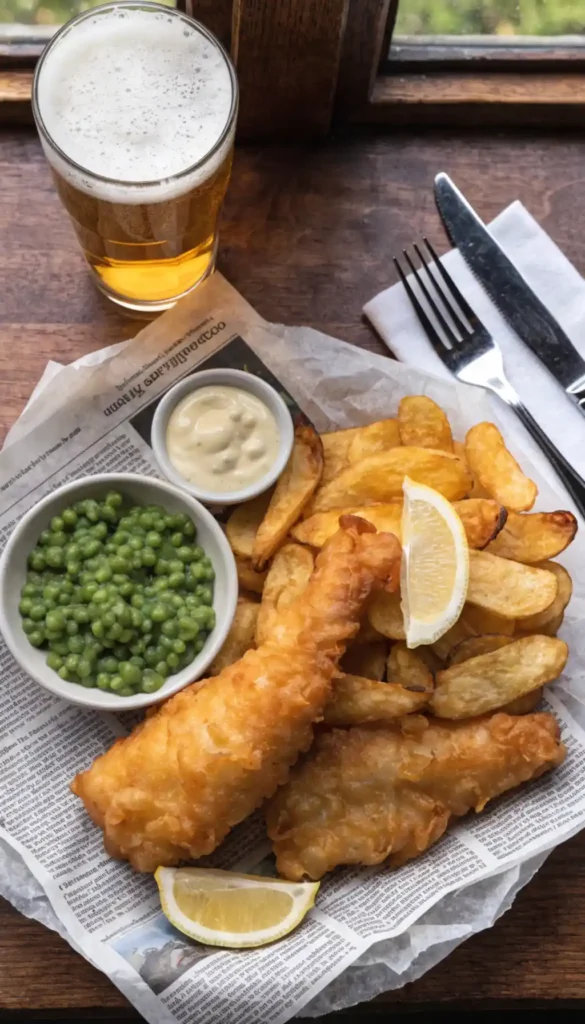
Traditional fish and chips plating uses newspaper. Lined with parchment, of course.
Pile chips generously on the plate. They’re half the appeal.
Place fish on top or alongside. Show off that gorgeous golden coating.
Add lemon wedges for brightness. Squeeze over everything before eating.
Serve tartar sauce and malt vinegar on the side. Both are essential accompaniments.
Mushy peas complete the authentic experience. They’re traditional British sides.
Air Fryer Adaptation
Want air fryer fish and chips? The method differs but works beautifully.
Spray fish with oil before air frying at 400°F for 12 minutes. Flip halfway through.
Air fry chips at 380°F for 20 minutes. Shake the basket every 5 minutes.
The texture differs slightly from deep-fried. Still delicious but lighter and less indulgent.
FYI, you’ll save significant calories with the air fryer method. Health-conscious folks appreciate this.
Baked Fish And Chips Option
Baking creates healthy fish and chips without sacrificing too much flavor. Preheat oven to 450°F.
Use panko instead of beer batter for baking. It crisps better in dry heat.
Spray generously with oil. Without moisture, it won’t crisp properly.
Bake chips for 25-30 minutes, flipping once. Bake fish for 15 minutes.
The texture won’t match fried versions. But it’s genuinely good and much lighter.
Tartar Sauce From Scratch
Mix ¾ cup mayo with 2 tablespoons chopped pickles. Add 1 tablespoon lemon juice.
Stir in 1 teaspoon capers and fresh dill. Season with salt and pepper.
Homemade tartar sauce tastes infinitely better than jarred. Takes 3 minutes.
Make it ahead and refrigerate. Flavors improve after a few hours.
Making Mushy Peas
Cook frozen peas according to package. Drain but reserve some cooking liquid.
Mash roughly with butter, salt, and pepper. Add cooking liquid until desired consistency.
They should be chunky, not smooth. The name is accurate – they’re literally mushy.
This traditional side complements the richness perfectly. The slight sweetness balances fried food.
Common Mistakes to Avoid
Using warm beer makes thin, gluey batter. Always use cold beer straight from the fridge.
Overcrowding the fryer drops oil temperature. This creates greasy, soggy food.
Not drying fish properly makes batter slide off. Pat those fillets bone dry.
Cutting potatoes too thin makes them burn before cooking through. Keep them thick.
Serving immediately after frying without draining creates oil puddles. Always drain properly.
Storage and Reheating
Leftover fish keeps refrigerated for 2 days maximum. Fish doesn’t store as well as chips.
Reheat fish in a 375°F oven for 10 minutes. This restores some crispiness.
Never microwave fried fish. It becomes soggy rubber instantly.
Chips reheat better than fish. Oven or air fryer both work well.
IMO, fish and chips are best eaten immediately. But leftovers are acceptable.
Sides and Accompaniments
Cole slaw adds crunch and freshness. The acidity cuts through rich fried food.
A simple green salad balances the meal. Keep the dressing light.
Pickled onions are traditional British accompaniments. The tang complements everything.
A pint of beer completes the pub experience. When in doubt, choose lager.
Why Homemade Beats Takeaway
How to make fish and chips at home costs about $15 for four people. Takeaway charges $12-15 per person.
Your oil is fresh. Restaurant fryers use oil repeatedly until it’s dark.
You control the quality of fish. No mystery cuts or questionable freshness.
The satisfaction of nailing this dish yourself is genuinely rewarding. Plus your house smells amazing.
Safety Considerations
Never fill the pot more than halfway with oil. Hot oil expands when you add food.
Keep a lid nearby to smother potential oil fires. Never use water on oil fires.
Use long tongs or a spider for adding and removing food. Protect yourself from splatter.
Turn off heat before adding food if you’re nervous. Better safe than burned.
Watch children and pets carefully. Hot oil is seriously dangerous.
Budget-Friendly Tips
Buy whole fish fillets on sale and portion them yourself. Pre-portioned costs more.
Use inexpensive white fish. Cod costs more than similar alternatives.
Reuse frying oil 2-3 times. Strain it after cooling and store properly.
Skip the tartar sauce and make your own. Homemade costs pennies.
Final Thoughts on Fish And Chips Perfection
This easy fish and chips recipe proves authentic British comfort food is totally achievable at home. The technique isn’t difficult once you understand the steps.
The combination of crispy batter, flaky fish, and perfect chips creates pure satisfaction. Every component plays its role beautifully.
Once you nail this, you’ll crave it regularly. The homemade version seriously competes with the best fish shops.
So heat that oil and get frying. Your inner Brit is about to be very happy.
FAQs
What’s the best fish for fish and chips? Cod and haddock are traditional choices with perfect flaky texture. Halibut, pollock, or any firm white fish work well too. Avoid oily fish like salmon or tuna – they don’t suit this preparation.
Can I make fish and chips without beer? Yes! Substitute club soda or sparkling water for beer. The carbonation is what creates light, crispy batter. The flavor changes slightly but the texture stays excellent.
Why is my batter soggy instead of crispy? Common causes: oil temperature too low, batter too thick, fish not dried properly, or overcrowding the fryer. Use a thermometer and maintain 375°F for crispiest results.
Can I prep anything ahead of time? Absolutely! Cut and soak potatoes up to 4 hours ahead. Complete the first fry for chips hours early. Make batter 30 minutes ahead. Just fry fish fresh right before serving.
How do I keep everything hot while frying in batches? Keep finished fish and chips in a 200°F oven on a wire rack. Don’t cover tightly or they’ll steam and lose crispiness. Loosely tenting with foil works fine.
Fish and Chips
Ingredients
Method
- Cut potatoes into thick fries, about ½ inch wide and soak them in cold water for at least 30 minutes to remove excess starch.
- Dry the potatoes thoroughly with paper towels to avoid oil splatter.
- Heat oil to 325°F for the first fry.
- Fry potatoes in batches for 4-5 minutes until soft but pale.
- Remove from oil with a slotted spoon and drain on a wire rack to cool completely.
- In a large bowl, whisk together 1 cup flour, baking powder, salt, and pepper.
- Gradually pour in cold beer while whisking until the batter is thick but pourable.
- Let the batter rest for 10 minutes.
- Heat oil to 375°F. Dredge fish fillets in plain flour, shaking off excess.
- Dip floured fish into the beer batter and carefully lower into hot oil.
- Fry in batches for 6-8 minutes until deep golden brown, turning halfway through.
- Drain on a wire rack and keep warm in a low oven.
- Heat oil back to 375°F for the second fry.
- Fry par-cooked chips in batches for 3-4 minutes until golden.
- Season with salt immediately after removing.
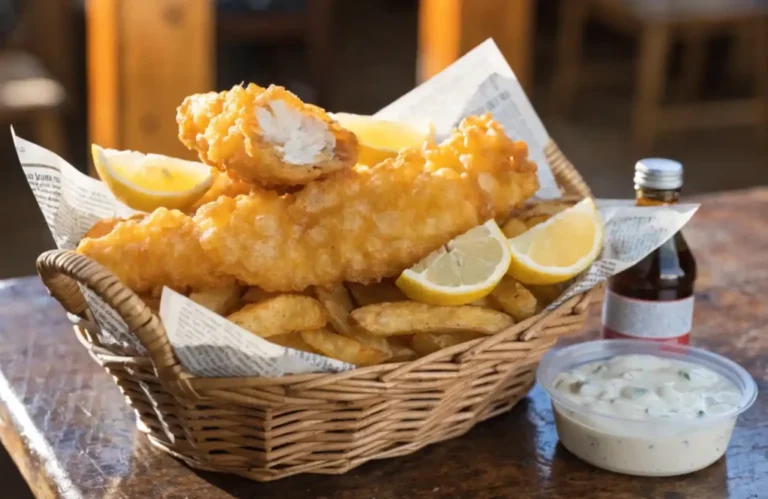
- Serve chips generously piled, topped with fish, and add lemon wedges, tartar sauce, and malt vinegar on the side.