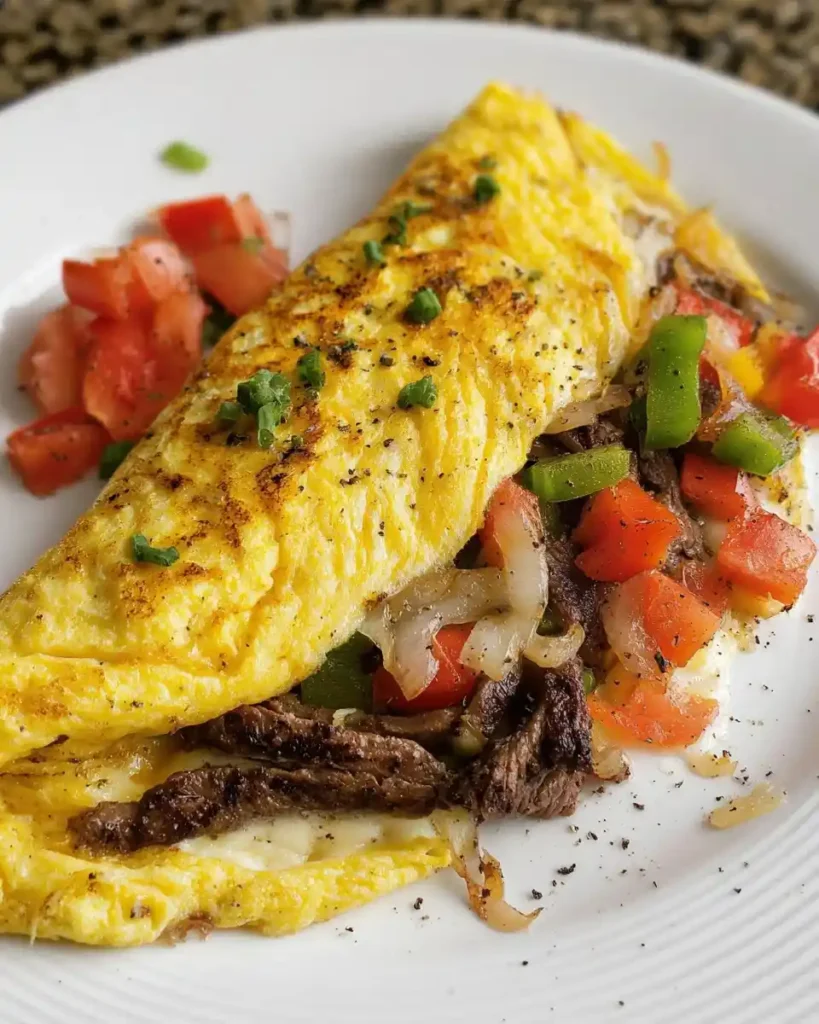
What if your two favorite things — a classic Philly cheesesteak and a fluffy breakfast omelette — had a brilliant, delicious baby? That’s exactly what a Philly Cheesesteak Omelette is. Tender steak, sautéed peppers and onions, and melted provolone all wrapped inside perfectly cooked eggs. Breakfast just got a serious upgrade.
I started making this after a Sunday where I had leftover sirloin in the fridge and zero interest in eating plain scrambled eggs. That first bite stopped me in my tracks. It’s been a weekend staple ever since — the kind of breakfast that makes people think you actually planned something special.
Servings and Prep Time
- Servings: 2
- Prep Time: 10 minutes
- Cook Time: 15 minutes
- Total Time: About 25 minutes
Why a Philly Cheesesteak Omelette Just Makes Sense
Have you ever thought about how well the flavors of a Philly cheesesteak translate to breakfast? The savory steak, the sweet caramelized onions, the bite of green pepper, the gooey cheese — every element works just as well in an egg wrapper as it does in a hoagie roll.
This Philly Cheesesteak Omelette also happens to be naturally low-carb, high in protein, and takes under 30 minutes start to finish. It delivers big flavor without any of the complexity that usually comes with a dish that tastes this good. That’s a rare combination.
Ingredients for Philly Cheesesteak Omelette
Here’s everything you need for two omelettes:
For the Filling:
- 6 oz sirloin steak, thinly sliced (or leftover cooked steak)
- 1 tablespoon olive oil
- 1/2 medium white onion, thinly sliced
- 1/2 medium green bell pepper, thinly sliced
- 1/4 teaspoon salt
- 1/8 teaspoon black pepper
For the Omelette:
- 4 large eggs
- 2 tablespoons whole milk or water
- 1/4 teaspoon salt
- 1/8 teaspoon black pepper
- 1 teaspoon unsalted butter (per omelette)
For Topping:
- 4 slices provolone cheese (2 per omelette)
- 1/4 cup diced fresh tomato (optional garnish)
How to Make a Philly Cheesesteak Omelette
Step 1: Prep the Steak for Quick Cooking
If you’re using raw sirloin, pop it in the freezer for 15 to 20 minutes before slicing. Partially frozen meat slices much thinner and more evenly than fully thawed meat — and thin slices are what make the filling tender rather than chewy inside the omelette.
Slice the steak against the grain into strips no thicker than 1/8 inch. Thin slices cook in under a minute in a hot pan and stay juicy. Thick, uneven pieces will overcook before the exterior browns, leaving you with tough, dry steak in every bite.
Step 2: Sauté the Vegetables Until Properly Caramelized
Heat a medium skillet over medium heat and add the olive oil. Once it shimmers, add the sliced onion and green bell pepper together. Spread them into a single layer and let them cook without stirring for 2 full minutes before you move them around.
That initial undisturbed cooking lets moisture evaporate and the natural sugars in the onion start to concentrate and brown. This caramelization is what gives the filling its sweetness — stirring too often keeps the vegetables steaming rather than browning, and you lose that flavor depth. Continue cooking for another 3 to 4 minutes, stirring occasionally, until the onion turns golden and the pepper softens.
Step 3: Cook the Steak Strips Briefly
Push the sautéed vegetables to the edge of the skillet and increase the heat to medium-high. Add the sliced steak strips to the center of the pan in a single layer. Let them cook for 60 to 90 seconds without touching them — you want a quick sear, not a slow steam.
Flip the strips and cook for another 30 to 60 seconds until just cooked through. Immediately stir the steak together with the onions and peppers, season with salt and black pepper, and remove the filling from the heat. Don’t leave the steak on the heat after mixing — it continues to cook from residual heat in the pan and can toughen quickly. Set the filling aside in a warm bowl while you cook the omelettes.
Step 4: Beat the Eggs Properly
Crack 4 eggs into a mixing bowl. Add the milk (or water), salt, and pepper. Whisk vigorously for a full 60 seconds until the mixture looks uniformly pale yellow with visible bubbles throughout. The whisking incorporates air into the eggs, which creates a lighter, fluffier omelette rather than a dense, flat one.
FYI, water makes a slightly lighter omelette than milk since it creates more steam during cooking. Milk adds a subtle creaminess. Both work well — use whichever you prefer or have on hand. Just make sure you whisk long enough that the yolks and whites are fully combined with no streaks remaining.
Step 5: Cook the First Omelette
Place a non-stick skillet over medium-low heat and add 1 teaspoon of butter. Let it melt and foam, then tilt the pan so the butter coats the entire surface. Once the foam subsides, pour in half the egg mixture (about 2 eggs worth).
Let the eggs sit undisturbed for 30 seconds until the edges start to look set. Then use a silicone spatula to gently lift the cooked edges and tilt the pan so the liquid egg flows underneath and contacts the hot surface. Repeat this around the entire perimeter. This technique cooks the omelette evenly without flipping, preventing it from tearing or breaking.
Step 6: Add the Filling and Cheese at the Right Moment
When the egg looks mostly set on top but still has a very slight sheen — not wet, not dry — add half the steak and vegetable filling to one half of the omelette. Lay 2 slices of provolone cheese directly on top of the filling. The residual heat from the eggs and filling will start melting the cheese immediately.
Don’t wait until the eggs are fully dry before adding the filling. A slightly underdone egg when you fold it will finish cooking from the heat of the filling and the folding process. Waiting too long creates a rubbery omelette that tears when you fold it.
Step 7: Fold and Finish the Omelette
Use the spatula to fold the empty half of the omelette over the filled half. Press down gently with the spatula for 10 to 15 seconds to seal the fold and help the cheese melt fully inside. You’ll see the cheese start to ooze out slightly at the edges — that’s the sign it’s melted properly.
Slide the omelette onto a plate, seam side down. The folded shape holds the filling inside cleanly and the presentation looks intentional even though it took you about 3 minutes. Repeat the entire process for the second omelette. Scatter diced fresh tomato over the top before serving if you want a pop of brightness and acidity.
Tips for Omelette Success Every Time
- Use a non-stick skillet — stainless steel or cast iron works for experienced cooks, but non-stick gives you far more control and forgiveness.
- Keep the heat at medium-low — high heat sets the eggs too fast and creates browning on the bottom before the top cooks through.
- Don’t overfill — too much filling makes folding impossible. Stick to the quantities listed and resist the urge to pile it higher.
- Rest the filling before using — hot filling added to cooking eggs can overcook the egg in contact with it; letting it cool slightly for 60 seconds prevents this.
- Whisk thoroughly — under-whisked eggs cook unevenly and produce a rubbery, uneven texture.
Variations to Try
This Philly Cheesesteak Omelette adapts well to different taste preferences and what you have available:
- Cheese options: Cheddar, American, mozzarella, or pepper jack all melt well and each brings a different flavor note. Provolone is traditional but not mandatory.
- Vegetable additions: Sliced mushrooms sautéed with the onions and peppers add an earthy, meaty quality that pairs beautifully with the steak.
- Spicy version: Add sliced jalapeños to the vegetable sauté or use pepper jack cheese instead of provolone.
- Lighter version: Use 2 whole eggs plus 2 egg whites per omelette to reduce calories while keeping the structure.
- No-steak option: Substitute thinly sliced portobello mushroom strips for steak — sauté them exactly the same way for a satisfying vegetarian version.
What to Serve Alongside This Dish
The Philly Cheesesteak Omelette is filling on its own, but these sides round out a complete breakfast:
- Crispy hash browns or home fries — a classic pairing that adds starchy satisfaction
- Fresh fruit salad — the brightness and acidity contrast the richness of the steak and cheese
- Toast or an English muffin — keeps things simple and provides something to soak up any filling that escapes
- Black coffee or fresh orange juice — both cut through the richness of the eggs and cheese nicely
FAQs About Philly Cheesesteak Omelette
Can I use leftover cooked steak for this recipe? Absolutely — and it actually makes the process faster. Slice the leftover steak thin and just warm it in the skillet with the sautéed vegetables for about 60 seconds before setting the filling aside. Cold steak from the fridge benefits from a quick warm-through to avoid cooling the omelette when you add the filling.
What’s the best cut of steak to use for this recipe? Sirloin works great because it’s flavorful, affordable, and stays tender when sliced thin and cooked quickly. Ribeye is the most authentic Philly cheesesteak choice and delivers the richest flavor. Flank steak or skirt steak also work well — just slice them very thin against the grain.
How do I prevent my omelette from tearing when I fold it? IMO the two biggest causes of torn omelettes are heat that’s too high and eggs that are too dry before folding. Keep the heat at medium-low and fold when the top still has the faintest shine. A thin, even layer of eggs also tears less than a thick, uneven one.
Can I make the filling ahead of time? Yes. Cook the steak and vegetable filling up to 2 days in advance and store it in an airtight container in the fridge. When ready to use, warm it briefly in the microwave or a skillet before adding to the omelette. Cold filling cools the eggs too quickly and slows the cooking process.
Is this recipe gluten-free? The base recipe is completely gluten-free. Just verify that the provolone and any sauces or seasonings you add don’t contain hidden gluten additives. The core ingredients — eggs, steak, vegetables, olive oil, butter, and cheese — are all naturally gluten-free.
Final Thoughts
The Philly Cheesesteak Omelette takes two things that already work well — a great cheesesteak and a well-made omelette — and combines them into something that works even better. It’s fast, satisfying, packed with protein, and impressive enough to make on a weekend when you want breakfast to feel like an actual event.
Master the omelette technique, don’t rush the filling, and use good cheese. Those three things will make every version you cook better than the last. Now go make it before someone else eats all your leftover steak