
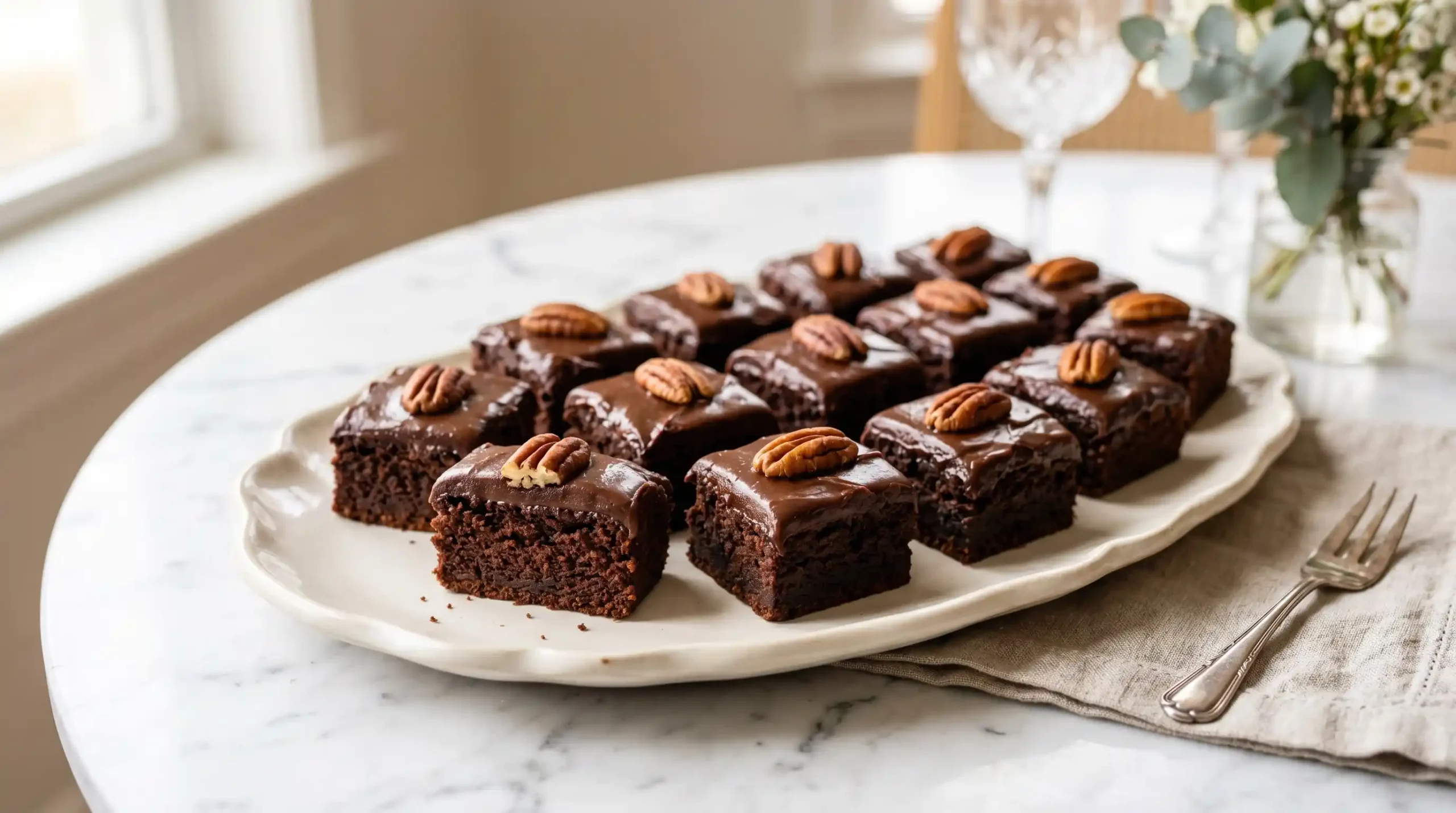
The original Texas Sheet Cake is a legendary dessert — a massive slab of deeply chocolatey, incredibly moist cake with a warm, fudgy frosting poured over the top while both are still hot. It feeds a crowd and looks effortlessly impressive. The only problem with it is that cutting and serving a sheet cake at a party involves plates, forks, and the specific chaos of people trying to take the corner piece. Texas Sheet Cake Bites solve every one of those logistical problems while delivering identical chocolate intensity in a two-bite format that guests can eat standing up, walking around, and without any utensils whatsoever.
I started making these when I needed a genuinely impressive party dessert that did not require a table full of plates and forks to serve. The Texas sheet cake flavour profile — the warm boiled cocoa frosting especially — is so specific and distinctive that people who grew up eating the original recognise it immediately, and people who have never had it before want to know what it is because nothing else tastes quite like it. Both reactions at the same dessert table are exactly what you want from a party dessert.
Have you ever made a dessert that generated more questions and enthusiasm from a party table than anything else you served? This is reliably that dessert. Let us make them properly.
What Makes Texas Sheet Cake Bites Different From Regular Chocolate Cupcakes
The distinction between Texas Sheet Cake Bites and a standard chocolate mini muffin comes down to two technique differences — the boiled cocoa-butter batter method and the poured fudge frosting. Both are specific to the Texas sheet cake tradition and produce results that standard creamed-butter chocolate cake methods cannot replicate.
Standard Chocolate Cupcake
Creams butter and sugar first, then adds eggs, flour, and cocoa. Produces a fluffy, slightly cakey texture with buttercream or ganache frosting that is thick and applied cold. Dense, rich, and heavy per bite.
Texas Sheet Cake Bite
Boils butter, water, and cocoa together first, then pours hot over dry ingredients. Produces an extraordinarily moist, almost fudge-like crumb. Topped with a warm poured frosting that sets into a thin fudgy shell. Light in texture but intensely chocolate in flavour per bite.
The boiled batter method produces a dramatically thinner batter than standard chocolate cake — it looks more like chocolate milk than cake batter at the mixing stage. This thin batter is the correct result and produces the characteristic crumb of Texas sheet cake — dense but not heavy, intensely moist, with a slight chewiness at the edges that the fluffy creamed-butter method cannot deliver. IMO, this is the single most interesting technique in American cake baking and the reason Texas sheet cake has a devoted following that no standard chocolate cake recipe ever quite generates.
What You Need
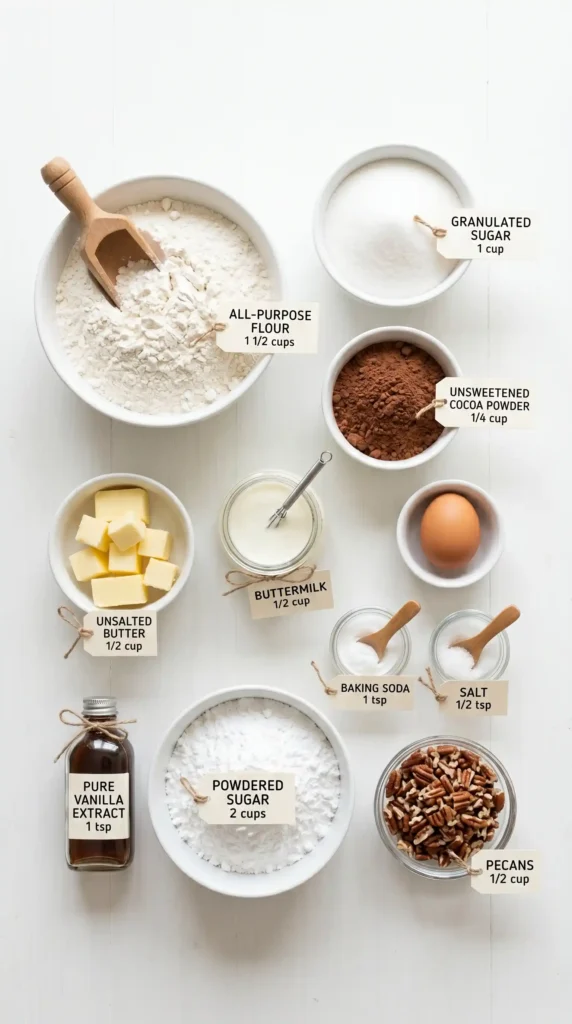
Eleven ingredients for both the bites and the frosting. Most of them are baking pantry staples. The frosting uses buttermilk as its liquid base rather than cream or milk — the slight tang of buttermilk against the sweet, rich cocoa-powdered sugar frosting produces the flavour that makes this frosting distinctive from any other chocolate frosting you have tasted. It is a small ingredient choice with a large flavour impact.
For the Chocolate Cake Bites
- 1 cup (125g) all-purpose flour
- 1 cup (200g) granulated white sugar
- 1/2 teaspoon baking soda
- 1/4 teaspoon salt
- 1/2 cup (113g) unsalted butter
- 1/4 cup (25g) unsweetened cocoa powder
- 1/2 cup (120ml) water
- 1/4 cup (60ml) full-fat buttermilk
- 1 large egg, lightly beaten
For the Texas Sheet Cake Frosting
- 1/4 cup (57g) unsalted butter
- 3 tablespoons full-fat buttermilk
- 3 tablespoons unsweetened cocoa powder
- 2 cups (240g) powdered sugar, sifted
- 1 teaspoon pure vanilla extract
The Frosting Timing Is the Most Critical Step in This Recipe — Here Is Exactly WhyTraditional Texas sheet cake applies the frosting while the cake is still warm from the oven — not hot, not cold, but warm. The warm cake absorbs a small amount of the warm poured frosting at the surface, creating an integrated fudgy layer rather than a separate topping sitting on top. Cold bites with cold frosting produce two distinct separate elements. Warm bites with warm frosting poured over them produce the characteristic texture where the frosting and cake edge merge — which is the defining textural experience of proper Texas sheet cake. Make the frosting in the final 3 minutes of baking so it is warm and pourable the moment the bites come out of the oven.
How to Make Texas Sheet Cake Bites Step by Step
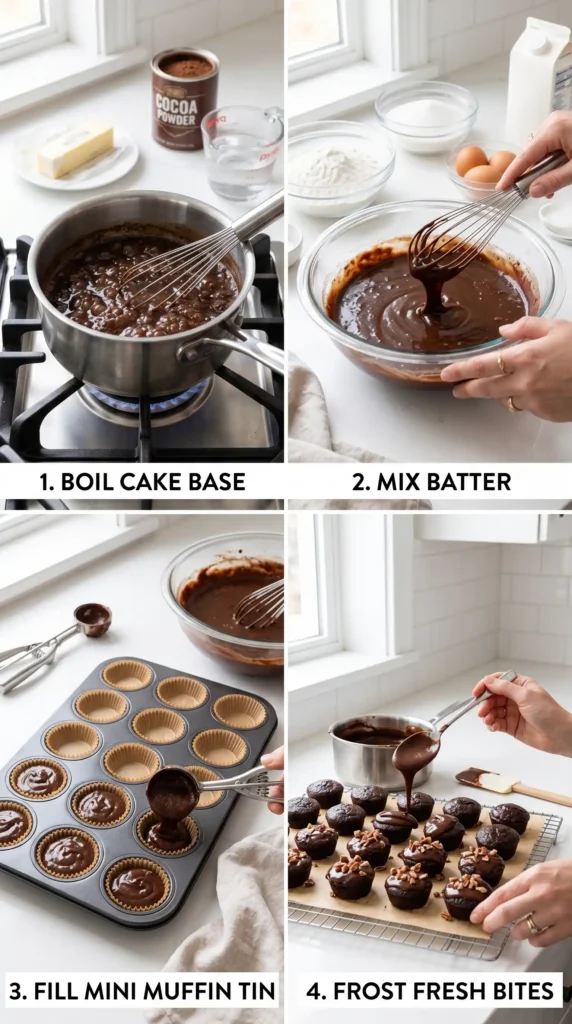
Seven stages: preheat and prepare the pan, mix the dry ingredients, boil the cocoa-butter mixture, combine to form batter, bake, make the frosting during the final bake minutes, and frost while warm. The most important timing detail is making the frosting while the bites bake rather than after — the frosting and the bites should reach the serving moment simultaneously while both are still warm.
Step 1: Preheat the Oven and Prepare the Mini Muffin Pan
Preheat the oven to 163°C (325°F). The lower-than-standard baking temperature is intentional for Texas sheet cake — the very thin, liquid batter bakes more evenly at a lower temperature, producing the characteristic moist, tender result. A higher temperature produces a domed top and slightly drier crumb rather than the flat, dense, fudgy texture that defines these bites.
Grease a 24-cup mini muffin tin very generously with butter or non-stick cooking spray, paying particular attention to the top flat surface around each cup where the thin batter can spread slightly during baking. A silicone mini muffin pan eliminates sticking almost completely and makes releasing the baked bites significantly easier than standard metal pans. If using metal, grease every surface thoroughly.
Step 2: Mix the Dry Ingredients
In a large mixing bowl, whisk together the flour, granulated sugar, baking soda, and salt until the baking soda is evenly distributed throughout the flour. Do this in the bowl you will ultimately combine the wet and dry ingredients in — pouring the hot cocoa mixture directly into the dry ingredient bowl allows immediate combining while the cocoa mixture is still hot and liquid, producing the best batter consistency.
Step 3: Boil the Cocoa-Butter-Water Mixture
Combine the butter, unsweetened cocoa powder, and water in a medium saucepan. Place over medium heat and stir continuously as the butter melts. Allow the mixture to come to a full, active boil while stirring — you will see bubbles rising across the entire surface rather than just at the edges. At the full boil, remove the pan from the heat immediately. The boiling activates the cocoa and produces a deep, intense chocolate flavour that simply heating to a simmer does not achieve.
The finished boiled mixture should look glossy, dark brown, and smooth — similar in appearance to a thin chocolate sauce. It should smell intensely of chocolate from the activated cocoa. Pour this hot mixture immediately over the dry ingredients in the bowl — do not allow it to cool before combining.
Step 4: Complete the Batter
Pour the hot cocoa-butter mixture over the dry ingredients. Stir immediately with a whisk or spatula until the mixture looks combined — it will be lumpy at first. Add the buttermilk and beaten egg to the warm combined mixture. Whisk until the batter looks smooth and uniform. The finished batter will look very thin — significantly thinner than standard cupcake batter, almost as fluid as a pourable sauce. This is the correct, expected consistency for Texas sheet cake. Do not add more flour.
Step 5: Fill the Mini Muffin Tin and Bake
Using a tablespoon, small ladle, or a squeeze bottle (which provides the most control), fill each mini muffin cup approximately two-thirds full. The thin batter spreads slightly during baking and rises modestly — filling to two-thirds provides enough room for a slight dome to form at the top without overflow. Overfilling produces bites that spill over the edges of the cup, fuse together, and cannot be removed cleanly from the pan.
Place the filled pan on the centre rack of the preheated 325°F oven. Bake for 10–12 minutes. The bites are done when a toothpick inserted into the centre of one comes out clean or with just one or two moist crumbs. The tops will look set and very slightly domed. They should spring back very gently when pressed at the centre — if they sink back down rather than springing, they need 1–2 more minutes.
Step 6: Make the Frosting During the Final 3 Minutes of Baking
When the bites have about 3 minutes remaining in the oven, begin making the frosting. Combine the butter, buttermilk, and cocoa powder in a clean medium saucepan over medium heat. Stir continuously as the butter melts and bring the mixture to a full boil — the same technique as the batter’s cocoa mixture. At the full boil, remove from heat immediately.
Add the vanilla extract and sifted powdered sugar to the hot cocoa-buttermilk mixture. Whisk vigorously until the frosting looks smooth and completely lump-free — the hot liquid dissolves the powdered sugar rapidly if it was sifted before adding. Unsifted powdered sugar forms stubborn lumps that do not dissolve easily in the frosting. Sift the sugar before the cocoa mixture boils so you can add it immediately when needed. The finished frosting should look glossy, pourable, and smooth, similar in consistency to warm caramel sauce.
Step 7: Frost the Warm Bites and Allow to Set
Remove the mini muffin pan from the oven. Allow the bites to cool in the pan for exactly 5 minutes — enough time to set sufficiently for clean removal but not so long that they cool completely. Remove the bites from the pan and place on a wire rack set over a piece of parchment or foil to catch frosting drips. While the bites are still warm, spoon the warm frosting over each one. Use approximately one teaspoon of frosting per bite — enough to create a complete coating that drips slightly down the sides.
The warm frosting on the warm Texas Sheet Cake Bites will initially look very liquid and runny. Allow them to rest at room temperature for 10–15 minutes until the frosting sets from liquid to a fudgy, slightly firm shell — the characteristic texture that makes this frosting unlike any other. Do not refrigerate to speed the setting — refrigeration produces a dull, firm frosting rather than the glossy, slightly chewy set that room temperature produces.
Variations Worth Making
Pecan Texas Sheet Cake Bites
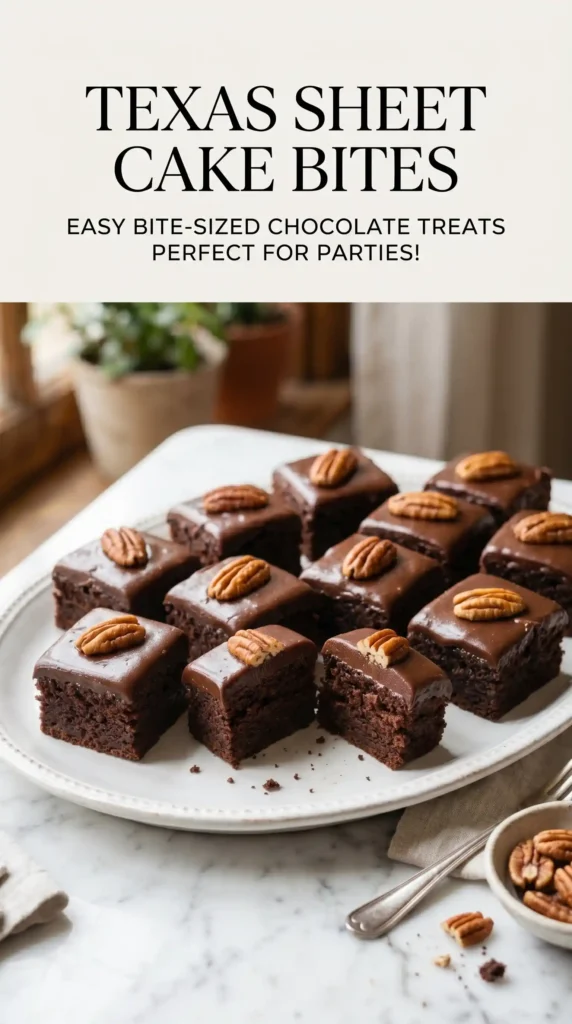
After frosting each bite while the frosting is still warm and sticky, immediately press a single toasted pecan half into the top of each frosted bite. The pecan sinks slightly into the warm frosting and adheres permanently as the frosting sets. Toasted pecans are the classic Texas sheet cake garnish — the combination of sweet fudgy frosting and toasted nut is one of the most reliable flavour pairings in American baking.
Mocha Texas Sheet Cake Bites
Add 1 tablespoon of instant espresso powder to the water before boiling it with the butter and cocoa. The espresso amplifies the chocolate flavour without making the bites taste strongly of coffee — it produces the same flavour intensification effect that espresso powder has in most chocolate baked goods. Add an additional teaspoon of instant espresso to the frosting alongside the vanilla for a more pronounced coffee-chocolate mocha character throughout both cake and frosting.
Storage Tips
Store Texas Sheet Cake Bites at room temperature in an airtight container for up to 3 days. The frosting maintains its characteristic fudgy texture best at room temperature — refrigerating the frosted bites makes the frosting hard and dry rather than the slightly soft, fudgy texture that defines it. If your kitchen is very warm, refrigerate briefly and bring to room temperature for 15 minutes before serving.
Unfrosted baked bites freeze well for up to 2 months — wrap individually or in a single layer in an airtight container. Thaw at room temperature for 30 minutes and frost with freshly made warm frosting for the best possible result from frozen bites. The frosting does not freeze well and should always be made fresh when needed.
Frequently Asked Questions
Why is my Texas Sheet Cake batter so thin? Did I make an error?
No — the very thin batter is entirely correct and expected. The Texas sheet cake method combines a hot cocoa-butter mixture with dry ingredients and buttermilk, producing a batter that looks almost pourable rather than scoopable. This is fundamentally different from standard cupcake batter and produces the characteristic moist, dense-but-light crumb of Texas sheet cake that creamed-butter methods cannot replicate. If your batter looks as thin as chocolate milk, you have made it correctly. Do not add more flour — additional flour produces a drier, less characteristic result.
Can I make Texas Sheet Cake Bites in a standard-size muffin tin?
Yes — the batter quantity in this recipe produces approximately 12 standard muffin-size cakes rather than 24 mini bites. Fill each standard muffin cup two-thirds full and increase the baking time to 15–18 minutes at the same 325°F temperature. The standard-size version requires more frosting — increase all frosting quantities by 50% to ensure adequate coverage. The larger format produces a more fork-required, plated dessert experience rather than the hand-held, party-appropriate bite of the mini version.
Can I substitute the buttermilk with regular milk?
Yes — make a buttermilk substitute by adding 1/2 teaspoon of white vinegar or fresh lemon juice to 1/4 cup of whole milk, stirring, and allowing to sit for 5 minutes until the milk curdles slightly. Use this in the batter in place of buttermilk. For the frosting, mix 3/4 teaspoon of white vinegar with 3 tablespoons of whole milk and allow to sit 5 minutes before using. The substitute replicates buttermilk’s acidity and produces a result very close to the original, though slightly less tangy in the finished frosting.
How do I get the frosting to set properly and why won’t mine set?
The frosting sets at room temperature through the gradual cooling of the butter and sugar mixture from its warm poured state to a fudgy, firm shell. Three reasons it may not set properly: the frosting was made with unsifted powdered sugar that produced an uneven consistency that does not set cleanly; the bites were refrigerated before the frosting set (refrigeration rushes setting but produces a dry, dull result rather than a glossy fudgy one); or there was too much liquid (buttermilk measured generously). Ensure powdered sugar is sifted, cool at room temperature, and measure buttermilk precisely.
Can I double this recipe for a large batch?
Yes — double every ingredient in both the batter and the frosting and use two 24-cup mini muffin tins. Bake both pans simultaneously on the same oven rack if they fit, or on different racks with the pans swapped and rotated at the 6-minute halfway mark. Make the frosting in one double batch — the larger quantity of hot mixture will maintain its warmth and pourability for longer, giving you more time to frost two pans of bites. A double batch produces 48 bites, which suits parties and events well.
Final Thoughts
These Texas Sheet Cake Bites deliver the most specifically distinctive, most historically beloved chocolate dessert in American baking in a format that suits modern party serving without any compromise to the flavour or texture that makes the original special. The boiled cocoa batter, the warm poured fudge frosting, the moist-dense-light crumb — all of it transfers perfectly to the mini format and produces a dessert that consistently outperforms expectations from every person who encounters it at a table.
Keep the baking temperature low. Make the frosting during the final 3 minutes of baking so it is warm and pourable when the bites come out. Frost while the bites are still warm. Set at room temperature rather than the refrigerator. These four timing decisions produce the authentic Texas sheet cake experience in each individual bite-sized piece.
Make a batch this weekend for whoever happens to be around. Accept the inevitable request for the recipe. And resist the temptation to explain how easy they were until after everyone has finished eating — the mystique is part of the experience. IMO, it is perfectly fine to let a 30-minute recipe look like significantly more work.
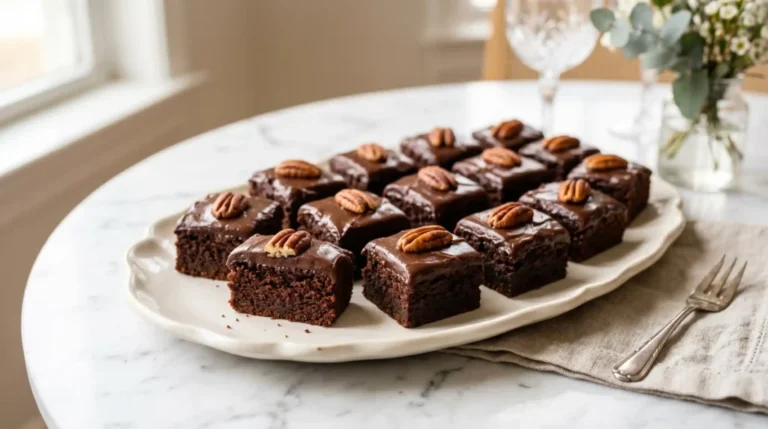
Texas Sheet Cake Bites
Ingredients
Method
- Preheat the oven to 325°F (163°C) and grease a 24-cup mini muffin tin.
- In a large mixing bowl, whisk together flour, sugar, baking soda, and salt.
- In a medium saucepan, combine butter, cocoa powder, and water. Boil while stirring, then pour the hot mixture into the dry ingredients.
- Stir immediately, then add the buttermilk and beaten egg. Whisk until smooth.
- Fill each muffin cup about two-thirds full with the batter.
- Bake for 10–12 minutes or until a toothpick comes out clean.
- In the final 3 minutes of baking, combine butter, buttermilk, and cocoa powder in a saucepan over medium heat and bring to a boil.
- Remove from heat and whisk in vanilla and powdered sugar until smooth.
- Cool bites for 5 minutes in the pan then remove and frost them with warm frosting.
- Let the frosting set at room temperature for 10–15 minutes before serving.