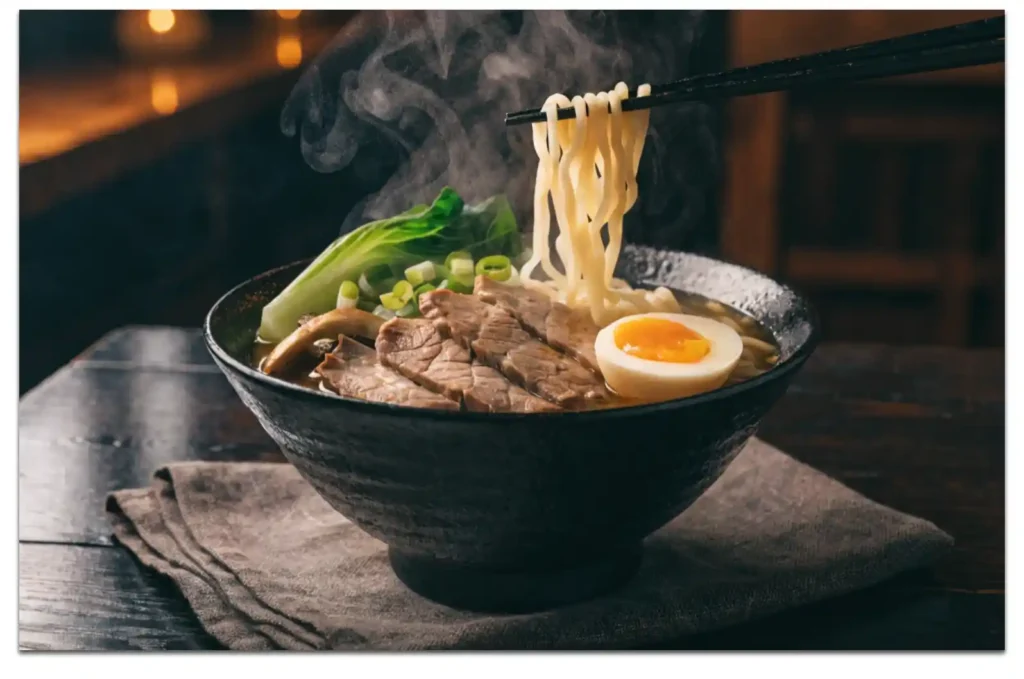
Instant ramen got you through college, but now? Now you deserve better. This beef ramen recipe transforms simple ingredients into a bowl so good, you’ll question why you ever paid $15 at restaurants.
Prep Time: 20 minutes
Cook Time: 25 minutes
Total Time: 45 minutes
Servings: 4 bowls
This homemade ramen beef creation rivals anything you’d find at fancy noodle shops. Ready to elevate your ramen game? Let’s make something spectacular happen.
Why Homemade Beats Instant
Have you ever wondered why restaurant ramen tastes so much better than instant packets? It’s not magic—it’s real ingredients and proper technique. Anyone can master this with basic skills.
I spent years perfecting this beef ramen recipes authentic approach. Tried countless variations. Made plenty of mistakes. But this version? It consistently delivers that rich, satisfying flavor everyone craves.
The broth is where magic happens. Deep, savory, complex—everything instant packets wish they could be. Fresh ingredients create layers of flavor that packets simply cannot replicate.
Plus, you control everything. Spice level, saltiness, toppings—it’s all your call. That customization makes each bowl perfect for your specific preferences. No more settling for mediocre.
Essential Ingredients
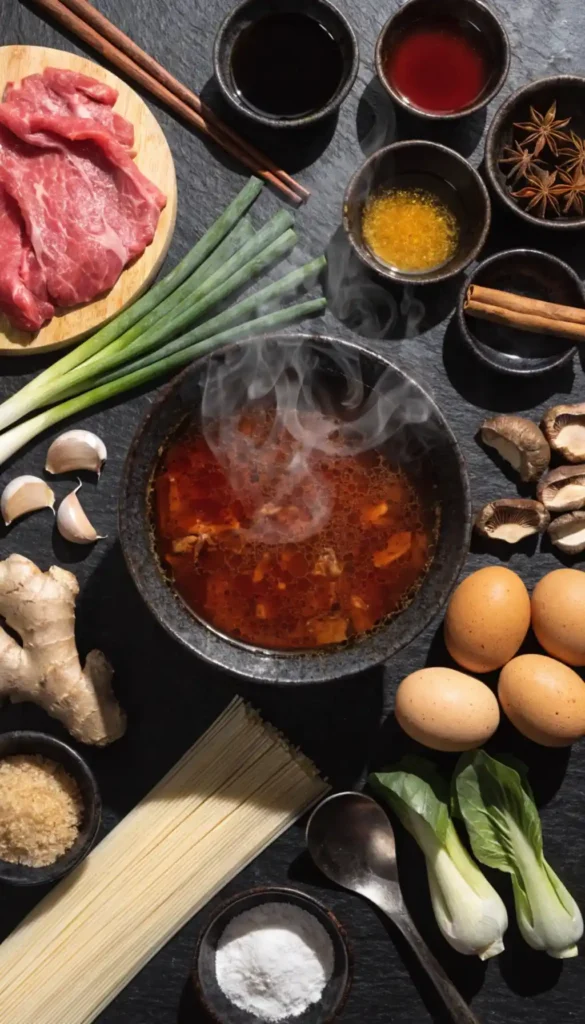
Let’s break down what you need for this Asian beef ramen recipe. Nothing too exotic or impossible to source. Just quality ingredients that create restaurant-worthy results consistently.
For the Broth:
- 6 cups beef broth
- 2 cups water
- 3 tablespoons soy sauce
- 2 tablespoons mirin
- 1 tablespoon sesame oil
- 4 cloves garlic, minced
- 1-inch piece fresh ginger, sliced
- 2 star anise
- 1 cinnamon stick
For the Beef:
- 1 pound beef sirloin or ribeye, thinly sliced
- 2 tablespoons soy sauce
- 1 tablespoon brown sugar
- 1 teaspoon cornstarch
- 1 teaspoon sesame oil
- 2 cloves garlic, minced
Now For the Noodles and Toppings:
- 16 ounces fresh or dried ramen noodles
- 4 soft-boiled eggs
- 2 cups baby bok choy
- 1 cup sliced mushrooms
- 4 green onions, sliced
- Nori sheets (optional)
- Sesame seeds for garnish
Quality ingredients matter here. Fresh ginger beats dried powder. Real beef broth trumps bouillon cubes. These choices elevate your traditional beef ramen recipe significantly.
Preparing Your Beef
Slice beef against the grain into thin strips. This technique makes each bite tender and easy to chew. With-grain slicing creates tough, chewy meat nobody enjoys.
Partially freeze the beef for 20 minutes before slicing. This firms it up, making thin, even slices easier to achieve. Professional chefs use this trick constantly.
Combine sliced beef with soy sauce, brown sugar, cornstarch, sesame oil, and minced garlic in a bowl. Mix thoroughly until every piece is coated evenly.
Let the beef marinate for at least 15 minutes. Longer is better if you have time. The marinade tenderizes while infusing flavor throughout. This step makes huge difference in taste.
Building the Broth Base
Heat a large pot over medium heat. Add sesame oil and let it warm up for 30 seconds. The oil carries flavor throughout your entire broth.
Add minced garlic and sliced ginger. Sauté for about 1 minute until fragrant. Don’t let them burn—burned garlic ruins everything. Stay attentive here.
Pour in beef broth and water. Add soy sauce and mirin. These ingredients create that signature umami flavor ramen is famous for worldwide.
Drop in star anise and cinnamon stick. These aromatics add subtle complexity and depth. They’re not overpowering—just quietly making everything taste better in the background.
Simmering for Flavor
Bring the broth to a boil, then reduce to low heat. Let it simmer gently for 15-20 minutes. This allows all those flavors to meld together beautifully.
The broth should smell incredible right now. That rich, savory aroma means you’re on the right track. If it doesn’t smell amazing, something went wrong.
Taste the broth and adjust seasoning as needed. Too salty? Add water. Not salty enough? More soy sauce. You’re the chef—trust your palate completely.
Remove and discard the ginger slices, star anise, and cinnamon stick before serving. They’ve done their job. Leaving them in makes the broth overpowering. FYI, this matters.
Cooking the Perfect Eggs
Start your soft-boiled eggs while the broth simmers. Bring a pot of water to rolling boil. Gently lower eggs in using a spoon.
Set a timer for exactly 6 minutes and 30 seconds. This timing gives you that perfect jammy yolk. Too short and it’s runny. Too long and it’s hard.
Prepare an ice bath while eggs cook. When the timer goes off, immediately transfer eggs to the ice water. This stops cooking and makes peeling easier.
Let eggs sit in ice water for 5 minutes. Peel them carefully under running water. Slice each egg in half lengthwise. The yolk should be slightly set but still creamy.
Preparing the Vegetables
Wash and trim your bok choy. Cut larger leaves in half lengthwise. Smaller ones can stay whole. They’ll cook quickly in the hot broth.
Slice mushrooms evenly—about 1/4 inch thick works perfectly. Thinner slices cook faster but can get mushy. Thicker slices stay firm but take longer.
Chop green onions, separating white and green parts. White parts go in during cooking. Green parts are for garnish. This separation creates better flavor distribution.
Have all your vegetables prepped and ready before you start assembling bowls. Organization prevents chaos when everything comes together quickly at the end.
Cooking the Noodles
Boil water in a separate pot for noodles. Never cook noodles directly in your broth—they’ll make it cloudy and starchy. Keep them separate always.
Fresh ramen noodles take 2-3 minutes. Dried noodles need 4-5 minutes. Follow package directions but start checking one minute early. Nobody wants mushy noodles.
Drain noodles but don’t rinse them unless using cold in a salad. The starch helps sauce cling better. It creates that satisfying, slurp-worthy texture.
Divide cooked noodles among four bowls immediately. They stick together when left sitting. Work quickly during this assembly stage for best results.
Searing the Beef
Heat a large skillet or wok over high heat. Add a tablespoon of oil and let it get smoking hot. High heat is crucial here.
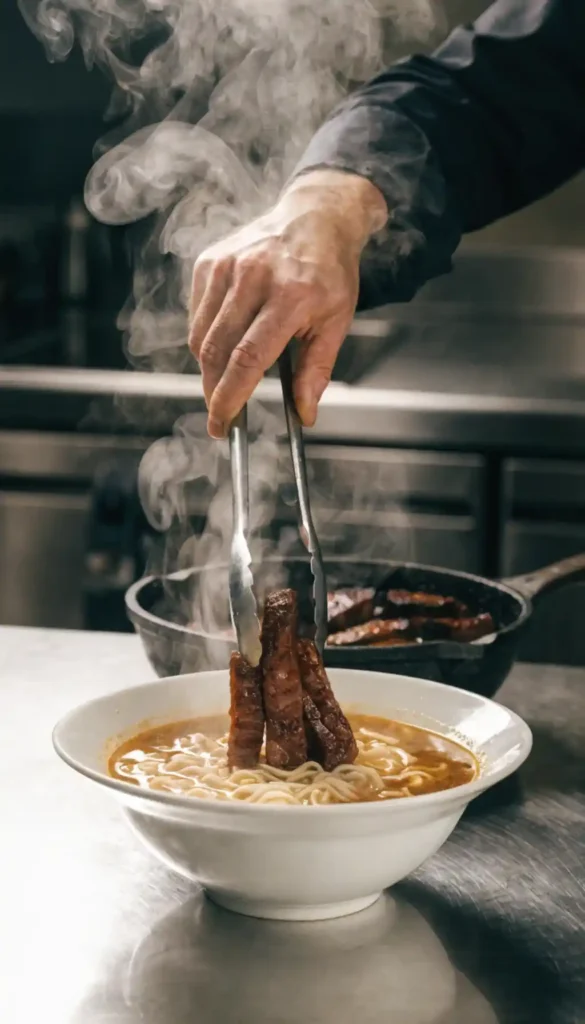
Add marinated beef in a single layer. Don’t overcrowd the pan or beef will steam instead of sear. Work in batches if necessary.
Let beef cook undisturbed for 1-2 minutes. You want that beautiful caramelized crust. Constant stirring prevents proper browning from developing.
Flip and cook another minute until beef is just cooked through. It’ll continue cooking slightly from residual heat. Overcooked beef turns tough and chewy. Nobody wants that.
Assembling Your Bowls
Place cooked noodles in each bowl first. Create a nest shape—this holds toppings better. Presentation matters even for home cooking, honestly.
Ladle hot broth over the noodles, filling about three-quarters full. The heat from broth will warm everything else. Leave room for toppings.
Add bok choy and mushrooms directly to the hot broth. They’ll cook in the residual heat perfectly. This method keeps vegetables crisp yet tender.
Arrange sliced beef on top of noodles. Fan it out nicely for visual appeal. Those caramelized edges should be visible—they’re flavor gold.
Adding Final Touches
Place a halved soft-boiled egg in each bowl. Position it prominently because it’s gorgeous. That creamy yolk enriches the broth when mixed in.
Sprinkle sliced green onions over everything. Add a pinch of sesame seeds. If using nori, place a sheet on the side of the bowl.
Drizzle a tiny bit of sesame oil over the top. Just a few drops—this isn’t sesame soup. That final touch adds aromatic depth to each spoonful.
Your yummy food ramen is ready. Serve immediately while everything is hot. Ramen waits for no one. The noodles will get soggy if left sitting.
Customization Options
Master the base recipe first, then experiment wildly. I’ve tried countless variations of these ramen recipes with instant ramen upgrades. Some work brilliantly. Others? Learning experiences.
Spicy Beef Ramen Version
Add chili oil or gochugaru to your broth. Start with one teaspoon and adjust up. You can always add heat but can’t remove it.
Top with sliced fresh jalapeños or Thai chilies. Add a dollop of chili paste directly in the bowl. These additions create that mouth-tingling heat lovers crave.
Mongolian Beef Ramen
Increase brown sugar in the marinade to three tablespoons. Add crushed red pepper flakes. This creates sweet-spicy balance Mongolian beef is famous for.
Toss beef with extra sauce after cooking. Top with extra green onions and sesame seeds. The sweet-savory combination works incredibly well with rich broth.
Ground Beef Ramen
Substitute ground beef for sliced beef. Brown it with garlic and ginger first. Season with soy sauce, brown sugar, and sesame oil similarly.
This version cooks faster and costs less. Kids often prefer ground beef too. It’s a practical adaptation that doesn’t sacrifice flavor at all.
Storage and Reheating
Store broth, noodles, and toppings separately in airtight containers. Never store them combined—noodles absorb broth and get mushy. Separation maintains quality overnight.
Broth keeps refrigerated for 4-5 days. Freeze it for up to 3 months. Just reheat on the stove until steaming hot before using again.
Cooked noodles last 2-3 days refrigerated. Rinse with cold water before storing to prevent clumping. Reheat by dunking briefly in boiling water.
Beef stays good for 3-4 days refrigerated. Reheat gently to prevent overcooking. Add it cold to hot broth—the heat warms it through perfectly.
Quick Weeknight Shortcuts
Make broth ahead on weekends. Store it refrigerated and just reheat when needed. This cuts weeknight cooking time dramatically down to 15 minutes.
Use rotisserie chicken instead of beef sometimes. Shred it and add to bowls. Different protein, same delicious results with zero cooking required.
Buy pre-sliced vegetables from the salad bar. Sure, it costs slightly more. But time savings on busy nights are absolutely worth the premium.
Keep frozen ramen noodles on hand. They cook straight from frozen in minutes. This eliminates an entire cooking step when you’re rushed. Smart preparation wins.
Cost Comparison
Restaurant ramen bowls cost $12-18 each typically. This recipe feeds four for about $25 total. That’s roughly $6 per serving—less than half price.
The beef represents the biggest expense here. Buy it on sale and freeze for later. Or use cheaper cuts like chuck roast sliced thin.
Making your own beef ramen soup beats takeout quality-wise too. Fresher ingredients, customized flavors, and zero mystery ingredients. You know exactly what you’re eating.
Batch cooking multiplies savings. Make double broth and freeze half. Future-you will appreciate having restaurant-quality ramen available instantly. Meal prep goals right there.
Ramen Hacks Worth Knowing
Add a splash of fish sauce to broth for extra umami depth. Just a teaspoon—it shouldn’t taste fishy. It adds subtle complexity most people can’t identify.
Blanch noodles in broth briefly before serving if you insist on cooking them together. This adds one minute max but keeps broth clearer overall.
Use kitchen shears to cut noodles for kids. Long noodles are hard for small children. Shorter pieces make eating easier without sacrificing taste.
Freeze leftover broth in ice cube trays. Pop out cubes to enhance other dishes later. They boost flavor in stir-fries, soups, and sauces incredibly well.
Pairing Suggestions
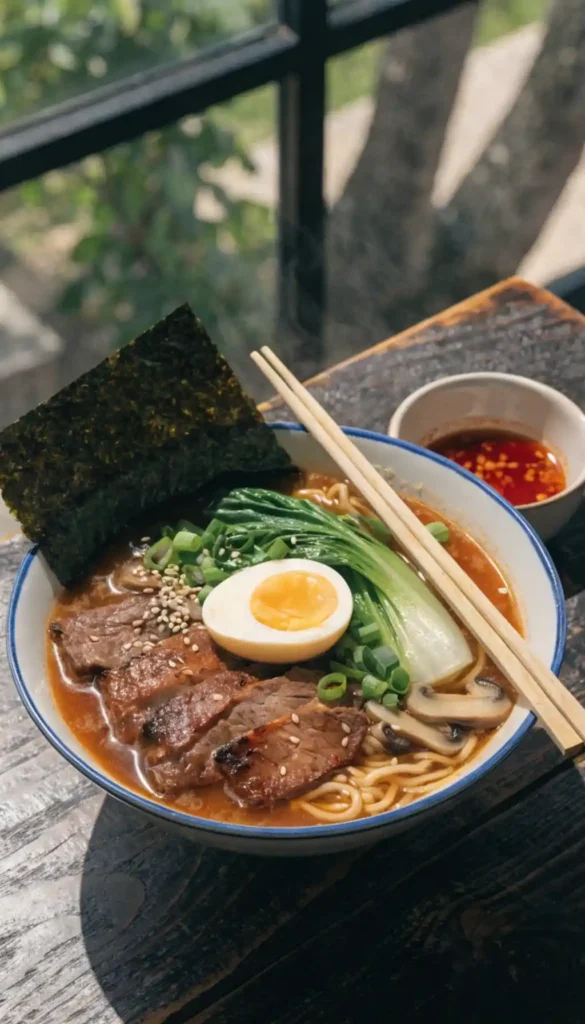
Serve this hearty beef ramen recipe with simple sides. Gyoza or spring rolls work perfectly. Keep sides light—the ramen is already filling and rich.
Pickled vegetables add refreshing crunch and acidity. They cut through the rich broth beautifully. Make quick pickles with rice vinegar, sugar, and salt.
Green tea or Japanese beer complement ramen nicely. The beverages cleanse your palate between bites. Even ice water works great, honestly.
Skip dessert or keep it super light. Fresh fruit or mochi are perfect endings. Heavy desserts after ramen create uncomfortable fullness nobody enjoys.
Common Mistakes to Avoid
Don’t overcook your noodles. They continue softening in hot broth. Slightly undercooked is better than mushy. You can’t reverse overcooked noodles, sadly.
Avoid adding all toppings at once carelessly. Arrange them intentionally for both visual appeal and even distribution. Presentation affects perceived taste significantly.
Never skimp on broth quality. It’s literally the foundation of your bowl. Cheap broth creates mediocre results no matter what else you do right.
Don’t let eggs boil too hard. That gray ring around the yolk? That’s overcooked. Gentle simmer and precise timing prevent this common issue completely.
Why This Recipe Works
This how to make beef ramen at home approach succeeds through balanced flavors and textures. Every component complements others without overpowering anything else unnecessarily.
The broth provides savory depth. Beef adds richness. Noodles give satisfying chew. Eggs contribute creaminess. Vegetables bring freshness. It’s perfectly balanced composition, IMO.
Traditional techniques combined with accessible ingredients make this achievable. You don’t need specialty equipment or impossible-to-find items. Just standard kitchen tools and grocery store ingredients.
The recipe scales easily for different serving sizes. Half it for two people or double for eight. The ratios maintain properly regardless of quantity adjustments.
Final Thoughts
You now know how to make authentic-tasting ramen at home. It’s easier than you imagined, right? No culinary degree required for these results.
This recipe has saved countless weeknight dinners at my house. It satisfies cravings without leaving home or spending fortune. That convenience can’t be overstated enough.
Stop ordering expensive delivery and start making this. Your taste buds will thank you. Your wallet will appreciate it. Everyone wins in this scenario.
Remember, practice makes perfect with ramen. Your first bowl might not be flawless. That’s completely okay. Even imperfect homemade ramen beats instant packets every single time.
Frequently Asked Questions
Can I use chicken broth instead of beef broth?
Yes, chicken broth works well and creates a lighter flavor profile. The result will be milder but still delicious. Add extra soy sauce for more depth if needed.
What’s the best beef cut for ramen?
Sirloin or ribeye work best for quick cooking. They’re tender and flavorful without being too expensive. Flank steak also works if sliced very thin against the grain.
Can I make this in a slow cooker?
Absolutely! Brown your beef first, then add all broth ingredients to your crockpot beef ramen. Cook on low for 6-8 hours. Add noodles and vegetables in the last 10 minutes.
How do I make vegetarian ramen?
Replace beef broth with mushroom or vegetable broth. Skip the beef and add extra mushrooms, tofu, or tempeh. Everything else stays the same—still incredibly flavorful.
Why is my broth cloudy?
Cooking noodles directly in broth causes cloudiness. Always cook noodles separately. Also, boiling broth too aggressively breaks down proteins. Keep it at a gentle simmer instead.
Beef Ramen Recipe: Restaurant-Quality Bowl at Home
4
servings520
kcal45
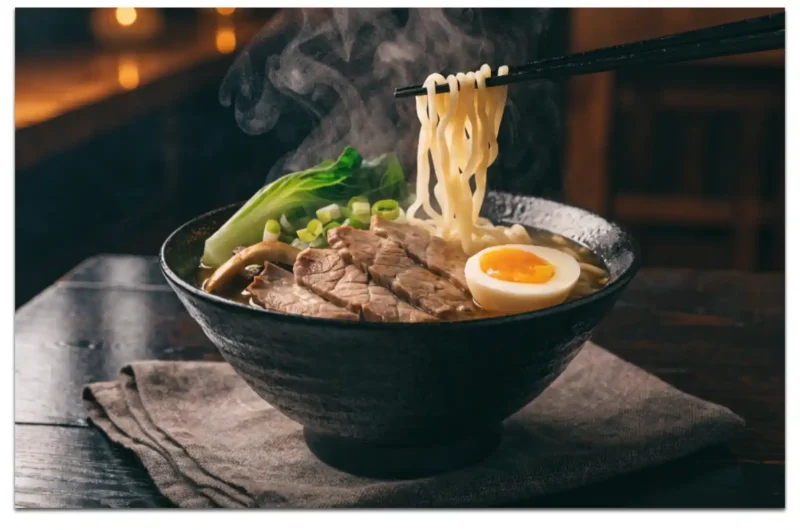
minutesThis beef ramen features rich homemade broth with aromatic spices, tender marinated beef, soft-boiled eggs, and fresh vegetables over noodles. Build flavorful broth by simmering beef stock with soy sauce, mirin, and aromatics. Sear marinated beef separately, cook noodles, then assemble bowls with hot broth and fresh toppings.
Ingredients
- For the Broth:
6 cups beef broth
2 cups water
3 tablespoons soy sauce
2 tablespoons mirin
1 tablespoon sesame oil
4 cloves garlic, minced
1-inch piece fresh ginger, sliced
2 star anise
1 cinnamon stick
- For the Beef:
1 pound beef sirloin or ribeye, thinly sliced
2 tablespoons soy sauce
1 tablespoon brown sugar
1 teaspoon cornstarch
1 teaspoon sesame oil
2 cloves garlic, minced
- For the Noodles and Toppings:
16 ounces fresh or dried ramen noodles
4 soft-boiled eggs
2 cups baby bok choy
1 cup sliced mushrooms
4 green onions, sliced
Nori sheets (optional)
Sesame seeds for garnish
Directions
- Slice beef against the grain into thin strips
- Combine beef with soy sauce, brown sugar, cornstarch, sesame oil, and garlic
- Marinate beef for 15 minutes minimum
- Heat sesame oil in large pot over medium heat
- Add minced garlic and sliced ginger, sauté 1 minute
- Pour in beef broth, water, soy sauce, and mirin
- Add star anise and cinnamon stick to broth
- Bring to boil, then reduce to simmer for 15-20 minutes
- Taste broth and adjust seasoning as needed
- Remove and discard ginger, star anise, and cinnamon stick
- Bring separate pot of water to boil for eggs
- Lower eggs into boiling water, cook exactly 6 minutes 30 seconds
- Transfer eggs to ice bath immediately
- Let eggs cool 5 minutes, then peel and halve lengthwise
- Prepare vegetables: wash bok choy, slice mushrooms, chop green onions
- Boil water in separate pot for noodles
- Cook noodles according to package directions
- Drain noodles and divide among four bowls
- Heat skillet over high heat with oil
- Add marinated beef in single layer, sear 1-2 minutes per side
- Ladle hot broth over noodles in each bowl
- Add bok choy and mushrooms to hot broth
- Arrange seared beef on top of noodles
- Place halved egg in each bowl
- Garnish with green onions, sesame seeds, and nori
- Drizzle tiny bit of sesame oil over top
- Serve immediately while hot