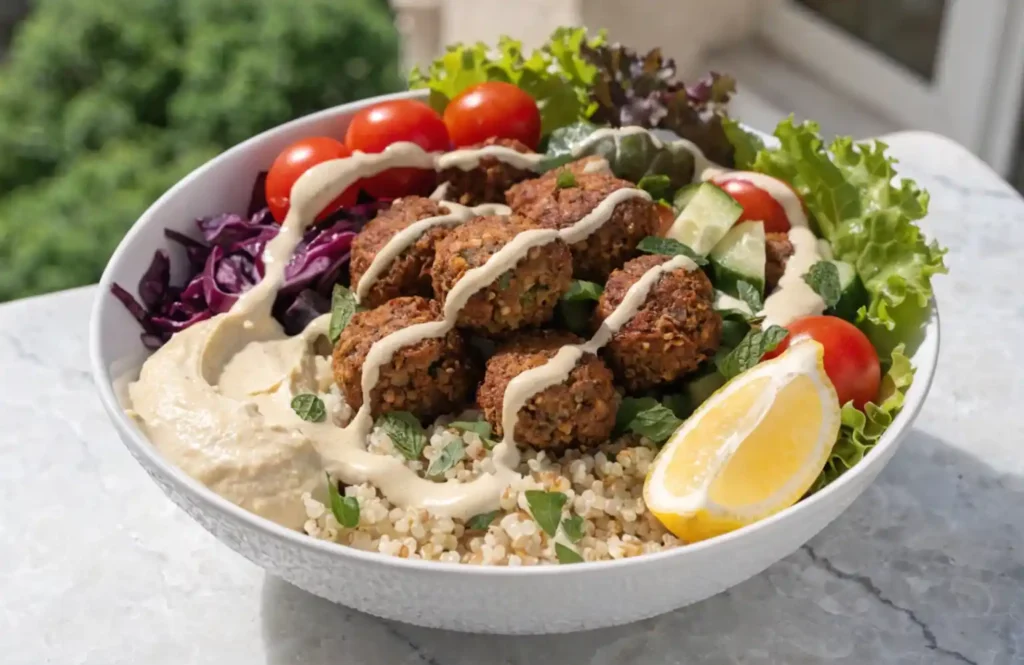
Crispy falafel, creamy hummus, fresh veggies, and tangy tahini sauce all piled into one beautiful bowl. This falafel bowl recipe is everything you want for lunch or dinner.
I’m going to show you how to build the ultimate healthy falafel bowl. Get ready for serious flavor in every bite.
Prep Time: 20 minutes
Cook Time: 25 minutes
Total Time: 45 minutes
Servings: 4 bowls
Why This Falafel Bowl Works
Here’s what makes this vegetarian falafel bowl absolutely perfect. You get complete nutrition, incredible texture contrast, and flavors that never get boring.
The crispy falafel provides protein and satisfying crunch. Fresh vegetables add vitamins and refreshing contrast.
I started making these bowls when I wanted healthy meals that actually tasted exciting. Now I meal prep them every week.
The customization options mean you’ll never tire of this base recipe. Change the toppings and it feels like a completely different meal.
The Components You’ll Build
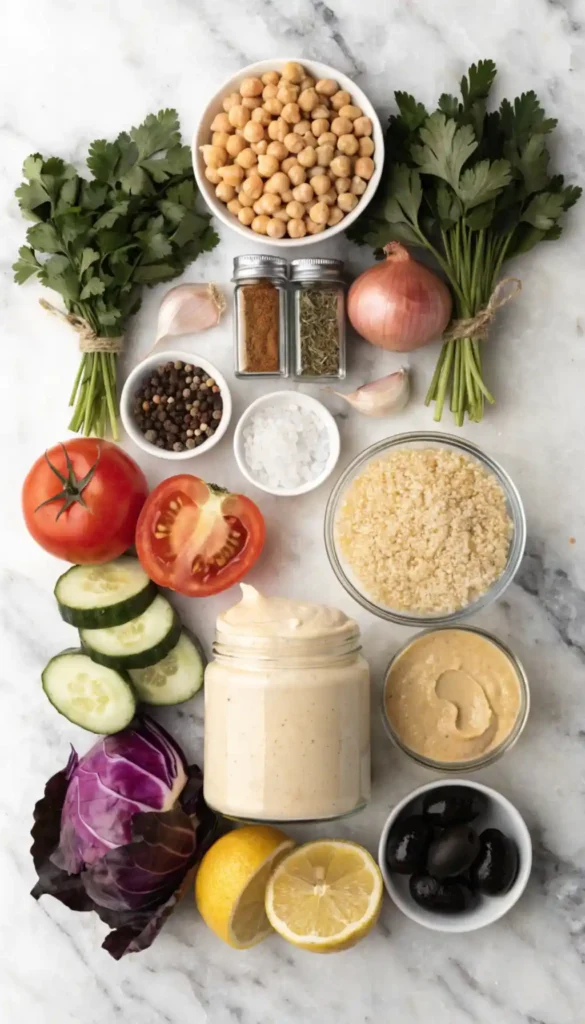
Let’s break down the elements that create these nutritious falafel bowl ideas. Each component plays a specific role.
For the Falafel:
- 1 can (15 oz) chickpeas, drained
- ½ cup fresh parsley
- ½ cup fresh cilantro
- 3 cloves garlic
- 1 small onion, chopped
- 3 tablespoons flour
- 1 teaspoon cumin
- 1 teaspoon coriander
- ½ teaspoon salt
- ¼ teaspoon baking powder
- 3 tablespoons olive oil (for frying)
For the Bowl Base:
- 2 cups cooked quinoa or rice
- 4 cups mixed greens
- 1 cup cherry tomatoes, halved
- 1 cucumber, diced
- 1 cup red cabbage, shredded
Now For the Tahini Sauce:
- ½ cup tahini
- ¼ cup lemon juice
- 2 cloves garlic, minced
- ¼ cup water
- Salt to taste
Additional Toppings:
- 1 cup hummus
- ½ cup pickled vegetables
- ¼ cup olives
- Fresh herbs
- Lemon wedges
Understanding Falafel Basics
Traditional falafel uses dried chickpeas soaked overnight. Canned chickpeas create a faster version that still tastes excellent.
The herbs aren’t just garnish – they’re essential for authentic flavor. Fresh parsley and cilantro make all the difference.
Baking powder helps falafel stay light and fluffy inside. Without it, they become dense and heavy.
The mixture should hold together when squeezed but not be paste-like. Too wet and they fall apart, too dry and they’re dense.
Baked vs. Fried Falafel
This baked falafel recipe offers a healthier alternative to traditional frying. You save calories and cleanup time.
Fried falafel tastes crispier and more authentic. The hot oil creates better exterior texture.
I usually bake them because it’s easier and healthier. But for special occasions, frying creates superior results. :/
Honestly, both methods produce delicious falafel. Choose based on your priorities and time.
Making the Falafel
Drain your chickpeas thoroughly and pat them dry with paper towels. Excess moisture makes soggy falafel.
Add chickpeas, herbs, garlic, onion, and spices to a food processor. Pulse until the mixture is finely chopped but not pureed.
You want a coarse, grainy texture – not hummus. The mixture should hold together when squeezed.
Transfer to a bowl and stir in flour and baking powder. Mix until just combined.
Let the mixture rest for 10 minutes. This allows the flour to absorb moisture and makes shaping easier.
Shaping Perfect Falafel
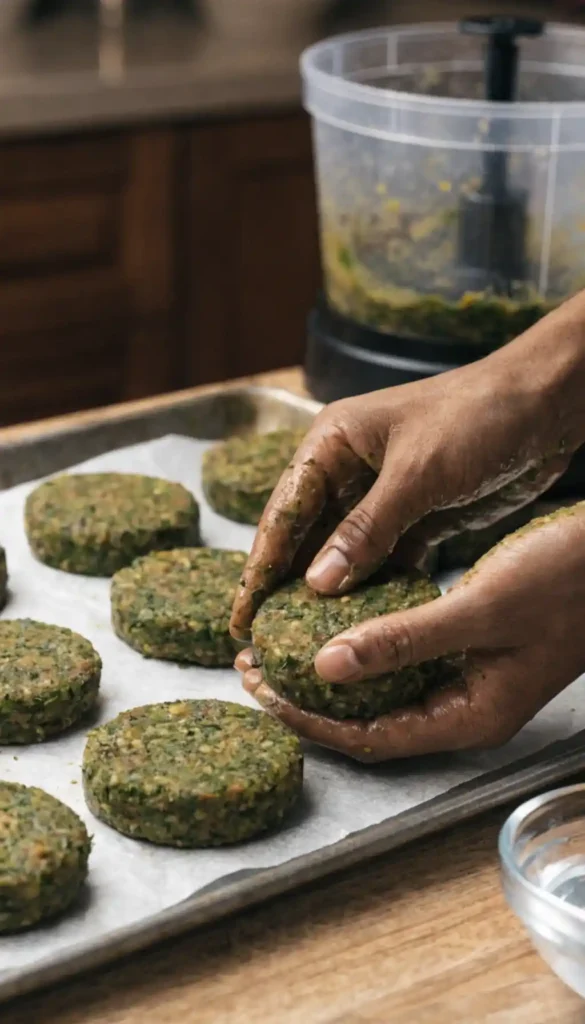
Scoop about 2 tablespoons of mixture and shape into balls or patties. Wet hands prevent sticking.
Make them uniform size for even cooking. I prefer slightly flattened patties over perfect balls.
Place shaped falafel on a baking sheet lined with parchment paper. Space them about an inch apart.
If baking, brush each one lightly with olive oil. This creates better browning.
Have you noticed how restaurant falafel always looks perfectly shaped? A falafel scoop creates that consistency.
Baking to Crispy Perfection
Preheat your oven to 375°F. A properly hot oven ensures good browning.
Bake for 25-30 minutes, flipping halfway through. Both sides should be golden brown and crispy.
The falafel should feel firm when touched. Underbaked ones are mushy inside.
Let them cool for 5 minutes before serving. They firm up slightly as they cool.
Pan-Frying Alternative
Heat ½ inch of oil in a large skillet to 350°F. Use a thermometer for accuracy.
Fry falafel in batches without crowding. They need space to cook evenly.
Cook 3-4 minutes per side until deep golden brown. Drain on paper towels.
Fried falafel are crispier and richer. The extra oil is worth it sometimes.
Preparing the Tahini Sauce
Whisk tahini and lemon juice together in a bowl. The mixture will seize up initially – that’s normal.
Gradually add water while whisking. The sauce will loosen and become smooth.
Add minced garlic and salt. Whisk until completely combined and pourable.
Adjust consistency with more water if needed. It should be thick but drizzleable.
This sauce makes or breaks the bowl. Don’t skip it or use store-bought.
Cooking the Grain Base
Quinoa or rice work equally well for falafel rice bowl recipe versions. I prefer quinoa for extra protein.
Cook according to package directions. Fluff with a fork and let cool slightly.
Season with a pinch of salt and squeeze of lemon. This prevents bland base.
You can make grains ahead and refrigerate. Reheat when ready to assemble bowls.
Preparing Fresh Vegetables
Wash and dry all your vegetables thoroughly. Wet vegetables make soggy bowls.
Dice cucumber into bite-sized pieces. Cut cherry tomatoes in half.
Shred red cabbage thinly for best texture. Massage it lightly with salt to soften.
Prep vegetables up to a day ahead. Store separately in airtight containers.
Building Your Bowl
Start with a base of greens in a wide bowl. This creates the foundation.
Add a scoop of quinoa or rice on one side. Keep components somewhat separated for visual appeal.
Arrange 3-4 falafel on the grain. They’re the star, so make them prominent.
Add clusters of different vegetables around the bowl. Cherry tomatoes here, cucumber there, cabbage in another section.
Adding the Finishing Touches
Dollop hummus generously in the bowl. It adds creaminess and extra protein.
Drizzle tahini sauce over everything. Be generous – this ties all flavors together.
Scatter pickled vegetables for tangy contrast. They cut through the rich falafel beautifully.
Add olives if you like them. They bring briny, salty notes.
Garnish with fresh herbs and lemon wedges. The falafel aesthetic comes from these final touches.
Meal Prep Strategy
These healthy falafel bowls with vegetables work brilliantly for meal prep. Make components separately and assemble daily.
Bake a double batch of falafel. They keep refrigerated for 4-5 days.
Cook grains and prep vegetables Sunday night. Store everything in separate containers.
Make tahini sauce fresh or it separates. Takes 2 minutes anyway.
Assemble each morning for lunch. Or pack components separately and build at work.
Falafel Bowl Variations
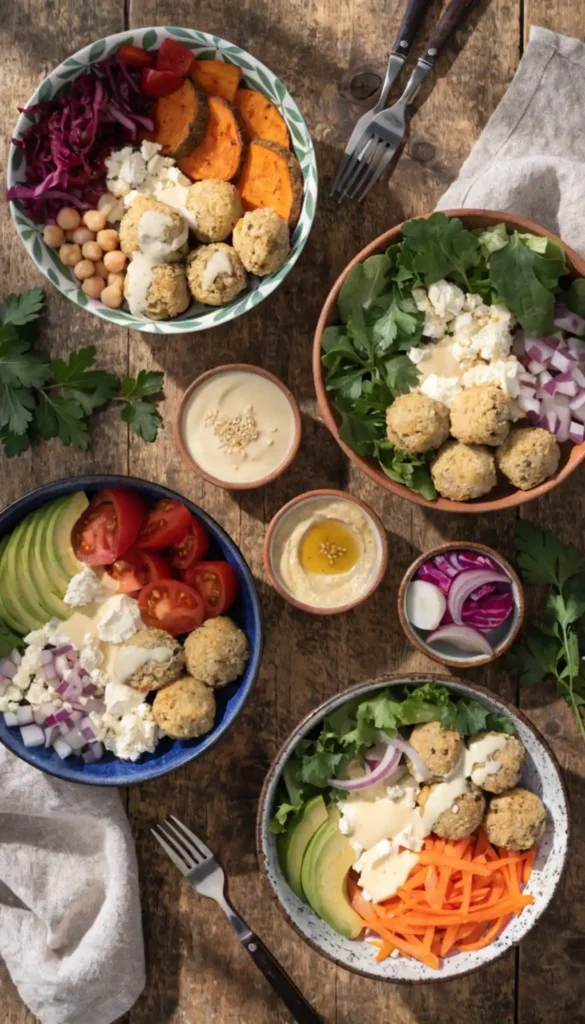
The base recipe adapts endlessly. Falafel dinner ideas expand when you play with toppings.
Add roasted vegetables for fall vibes. Sweet potato, cauliflower, and Brussels sprouts work beautifully.
Create a falafel salad bowl by increasing greens and reducing grains. Perfect for lighter meals.
Make it spicy with harissa or sriracha. The falafel handle heat beautifully.
Add feta cheese for extra richness. Not vegan but absolutely delicious.
Turning It Into Other Meals
Use these falafel for a falafel pita sandwich. Stuff pita with falafel, vegetables, and tahini.
Create a falafel platter for parties. Arrange everything on a large board with extra dips.
Build a hummus bowl idea by making hummus the star. Add falafel as protein on top.
The versatility makes this recipe valuable. Master the falafel and create endless meals.
Nutritional Benefits
This healthy falafel bowl recipe packs complete nutrition. Chickpeas provide plant protein and fiber.
Quinoa adds all nine essential amino acids. Together they create complete protein.
The vegetables contribute vitamins, minerals, and gut health recipes vegetarian benefits. Fiber keeps you full for hours.
Tahini provides healthy fats and calcium. It’s surprisingly nutrient-dense.
FYI, one bowl contains about 450 calories with 15 grams of protein. That’s a balanced, satisfying meal.
Storage and Reheating
Store falafel separately from vegetables in airtight containers. They keep for 4-5 days refrigerated.
Reheat falafel in the oven at 350°F for 10 minutes. This restores crispiness.
Microwave works but makes them soft. Toaster oven is better if you have one.
Store tahini sauce in a jar in the fridge. Whisk before using as it separates.
Assemble bowls fresh for best texture. Preassembled bowls get soggy.
Common Mistakes to Avoid
Using wet chickpeas makes falafel fall apart. Always pat them completely dry.
Over-processing creates paste instead of falafel. Pulse carefully and stop while still grainy.
Skipping the resting time makes falafel harder to shape. Give the mixture 10 minutes.
Crowding them while cooking prevents browning. Leave space between each one.
Not seasoning the grains creates bland base. Always season your quinoa or rice.
Making It Kid-Friendly
Kids sometimes resist unfamiliar textures. Shape falafel into nugget shapes for familiarity.
Let them build their own bowls. Kids eat more when they participate.
Serve tahini sauce on the side. Some kids prefer plain vegetables.
Start with familiar vegetables they already like. Gradually introduce new ones.
Call it a “build-your-own bowl bar.” Make it fun and interactive.
Budget-Friendly Tips
Dried chickpeas cost less than canned. Soak them overnight if you’re not rushed.
Buy tahini in bulk from Middle Eastern markets. It’s half the price.
Grow your own herbs on a windowsill. Parsley and cilantro grow easily.
Use whatever vegetables are on sale. The formula works with any combination.
Make large batches and freeze extra falafel. They reheat beautifully from frozen.
Why Homemade Beats Restaurant
Restaurant falafel bowls cost $12-15. Your homemade version costs maybe $4 per serving.
You control the freshness and quality of ingredients. No mystery oils or preservatives.
IMO, homemade falafel taste better because they’re fresh. Restaurant ones often sit under heat lamps.
Plus you can customize everything exactly how you want it. That’s priceless.
Perfect for Every Season
Spring calls for asparagus and peas. Add them blanched to your bowl.
Summer demands tomatoes and cucumbers. The fresh, crisp vegetables shine.
Fall welcomes roasted squash and beets. Warm vegetables contrast nicely with cool tahini.
Winter works with kale and roasted root vegetables. Hearty and satisfying.
Final Thoughts on Bowl Perfection
Falafel bowls prove healthy eating doesn’t have to be boring. This recipe delivers restaurant-quality results at home.
The crispy falafel, creamy sauces, and fresh vegetables create perfect balance. Every component plays its role.
Once you master this, you’ll make variations constantly. The formula is too good not to repeat.
So grab those chickpeas and start blending. Your new favorite lunch is about to happen.
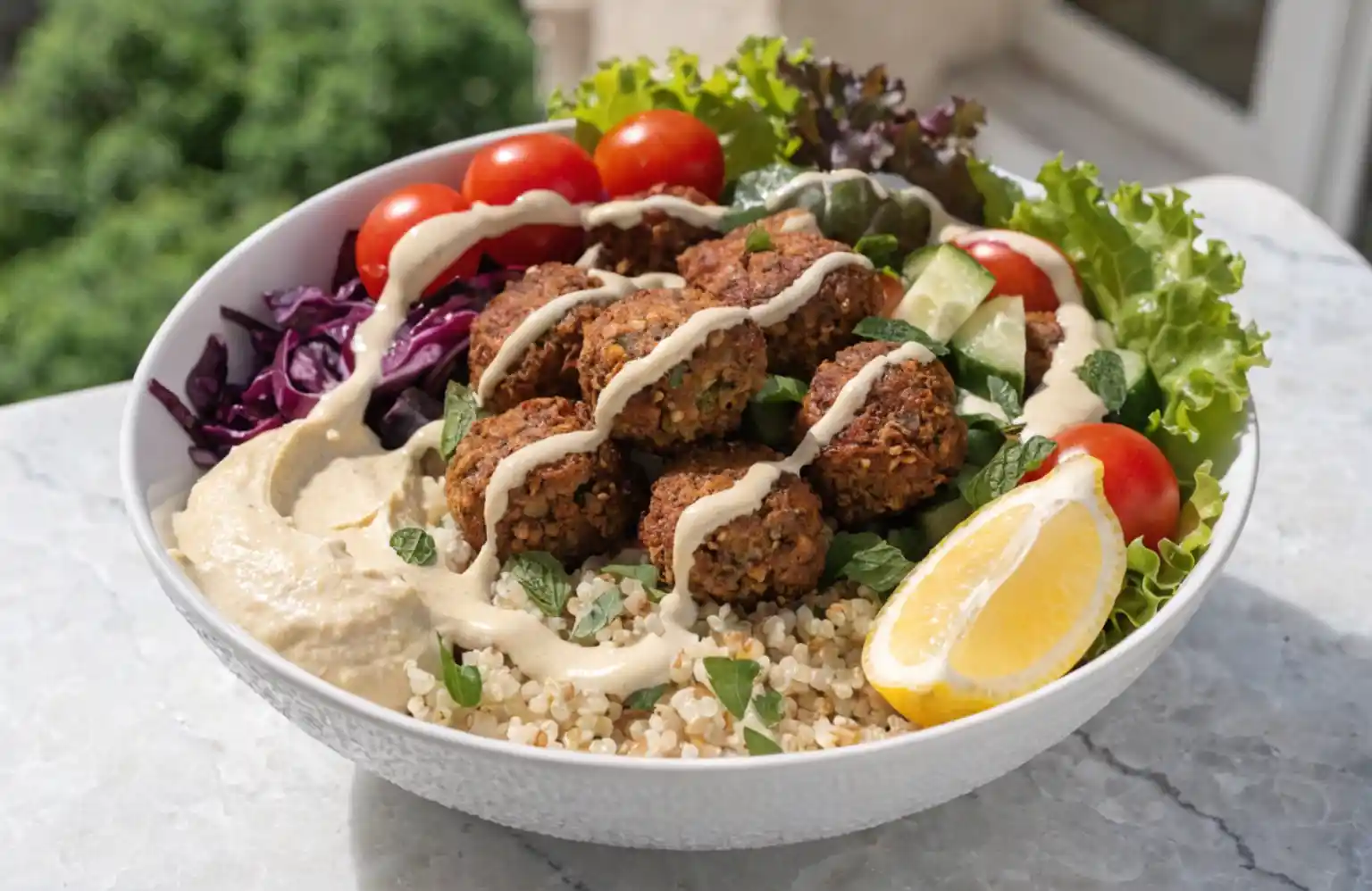
Falafel Bowl Recipe: Fresh, Healthy, and Ridiculously Satisfying
4
servings450
kcal45
minutesHealthy falafel bowls combine crispy baked chickpea falafel with fresh vegetables, fluffy quinoa, creamy hummus, and tangy tahini sauce. The vegan falafel provides plant protein while vegetables add nutrients and crunch. Meal-prep friendly components can be made ahead and assembled fresh. Customizable base adapts to any season or preference. Complete, balanced meal in one bowl.
Ingredients
1 can (15 oz) chickpeas, drained
½ cup fresh parsley
½ cup fresh cilantro
3 cloves garlic
1 small onion, chopped
3 tbsp flour
1 tsp cumin
1 tsp coriander
½ tsp salt
¼ tsp baking powder
3 tbsp olive oil
2 cups cooked quinoa
4 cups mixed greens
1 cup cherry tomatoes
1 cucumber, diced
1 cup red cabbage
½ cup tahini
¼ cup lemon juice
2 cloves garlic (sauce)
¼ cup water
1 cup hummus
Pickled vegetables
Olives and herbs
Directions
- Preheat oven to 375°F
- Drain and dry chickpeas thoroughly
- Add chickpeas, herbs, garlic, onion, spices to food processor
- Pulse until coarsely chopped
- Transfer to bowl
- Stir in flour and baking powder
- Let mixture rest 10 minutes
- Shape into balls or patties
- Place on lined baking sheet
- Brush with olive oil
- Bake 25-30 minutes, flipping halfway
- Whisk tahini and lemon juice
- Gradually add water while whisking
- Add garlic and salt to sauce
- Cook quinoa according to package
- Season with salt and lemon
- Wash and prep all vegetables
- Dice cucumber and halve tomatoes
- Shred cabbage thinly
- Place greens in bowl base
- Add quinoa to one side
- Arrange falafel prominently
- Add vegetable clusters around bowl
- Dollop hummus generously
- Drizzle tahini sauce over everything
- Add pickled vegetables and olives
- Garnish with herbs and lemon
FAQs
Can I use canned chickpeas instead of dried? Yes! Canned chickpeas work great for quicker falafel. Just make sure to drain and dry them thoroughly. The texture is slightly different from traditional dried chickpeas but still delicious.
Why do my falafel fall apart? Common causes: chickpeas were too wet, mixture wasn’t rested long enough, or not enough flour was added. Make sure to dry chickpeas well and let the mixture rest 10 minutes.
Can I make falafel ahead of time? Absolutely! Shape the falafel and refrigerate for up to 24 hours before cooking. Or bake them completely and store for 4-5 days. They also freeze well for up to 3 months.
Is this recipe gluten-free? Not as written because it uses regular flour. Substitute with chickpea flour or gluten-free all-purpose flour for a gluten-free version. The texture stays similar.
What’s the best way to reheat falafel? Oven or toaster oven at 350°F for 10 minutes restores crispiness. Microwave works but makes them soft. Air fryer works brilliantly if you have one.