That jar of kimchi sitting in your fridge? It’s about to become dinner. This Kimchi Fried Rice Recipe transforms leftover rice and fermented cabbage into addictively spicy, umami-packed comfort food that’s ready in 15 minutes flat.
I started making this during college when my budget was tight and my fridge was sad. Now it’s my go-to whenever I need something fast, satisfying, and actually delicious. The best part? It tastes better than most Korean restaurants charge $15 for.
Prep Time: 5 minutes
Cook Time: 10 minutes
Total Time: 15 minutes
Servings: 2 servings
Why This Recipe Works
Here’s what makes kimchi fried rice brilliant—it uses day-old rice which fries better than fresh. Cold, dried rice grains separate beautifully instead of turning mushy.
The kimchi provides instant flavor complexity. The fermentation creates depth that normally requires hours of cooking. Plus, the kimchi juice adds tanginess and umami.
High heat creates that essential wok hei—the slightly charred, smoky flavor. This separates restaurant fried rice from home versions. The technique matters as much as ingredients.
What Makes Korean Fried Rice Special
The Kimchi Factor
Kimchi brings sourness, spice, and fermented funk. These flavors transform plain rice into something crave-worthy. Fresh cabbage can’t replicate this complexity.
Older, more fermented kimchi works better than fresh. The stronger flavor stands up to cooking. Fresh kimchi tastes too mild after frying.
The kimchi juice is liquid gold. Don’t discard it. That brine contains concentrated flavor that makes ordinary fried rice extraordinary.
Comparison to Other Fried Rice
Chinese Fried Rice Recipe Authentic versions use soy sauce and simple vegetables. Japanese Fried Rice often includes butter and soy. Korean Chicken Fried Rice adds gochugaru and sesame oil.
Kimchi fried rice is bolder, tangier, and spicier. The fermented element creates unique flavor profile. IMO, it’s the most interesting fried rice variation.
Ingredients You’ll Need
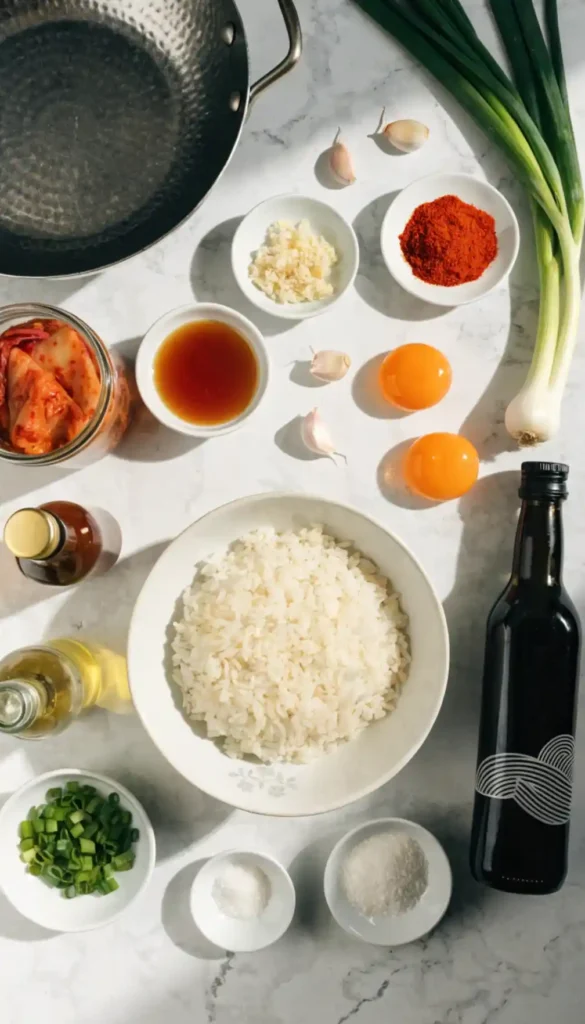
For the Base
These create authentic Korean flavor. Don’t substitute the kimchi—it’s essential.
- 3 cups cooked rice, day-old and cold
- 1 cup kimchi, chopped
- 1/4 cup kimchi juice
- 2 tablespoons vegetable oil
- 2 cloves garlic, minced
- 2 scallions, chopped (white and green parts separated)
- 1 tablespoon gochugaru (Korean red pepper flakes)
- 2 tablespoons soy sauce
- 1 tablespoon sesame oil
- Salt and pepper to taste
Optional Protein
These additions make it more substantial. Pick one or combine.
- 2 eggs (fried sunny-side up)
- 4 ounces bacon, diced
- 4 ounces spam, cubed
- 6 ounces chicken, diced
- 4 ounces firm tofu, cubed
For Garnish
These finishing touches add visual appeal and extra flavor.
- Toasted sesame seeds
- Extra sliced scallions
- Nori strips (seaweed)
- Extra gochugaru for heat lovers
Equipment Needed
You need minimal tools. A wok is ideal but not mandatory.
- Large wok or skillet
- Spatula or wooden spoon
- Cutting board and knife
- Measuring cups and spoons
- Small frying pan for eggs (if using)
Preparing Ingredients
The Rice Situation
Use day-old refrigerated rice. Fresh rice contains too much moisture. It steams instead of fries.
Break up any clumps with your hands. Individual grains fry better. Clumped rice creates uneven cooking.
If you only have fresh rice, spread it on a baking sheet. Refrigerate uncovered for 30 minutes. This dries the surface.
No rice? Cook it hours ahead and cool completely. Never use warm rice—it creates mushy disaster.
Preparing Kimchi
Chop kimchi into bite-sized pieces. Large chunks don’t distribute evenly. Aim for roughly 1/2-inch pieces.
Squeeze kimchi gently over bowl to collect juice. Reserve the juice—it’s crucial for flavor.
Very sour kimchi indicates heavy fermentation. This is perfect for fried rice. The cooking mellows the intensity.
Cooking Process
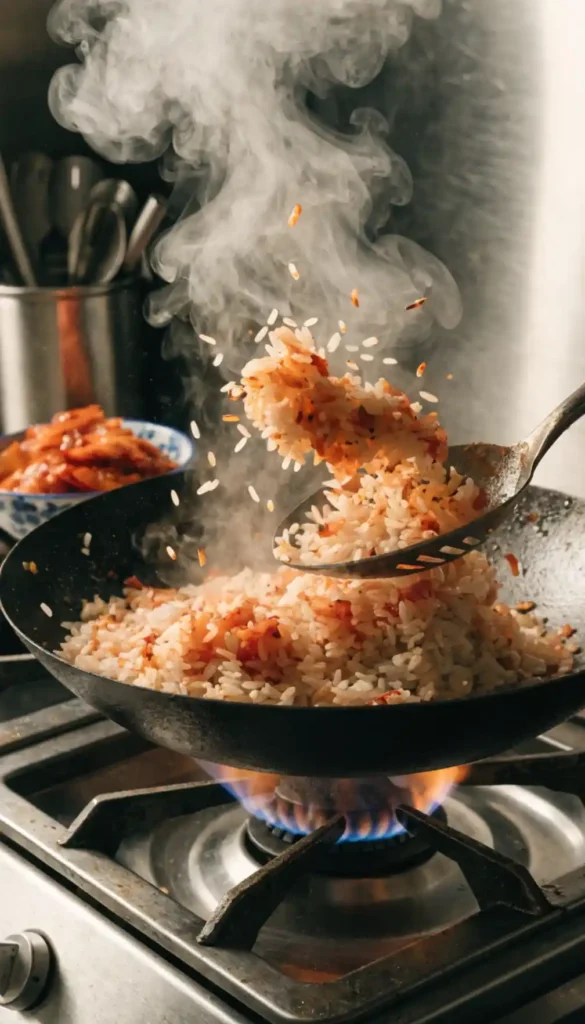
Heating the Wok
Heat wok or large skillet over high heat until smoking hot. This is essential for proper frying.
Add vegetable oil and swirl to coat. The oil should shimmer immediately.
High heat prevents sticking and creates that essential charred flavor. Don’t be scared of the heat.
If using protein, cook it first in the hot wok. Remove and set aside.
Building Flavor Base
Add minced garlic and white parts of scallions. Stir-fry for 30 seconds until fragrant.
Don’t let garlic burn. It turns bitter instantly. Keep everything moving constantly.
Add chopped kimchi. Stir-fry for 2-3 minutes until edges start browning slightly.
The kimchi should sizzle aggressively. If not, your heat isn’t high enough.
Adding Rice
Add cold rice to wok. Break up any remaining clumps with spatula.
Press rice against hot wok surface. Let sit for 30 seconds before stirring. This creates crispy bits.
Continue stir-frying, pressing and stirring alternately. Work quickly to prevent burning.
The rice should start looking slightly toasted. Some grains get golden and crispy—that’s perfect.
Seasoning
Pour kimchi juice over rice. Toss to distribute evenly throughout.
Add soy sauce, gochugaru, and sesame oil. Mix thoroughly so every grain gets coated.
The kimchi juice adds tanginess while soy sauce provides saltiness. The gochugaru brings heat.
Taste and adjust seasoning. Add salt if needed, though kimchi usually provides enough.
Final Touches
Add green parts of scallions. Toss for 30 seconds until just wilted.
Drizzle with extra sesame oil if desired. The toasted aroma is incredible.
Remove from heat immediately. Continued cooking on residual heat can dry it out.
Adding Protein
Fried Egg Method
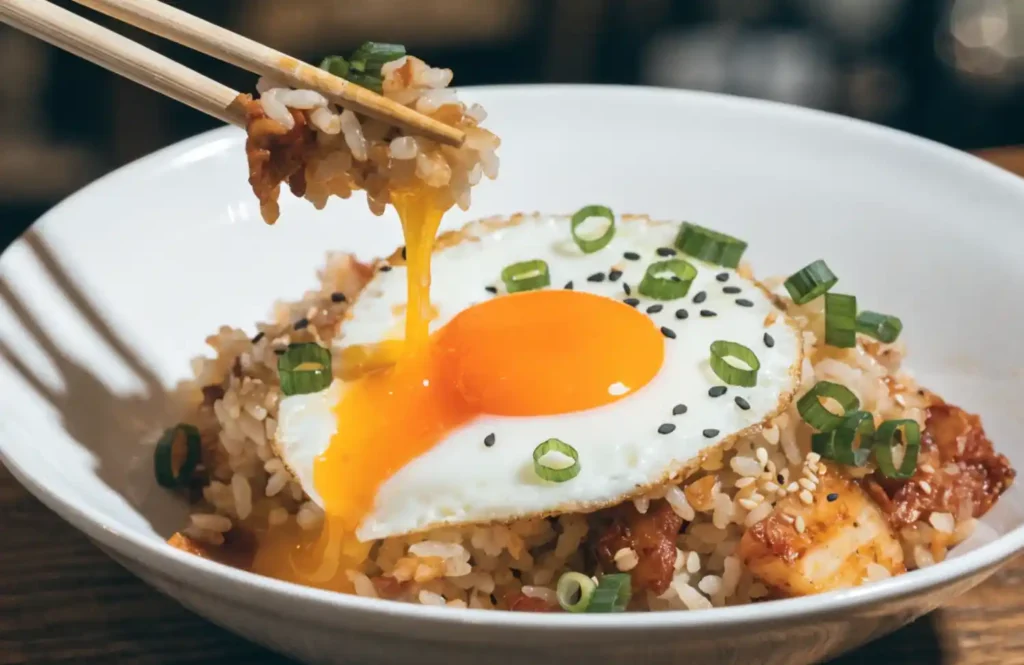
Fry eggs sunny-side up in separate pan. The runny yolk becomes sauce.
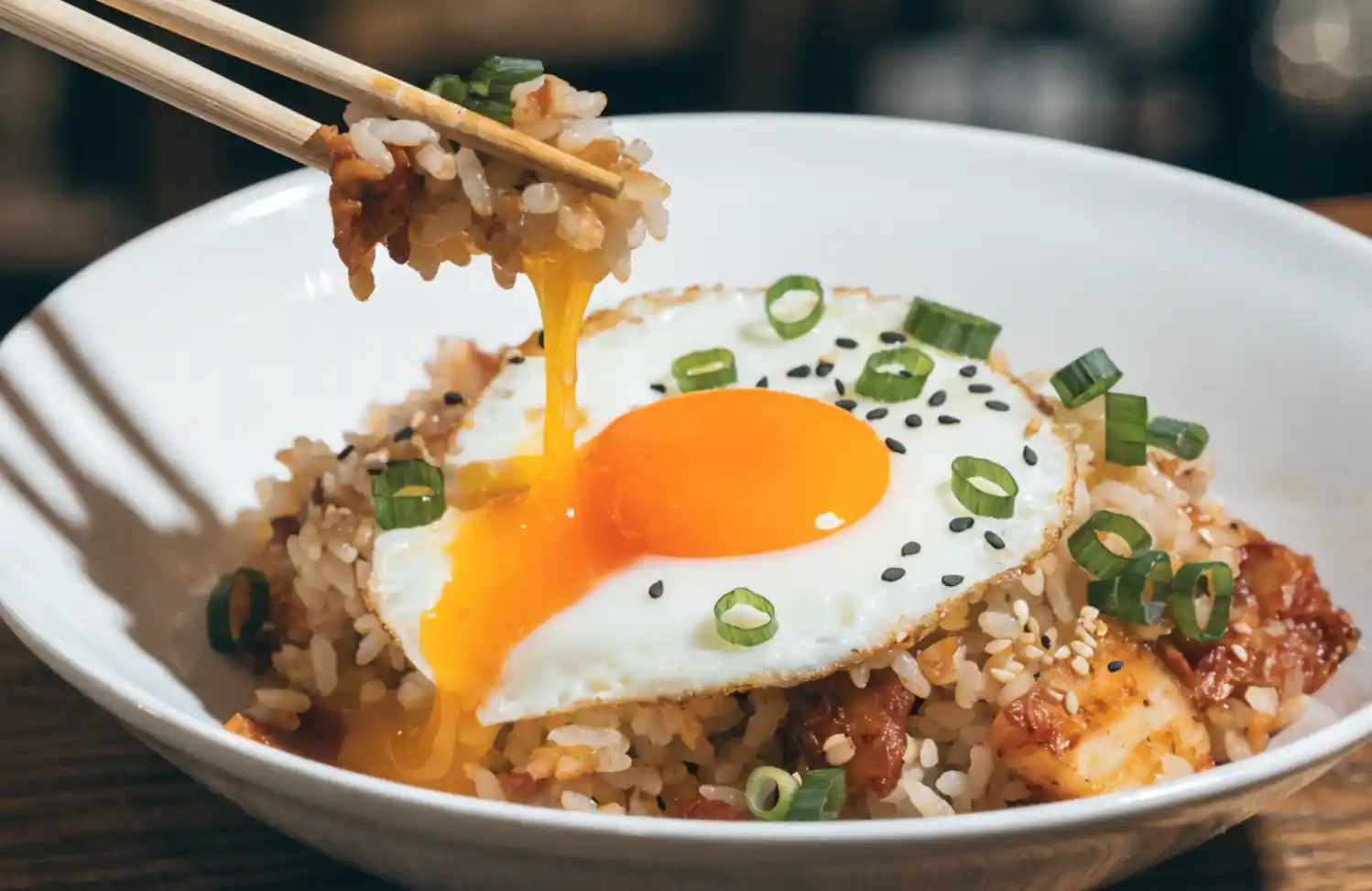
Place fried egg on top of fried rice just before serving. Breaking the yolk creates creamy richness.
The yolk mixing into rice is pure magic. This is the classic Korean presentation.
Bacon or Spam
Dice and cook until crispy before adding aromatics. The rendered fat adds flavor.
Remove excess grease if using bacon. Too much makes rice greasy.
Spam is traditional and delicious. Don’t knock it until you’ve tried it.
Chicken
Dice into small pieces. Season with salt and pepper.
Cook in hot wok until golden. Remove and add back with scallions.
Tofu
Press tofu to remove moisture. Cube and pan-fry until golden on all sides.
Firm or extra-firm tofu works best. Silken falls apart during stir-frying.
Serving Suggestions
Traditional Presentation
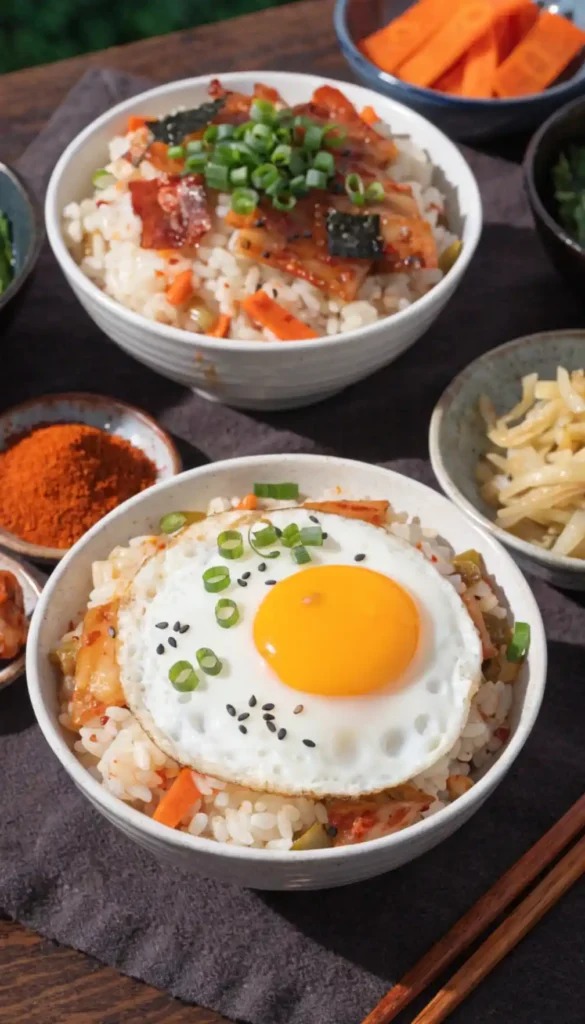
Serve in bowl with fried egg on top. Sprinkle sesame seeds and extra scallions.
Add nori strips for umami boost. The seaweed complements kimchi beautifully.
Drizzle extra sesame oil and sprinkle gochugaru. Let everyone customize spice level.
Making It a Meal
Serve with cucumber salad for cooling contrast. The crunch and freshness balance the heat.
Add Korean banchan (side dishes) for authentic experience. Pickled radish works especially well.
Pair with miso soup or kimchi stew. Creates complete Korean meal.
Storage and Reheating
Refrigerator Storage
Store in airtight container for up to 3 days. The flavors actually improve overnight.
The kimchi continues fermenting slightly. This intensifies the tanginess.
Reheating
Reheat in hot skillet with splash of oil. Microwave works but creates softer texture.
Add splash of water if rice seems dry. Stir while reheating to distribute moisture.
FYI, reheated kimchi fried rice makes incredible Easy Apartment Meals for busy weeknights.
Variations Worth Trying
Seafood Version
Add shrimp or squid during final minutes. The seafood cooks quickly.
Cheese Kimchi Fried Rice
Top with shredded mozzarella. Let melt under broiler. The Korean-Italian fusion works surprisingly well.
Spam Kimchi Fried Rice
Use diced spam as protein. This is incredibly popular in Korea.
Vegan Version
Skip egg and use tofu. Ensure kimchi is vegan (some contains fish sauce).
Spicy Fried Rice Upgrade
Double the gochugaru. Add sliced fresh chilies. For serious heat seekers only.
Why This Beats Takeout
Homemade kimchi fried rice costs maybe $3 for two servings. Takeout costs $12-15 per person.
You control the kimchi-to-rice ratio. Restaurants are often stingy with kimchi.
Making it takes 15 minutes. Waiting for delivery takes 30-45 minutes minimum.
The flavor is fresher and more vibrant. You can adjust spice and seasoning perfectly.
Perfect for Meal Prep
Make double batch on Sunday. Pack in containers for quick lunches.
Kimchi fried rice reheats beautifully. Better than most fried rice actually.
Add different proteins throughout the week. Creates variety without extra cooking.
Common Mistakes to Avoid
Using Fresh Rice
Warm, fresh rice turns gummy and mushy. Always use cold, day-old rice. No exceptions.
Not Enough Heat
Medium heat creates steamed rice, not fried rice. Crank the heat high. Don’t be timid.
Overcrowding the Pan
Too much rice prevents proper frying. Work in batches if necessary.
Skipping Kimchi Juice
The juice contains concentrated flavor. Using only kimchi misses essential tanginess.
FAQ Section
Can I use brown rice?
Yes. Brown rice actually works great. It stays firmer during frying. Use day-old cold brown rice same as white.
What if my kimchi isn’t spicy enough?
Add extra gochugaru or drizzle gochujang (Korean chili paste). Control heat level to your preference.
Can I make this without eggs?
Absolutely. The egg is optional topping. The fried rice stands alone perfectly. Try tofu for protein instead.
Why is my fried rice mushy?
You used fresh rice or heat wasn’t high enough. Cold rice and high heat are non-negotiable for proper texture.
How sour should the kimchi be?
Older, more fermented kimchi works better. The sour flavor mellows during cooking. Fresh kimchi tastes too mild after frying.
Kimchi Fried Rice Recipe: Your Fridge Cleanup Hero
2
servings420
kcal15
minutesKimchi fried rice stir-fries day-old rice with chopped kimchi, aromatics, and Korean seasonings for quick, flavorful meal. Heat wok, cook garlic and kimchi, add cold rice, season with kimchi juice and soy sauce, top with fried egg. Tangy, spicy Korean comfort food ready in 15 minutes using leftover rice and fermented kimchi.
Ingredients
- Base:
3 cups cooked rice, day-old and cold
1 cup kimchi, chopped
1/4 cup kimchi juice
2 tablespoons vegetable oil
2 cloves garlic, minced
2 scallions, chopped (separated)
1 tablespoon gochugaru
2 tablespoons soy sauce
1 tablespoon sesame oil
Salt and pepper
- Optional Protein:
2 eggs, bacon, spam, chicken, or tofu
Directions
- Break up day-old cold rice, ensure no clumps
- Chop kimchi into bite-sized pieces
- Squeeze kimchi gently, reserve juice
- Heat wok over high heat until smoking
- Add vegetable oil, swirl to coat
- Cook protein if using, remove and set aside
- Add minced garlic and white scallion parts
- Stir-fry 30 seconds until fragrant
- Add chopped kimchi, stir-fry 2-3 minutes
- Add cold rice, break up clumps
- Press rice against wok, let sit 30 seconds
- Stir-fry while pressing alternately
- Pour kimchi juice over rice, toss
- Add soy sauce, gochugaru, sesame oil
- Mix thoroughly, taste and adjust
- Add green scallion parts, toss 30 seconds
- Remove from heat immediately
- Fry eggs sunny-side up separately if using
- Plate rice, top with fried egg
- Garnish with sesame seeds, scallions, nori
Final Thoughts
There you have it—everything you need to make incredible Kimchi Fried Rice Recipe that transforms pantry staples into restaurant-quality Korean Meals Easy enough for any night. This recipe proves the best meals come from simple ingredients cooked properly.
The combination of tangy kimchi, crispy rice, and runny egg creates addictive comfort food. Quick cooking time makes weeknight dinners effortless. So grab that kimchi jar and heat that wok—your taste buds are about to experience Korean flavor magic.