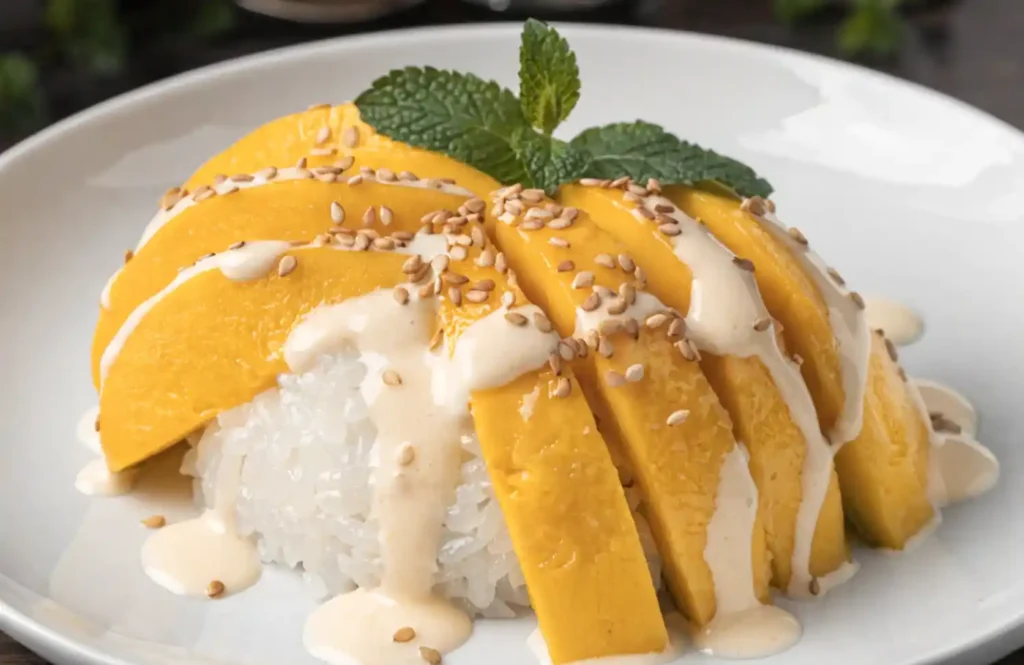
That dessert you ordered at every Thai restaurant? You can make it at home. This Mango Sticky Rice Recipe delivers authentic sweet coconut rice with perfectly ripe mango for a dessert that tastes like tropical vacation.
I tried making this after a trip to Bangkok ruined me for all other desserts. Now I make it constantly because it’s surprisingly simple and tastes better than most restaurants charge $12 for. The secret is in the coconut sauce.
Prep Time: 15 minutes
Soaking Time: 4 hours (or overnight)
Cook Time: 25 minutes
Total Time: 4 hours 40 minutes
Servings: 4 servings
Why This Recipe Works
Here’s what makes Thai Mango Sticky Rice special—the glutinous rice creates uniquely chewy texture. Regular rice won’t work. You need the specific sticky rice variety.
The coconut milk mixture sweetens and enriches the rice. It’s not just coconut flavor—it’s creamy, sweet, and slightly salty all at once. This balance defines the dessert.
Ripe mango provides natural sweetness and tropical flavor. The fruit’s silky texture contrasts perfectly with chewy rice. Every component plays essential role.
What Makes Authentic Mango Sticky Rice
The Rice Foundation
Thai sticky rice (glutinous rice) has high starch content. This creates distinctive sticky, chewy texture. The rice clumps together naturally.
Despite the name, glutinous rice contains no gluten. It’s naturally gluten-free. The name refers to the glue-like stickiness.
Chinese Sticky Rice uses similar rice but different preparation. Thai version focuses on coconut and sweet flavors. Chinese versions are often savory.
Traditional Preparation
Traditional Mango Sticky Rice uses bamboo steamer. The steaming method creates proper texture. Boiling creates mushy, wrong texture.
The coconut sauce gets added in two stages. First batch soaks into rice. Second batch serves as topping. This layering creates depth.
IMO, the two-sauce technique separates restaurant-quality from homemade attempts. Don’t skip the second sauce.
Ingredients You’ll Need
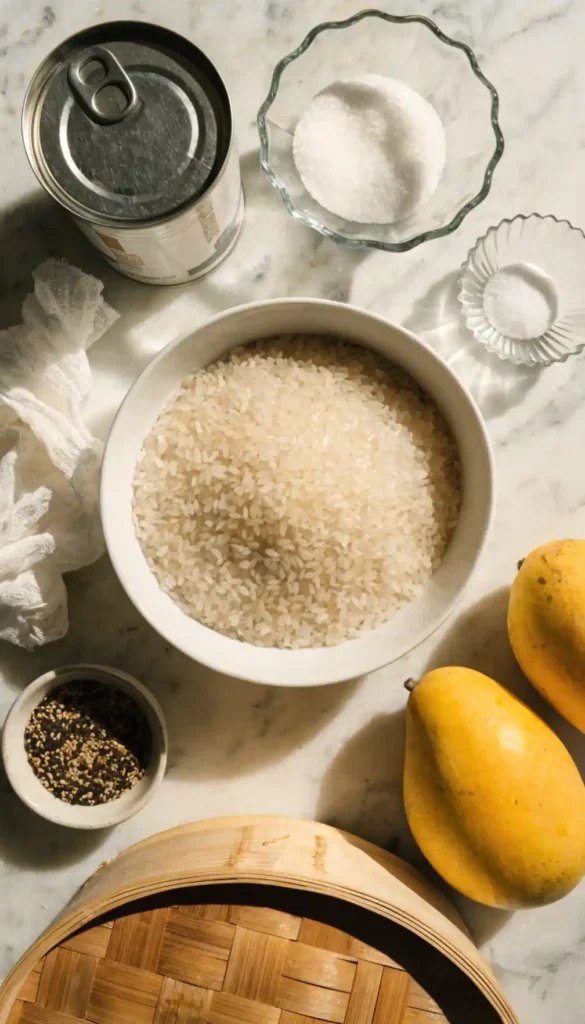
For the Sticky Rice
These create authentic texture and flavor. The rice type is non-negotiable.
- 1 and 1/2 cups Thai sweet sticky rice (glutinous rice)
- 1 can (14 oz) coconut milk, divided
- 1/2 cup sugar
- 1/2 teaspoon salt
- Water for soaking
For Serving
These complete the traditional presentation. The mango must be ripe.
- 2-3 ripe mangos, sliced
- 2 tablespoons toasted sesame seeds
- 2 tablespoons coconut cream (thick top layer from can)
- Fresh mint leaves (optional)
Equipment Needed
You need specific tools for proper steaming. Don’t try shortcuts.
- Large bowl for soaking
- Bamboo steamer or metal steamer basket
- Cheesecloth or thin kitchen towel
- Large pot for steaming
- Small saucepan
- Measuring cups and spoons
Preparing the Rice
Soaking the Rice
Rinse sticky rice in cold water 3-4 times until water runs clear. This removes excess starch.
Place rinsed rice in large bowl. Cover with cold water by 2 inches.
Soak for minimum 4 hours or overnight. This hydration is essential for proper texture.
Drain rice completely before steaming. Excess water creates mushy rice.
The rice grains should look plump and translucent. Unsoaked rice stays opaque.
Setting Up Steamer
Line bamboo steamer or metal steamer basket with cheesecloth. Drape cloth over sides for wrapping rice.
Fill pot with 2-3 inches water. Bring to boil.
The water shouldn’t touch steamer bottom. Steam cooks rice, not boiling water.
Place soaked, drained rice in lined steamer. Spread evenly for uniform cooking.
Fold cheesecloth over rice, covering completely. This traps steam for even cooking.
Steaming Process
Place steamer over boiling water. Cover with lid.
Steam for 20-25 minutes. Check water level periodically. Add more if needed.
The rice should be translucent and sticky when done. Taste a grain—it should be tender, not crunchy.
If rice seems undercooked, steam another 5 minutes. Better slightly overcooked than undercooked.
Remove from heat when rice is tender and sticky. Transfer to bowl immediately.
Making the Coconut Sauce
First Coconut Mixture
Reserve 1/4 cup coconut cream from can top. Set aside for topping.
Combine remaining coconut milk, sugar, and salt in saucepan.
Heat over medium, stirring constantly until sugar dissolves completely. Don’t boil—just warm it.
The mixture should be smooth with no sugar crystals. Taste it—should be sweet with slight saltiness.
Remove from heat once sugar dissolves. The sauce will be thin.
Mixing Rice and Sauce
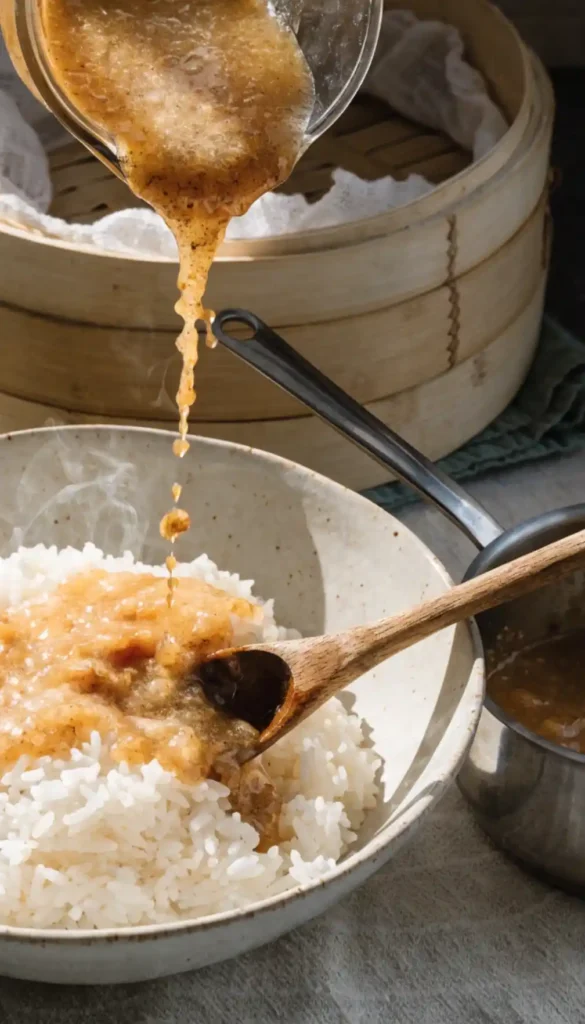
Pour 3/4 of warm coconut mixture over hot steamed rice immediately.
Fold gently with spatula to coat rice evenly. Don’t stir vigorously—you want sticky clumps.
Cover bowl with plastic wrap or towel. Let sit for 30 minutes.
The rice absorbs coconut mixture during resting. This creates creamy, sweet flavor throughout.
After 30 minutes, rice should be glossy and slightly wet. All liquid should be absorbed.
Second Coconut Sauce
Heat reserved 1/4 cup coconut cream with 1 tablespoon sugar. Stir until sugar dissolves.
This thicker sauce drizzles over plated dessert. The richness provides final flavor layer.
Keep warm until serving. Cold coconut cream solidifies and won’t drizzle properly.
Preparing the Mango
Selecting Ripe Mangos
Use champagne or Ataulfo mangos if possible. These are sweetest and least fibrous.
The mango should yield slightly to gentle pressure. Too firm means underripe. Too soft means overripe.
Smell the stem end. Ripe mangos smell sweet and tropical. No smell means not ready.
Slicing Technique
Stand mango on end. Slice down both sides of flat pit.
Score flesh in crosshatch pattern without cutting through skin.
Push skin side to invert mango. Cut off cubes with knife.
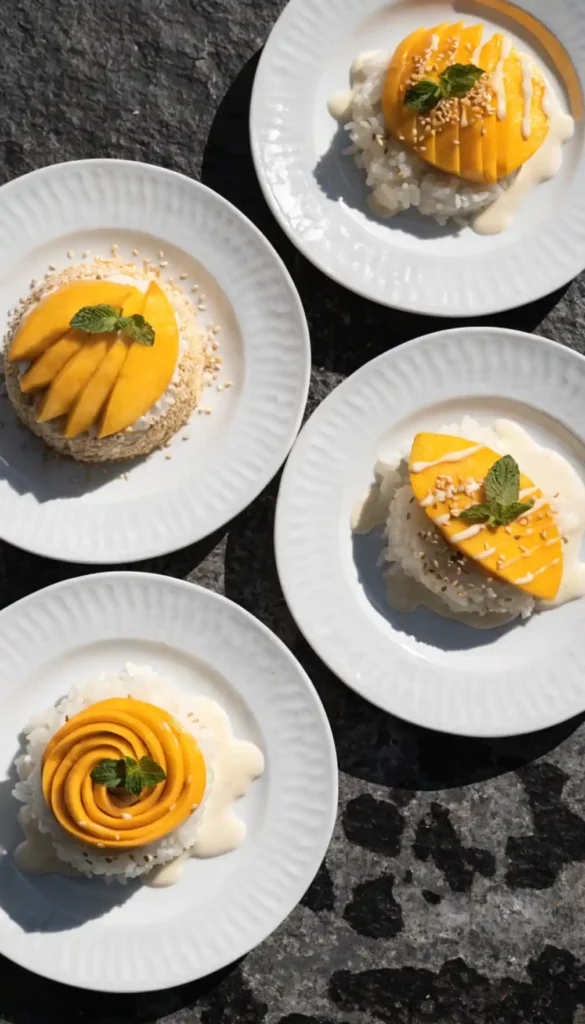
Or slice peeled mango into thin strips. This creates more elegant presentation for Mango Sticky Rice Plating.
FYI, practice makes perfect with mango cutting. Don’t stress about perfection.
Assembling and Serving
Traditional Plating
Mold warm sticky rice into mound using small bowl or hands. Place on plate.
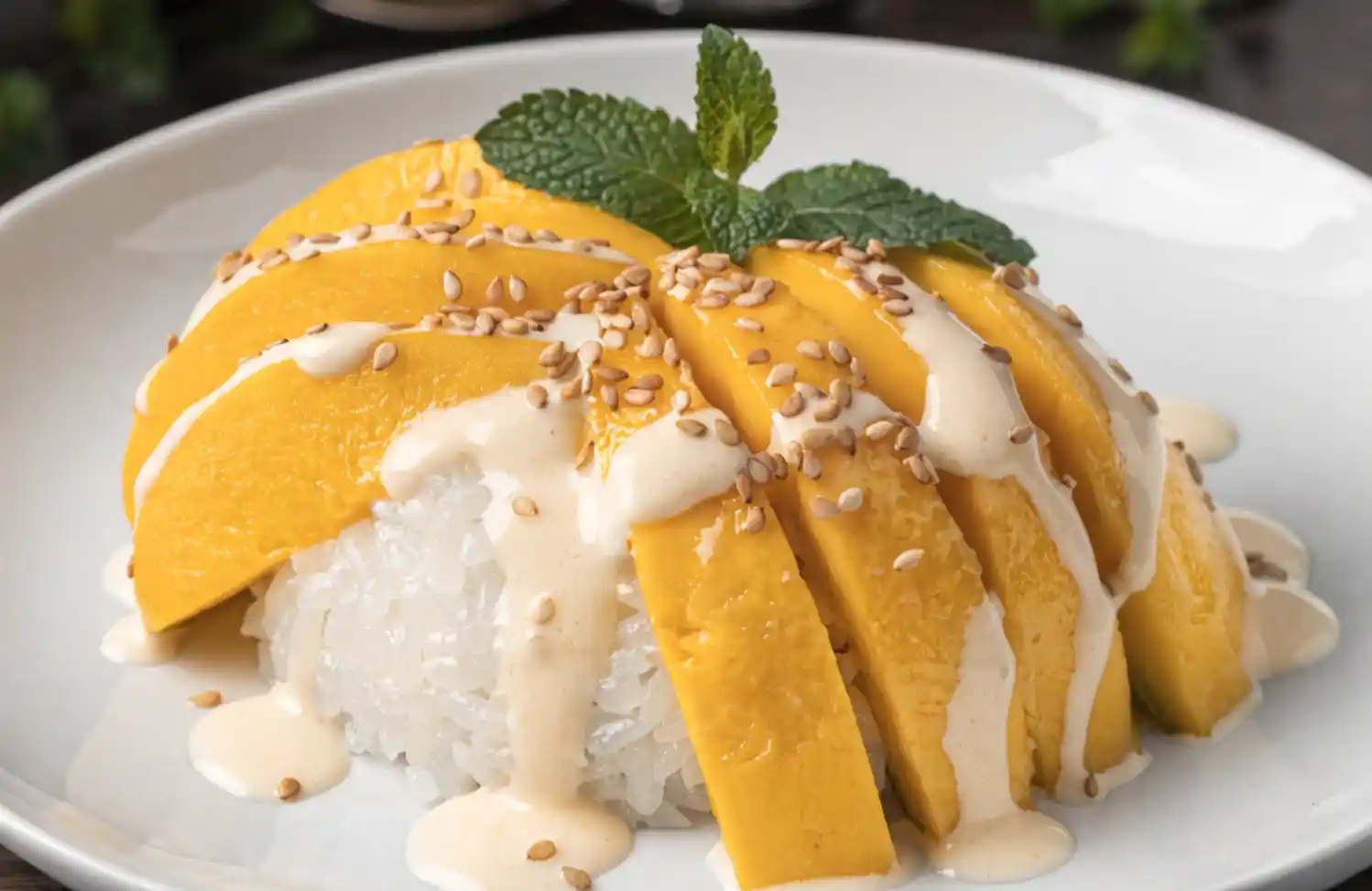
Arrange mango slices artfully around rice. Overlap them slightly for visual appeal.
Drizzle reserved coconut cream sauce over rice. Let it pool around base.
Sprinkle toasted sesame seeds over everything. The nutty crunch adds textural contrast.
Alternative Presentations
Serve in individual bowls for casual approach. Layer rice, mango, sauce, sesame seeds.
Use banana leaf as base for authentic Thai presentation. The green contrasts beautifully with yellow mango.
Create Mango Sticky Rice Aesthetic for Instagram by using white plates and fresh mint garnish.
Serve family-style with rice in large bowl and mango arranged on separate platter.
Storage and Reheating
Room Temperature
Serve sticky rice warm or at room temperature. It tastes best within 2-3 hours of making.
Don’t refrigerate if eating same day. Cold rice hardens and loses appeal.
Refrigerator Storage
Refrigerate leftover rice separately from mango for up to 2 days. The rice firms up when cold.
Microwave rice for 30-45 seconds to soften before serving. Add splash of coconut milk if too dry.
Store cut mango in airtight container for 1-2 days maximum. Cut mango deteriorates quickly.
Variations Worth Trying
Vegan Mango Sticky Rice
This recipe is naturally vegan. Just ensure coconut milk contains no additives.
Purple Sticky Rice
Use black glutinous rice for dramatic color. Creates stunning purple rice with same great flavor.
Mixed Fruit Version
Add sliced strawberries, kiwi, or passion fruit. Creates tropical fruit salad effect.
Coconut Toasted Rice
Toast some sticky rice until crispy. Sprinkle over top for crunchy texture contrast.
Common Mistakes to Avoid
Using Regular Jasmine Rice
Regular rice won’t work. You need glutinous sticky rice specifically. Mango Sticky Rice Recipe With Jasmine Rice won’t have proper texture.
Boiling Instead of Steaming
Boiling creates mushy, waterlogged rice. Steaming maintains proper chewy texture. No shortcuts here.
Unripe Mangos
Hard, unripe mangos taste sour and fibrous. Wait for perfectly ripe fruit. Patience pays off.
Skipping Second Sauce
The drizzle sauce provides essential richness. Don’t skip this traditional component.
Why Homemade Beats Restaurant
You control sweetness levels. Restaurants often make it too sweet. Adjust sugar to preference.
Fresh mango at home tastes better than restaurant fruit. You choose the ripeness level.
The cost is about $6 for 4 servings. That’s $1.50 per person. Restaurants charge $8-12 per serving.
Making it yourself connects you to Thai culinary tradition. The process is meditative and satisfying.
Perfect for Special Occasions
This Easy Mango Sticky Rice impresses dinner guests. The exotic flavors feel special and sophisticated.
Perfect for summer when mangos are abundant and cheap. The tropical flavors suit hot weather.
Great for Thai-themed dinner parties. Serve after curry or pad thai for authentic meal.
FAQ Section
Can I use a rice cooker?
Not recommended. Rice cooker creates wrong texture. Steaming is essential for authentic sticky rice. If desperate, use rice cooker’s steam function with basket.
What if I can’t find Thai sticky rice?
Check Asian grocery stores. It’s sometimes labeled “sweet rice” or “glutinous rice.” Online ordering works too. Regular rice won’t substitute properly.
Can I make this ahead?
Cook rice 2-3 hours ahead and keep covered at room temperature. Don’t refrigerate. Slice mango just before serving.
Why is my rice mushy?
You boiled instead of steamed, or added too much coconut mixture. Use steaming method and measure coconut sauce accurately.
How ripe should mangos be?
Very ripe but not overripe. Should smell sweet, yield slightly to pressure, and have smooth skin without bruises or dark spots.
Mango Sticky Rice Recipe: Thailand’s Sweetest Secret
4
servings420
kcal4
hours40
minutesMango sticky rice combines steamed glutinous rice with sweet coconut sauce and ripe mango for authentic Thai dessert. Soak sticky rice overnight, steam 25 minutes, mix with coconut-sugar sauce, let absorb 30 minutes, serve with sliced mango and coconut drizzle. Traditional Thai dessert ready in under 5 hours with stunning tropical flavors.
Ingredients
- Rice:
1 and 1/2 cups Thai sticky rice
1 can (14 oz) coconut milk, divided
1/2 cup sugar
1/2 teaspoon salt
Water for soaking
- Serving:
2-3 ripe mangos, sliced
2 tablespoons toasted sesame seeds
2 tablespoons coconut cream
Fresh mint leaves (optional)
Directions
- Rinse sticky rice 3-4 times until water runs clear
- Soak rice in cold water 4 hours or overnight
- Drain rice completely before cooking
- Line steamer with cheesecloth
- Fill pot with 2-3 inches water, bring to boil
- Spread soaked rice in lined steamer evenly
- Fold cheesecloth over rice, cover completely
- Steam 20-25 minutes until translucent and tender
- Reserve 1/4 cup coconut cream from can top
- Combine remaining coconut milk, sugar, salt in saucepan
- Heat until sugar dissolves (don’t boil)
- Pour 3/4 coconut mixture over hot rice immediately
- Fold gently to coat rice
- Cover, let sit 30 minutes to absorb
- Heat reserved coconut cream with 1 tablespoon sugar
- Stir until sugar dissolves, keep warm
- Slice mangos into cubes or strips
- Mold warm rice into mound on plate
- Arrange mango slices around rice
- Drizzle coconut cream sauce over rice
- Sprinkle toasted sesame seeds
- Garnish with mint if desired
Final Thoughts
There you have it—everything you need to make incredible Mango Sticky Rice Recipe that rivals any Thai restaurant. This Authentic Mango Sticky Rice Recipe proves exotic doesn’t mean complicated.
The combination of sweet coconut rice and tropical mango creates Thai Mango Sticky Rice perfection. Traditional technique ensures authentic results. So grab that sticky rice and get soaking—your taste buds are about to experience Thailand’s most beloved Sweet Sticky Rice Recipe dessert.