That smoky, savory Indonesian fried rice from street food stalls? You can absolutely nail it at home. This nasi goreng recipe delivers authentic flavor with techniques that actually work in a regular kitchen.
I’m going to show you how to make this iconic dish. Get ready for the best fried rice you’ve ever tasted.
Prep Time: 15 minutes
Cook Time: 10 minutes
Total Time: 25 minutes
Servings: 4 generous portions
Why This Nasi Goreng Recipe Works
Here’s what separates restaurant-quality nasi goreng from sad, mushy fried rice. The secret is day-old rice, high heat, and that magical sweet soy sauce called kecap manis.
This recipe captures authentic indonesian food flavors without requiring specialty equipment. You don’t need a wok burner or professional setup.
I learned to make this from an Indonesian friend who taught me the real techniques. Now it’s my go-to when I’m craving something satisfying and flavorful.
The smoky char, the perfect rice texture, the savory-sweet-spicy balance – it all comes together beautifully. This beats takeout every single time.
The Essential Ingredients
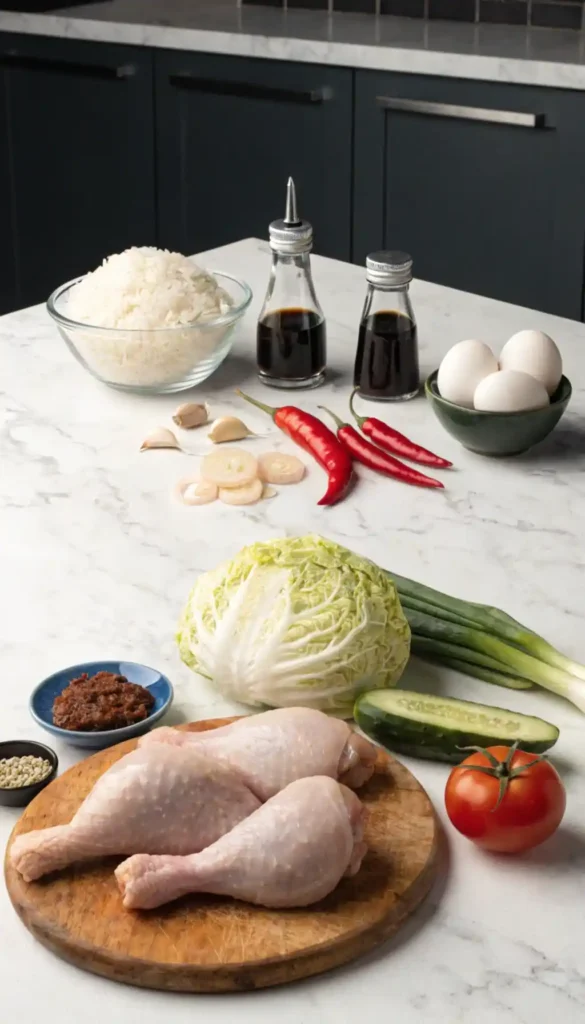
Let’s break down what you need for authentic nasi goreng. Some ingredients are non-negotiable while others offer flexibility.
For the Rice Base:
- 4 cups cooked rice, day-old and cold
- 3 tablespoons vegetable oil
- 2 eggs
- 2 cloves garlic, minced
- 2 shallots, thinly sliced
- 1 red chili, sliced (adjust to taste)
For the Seasoning:
- 3 tablespoons kecap manis (sweet soy sauce)
- 2 tablespoons regular soy sauce
- 1 tablespoon fish sauce
- 1 teaspoon shrimp paste (optional but recommended)
- ½ teaspoon white pepper
Proteins & Add-ins:
- 8 ounces chicken, shrimp, or tofu
- 2 green onions, sliced
- 1 cup cabbage, shredded
For Serving:
- Fried eggs (one per person)
- Cucumber slices
- Tomato slices
- Prawn crackers (krupuk)
Understanding Day-Old Rice
Fresh rice is your enemy in fried rice dishes. It’s too moist and clumps together into a gummy mess. :/
Day-old refrigerated rice has dried out slightly. The grains separate easily and don’t stick together when stir-fried.
Cook your rice the day before if possible. Spread it on a baking sheet to cool, then refrigerate overnight.
In a pinch, spread fresh rice on a tray and refrigerate for 2-3 hours. It’s not perfect but works better than hot rice.
Kecap Manis: The Secret Weapon
Kecap manis is Indonesian sweet soy sauce. It’s thicker, sweeter, and more complex than regular soy sauce.
You’ll find it in Asian grocery stores or online. ABC brand is widely available and authentic.
Can’t find it? Mix 2 tablespoons regular soy sauce with 1 tablespoon molasses or brown sugar. Not identical but close enough.
This ingredient creates that signature nasi goreng flavor. Without it, you’re just making chinese fried rice instead.
Prep Work That Saves Time
Mise en place is crucial for stir-frying. Have everything chopped, measured, and ready before you heat the wok.
Mince the garlic and slice the shallots thinly. Dice your protein into small, even pieces.
Mix all your sauces together in a small bowl. This lets you add them quickly without fumbling during cooking.
Break up the cold rice with your hands. Separate any clumps before you start cooking.
Have you noticed how restaurant stir-fries come together so fast? Proper prep is their secret.
Choosing and Preparing Protein
Chicken thighs work better than breast meat. They stay juicier during high-heat cooking.
Shrimp cooks quickly and adds sweetness. Use peeled, deveined shrimp for easiest preparation.
Tofu creates excellent vegetarian nasi goreng. Press it well and cube into bite-sized pieces.
You can combine proteins too. Chicken and shrimp together is traditional and delicious.
High Heat Technique
Crank your burner to the highest setting. Nasi goreng needs intense heat to develop that smoky char.
Use a large wok or the biggest skillet you own. Crowding prevents proper browning.
Work quickly and keep ingredients moving. High heat means things cook in seconds, not minutes.
The slight char on the rice creates authentic flavor. Don’t be afraid of a little smoke.
Starting with Aromatics
Heat your wok until it’s smoking hot. Add oil and swirl to coat the surface.
Toss in garlic, shallots, and chili. Stir-fry for 30 seconds until fragrant.
Don’t let the garlic burn. It goes from perfect to bitter in seconds at this temperature.
The aromatics create the flavor foundation. Everything builds on this base.
Cooking the Protein
Add your protein to the hot wok. Spread it in a single layer.
Let it sit undisturbed for 30 seconds to get color. Then toss and cook until just done.
Chicken takes 3-4 minutes. Shrimp needs only 2 minutes. Tofu requires about 3 minutes.
Remove the cooked protein to a plate. You’ll add it back later.
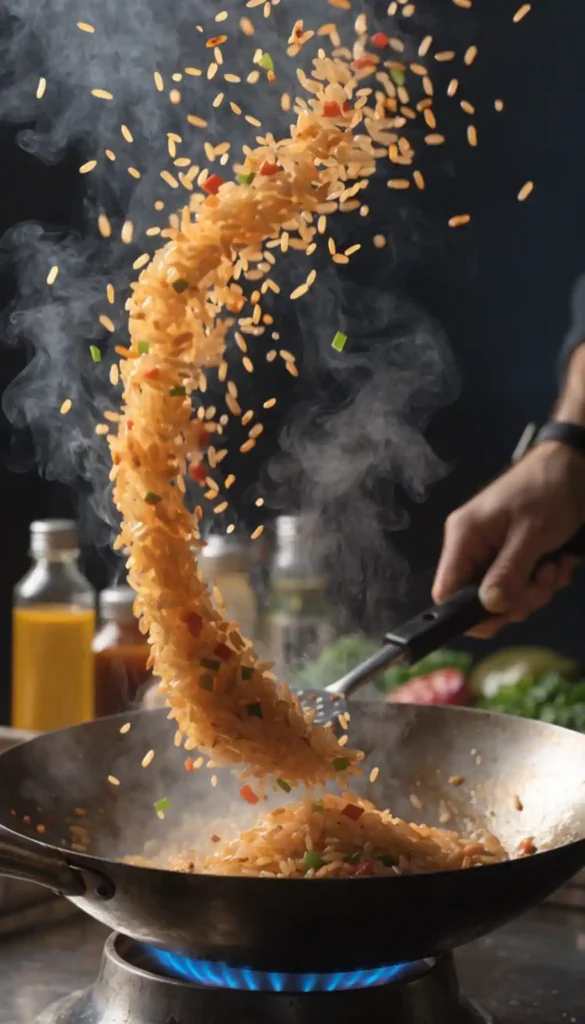
The Rice Stir-Fry
Add a bit more oil if the wok looks dry. Toss in the cold rice.
Break up clumps with your spatula. Keep the rice moving constantly.
Stir-fry for 2-3 minutes until the rice starts to crisp slightly. You want some grains to take on color.
This is where that day-old rice really shines. Fresh rice would turn to mush here.
Adding the Sauces
Push the rice to one side of the wok. Pour your sauce mixture into the empty space.
Let it bubble for a few seconds, then toss everything together. This distributes sauce evenly.
The rice should look glossy and take on a caramel color from the kecap manis. Each grain should be coated.
Keep tossing until no puddles of sauce remain. Everything should look unified.
Incorporating Vegetables
Add the shredded cabbage and stir-fry for 1 minute. It should wilt slightly but stay crunchy.
Toss in the cooked protein and green onions. Mix everything together thoroughly.
The vegetables add texture and freshness. They balance the rich, savory rice.
Cook for another minute until everything is hot. Taste and adjust seasoning if needed.
The Fried Egg Topping
Push the rice to the sides of the wok. Crack eggs into the center.
Let them fry until the edges are crispy but yolks stay runny. This takes about 2 minutes.
Alternatively, fry eggs separately for cleaner presentation. One fried egg tops each serving traditionally.
The runny yolk mixing into the rice is part of the authentic experience. Don’t skip this step.
Plating Like a Pro
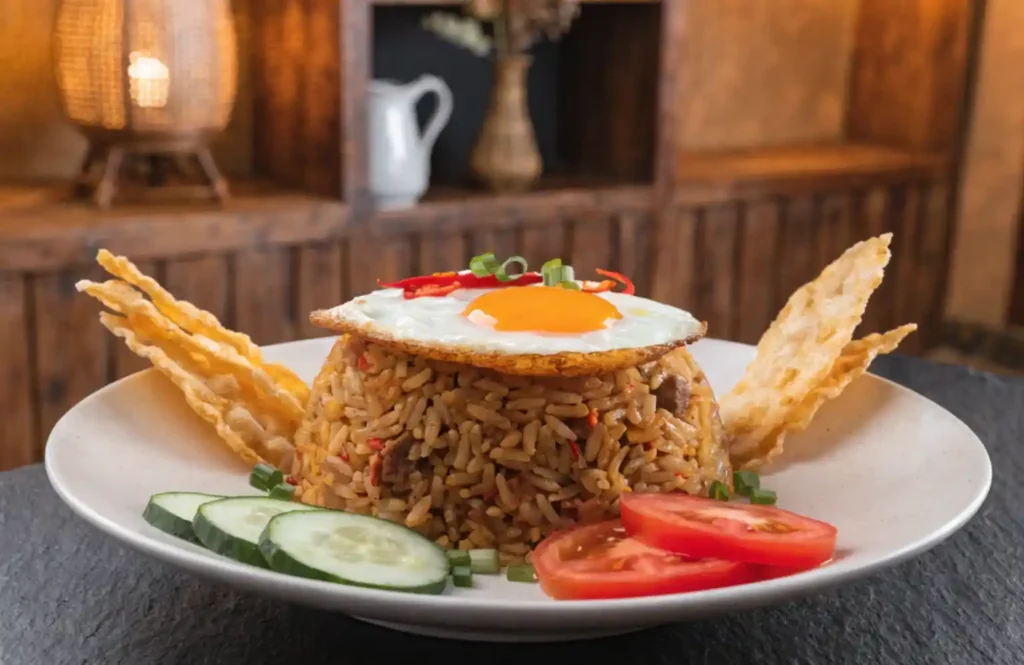
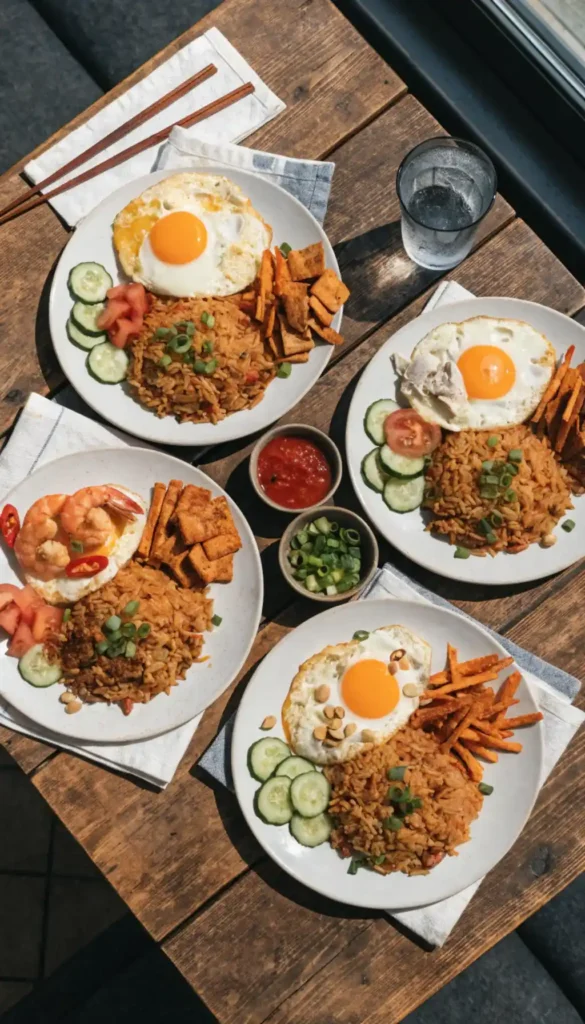
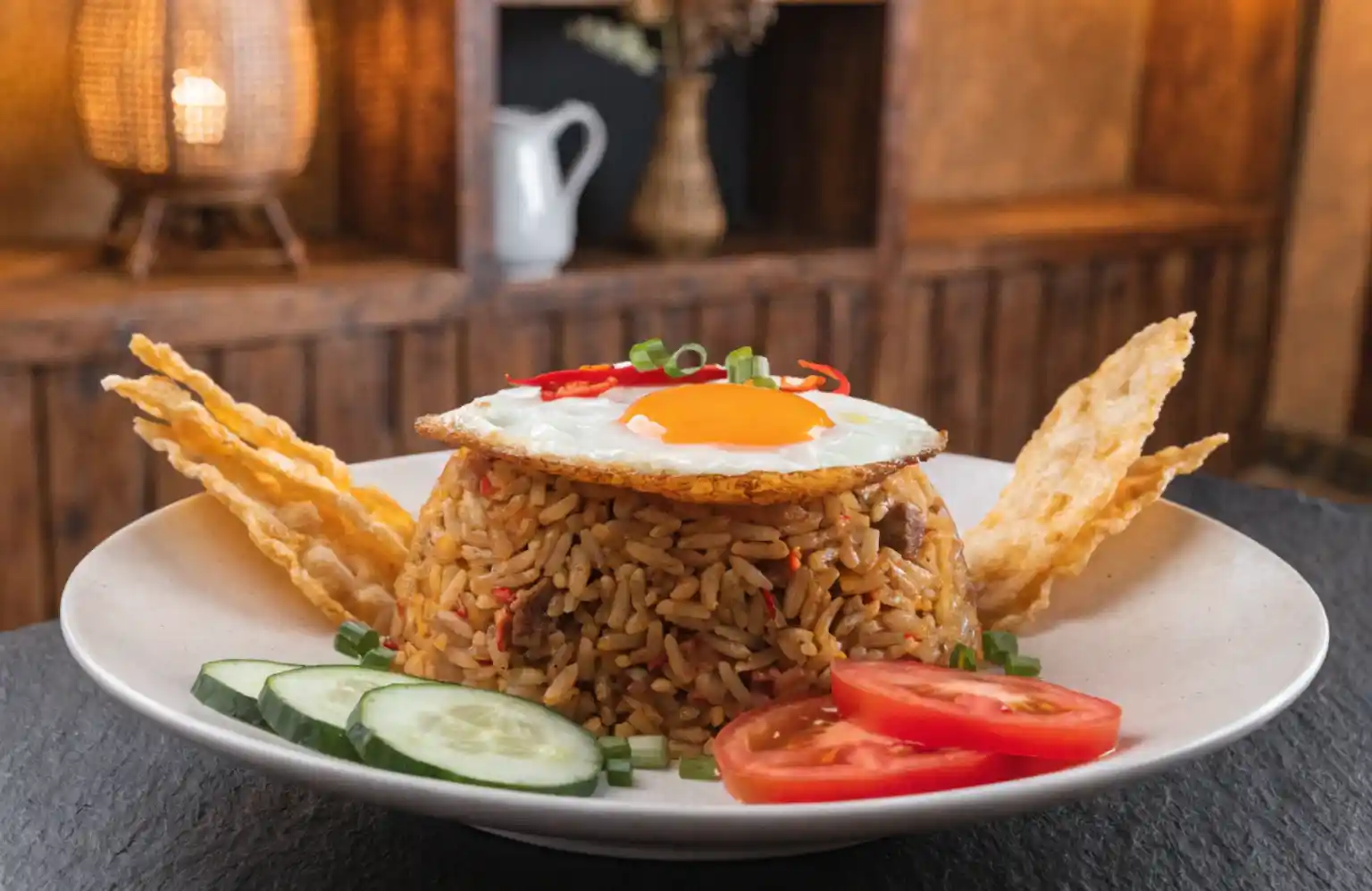
Mound the nasi goreng on plates. Top each portion with a fried egg.
Arrange cucumber and tomato slices alongside. They provide cooling contrast to the spicy, rich rice.
Add prawn crackers if you have them. They’re traditional and add fun crunch.
Garnish with extra sliced chili and green onions. Simple but effective presentation.
Nasi Goreng Variations
This base recipe adapts beautifully to different preferences. Nasi goreng pattaya wraps the rice in an omelet – impressive and delicious.
Add sambal for extra heat. Indonesian chili paste kicks up the spice level significantly.
Sweet fried rice versions use pineapple or raisins. It’s less traditional but surprisingly good.
Seafood nasi goreng uses a mix of shrimp, squid, and fish. Coastal regions favor this variation.
Comparison to Other Rice Dishes
How does this stack up against other asian easy dinner recipes like hibachi fried rice? The flavor profiles differ significantly.
Hibachi fried rice uses butter and soy sauce. It’s simpler and less complex than nasi goreng.
Chinese fried rice typically includes oyster sauce and sesame oil. The aromatics differ too.
Schezwan fried rice brings serious heat and tangy flavor. Nasi goreng is more balanced.
Each has its place, but IMO, nasi goreng offers the most complex flavor. The kecap manis makes all the difference.
Make-Ahead and Meal Prep
Nasi goreng works brilliantly for meal prep. Make a big batch and portion it into containers.
It keeps refrigerated for 4 days. Reheat in a hot skillet for best texture.
Don’t refrigerate with the fried egg on top. Add fresh fried eggs when reheating.
The flavors actually improve after a day. The rice absorbs the seasonings more deeply.
Common Mistakes to Avoid
Using fresh rice creates mushy, clumpy results. Always use day-old rice for proper texture.
Low heat prevents that essential char flavor. Crank the heat high and work quickly.
Adding too much liquid makes soggy rice. The sauces should coat, not drown.
Overcrowding the pan steams instead of fries. Use a large wok or cook in batches.
Skipping the shrimp paste loses authentic flavor. It adds umami depth that’s hard to replace.
Serving Suggestions
This easy food for lunch works as a complete meal. Add a side of satay for special occasions.
Serve with sambal on the side. Let people adjust their own spice level.
Pair with Indonesian vegetable pickles (acar). The acidity cuts through the richness perfectly.
A simple cucumber salad adds refreshing crunch. Keep the sides light since the rice is rich.
Why Homemade Beats Takeout
Restaurant nasi goreng often sits under heat lamps. Your fresh version tastes infinitely better.
You control the spice level and protein quality. No mystery ingredients or excess oil.
Making it costs maybe $8 for four servings. Takeout charges $12-15 per single portion.
The satisfaction of nailing authentic indonesian food at home is priceless. Plus your kitchen smells amazing.
Perfect for Busy Weeknights
This qualifies as one of the easiest lunch ideas with rice simple enough for weeknight cooking. Twenty-five minutes from start to finish.
Most of that time is just chopping and measuring. The actual cooking takes under 10 minutes.
Use leftover rice from previous nights. This turns leftovers into something exciting.
It’s faster than delivery and tastes fresher. FYI, your family will request this regularly.
Photographing Your Nasi Goreng
Want that nasi goreng aesthetic for social media? Plate it beautifully in a shallow bowl.
The fried egg on top is photogenic – keep that yolk runny. Natural lighting makes it look even better.
Nasi goreng photography benefits from garnishes. Fresh herbs, lime wedges, and chili slices add color.
Overhead shots work best. Show the whole composition with sides arranged around the main dish.
Final Thoughts on Rice Perfection
Nasi goreng proves that simple ingredients create spectacular results when prepared correctly. This is comfort food elevated to art.
The smoky char, complex seasonings, and perfect texture make this unforgettable. Every bite delivers satisfaction.
Once you master this, you’ll make it constantly. It’s too easy and too delicious not to.
So fire up that wok and get cooking. Your best fried rice adventure starts now.
Nasi Goreng Recipe: Indonesia’s Legendary Fried Rice You Can Master
4
servings420
kcal25
minutesIndonesian nasi goreng features day-old rice stir-fried with aromatics, protein, and sweet soy sauce over high heat. The dish combines kecap manis, garlic, shallots, and chili for complex sweet-savory-spicy flavor. Topped with a fried egg and served with cucumber and tomato. Ready in 25 minutes, this authentic street food classic beats takeout.
Ingredients
4 cups cooked rice, day-old
3 tbsp vegetable oil
2 eggs
2 cloves garlic, minced
2 shallots, sliced
1 red chili, sliced
3 tbsp kecap manis
2 tbsp soy sauce
1 tbsp fish sauce
1 tsp shrimp paste
½ tsp white pepper
8 oz chicken/shrimp/tofu
2 green onions, sliced
1 cup cabbage, shredded
Fried eggs for serving
Cucumber and tomato slices
Prawn crackers
Directions
- Prep all ingredients before cooking
- Mince garlic and slice shallots
- Mix all sauces in small bowl
- Break up cold rice with hands
- Heat wok to smoking hot
- Add oil and swirl to coat
- Stir-fry garlic, shallots, chili 30 seconds
- Add protein in single layer
- Cook until just done, remove
- Add more oil if needed
- Add cold rice to hot wok
- Break up clumps with spatula
- Stir-fry rice 2-3 minutes
- Push rice to side of wok
- Pour sauce mixture into empty space
- Let bubble, then toss everything
- Add cabbage, stir-fry 1 minute
- Return protein, add green onions
- Mix thoroughly until hot
- Crack eggs into center of wok
- Fry until edges crispy
- Serve topped with fried egg
- Add cucumber and tomato sides
FAQs
Can I use freshly cooked rice instead of day-old? You can, but results will be much better with day-old rice. If you must use fresh, spread it on a tray and refrigerate for 2-3 hours minimum. Fresh hot rice creates gummy, clumpy fried rice.
What if I can’t find kecap manis? Mix regular soy sauce with molasses or brown sugar in a 2:1 ratio. It won’t be exactly the same but captures the sweet-savory profile. Some stores also carry it as “sweet soy sauce.”
Is nasi goreng very spicy? Not necessarily. The heat level is completely adjustable. Start with less chili and add more to taste. The dish focuses more on savory-sweet balance than heat.
Can I make this vegetarian? Absolutely! Use tofu instead of meat and skip the shrimp paste (or use vegetarian shrimp paste). The dish works beautifully without animal proteins while staying flavorful.
Why does my fried rice turn out mushy? Common causes: fresh rice instead of day-old, too much sauce, not enough heat, or overcrowding the pan. Use cold day-old rice and high heat for best results.