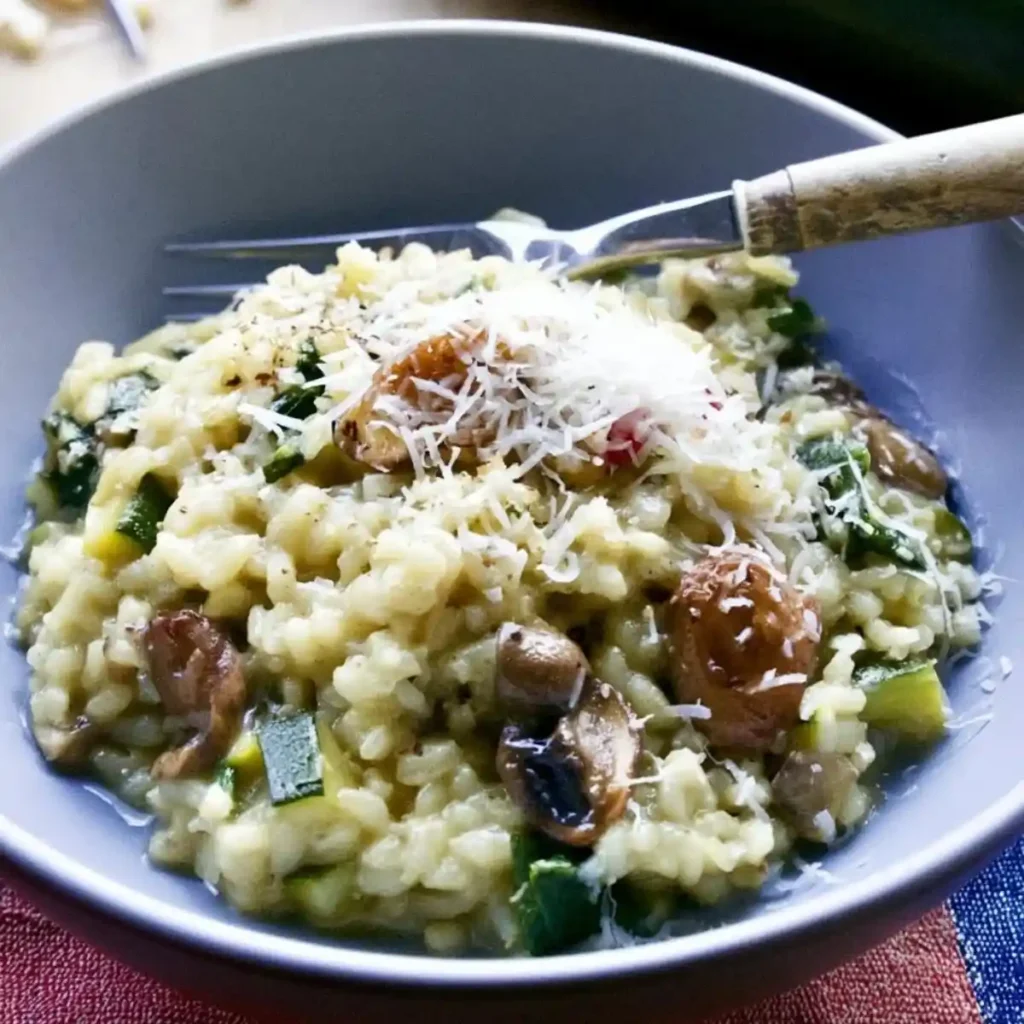
Think risotto is too fussy for a weeknight? Think again. This Zucchini Mushroom Risotto delivers restaurant-level creaminess in about 30 minutes, and it’s way easier than people make it sound.
I used to avoid risotto entirely, convinced it required constant babysitting and some kind of Italian grandmother’s intuition. Turns out, it just needs patience and a wooden spoon.
Servings: 4
Prep time: 10 minutes
Cook time: 30 minutes
Total time: About 40 minutes
Why This Risotto Actually Works
Ever wonder why risotto turns out gluey at some restaurants and perfectly creamy at others? It’s all about technique, not luck. Arborio rice releases starch gradually, and that starch is what creates the signature creamy texture.
Zucchini adds freshness while mushrooms bring earthy depth. Parmesan ties everything together with salty richness. IMO, this combination beats plain mushroom risotto by a mile, since the zucchini keeps things from feeling too heavy.
Ingredients You’ll Need
Nothing here requires a specialty grocery run, aside from maybe the Arborio rice if your pantry’s a little basic. Everything else sits in a standard grocery store without much searching.
Here’s your complete lineup:
- Olive oil or vegetable oil – 1 tablespoon
- Onion – 1/2 medium, finely chopped
- Zucchini – 1 medium, chopped
- Baby Bella or button mushrooms – 8 ounces, sliced
- Arborio rice – 1 cup
- Chicken or vegetable stock – 3 1/2 to 4 cups, kept warm
- Dry white wine – 1/2 cup
- Parmesan cheese – 1/2 cup, freshly grated
- Fresh basil – 2 tablespoons, chopped
- Salt – 1/2 teaspoon, or to taste
- Black pepper – 1/4 teaspoon, freshly ground
- Saffron – 1 pinch, optional
That saffron pinch is optional, but it adds a gorgeous golden color if you’ve got it lying around.
How To Make Zucchini Mushroom Risotto, Step By Step
Warm Your Stock First
Heat the stock in a separate saucepan over low heat and keep it warm throughout the entire cooking process. This step matters more than people realize, so don’t skip it.
Adding cold stock to your rice shocks the temperature and slows down cooking. Keeping it warm ensures the rice cooks evenly and absorbs liquid at a steady, predictable pace.
Sauté The Onion
Heat the olive oil in a large pot over medium heat until it shimmers slightly. Add the finely chopped onion and cook for 2 to 3 minutes, stirring occasionally.
You want the onion soft and translucent, not browned or crispy. This gentle sauté builds a sweet, savory base that supports every other flavor added later in the process.
Cook The Zucchini And Mushrooms
Add the chopped zucchini and sliced mushrooms directly into the pot with the softened onion. Cook for 4 to 5 minutes, stirring occasionally so nothing sticks or burns.
Mushrooms release a surprising amount of moisture as they cook, and you want that excess liquid to reduce down. This concentrates their earthy flavor instead of leaving the pot watery.
Toast The Rice
Add the Arborio rice straight into the pot with the vegetables. Stir constantly for about 1 minute, coating every grain in oil and letting it toast slightly.
Have you ever wondered why some risottos taste flat? Skipping this toasting step is often the culprit. Toasted rice grains hold their shape better and absorb liquid more evenly throughout cooking.
Deglaze With White Wine
Pour in the dry white wine and stir constantly as it bubbles and cooks down. Keep stirring until most of the liquid absorbs into the rice, which takes just a couple minutes.
This step adds acidity and depth that plain stock alone can’t replicate. If you’re avoiding alcohol, swap it for extra stock and add a splash of lemon juice near the end instead.
Begin Adding Stock Gradually
Add about 1/2 cup of warm stock to the pot. Stir frequently, letting the rice absorb most of the liquid before adding the next addition.
This is the part people find tedious, but it’s genuinely not that hard. You’re basically just standing near the stove, stirring occasionally while scrolling your phone or chatting with whoever’s in the kitchen.
Keep Building Layer By Layer
Continue adding warm stock about 1/2 cup at a time, stirring regularly after each addition. Wait until the rice absorbs most of the liquid before pouring in more.
This gradual process takes about 18 to 22 minutes total. Each addition coaxes more starch out of the rice, building that signature creamy texture one small pour at a time.
Check For Doneness
Taste a spoonful of rice periodically as you near the 18-minute mark. Properly cooked risotto should feel creamy overall but still have a slight bite right in the center of each grain.
Overcooked risotto turns mushy and loses its texture entirely. Undercooked risotto stays too firm and starchy. You’re aiming for that perfect middle ground, sometimes called “al dente” in Italian cooking circles.
Stir In The Finishing Touches
Once the rice reaches that ideal texture, stir in the Parmesan cheese, fresh basil, salt, black pepper, and optional saffron. Mix thoroughly so everything distributes evenly throughout the pot.
The cheese melts into the warm rice almost instantly, adding richness and that unmistakable salty depth. The basil brightens everything up with a fresh, herbaceous finish right at the end.
Adjust And Serve
If the risotto looks too thick at this point, stir in a small splash of additional warm stock until it loosens to a creamy, slightly flowing consistency. Taste and adjust the seasoning as needed.
Serve the Zucchini Mushroom Risotto immediately while it’s warm and creamy. Risotto waits for no one, since it thickens up fast as it cools.
Tips For Risotto Success
A few small habits separate mediocre risotto from genuinely great risotto. These come straight from my own kitchen trial and error over the years.
- Never skip warming the stock – cold stock disrupts even cooking
- Add liquid gradually – dumping it all in at once ruins the texture
- Stir often, not constantly – frequent stirring releases starch without exhausting your arm
- Serve immediately – risotto loses its creamy magic as it sits and cools
Have you ever let risotto sit too long before serving? It thickens into something closer to rice pudding texture, which nobody’s asking for here
What To Serve With This Risotto
This risotto works beautifully as a main dish, but a few sides round out the meal nicely. Here’s what pairs well with it.
- A simple arugula salad with lemon vinaigrette
- Garlic bread or crusty Italian bread
- Grilled chicken or shrimp on the side
- A glass of the same white wine used in cooking
Keep sides light since the risotto itself carries plenty of richness and flavor on its own.
Storing And Reheating Leftovers
Store leftover risotto in an airtight container in the refrigerator for up to 3 days. It thickens considerably once chilled, which is completely normal and expected.
Reheat gently on the stove with a splash of stock or water to restore that original creamy consistency. Microwaving works in a pinch, but stovetop reheating gives better texture results overall.
Frequently Asked Questions
Can I use a different type of rice for risotto?
Arborio rice works best due to its high starch content. Carnaroli rice also works well as an alternative, though standard long-grain rice won’t achieve the same creamy texture.
Can I make this risotto without wine?
Yes, replace the white wine with additional warm stock. Add a small splash of lemon juice near the end to mimic that acidic brightness the wine normally provides.
Why does my risotto turn out gluey instead of creamy?
This usually happens from overcooking or adding stock too quickly. Gradual additions with frequent stirring create creaminess without breaking down the rice into mush.
Can I make this recipe vegetarian?
Absolutely. Use vegetable stock instead of chicken stock, and swap in a vegetarian-friendly Parmesan-style cheese if traditional Parmesan doesn’t fit your dietary needs.
Why does risotto need to be served immediately?
Risotto continues absorbing liquid as it sits, causing it to thicken and lose its creamy consistency. Serving it right away preserves that signature texture people love.
Wrapping Up This Zucchini Mushroom Risotto Recipe
This recipe checks every box: creamy, comforting, surprisingly approachable, and genuinely impressive for a weeknight dinner. It’s the kind of dish that feels fancier than the effort it actually requires.
Give this recipe a try soon, and don’t rush the stock-adding process. Once you taste that first creamy, cheesy bite, you’ll understand exactly why risotto earned its reputation as ultimate comfort food.

Zucchini Mushroom Risotto
Ingredients
Method
- Heat the stock in a separate saucepan over low heat and keep it warm.
- In a large pot, heat the olive oil over medium heat until shimmering. Add the finely chopped onion and cook for 2 to 3 minutes until soft and translucent.
- Add the chopped zucchini and sliced mushrooms to the pot with the softened onion and cook for 4 to 5 minutes, stirring occasionally.
- Stir in the Arborio rice and toast for about 1 minute, coating every grain in oil.
- Pour in the dry white wine and stir constantly until most of the liquid has absorbed.
- Gradually add about 1/2 cup of warm stock to the pot, stirring frequently until the rice absorbs the liquid before adding more, repeating this for about 18 to 22 minutes.
- Taste the rice as it cooks and check for doneness; it should be creamy with a slight bite.
- Once the rice is cooked, stir in the Parmesan cheese, fresh basil, salt, black pepper, and optional saffron.
- If the risotto appears too thick, stir in a splash of warm stock until it reaches a creamy consistency. Taste and adjust seasoning if needed.
- Serve immediately, as risotto thickens quickly when sitting.