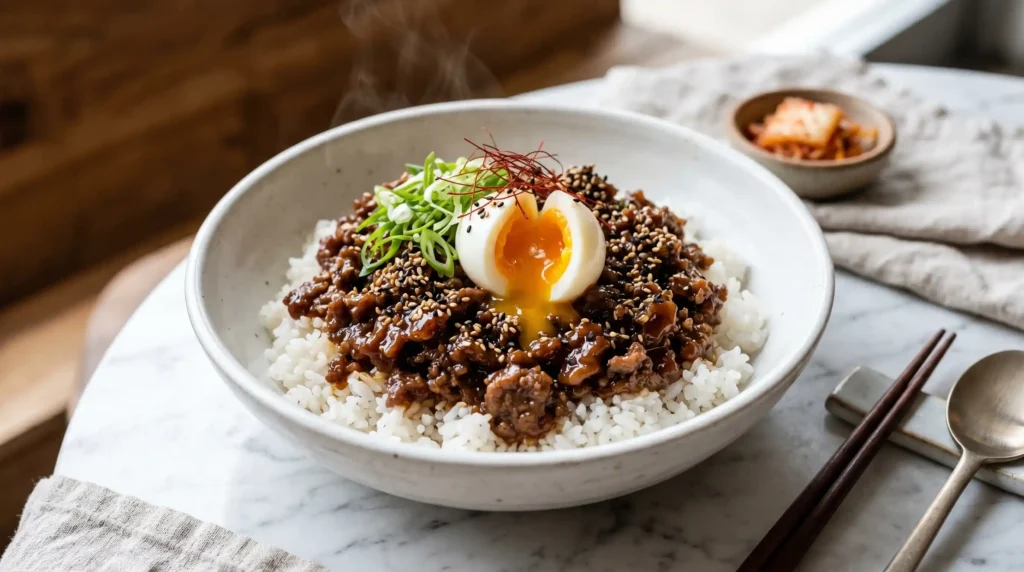
Prep Time: 5 minutes | Cook Time: 15 minutes | Total Time: 20 minutes | Servings: 2–3
Some dishes just stop you mid-bite and make you think, “why have I not been making this every week?” Korean Beef Bulgogi is exactly that dish. Sweet, savory, slightly caramelized ground beef over a bowl of fluffy rice – it is fast, bold, and completely satisfying.
I made this on a Wednesday night when I had absolutely nothing planned for dinner. Twenty minutes later I was eating one of the best weeknight meals I had put together all year. No special equipment, no long ingredient list, no drama.
If you have been curious about Korean-inspired cooking but felt intimidated to try, this Beef Bulgogi recipe is the perfect starting point. Trust me on this one.
What Exactly Is Beef Bulgogi?
Bulgogi is a classic Korean dish whose name literally translates to “fire meat.” Traditional bulgogi uses thinly sliced marinated beef cooked over high heat. This version uses ground beef with a quality bulgogi sauce, which cuts down prep time significantly without sacrificing any of the flavor.
The bulgogi sauce does all the heavy lifting here. It delivers a combination of soy, garlic, sesame, pear or apple for sweetness, and ginger – a flavor profile that is deeply savory, slightly sweet, and genuinely addictive. Have you ever tasted a sauce that makes you want to eat more rice just to have more of it? That is bulgogi sauce.
Here is why this ground beef version works so well:
- Ground beef cooks faster than sliced beef and absorbs the sauce more evenly
- Crispy edges develop naturally as the ground beef browns in the skillet
- Bulgogi sauce is widely available at most Asian grocery stores and many mainstream supermarkets
- The whole dish takes under 20 minutes from start to finish
- Minimal cleanup required – just one skillet and a serving bowl
Ingredients for Beef Bulgogi
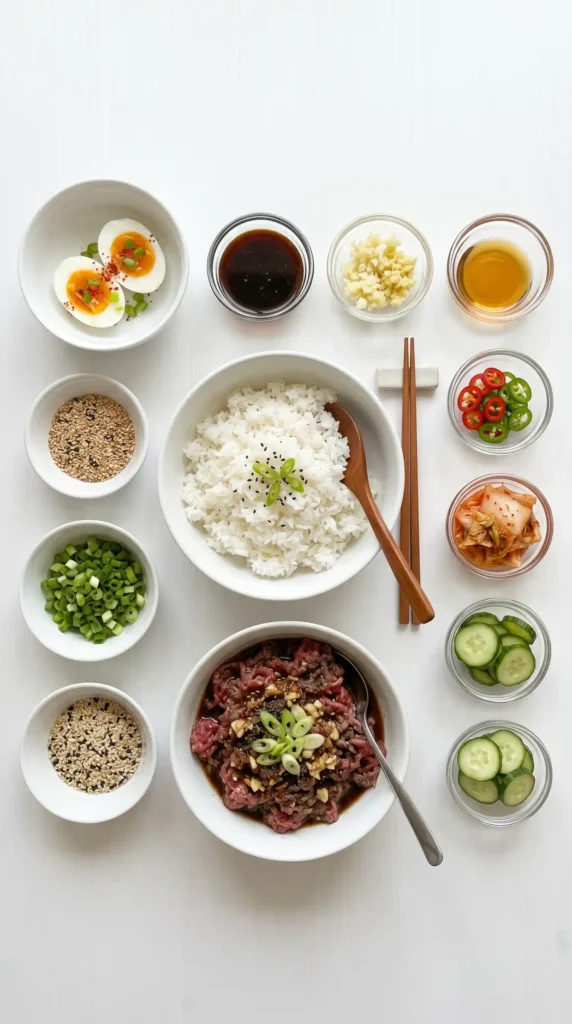
This recipe keeps things beautifully simple. You only need a handful of ingredients, but every single one plays an important role.
Main Ingredients
- 1 pound ground beef (use good quality beef for best flavor – 80/20 fat ratio works great)
- 1/4 cup bulgogi sauce (choose a high-quality brand for the richest flavor)
- 2 scallions, chopped (for garnish)
- 1 tablespoon sesame seeds (for added crunch and nuttiness)
- 2 soft-boiled eggs (optional, for garnish and extra protein)
FYI, the quality of your bulgogi sauce genuinely matters here. Since the sauce is one of only five ingredients, a good brand makes a noticeable difference. Look for one that lists pear or apple juice near the top of the ingredients for authentic sweetness.
For Serving
- Steamed white rice or short-grain rice (1 cup dry rice serves 2 generously)
- Extra scallions and sesame seeds for topping
How To Make Beef Bulgogi – Step By Step
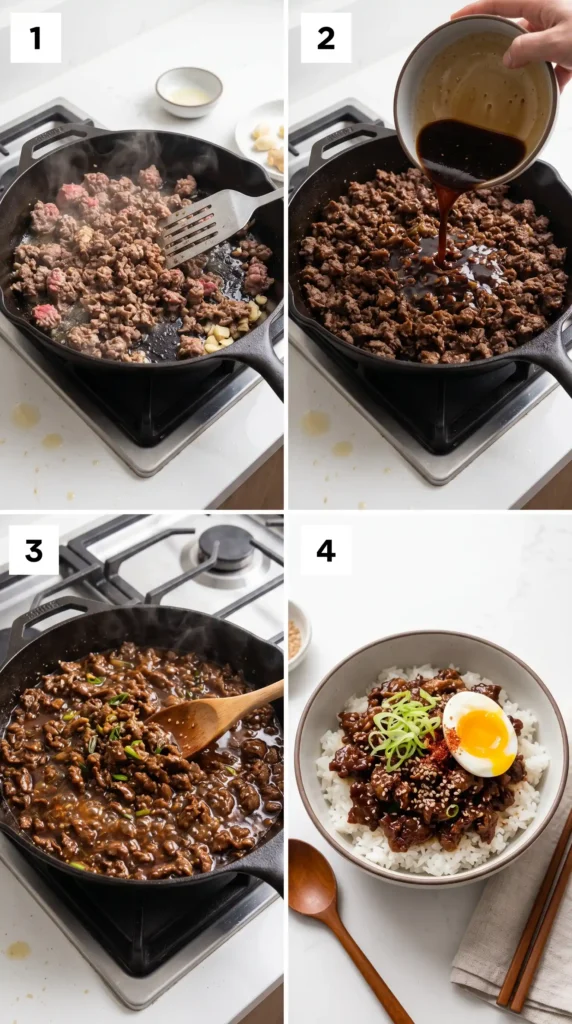
This recipe moves quickly, so read through all the steps once before you start. The actual cook time is only about 15 minutes, and every minute counts here for getting the texture right.
Step 1: Get the Skillet Ready
Place a large skillet or wide frying pan on the stove over medium heat. Let the pan warm up for a full minute or two before you add anything to it. A properly preheated skillet is the difference between ground beef that browns and caramelizes and ground beef that steams and turns grey.
You do not need any oil here. Ground beef contains enough natural fat to cook without sticking, especially at medium heat. Adding oil can make the finished dish feel greasy rather than glossy and saucy, so skip it.
Step 2: Brown the Ground Beef
Add the full 1 pound of ground beef to the preheated skillet. Use a wooden spoon or a flat spatula to break the beef apart into medium-sized crumbles as it cooks. You want pieces that are small enough to cook through evenly but not so fine that the beef becomes powder-like.
Cook the beef over medium heat for about 6 to 8 minutes, continuing to stir and break it apart every minute or so. The key thing to watch for here is browning. You want actual color on the beef – golden brown edges and slightly caramelized pieces. That browning adds a layer of flavor that plain grey cooked beef simply does not have.
During the last 2 minutes of browning, reduce your stirring and let the beef sit undisturbed for short bursts. This allows some pieces to develop those crispy, slightly charred edges that make the texture of this dish so satisfying. Those crispy bits are not mistakes – they are the best part.
Once the beef is fully browned with no pink remaining and you have some nicely crisped edges, carefully tilt the skillet and use a spoon to drain off any accumulated grease. Too much residual fat will dilute the bulgogi sauce and make the dish greasy instead of saucy and glossy. Drain it well.
Step 3: Add the Bulgogi Sauce
With the heat still on medium, pour the 1/4 cup of bulgogi sauce directly over the browned beef in the skillet. The sauce will hit the hot pan and start bubbling immediately – that is exactly what you want. Use your spoon to stir the sauce into the beef immediately so every piece gets coated.
Reduce the heat to medium-low and let the beef and bulgogi sauce simmer together for about 5 minutes. This simmering time is important. It gives the sauce time to reduce slightly, deepen in flavor, and fully coat the beef. Stir every minute or so to prevent anything from sticking to the bottom of the pan.
Watch the sauce as it simmers. You want it to thicken to a glossy, slightly sticky consistency that clings to the beef rather than pooling at the bottom of the skillet. If it reduces too quickly or starts to look dry, add a small splash of water – about 1 tablespoon at a time – and stir it in.
Taste the beef at this stage. The bulgogi sauce should give you a balanced hit of sweet, salty, and savory. If you want more depth, add just a tiny splash of soy sauce. If you want more sweetness, a drop of honey works perfectly. Adjust to your preference before serving.
Step 4: Soft-Boil the Eggs (Optional)
If you want to add soft-boiled eggs as a garnish, prepare them while the beef cooks. Bring a small pot of water to a full boil. Gently lower 2 eggs into the boiling water using a spoon and set a timer for exactly 6 minutes and 30 seconds for a jammy, slightly runny yolk.
When the timer goes off, immediately transfer the eggs to a bowl of ice water to stop the cooking. Let them sit in the cold water for 3 minutes, then peel them carefully. The whites will be fully set and the yolks will be soft and custardy – a perfect contrast to the bold bulgogi beef.
Step 5: Assemble and Serve
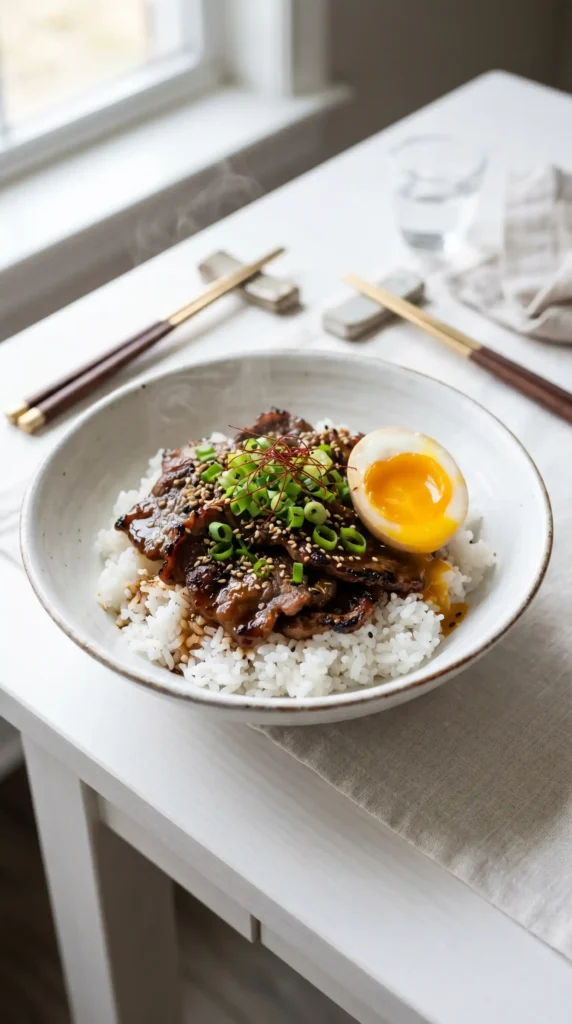
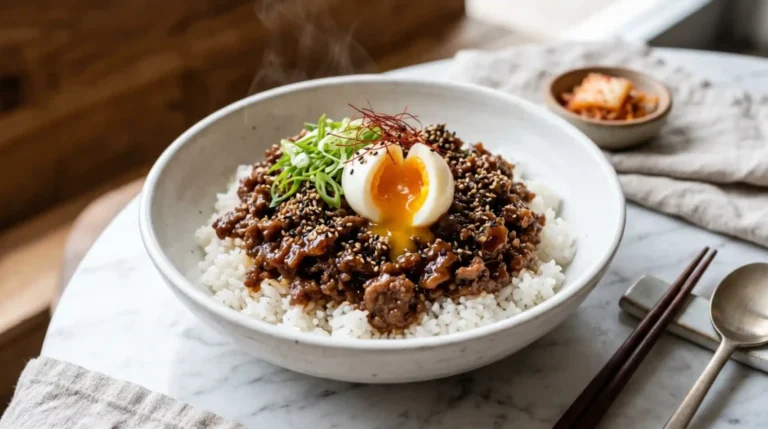
Scoop a generous portion of steamed rice into each serving bowl. Spoon the hot bulgogi beef over the top of the rice, making sure to get plenty of that glossy sauce along with the meat. The sauce soaks into the rice and makes every bite incredibly flavorful.
Scatter the chopped scallions across the top of each bowl. The raw scallions add a fresh, sharp contrast to the sweet richness of the bulgogi beef. Then sprinkle the 1 tablespoon of sesame seeds over everything for a light, nutty crunch that rounds out the textures beautifully.
If you made the soft-boiled eggs, slice each one in half lengthwise and nestle them alongside the beef in the bowl. The soft yolk will break slightly as you eat and mix into the bulgogi sauce and rice, adding a rich, creamy element that takes the bowl to another level entirely.
What To Serve With Beef Bulgogi
This dish is a complete, satisfying meal on its own over rice. But if you want to build it out into a fuller spread, here are some easy additions that work really well alongside it.
- Kimchi – the spicy, fermented tang cuts perfectly through the sweetness of the bulgogi sauce
- Steamed or sauteed bok choy for a simple green vegetable on the side
- Cucumber salad with rice vinegar and sesame oil for a cool, refreshing contrast
- Miso soup to round out the meal into a proper Korean-inspired spread
- Cauliflower rice if you want a lower-carb option that still soaks up the sauce well
Tips For the Best Beef Bulgogi Every Time
After making this recipe more times than I care to admit, here are the details that consistently produce the best results.
- Let the beef develop real browning. Do not rush this step. Pale grey beef and beautifully caramelized beef are very different eating experiences.
- Drain the grease before adding sauce. This keeps the dish saucy and glossy rather than greasy and heavy.
- Simmer the sauce long enough. Five minutes of simmering concentrates the flavors and creates that sticky, coating consistency.
- Use a wide skillet. More surface area means better browning. A narrow pan traps steam and prevents crispiness.
- Do not overcrowd the pan. Cook in two batches if needed. Crowding causes the beef to steam instead of brown.
Make-Ahead and Storage
Storing Leftovers
Store leftover Beef Bulgogi in an airtight container in the refrigerator for up to 3 days. The flavors actually deepen overnight, so day-two bulgogi is genuinely excellent. Reheat in a skillet over medium heat with a tiny splash of water to loosen the sauce.
Freezing
Beef Bulgogi freezes really well. Let it cool completely, then freeze in portions in zip-lock bags or airtight containers for up to 2 months. Thaw overnight in the fridge and reheat in a skillet. IMO, this is one of the best freezer meal options out there.
Meal Prep
This recipe scales up easily. Double or triple the batch, portion it into containers with rice, and you have ready-to-go lunches and dinners for the entire week. The sauce reheats beautifully and the beef stays flavorful without drying out.
Frequently Asked Questions
Can I use a different cut of beef instead of ground beef?
Absolutely. Traditional Beef Bulgogi uses thinly sliced ribeye or sirloin. If you want to go that route, slice the beef as thin as possible – ideally around 1/8 inch – and marinate it in the bulgogi sauce for at least 30 minutes before cooking over high heat. Ground beef is the quick, practical alternative that still delivers great flavor.
Where can I buy bulgogi sauce?
Most large supermarkets stock bulgogi sauce in the Asian foods aisle. Korean grocery stores carry multiple brands and options. Online retailers also carry popular brands like CJ Bibigo, Sempio, and Kikkoman. In a pinch, you can make a simple homemade version with soy sauce, brown sugar, sesame oil, garlic, and grated pear.
How spicy is Beef Bulgogi?
Traditional bulgogi sauce is not spicy – it leans sweet and savory. If you want heat, add a teaspoon of gochujang (Korean chili paste) to the sauce while it simmers. You can control the heat level completely, making this recipe friendly for both spice lovers and people who prefer milder food.
Can I make this recipe without the eggs?
Yes, the soft-boiled eggs are entirely optional. They add a nice richness and make the bowl look more substantial, but the dish is completely satisfying without them. If you do include them, the jammy yolk mixing into the rice and bulgogi sauce is genuinely one of the highlights of the bowl.
Can I use a different sauce instead of bulgogi sauce?
If you cannot find bulgogi sauce, teriyaki sauce makes a reasonable substitute for a similar sweet-savory flavor profile. It is not identical – bulgogi sauce has a more complex fermented depth – but it works in a pinch. You could also combine 3 tablespoons of soy sauce with 1 tablespoon of brown sugar and a teaspoon of sesame oil as a quick homemade substitute.
Final Thoughts
This Beef Bulgogi recipe is one of those rare dishes that looks impressive, tastes incredible, and takes almost no time to make. Twenty minutes, one skillet, five ingredients, and you have a dinner that genuinely excites you.
Whether you make it as a quick weeknight meal, a meal-prep staple, or the dish you show off to friends who think Korean cooking is complicated, it delivers every single time. The sweet, savory, slightly sticky bulgogi sauce over crispy ground beef and fluffy rice is about as satisfying as it gets.
Go make it tonight. Your Wednesday night self will thank you.
Beef Bulgogi
Ingredients
Method
- Place a large skillet or wide frying pan on the stove over medium heat for 1-2 minutes.
- Add the ground beef to the preheated skillet, breaking it apart into medium-sized crumbles.
- Cook the beef for about 6-8 minutes until browned, stirring every minute.
- Drain off excess grease from the skillet.
- Pour the bulgogi sauce over the browned beef and stir to coat.
- Reduce the heat to medium-low and simmer for about 5 minutes until the sauce thickens.
- Optional: Soft-boil the eggs in boiling water for 6 minutes and cool in ice water.
- Scoop rice into serving bowls and top with bulgogi beef.
- Garnish with chopped scallions and sesame seeds. Add soft-boiled eggs if using.