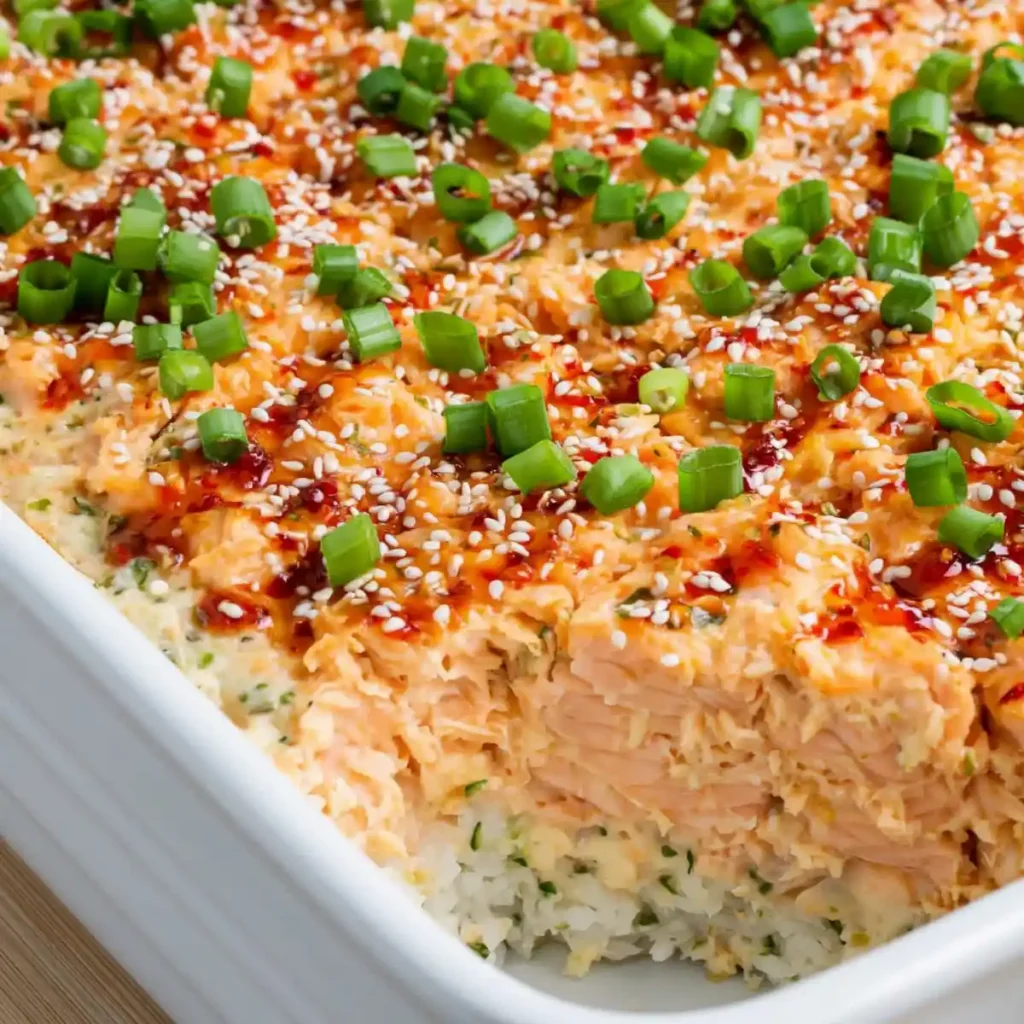
Craving sushi but dreading the rolling mat? Meet the salmon sushi bake. You layer rice, creamy salmon, and toppings in one dish, and nobody judges your lopsided rolls because you never roll anything.
I made my first sushi roll at home and ended up with a pile of rice on my counter. Then a friend showed me this casserole version. It tastes like a spicy salmon roll, and it takes far less skill.
Salmon Sushi Bake Recipe at a Glance
Here is the quick snapshot before we start. Skim it, then decide whether tonight is sushi night. (Spoiler: it is.)
- Servings: 6 to 8 people
- Prep time: 30 minutes
- Cook time: 30 minutes
- Cooling time: 20 minutes for the rice
- Total time: about 1 hour 20 minutes
- Difficulty: easy, no rolling skills required
Why This Salmon Sushi Bake Works
Have you ever wondered why a sushi roll tastes so good? It balances soft rice, rich fish, creamy sauce, and a salty crunch. This bake copies that balance in a simple pan.
The salmon mixture brings creamy, spicy flavor. Cream cheese and Japanese mayonnaise make it smooth. Sriracha adds a gentle kick, and soy sauce adds depth.
The furikake layer is my favorite part. It sits between the rice and the salmon, so every scoop tastes savory and a little smoky. IMO, it turns a good dish into a great one.
Ingredients and Quantities
Let’s go shopping. I list every amount here, so you never guess in the aisle. You need 22 items in total, and some of them serve as toppings.
The Salmon
- 1 1/2 pounds salmon fillet
- 1 teaspoon salt
- 1/2 teaspoon black pepper
- 1/2 teaspoon garlic powder
The Rice
- 2 cups dry Calrose sushi rice
- 2 1/2 cups water
- 1/4 cup seasoned rice vinegar
The Creamy Mixture
- 8 ounces imitation crab meat, chopped
- 1/2 cup Japanese mayonnaise
- 4 ounces cream cheese, softened
- 1 tablespoon sriracha
- 1 tablespoon low-sodium soy sauce
- 3 tablespoons furikake seasoning
The Toppings and Serving Items
- 2 tablespoons spicy mayonnaise
- 1 tablespoon sriracha, for topping
- 2 green onions, chopped
- 1 tablespoon black sesame seeds
- 1 tablespoon white sesame seeds
- 8 roasted seaweed sheets
- 1 English cucumber, sliced
- 1 avocado, sliced
- 2 tablespoons unagi sauce
FYI, Japanese mayonnaise tastes richer and tangier than regular mayo. Look for the bottle with the baby on the label. It changes the whole dish.
Choosing the Right Rice
Can you use any rice here? You can, but you should not. Sushi rice has a sticky texture that holds together under the creamy topping.
- Calrose rice: soft, sticky, and easy to find. My go-to choice.
- Japanese short-grain rice: slightly firmer, and great if you find it.
- Jasmine rice: too loose, so the layers fall apart.
- Long-grain rice: dry and fluffy, which makes the wrong texture.
I once used leftover jasmine rice because I felt lazy. The bake turned out crumbly, and it tasted like fish and regret :/. Buy the right rice.
How to Make Salmon Sushi Bake Step by Step
I break this into small steps. Read through once, then cook along with me. You can cook the rice while the oven heats, so the time moves quickly.
Step 1: Rinse the Rice
Place the sushi rice in a large bowl or fine strainer. Run cold water over it and stir gently with your fingers. Keep rinsing for about 1 minute, until the water looks mostly clear.
Rinsing removes extra starch. Too much starch makes the rice gummy. Drain it well before you cook.
Step 2: Cook the Rice
Add the rinsed rice and 2 1/2 cups of water to a rice cooker or pot. Follow the package directions for your method. In a pot, bring it to a boil, cover, and simmer on low until the water disappears.
Let the rice rest with the lid on for 10 minutes. This lets the grains finish steaming. Do not peek, because the steam does the work.
Step 3: Season and Cool the Rice
Move the warm rice onto a large tray or baking sheet. Pour the seasoned rice vinegar over the top. Fold it in gently with a spatula, using cutting motions instead of stirring.
Spread the rice thin and let it cool for about 20 minutes. Warm rice melts the creamy topping later. Patience here saves you a soggy mess.
Step 4: Heat the Oven
Preheat your oven to 400°F (200°C). Place the rack in the middle. A hot oven gives the salmon a nice bake without drying it out.
Line a baking sheet with parchment paper if you like easy cleanup. I always do. Future me appreciates the favor.
Step 5: Season the Salmon
Place the salmon fillet on the baking sheet. Sprinkle the salt, black pepper, and garlic powder evenly over the top. Rub it in gently with your fingers.
Pat the fish dry first if it feels wet. Dry salmon seasons better and bakes better. It takes five seconds.
Step 6: Bake the Salmon
Slide the salmon into the oven. Bake for 15 to 20 minutes, until the thickest part reaches 145°F (63°C) on a thermometer. The fish should flake easily with a fork.
Let it cool for 5 to 10 minutes. Hot salmon breaks down unevenly and heats the cream cheese too fast. Cool fish gives you better texture.
Step 7: Flake the Salmon
Move the salmon to a large mixing bowl. Pull off the skin and toss it out. Flake the fish into bite-size pieces with two forks.
Leave a few chunky pieces. They give the final dish a nice bite. You do not want baby food.
Step 8: Mix the Creamy Topping
Add the chopped imitation crab, Japanese mayonnaise, softened cream cheese, 1 tablespoon sriracha, and soy sauce to the bowl. Stir until everything looks fully combined.
Make sure the cream cheese sits at room temperature. Cold cream cheese forms lumps. Soft cream cheese blends right in.
Step 9: Press the Rice into the Dish
Spread the cooled rice evenly into a 9×13-inch baking dish. Press it lightly with a spatula or damp hands. Aim for an even layer, about one inch thick.
Wet your hands with water first. Sticky rice clings to dry fingers like glue. A little water solves that.
Step 10: Add the Furikake
Sprinkle the 3 tablespoons of furikake evenly over the rice. Cover the whole surface, including the corners. This layer gives you salty, savory flavor in every bite.
Do not skip it. I once forgot, and the bake tasted flat. Learn from my mistake.
Step 11: Add the Salmon Mixture
Spoon the salmon mixture over the furikake. Spread it gently to the edges with a spatula. Keep the layer even, so everything heats at the same speed.
Do not press down hard. You want a soft, creamy top. Smooth it out and move on.
Step 12: Broil
Place the dish under the broiler for 4 minutes. Watch it closely, because broilers work fast. The top should look hot and lightly browned.
Remove it as soon as you see golden spots. Leave it too long, and the mayo layer dries out. Four minutes usually does the job.
Step 13: Drizzle and Garnish
Drizzle the spicy mayonnaise and the extra tablespoon of sriracha over the top. Sprinkle on the green onions, black sesame seeds, and white sesame seeds. Add the unagi sauce if you like a sweet finish.
The drizzle makes the dish look like a restaurant plate. Use a squeeze bottle if you own one. A spoon works fine too.
Step 14: Serve
Scoop the warm bake onto a seaweed sheet. Add a slice of cucumber and a slice of avocado. Fold it up like a taco and eat it with your hands.
This part makes dinner fun. Let everyone build their own bites. It beats arguing over who gets the last roll.
Tips for the Best Salmon Sushi Bake
I have made this recipe many times, and these small tricks help every time. Each one fixes a mistake I made myself.
- Cool the rice fully. Warm rice melts the topping.
- Use Japanese mayonnaise. It tastes richer than regular mayo.
- Do not overbake the salmon. Dry fish ruins the creamy texture.
- Wet your hands. They stop the rice from sticking.
- Watch the broiler. Four minutes goes fast.
One more tip: add the seaweed at the table. Seaweed turns soggy if it sits too long. Keep it crisp until the last second.
Salmon Sushi Bake vs. Sushi Rolls
Why bake it instead of rolling it? Both taste great, but they ask for different effort. Here is how they compare.
- Time: the bake takes about the same, but you skip all the rolling.
- Skill: the bake needs none. Rolls need practice.
- Serving: the bake feeds a crowd from one pan. Rolls take much longer to make in bulk.
- Mess: the bake stays tidy. Rolls scatter rice everywhere.
I love a good roll, but I do not enjoy making 40 of them. The bake gives me the same flavor in a fraction of the stress.
Serving Ideas and Variations
You can change this dish in lots of ways. Here are a few swaps I enjoy.
- Swap the fish: use tuna or cooked shrimp instead of salmon.
- Add heat: stir in extra sriracha or a pinch of chili flakes.
- Skip the crab: double the salmon for a richer bake.
- Add crunch: top with crispy fried onions or tempura flakes.
Serve it with miso soup or a simple seaweed salad. Both keep the meal light. Cold green tea pairs well too.
Storing and Reheating Leftovers
Let the bake cool, then cover it tightly. It keeps in the fridge for 2 to 3 days. Store the seaweed, cucumber, and avocado separately, so they stay fresh.
Reheat a portion in the microwave for 1 to 2 minutes. Stir halfway through. Add a small splash of water over the rice if it feels dry.
Salmon Sushi Bake FAQs
Can I make salmon sushi bake ahead of time?
Yes. Assemble the dish up to a day early and cover it in the fridge. Add the broiling step right before serving. Garnish after it comes out.
What can I use instead of imitation crab?
Cooked shrimp, lump crab meat, or extra salmon all work. Chop them small so they mix evenly. Each one changes the flavor slightly.
Do I need furikake?
I strongly suggest it. Furikake adds salty, savory flavor that nothing else replicates. If you cannot find it, mix toasted sesame seeds with crushed seaweed and a pinch of salt.
Is this dish spicy?
It has mild heat. Sriracha gives a gentle kick, not a fire. Cut the sriracha in half for a milder bake, or add more for heat lovers.
Can I freeze it?
I do not recommend it. Rice turns hard after freezing, and the creamy topping can separate. Eat it fresh or keep it in the fridge for a few days.
Is the salmon safe to eat?
Yes. You bake the salmon to 145°F, which cooks it fully. The imitation crab comes pre-cooked, so you only need to chop it.
Final Thoughts on Salmon Sushi Bake
This salmon sushi bake gives you all the flavor of a spicy salmon roll with none of the rolling. Cool the rice, bake the salmon gently, layer with furikake, and broil briefly. Serve it with seaweed, cucumber, and avocado.
I make this whenever friends come over and I want to look impressive :). Try it this weekend, then tell me how it went. Who knew a casserole could taste this much like sushi night?
Salmon Sushi Bake
Ingredients
Method
- Rinse the sushi rice in a large bowl or fine strainer under cold water, stirring gently for about 1 minute until the water runs mostly clear. Drain well.
- Cook the rinsed rice with 2.5 cups of water in a rice cooker or pot according to package directions. Let rest covered for 10 minutes after boiling.
- Spread the warm rice on a tray and pour seasoned rice vinegar over it. Gently fold with a spatula and allow to cool for 20 minutes.
- Preheat your oven to 400°F (200°C). Prepare a baking sheet lined with parchment.
- Place the salmon on the baking sheet and season with salt, black pepper, and garlic powder. Bake for 15-20 minutes until the thickest part reaches 145°F (63°C). Let cool for 5-10 minutes after baking.
- Flake the cooled salmon into bite-size pieces, leaving some chunky pieces for texture.
- In a bowl, mix the flaked salmon with chopped imitation crab, Japanese mayonnaise, cream cheese, sriracha, and soy sauce until fully combined.
- Layer the cooled rice evenly into a baking dish, pressing down lightly to form an even layer of about one inch thick.
- Sprinkle furikake evenly over the rice, covering the entire surface.
- Spoon the creamy salmon mixture over the furikake, smoothing it gently without pressing down hard.
- Broil the assembled dish for 4 minutes, watching closely for golden spots on the top.
- Drizzle spicy mayonnaise and sriracha on top, and sprinkle with green onions and sesame seeds before serving.
- Enjoy the bake by scooping it onto a seaweed sheet with slices of cucumber and avocado, folding it like a taco.