Servings: 6 people | Prep Time: 20 minutes | Cook Time: 45 minutes | Total Time: ~65 minutes
Some recipes just feel like a hug in a dish. This Vegetable Casserole is exactly that. It’s warm, hearty, loaded with good-for-you veggies, and honestly one of the easiest dinners you can make on a busy weeknight. No complicated techniques, no hard-to-find ingredients.
I first made this on a cold Sunday when I had half a fridge full of random vegetables and absolutely zero motivation to do anything fancy. What came out of the oven was so good that it became a weekly staple in my house — and I’m not even a little sorry about it.
Have you ever stared into your fridge wondering what on earth to make for dinner? This easy vegetable casserole recipe is the answer every single time. Let’s walk through it together.
What You Need: Full Ingredient List
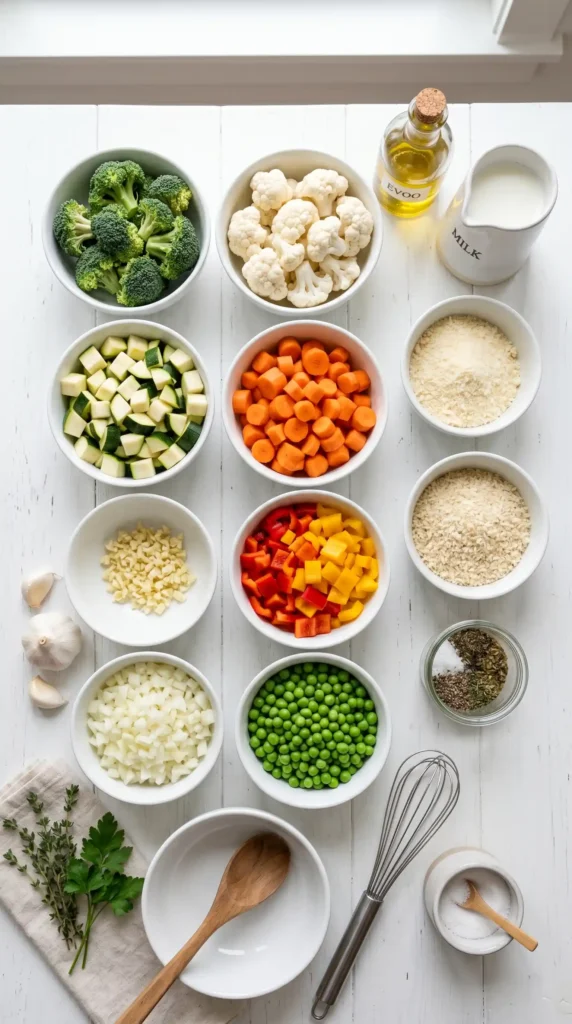
Here’s everything you need to make this vegetable casserole for 6 people:
Vegetables
- 2 cups (200g) broccoli florets, cut into bite-sized pieces
- 2 cups (200g) cauliflower florets, cut into bite-sized pieces
- 1 large zucchini (about 250g), sliced into half-moons
- 1 large red bell pepper (about 150g), diced
- 1 cup (130g) frozen peas, thawed
- 1 medium yellow onion (about 150g), finely diced
- 3 garlic cloves, minced
- 2 medium carrots (about 150g), peeled and sliced
Sauce and Seasoning
- 3 tablespoons (45ml) olive oil
- 3 tablespoons (25g) all-purpose flour
- 2 cups (480ml) whole milk or unsweetened plant milk
- 1 cup (240ml) vegetable broth
- 1 teaspoon salt, or more to taste
- 1/2 teaspoon black pepper
- 1/2 teaspoon smoked paprika
- 1/4 teaspoon dried thyme
- 1/4 teaspoon garlic powder
Topping
- 1 cup (100g) shredded cheddar cheese (or dairy-free alternative)
- 1/2 cup (50g) breadcrumbs
- 1 tablespoon (15ml) olive oil or melted butter
Why This Vegetable Casserole Recipe Actually Works
A lot of vegetable casseroles end up bland or watery — and that’s a real shame. This recipe avoids both problems. The white sauce base holds everything together and adds creaminess without being heavy. The vegetable broth adds depth, and the smoked paprika brings a subtle warmth that makes each bite interesting.
The breadcrumb and cheese topping is the secret weapon here. It crisps up beautifully in the oven and gives you that satisfying crunch on top of soft, tender vegetables underneath. That contrast in texture is what separates a great casserole from a forgettable one.
FYI, this recipe works just as well with whatever vegetables you have on hand. Swapping out the bell pepper for mushrooms or the zucchini for green beans changes the flavor profile slightly but keeps the dish just as satisfying. It’s a genuinely flexible recipe.
How to Make a Vegetable Casserole Step by Step
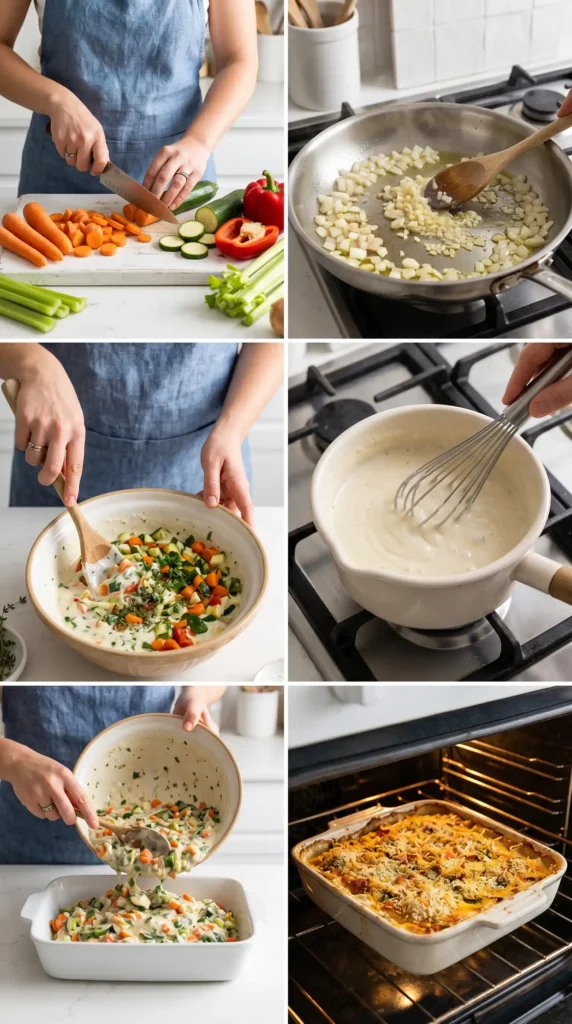
Alright, let’s get cooking. This process has a few stages but each one is straightforward. Follow along and you’ll have a gorgeous, bubbling casserole on the table in just over an hour.
Step 1: Prep All Your Vegetables
Before you turn on a single burner, get all your vegetables prepped and ready. Wash and dry the broccoli and cauliflower, then break them into bite-sized florets. Slice the zucchini into half-moon shapes about a quarter-inch thick — not too thin or they’ll go mushy in the oven.
Dice the bell pepper into roughly one-inch pieces. Peel and slice the carrots into rounds. Finely dice your onion and mince your garlic. Thaw the frozen peas by leaving them in a bowl at room temperature for 15 minutes or running them under cold water for a minute.
Having everything prepped before you start cooking makes the whole process smoother. Mise en place — a French term meaning everything in its place — sounds fancy but it just means being organized before you cook. It’s genuinely one of the best habits you can build in the kitchen.
Step 2: Saute the Aromatics and Harder Vegetables
Heat 2 tablespoons of olive oil in a large oven-safe skillet or a wide saucepan over medium heat. Once the oil shimmers, add the diced onion and carrot. Cook these together, stirring occasionally, for about 5 to 6 minutes. You want the onion to turn translucent and the carrot to start softening slightly.
Add the minced garlic and cook for another 60 seconds, stirring constantly. Garlic burns fast, so keep it moving. Once you smell it getting fragrant — that toasty, savory smell — it’s ready. Don’t walk away at this point; burned garlic will make the whole dish taste bitter and that’s a very unpleasant surprise.
Now add the broccoli, cauliflower, and bell pepper to the pan. Stir everything together and cook for another 4 to 5 minutes over medium heat. You’re not trying to fully cook the vegetables at this stage — just get them started. They’ll finish cooking in the oven where everything comes together.
Step 3: Build the Creamy Sauce
Push all the vegetables to the sides of the pan to clear the center. Add the remaining 1 tablespoon of olive oil to the center and let it heat for 30 seconds. Sprinkle the flour over the oil and stir it quickly to form a paste. This paste is called a roux and it’s what thickens your sauce.
Cook the roux for 1 full minute, stirring constantly. This step gets rid of the raw flour taste. Now, slowly pour in the vegetable broth while stirring. The mixture will thicken quickly — keep stirring to prevent lumps. Then gradually add the milk, a splash at a time, stirring continuously as the sauce builds.
Once all the liquid is in, stir in the salt, black pepper, smoked paprika, thyme, and garlic powder. Taste the sauce and adjust the salt if needed. Let the sauce simmer gently for 2 to 3 minutes, stirring, until it coats the back of a spoon. It should look smooth, creamy, and well-seasoned.
Step 4: Combine Everything
Remove the pan from the heat. Stir the zucchini and thawed peas into the vegetable and sauce mixture. These go in at this stage because they cook faster — adding them now means they won’t turn to mush in the oven. Stir gently so everything gets evenly coated in that creamy sauce.
If your skillet is oven-safe, you can bake the casserole directly in it. If not, transfer everything now to a lightly greased 9×13 inch baking dish. Spread the mixture out evenly. Make sure the sauce reaches all the corners. An uneven layer means some vegetables cook faster than others, so take a moment to spread it properly.
Step 5: Add the Topping and Bake
In a small bowl, mix together the breadcrumbs and 1 tablespoon of olive oil or melted butter. Stir until the breadcrumbs are evenly coated — this helps them turn golden and crispy in the oven rather than just turning dry and pale. Sprinkle the shredded cheese evenly over the top of the casserole.
Then scatter the oiled breadcrumbs evenly over the cheese layer. Slide the dish into your preheated oven at 375 degrees Fahrenheit (190 degrees Celsius) and bake for 25 to 30 minutes. You’re looking for the topping to turn deep golden brown and the sauce to be visibly bubbling around the edges of the dish.
Once it’s out of the oven, let the casserole rest for 5 to 10 minutes before serving. This rest time lets the sauce settle and thicken slightly, making it much easier to scoop into portions. Serving it straight from the oven means a runny mess on the plate — patience pays off here. 🙂
Tips for the Best Vegetable Casserole Every Time
- Don’t skip the roux: It’s what gives the sauce body. A watery sauce makes a soggy casserole — nobody wants that.
- Cut vegetables evenly: Uneven pieces cook at different rates. Keep your cuts consistent for the best texture throughout.
- Season the sauce well: Taste the sauce before baking. It should be well-seasoned because the vegetables will dilute it slightly in the oven.
- Use full-fat milk: It creates a creamier, more stable sauce than low-fat versions. Plant milk works too — just go for unsweetened.
- Don’t overcrowd the pan: A packed pan steams instead of roasting. If it looks too full, use a bigger dish.
Vegetable Casserole Variations Worth Trying
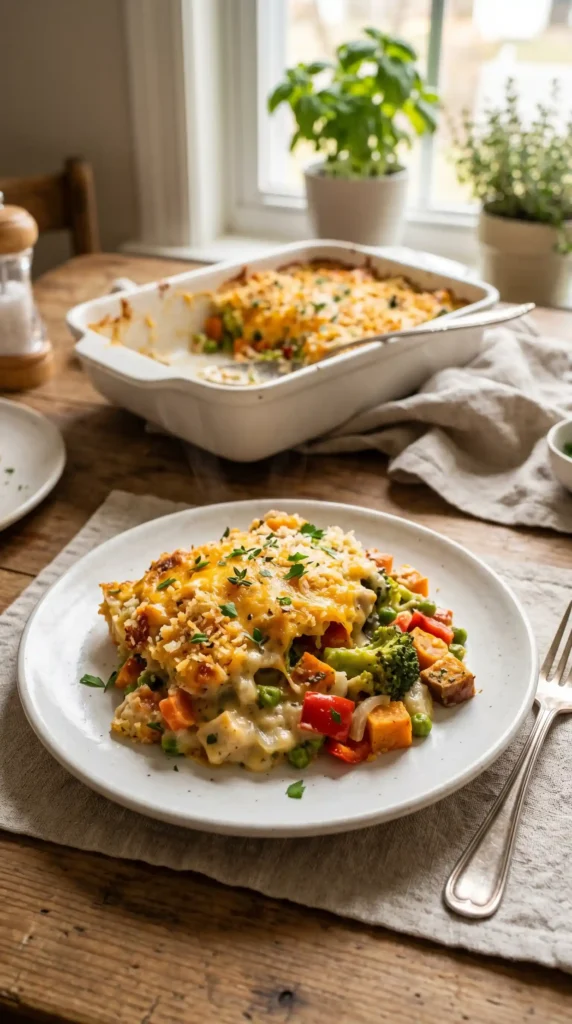
One of the things I genuinely love about this recipe is how easy it is to customize. Here are some variations that work really well:
- Cheesy Spinach Addition: Stir 2 cups of fresh spinach into the mix right before baking. It wilts perfectly and adds color.
- Protein Boost: Add a can of drained chickpeas or white beans to make it more filling and protein-rich.
- Spicy Version: Add 1/2 teaspoon of chili flakes to the sauce for a gentle heat that balances the creaminess.
- Vegan Option: Use plant milk, vegan butter, and dairy-free cheese. The result is just as satisfying, IMO.
- Pasta Casserole: Stir 2 cups of cooked pasta into the mix before baking for a heartier, more filling dish.
How to Store and Reheat Vegetable Casserole
Store leftover vegetable casserole in an airtight container in the refrigerator for up to 4 days. The flavors actually get better overnight as everything melds together. Honestly, day-two casserole hits harder than day-one — don’t ask me why, it just does.
To reheat, cover the dish with foil and warm it in the oven at 325 degrees Fahrenheit for 15 to 20 minutes. The foil stops the topping from overbrowning. For individual portions, a microwave on medium power for 2 to 3 minutes works fine — just add a splash of milk or broth to keep the sauce from drying out.
You can also freeze this casserole for up to 2 months. Freeze it in portions for easy weeknight meals. Thaw overnight in the fridge before reheating. The texture of the vegetables changes slightly after freezing, but the flavor stays great.
Frequently Asked Questions
Can I make this vegetable casserole ahead of time?
Yes, absolutely. Assemble the casserole fully, cover it tightly, and refrigerate for up to 24 hours before baking. When you’re ready, pull it out 20 minutes before baking to take the chill off, then bake as directed. You may need to add 5 extra minutes to the bake time.
What vegetables work best in a vegetable casserole?
Hardy vegetables like broccoli, cauliflower, carrots, zucchini, green beans, and bell peppers all work brilliantly. Avoid high-water vegetables like cucumber or tomato in large amounts — they release too much liquid and can make the sauce watery. Stick to vegetables that hold their shape when cooked.
Can I make this recipe gluten-free?
Yes. Swap the all-purpose flour for gluten-free all-purpose flour or cornstarch (use 2 tablespoons of cornstarch instead of 3 tablespoons of flour). Use gluten-free breadcrumbs for the topping. Everything else in the recipe is naturally gluten-free.
Why is my vegetable casserole watery?
The most common cause is vegetables releasing moisture during baking. To prevent this, make sure you cook the harder vegetables in the pan before baking. Also, don’t skip cooking the roux properly — that’s what thickens the sauce. Using full-fat milk instead of a watered-down alternative also helps significantly.
Can I use frozen vegetables instead of fresh?
You can, but thaw and drain them thoroughly first. Frozen vegetables hold a lot of water. If you add them straight from frozen, that extra water will thin out your sauce and result in a soggy casserole. Pat them dry with a paper towel after thawing for the best results.
Final Thoughts
This Vegetable Casserole recipe proves that comfort food doesn’t have to be complicated. You get a creamy, cheesy, golden-topped dish packed with vegetables that even the pickiest eaters tend to love. It’s filling, satisfying, and genuinely easy to pull off on any night of the week.
Whether you’re cooking for a crowd or meal prepping for the week ahead, this dish delivers every time. It’s the kind of recipe that adapts to what you have, what you like, and who you’re feeding — and that flexibility makes it truly valuable in any home cook’s rotation.
So next time you’re staring at a fridge full of random vegetables, you know exactly what to make. Preheat that oven and get going — you’ve got this.

Easy Vegetable Casserole
Ingredients
Method
- Prepare all your vegetables: wash and dry the broccoli and cauliflower, then break them into bite-sized florets. Slice the zucchini into half-moon shapes about a quarter-inch thick. Dice the bell pepper, peel and slice the carrots, finely dice the onion, and mince the garlic. Thaw the peas.
- Heat 2 tablespoons of olive oil in a large oven-safe skillet over medium heat. Add the onion and carrot, and cook for 5 to 6 minutes until the onion is translucent.
- Add the minced garlic and cook for another 60 seconds. Then add the broccoli, cauliflower, and bell pepper, stirring and cooking for another 4 to 5 minutes.
- Push the vegetables to the sides of the pan, add the remaining tablespoon of olive oil, and sprinkle the flour to form a roux. Cook the roux for 1 minute, stirring constantly.
- Slowly pour in the vegetable broth, stirring to prevent lumps, then gradually add the milk while stirring continuously. Add salt, black pepper, smoked paprika, thyme, and garlic powder, then let it simmer for 2 to 3 minutes.
- Remove from heat and gently stir in the zucchini and thawed peas.
- Transfer the mixture to a lightly greased baking dish, spreading it evenly.
- In a small bowl, mix breadcrumbs with 1 tablespoon of olive oil or melted butter. Sprinkle the shredded cheese over the mixture and then scatter the breadcrumbs on top.
- Bake in a preheated oven at 375°F (190°C) for 25 to 30 minutes until the topping is golden brown and the sauce is bubbling. Let it rest for 5 to 10 minutes before serving.