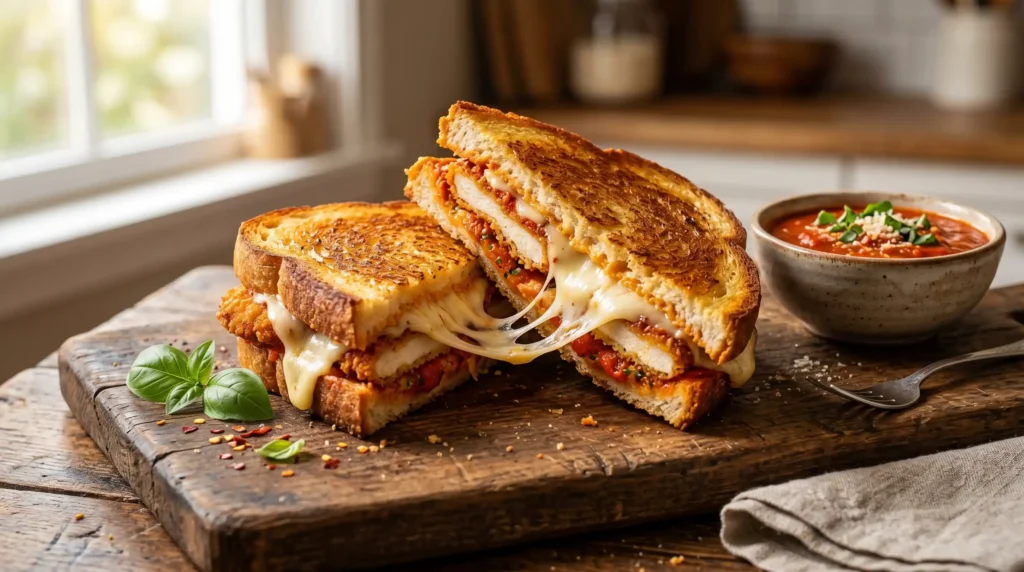
Prep: 15 min Cook: 20 min Total: 35 min Servings: 4 sandwiches Difficulty: Easy
Chicken Parmesan is a masterpiece. Grilled cheese is a masterpiece. Someone, at some magnificent point in culinary history, decided to combine them — and the result is the Chicken Parmesan Grilled Cheese. Crispy breaded chicken. Tangy marinara. Two types of melted cheese. Golden toasted bread. Every element of both dishes, in one sandwich you can hold in one hand.
I made this for the first time when I had leftover chicken parm from the night before and absolutely no interest in reheating it as-is. Slapping it between two buttered slices of sourdough and pressing it in a skillet was a moment of inspired laziness that I have since replicated on purpose, enthusiastically, many times.
Have you ever eaten a sandwich that felt genuinely celebratory? This is that sandwich. Let us build it properly, from scratch.
Why This Mashup Actually Makes Sense
Classic chicken parm already uses all the structural components of a great sandwich — it has a protein, a sauce, and melted cheese. The only thing missing was bread doing something worthwhile. Standard chicken parm gets served on a plate with pasta alongside, which is wonderful. But pressing those same elements between buttered bread and toasting the whole thing transforms a fork-and-knife meal into something you can eat standing at the kitchen counter, and that has a specific kind of joy to it.
The grilled cheese format also solves a practical problem: the bread acts as a moisture barrier that keeps the marinara contained and the chicken coating from going soft. The direct contact between the buttered bread and the hot skillet creates a crispy outer shell that seals everything inside while the cheese melts through the layers. Every bite delivers crunch, sauciness, and pull-apart cheese simultaneously.
IMO, this also makes one of the best quick weeknight dinners you can cook. Thirty-five minutes from start to finish, one skillet, and the kind of result that makes people think you put in significantly more effort than you actually did.
What You Need
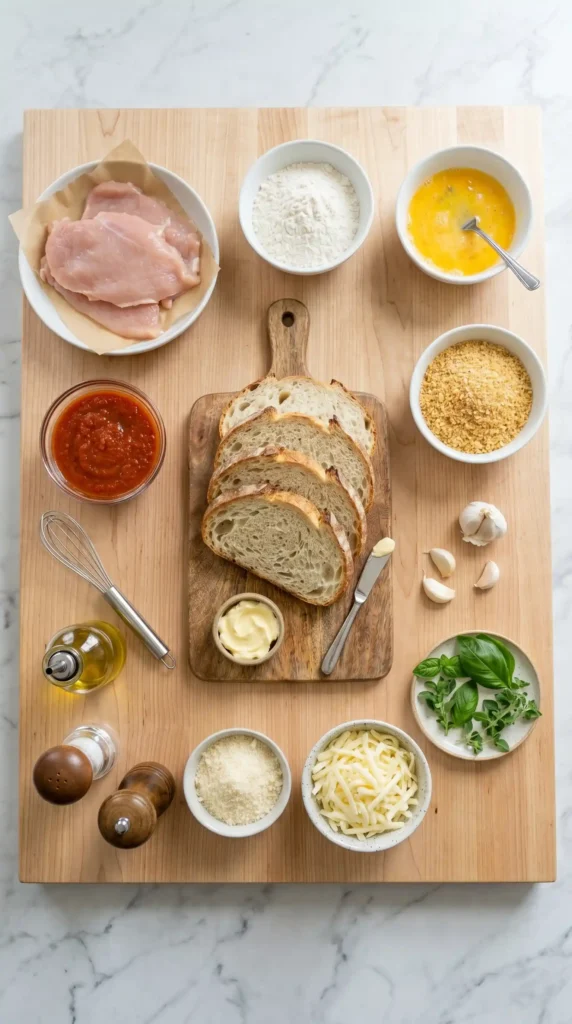
Two distinct components: the breaded chicken and the sandwich build. You can use leftover chicken parm if you have it, or make the chicken fresh in about 15 minutes. Both routes deliver the same outstanding result. Either way, do not skip the fresh-shredded cheese — pre-shredded bags contain anti-caking agents that prevent smooth, even melting.
For the Crispy Breaded Chicken
- 2 large boneless, skinless chicken breasts (about 180g each), halved horizontally to make 4 thin cutlets
- 1/2 cup (65g) all-purpose flour
- 2 large eggs, beaten
- 1 cup (100g) Italian seasoned breadcrumbs
- 1/3 cup (35g) freshly grated Parmesan cheese (mixed into breadcrumbs)
- 1 teaspoon garlic powder
- 1 teaspoon dried Italian seasoning
- 1/2 teaspoon salt
- 1/4 teaspoon black pepper
- 3 tablespoons olive oil (for pan-frying the chicken)
For the Marinara Sauce
- 1 cup (240ml) good quality marinara or tomato pasta sauce — store-bought works perfectly here
- 1/2 teaspoon dried Italian seasoning
- 1 garlic clove, finely minced (optional, if heating from jarred sauce)
- Pinch of red pepper flakes (optional)
Now For the Sandwich Build
- 8 slices of sourdough or Italian bread, cut about 1.5cm thick
- 4 tablespoons unsalted butter, softened (for buttering the outer bread faces)
- 1 and 1/2 cups (170g) fresh mozzarella or low-moisture mozzarella, thinly sliced or shredded
- 1/2 cup (50g) freshly grated Parmesan cheese
- Optional: fresh basil leaves tucked inside the sandwich before pressing
Thin Cutlets Are Non-NegotiableThick chicken breasts do not work in this sandwich — they take too long to cook through and create a sandwich too thick to press and toast evenly. Slice each breast in half horizontally to create two thin cutlets about 1cm thick, or pound them to even thickness between sheets of cling film. Thin cutlets cook in 3–4 minutes per side, fit between bread slices cleanly, and give you the right chicken-to-cheese ratio in every bite.
How to Make Chicken Parmesan Grilled Cheese
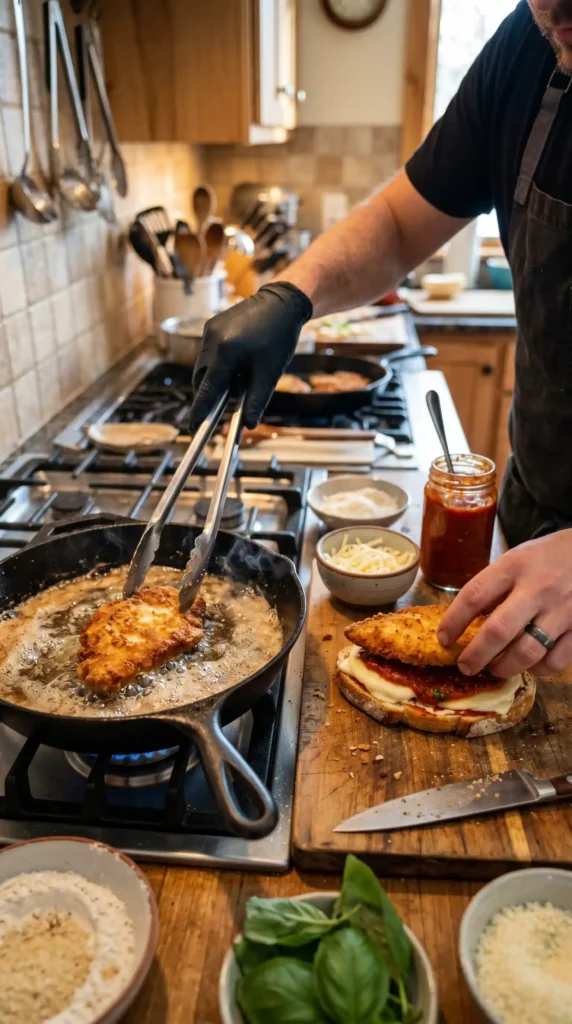
Three stages: bread and cook the chicken, warm the marinara, then build and toast the sandwiches. The chicken takes the most time and can be cooked ahead. Once the chicken is ready, the sandwich comes together in under 10 minutes. Read through the full process once before starting so nothing catches you off guard when the skillet is hot.
Step 1: Slice and Prepare the Chicken Cutlets
Place each chicken breast on a clean cutting board. Using a sharp knife held parallel to the board, slice each breast horizontally through the middle to create two thinner, equal-sized cutlets. If any of the resulting pieces look uneven in thickness, place them between two sheets of cling film and use a rolling pin or meat mallet to pound them gently to an even thickness of about 1cm. Even thickness means the chicken cooks uniformly — no dry edges and no underdone centre.
Pat each cutlet completely dry with paper towels. Moisture on the surface of the chicken prevents the flour coating from adhering properly and causes the breadcrumbs to steam rather than crisp during frying. Dry chicken coats cleanly and fries up golden. Take thirty seconds to do this step properly — it matters more than people expect.
Step 2: Set Up the Breading Station
Arrange three shallow dishes in a line. In the first dish, spread the flour in an even layer. In the second, whisk the beaten eggs until smooth. In the third, combine the Italian breadcrumbs, grated Parmesan, garlic powder, Italian seasoning, salt, and pepper — stir everything together until the Parmesan distributes evenly throughout the crumb mixture. The Parmesan mixed into the coating is one of the key details that makes this taste like genuine chicken parm rather than a plain breaded cutlet.
Season each dry chicken cutlet lightly with salt and pepper before dredging. Working one at a time, press each cutlet into the flour on both sides, shaking off any excess. Dip it in the beaten egg, letting the excess drip off for a couple of seconds. Then press it firmly into the breadcrumb mixture on both sides, using your fingers to press the crumbs in so they adhere in an even, thorough layer. No bare spots in the coating — any gaps leave the chicken surface exposed to direct heat, which dries it out rather than letting the breading protect and insulate it during frying.
Step 3: Pan-Fry the Chicken Cutlets
Heat the olive oil in a large skillet over medium-high heat until it shimmers and a breadcrumb dropped in sizzles immediately. Add two cutlets to the pan — do not crowd them. Frying too many at once drops the oil temperature and results in greasy, pale breading rather than a golden, crispy crust. Give each cutlet enough space to cook without overlapping or touching the others.
Cook the first side for 3–4 minutes without touching the cutlets. The breading needs uninterrupted contact with the hot oil to set and develop its crust. Moving them early tears the coating and leaves patches of grey, soft crumbs rather than a uniform golden surface. When the edges look golden and the crust looks set and firm, flip each cutlet once using tongs. Cook the second side for 3 minutes until equally golden and the internal temperature reads 74°C (165°F).
Transfer the cooked cutlets to a wire rack, not paper towels. Paper towels trap steam beneath the cutlet and soften the bottom crust quickly. The wire rack keeps air circulating underneath and maintains the crunch on both surfaces. Cook the remaining two cutlets the same way. Allow all four to rest for 2 minutes on the rack while you warm the marinara.
Step 4: Warm the Marinara Sauce
Pour the marinara into a small saucepan over medium-low heat. Add the Italian seasoning, optional minced garlic, and red pepper flakes if using. Stir and heat for about 3–4 minutes until warmed through and just starting to bubble at the edges. You do not need to cook it further — this is just a warming step. Remove from heat and set aside.
The sauce goes inside the sandwich in a thin, controlled layer — not poured generously. Too much marinara makes the interior wet and causes the bread to saturate and go soggy before the outside crisps properly. A tablespoon or two per sandwich, spread evenly, is the right amount. Restraint with the sauce produces a cleaner, crispier result. FYI, you can serve extra sauce warm on the side for dipping, which is genuinely the best approach.
Step 5: Assemble the Sandwiches
Lay all eight bread slices on a clean surface. Spread softened butter generously on one side of each slice — this is the outside face that will contact the skillet. Cover every corner and edge. Thin, uneven butter application produces patchy browning and dry spots. Generous, even coverage gives you the deep golden crust that makes a grilled cheese look and taste properly done.
On the unbuttered side of four bread slices, layer the fillings in this order: a layer of sliced or shredded mozzarella, a tablespoon of warm marinara spread to within 1cm of the edges, one crispy chicken cutlet, another tablespoon of marinara spread directly on the chicken, a second layer of mozzarella, and a generous pinch of grated Parmesan. If you want to add fresh basil leaves, tuck them in between the marinara and the final cheese layer now. Top with the remaining four bread slices, buttered side facing outward.
Step 6: Toast the Sandwiches
Heat the Pan Properly
Start by heating a large skillet over medium heat, not high. Since the Chicken Parmesan Grilled Cheese is thicker than a regular sandwich, it needs slower cooking to heat through evenly without burning the bread.
Toast the First Side
Place two sandwiches butter-side down in the pan. Then press them gently with a spatula to ensure even contact. Cook for 3–4 minutes until the bread turns deep golden and crispy.
Flip and Cook Evenly
Next, carefully flip the sandwiches using a wide spatula to keep the filling intact. Cook the second side for another 3 minutes until equally golden and the cheese inside starts to melt.
Melt the Cheese Perfectly
If the bread is done but the cheese isn’t fully melted, lower the heat and cover the pan for about 60 seconds. This helps the Chicken Parmesan Grilled Cheese melt perfectly without burning.
Rest and Slice
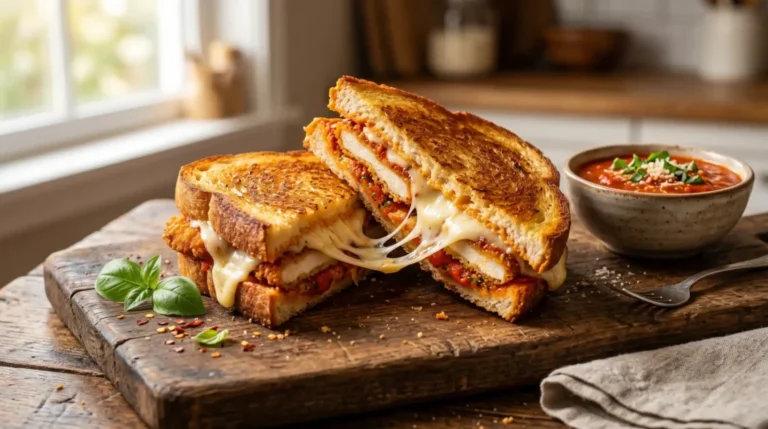
Remove the sandwiches from the pan and let them rest briefly. Then slice diagonally to reveal the layers and serve immediately with marinara sauce.
Using Leftover Chicken Parmesan
If you have leftover chicken parm, slice it thin and use it inside your Chicken Parmesan Grilled Cheese. The sandwich reheats everything as it cooks, making it just as delicious—if not better—the next day.
Variations Worth Making
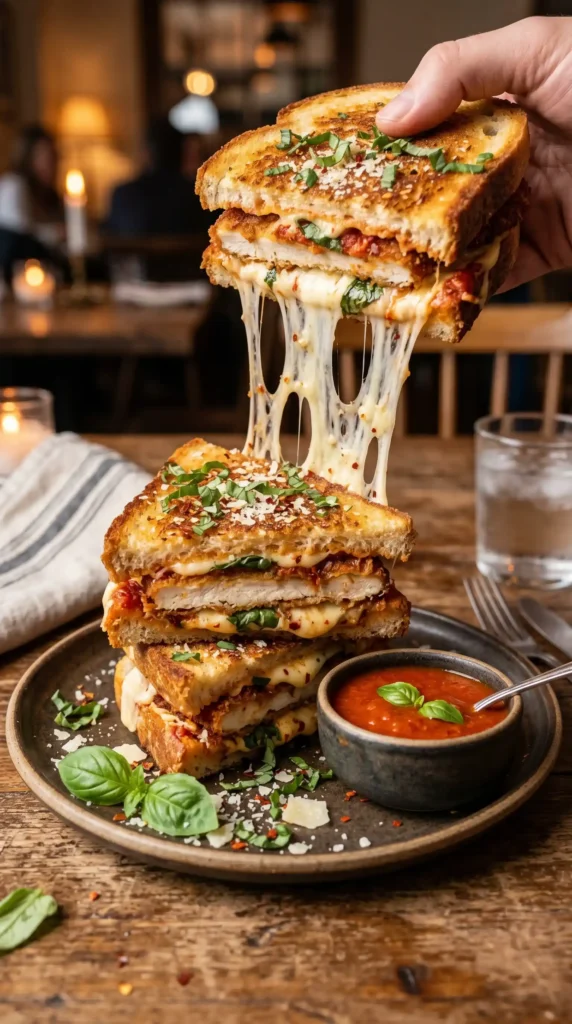
Spicy Arrabiata Chicken Parmesan Grilled Cheese
Swap the standard marinara for a homemade or store-bought arrabiata sauce — the spicy tomato sauce made with red chilli and garlic. The heat from the arrabiata cuts through the richness of the melted cheese and adds a layer of complexity that makes this version taste more grown-up and bold. Add a thin layer of sliced fresh red chilli inside the sandwich for extra heat if you want it even more pronounced.
Four-Cheese Version
Layer mozzarella, Parmesan, provolone, and fontina inside the sandwich instead of just two cheeses. Each cheese contributes something different: mozzarella pulls, Parmesan adds sharpness and salt, provolone melts smoothly, and fontina adds a creamy, nutty richness. The four-cheese version melts more dramatically and creates that spectacular cheese-pull when the sandwich is split open that makes food photography worth doing.
Air Fryer Chicken Version
Skip the pan-frying for the chicken entirely. Spray the breaded cutlets with cooking oil spray on both sides and air fry at 200°C (400°F) for 12–14 minutes, flipping once halfway, until golden and cooked through. The air fryer produces a genuinely excellent crust with significantly less oil, and the chicken comes out with a lighter, crispier texture than pan-frying. Assemble and toast the sandwich in a skillet as normal.
Storage and Make-Ahead Tips
The breaded, cooked chicken cutlets keep well in the fridge for up to 3 days in an airtight container. This makes the recipe practical to split across two days — cook the chicken on Sunday, assemble and toast the sandwiches fresh on Monday in under 10 minutes. The marinara also keeps refrigerated for up to 5 days. Keep both components separate and never assemble the full sandwich in advance unless you plan to eat it immediately.
A fully assembled and toasted sandwich does not store well. The bread absorbs moisture from the sauce and loses its crunch within 30 minutes of being off the heat. Always toast the sandwich fresh. If you need to hold a finished sandwich warm for a few minutes before serving, keep it on a wire rack in a low oven at 95°C (200°F) — this maintains temperature without steaming the bread soft.
Frequently Asked Questions
What bread works best for a Chicken Parmesan Grilled Cheese?
Sourdough is the top choice because its slight acidity complements the marinara, its dense crumb holds up to the wet filling without going soggy immediately, and it toasts to a deeply golden, crunchy crust that holds everything inside. Italian bread is a classic alternative with a lighter texture. Avoid soft sandwich bread — it compresses under the weight of the filling and becomes saturated with sauce before the outside browns properly.
Can I use store-bought breaded chicken or chicken tenders?
Yes, and this is a great shortcut for a genuinely fast weeknight version. Cook the store-bought breaded chicken according to its package directions — oven-baked or air-fried works best since it keeps the coating crispy. Avoid microwave preparation for this recipe since microwave-cooked breaded chicken turns soft and soggy almost immediately. Once the chicken is hot and crispy from the oven or air fryer, proceed with the sandwich assembly exactly as directed.
How do I prevent the bread from burning before the cheese melts?
Medium heat rather than medium-high is the key. This sandwich is thicker than a standard grilled cheese and needs more time for the interior heat to penetrate and melt the cheese fully. If the bread looks golden after 3 minutes but the inside still feels cold, cover the pan with a lid for 60 seconds — the trapped steam heats the interior without further browning the outside. This technique works reliably for any thick stuffed grilled cheese.
Can I use fresh mozzarella instead of low-moisture mozzarella?
Fresh mozzarella works but releases more moisture during melting, which can make the interior of the sandwich wet if you use too much. If you use fresh mozzarella, slice it thin and blot each slice with paper towels before layering to remove surface moisture. Low-moisture mozzarella melts more cleanly, stays in place better, and produces the stretchy pull without the extra liquid — it is the slightly more practical choice for this specific application.
Can I make this recipe gluten-free?
Yes. Use a certified gluten-free 1:1 flour blend for the dredging step, gluten-free Italian breadcrumbs for the coating, and gluten-free bread for the sandwich. The cooking process stays identical. The texture of the breading changes slightly — gluten-free breadcrumbs tend to produce a slightly denser crust than regular — but the flavour remains excellent throughout. Check that your marinara sauce is also certified gluten-free, as some jarred sauces use wheat-based thickeners.
Final Thoughts
The Chicken Parmesan Grilled Cheese is the kind of recipe that makes both classics better by combining them. The chicken parm gets a crispy bread shell and becomes portable. The grilled cheese gets a protein, a sauce, and a reason to feel like a proper meal. Neither one loses anything in the translation — they genuinely improve each other.
Thirty-five minutes, one skillet, and the kind of result that makes anyone who eats it immediately ask when you are making it again. That is the standard this recipe consistently meets.
Slice those chicken breasts thin, butter that bread all the way to the edges, and keep the heat at medium. Do those three things right and everything else follows naturally. Now go make dinner.
Chicken Parmesan Grilled Cheese
Ingredients
Method
- Slice and prepare the chicken cutlets by halving each chicken breast horizontally to create thin cutlets.
- Pound thicker pieces between cling film to an even thickness if necessary.
- Pat each cutlet dry with paper towels to ensure proper coating.
- Set up a breading station with three shallow dishes: one for flour, one for beaten eggs, and one for a mixture of breadcrumbs, Parmesan, garlic powder, Italian seasoning, salt, and pepper.
- Season each chicken cutlet lightly with salt and pepper, dredge in flour, dip in egg, then coat with the breadcrumb mixture.
- Heat olive oil in a skillet over medium-high heat until shimmering.
- Pan-fry the chicken cutlets, cooking each side for 3-4 minutes until golden and cooked through.
- Transfer cooked cutlets to a wire rack to maintain their crispiness.
- Heat the marinara sauce in a small saucepan over medium-low heat for 3-4 minutes until warm.
- Spread softened butter on one side of each slice of bread.
- On the unbuttered sides of half the bread slices, layer in the order: mozzarella, marinara, chicken cutlet, more marinara, another layer of mozzarella, and Parmesan.
- Top with the remaining bread slices, buttered side facing out.
- Toast each sandwich in the skillet over medium heat, pressing gently for even contact.
- Flip the sandwiches and cook until golden and cheese is melted, adjusting heat as needed.
- Let sandwiches rest briefly before slicing and serving.