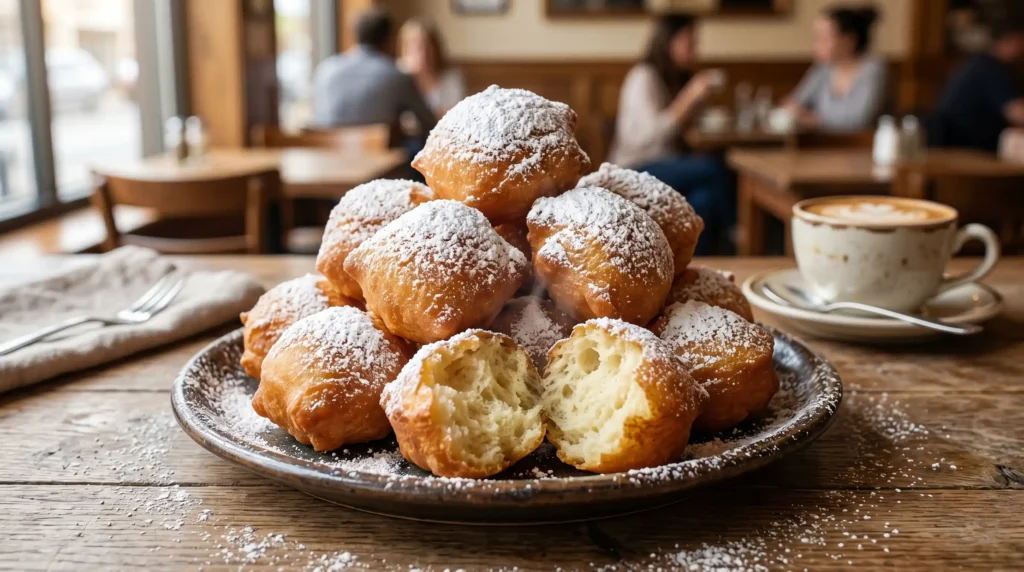
Picture this: a warm, pillowy square of fried dough, so light it practically floats off the plate, buried under a blizzard of powdered sugar. That is a beignet — and it is one of the most joyful things you can eat. I tried my first one in New Orleans and immediately thought, “Why does anyone eat anything else?”
The good news is you do not need a plane ticket to experience that magic. These Fluffy Buttermilk Beignets bring the whole New Orleans coffee-shop experience straight to your kitchen. The buttermilk is the secret weapon here — it adds a gentle tang, activates beautifully with baking powder, and produces the most impossibly light, airy texture you can achieve without yeast.
What Makes Buttermilk Beignets Different?
Traditional beignets use yeast, which means you wait. Sometimes an hour, sometimes longer. These Fluffy Buttermilk Beignets skip the yeast entirely and use buttermilk with baking powder instead. The result? A beignet that rises fast, fries beautifully, and lands on your plate in about 35 minutes total. No waiting. No proofing. No stress.
The buttermilk also adds something yeast versions cannot quite replicate — a subtle, creamy tang that makes the dough taste richer and more complex. IMO, it actually makes these beignets more interesting than the classic version. Bold claim, I know, but try them and tell me I am wrong.
Why You Will Love This Recipe
- No yeast and no long resting time — ready in about 35 minutes
- Uses pantry staples you almost certainly already have
- Produces a genuinely light, airy, pillowy interior
- Golden crispy exterior with a soft, cloud-like center
- Deeply satisfying with just powdered sugar, or dressed up with dipping sauces
- Perfect for breakfast, brunch, dessert, or a late-night treat
- Scales easily — double the batch for a crowd with no extra effort
Have you ever made something for the first time and immediately known you would make it again that same week? That was me with these beignets. The first batch disappeared in about four minutes between two people. No regrets whatsoever.
Ingredients You Need
The Core Ingredients
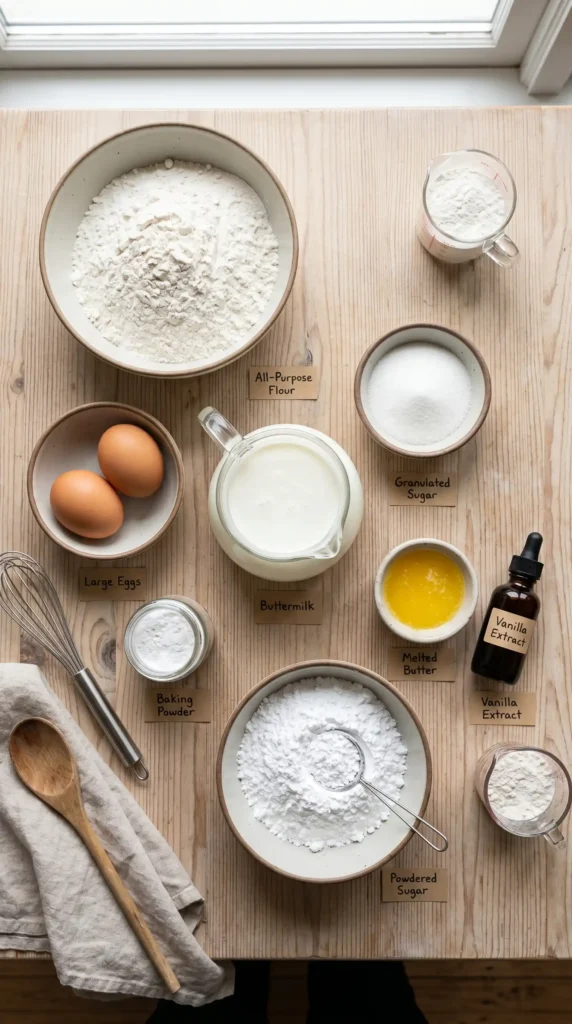
This recipe makes approximately 24 Fluffy Buttermilk Beignets, serving 4 to 6 people. Here is everything you need:
- 2 cups all-purpose flour (250g), plus extra for dusting the surface
- 2 teaspoons baking powder
- 1/4 teaspoon baking soda
- 2 tablespoons granulated white sugar
- 1/2 teaspoon fine salt
- 3/4 cup buttermilk (180ml), cold straight from the fridge
- 1 large egg, room temperature
- 1 tablespoon unsalted butter, melted and slightly cooled
- 1 teaspoon pure vanilla extract
- 4 cups (about 1 liter) neutral oil for frying — vegetable, canola, or peanut oil all work well
- 1 cup (120g) powdered sugar (confectioners sugar) for dusting — and then more, because you always need more
Optional Flavor Additions
The classic version is perfect with just powdered sugar, but these optional extras create exciting variations:
- 1/4 teaspoon ground cinnamon (mixed into the dry ingredients for warmth)
- 1/2 teaspoon lemon or orange zest (stirred into the wet ingredients for a citrus lift)
- 1/4 teaspoon freshly grated nutmeg (adds a subtle, cozy depth)
- Chocolate dipping sauce, caramel sauce, or chicory coffee on the side
- A pinch of cayenne in the powdered sugar for a spicy-sweet finish
FYI — the oil temperature is everything in this recipe. Too cool and the beignets absorb grease and come out dense and heavy. Too hot and the outside burns before the inside cooks through. Aim for a steady 350°F to 360°F (175°C to 182°C) throughout frying. A candy or deep-fry thermometer makes this effortless.
Equipment You Need
- A large, deep heavy-bottomed pot or Dutch oven for frying
- A candy or deep-fry thermometer (non-negotiable for consistent results)
- Two large mixing bowls
- A whisk and a rubber spatula or wooden spoon
- A lightly floured surface and a rolling pin
- A sharp knife or pizza cutter for cutting the dough
- A wire skimmer or slotted spoon for retrieving beignets
- A wire cooling rack set over a baking sheet lined with paper towels
- A fine mesh sieve for dusting powdered sugar
How to Make Fluffy Buttermilk Beignets (Step by Step)
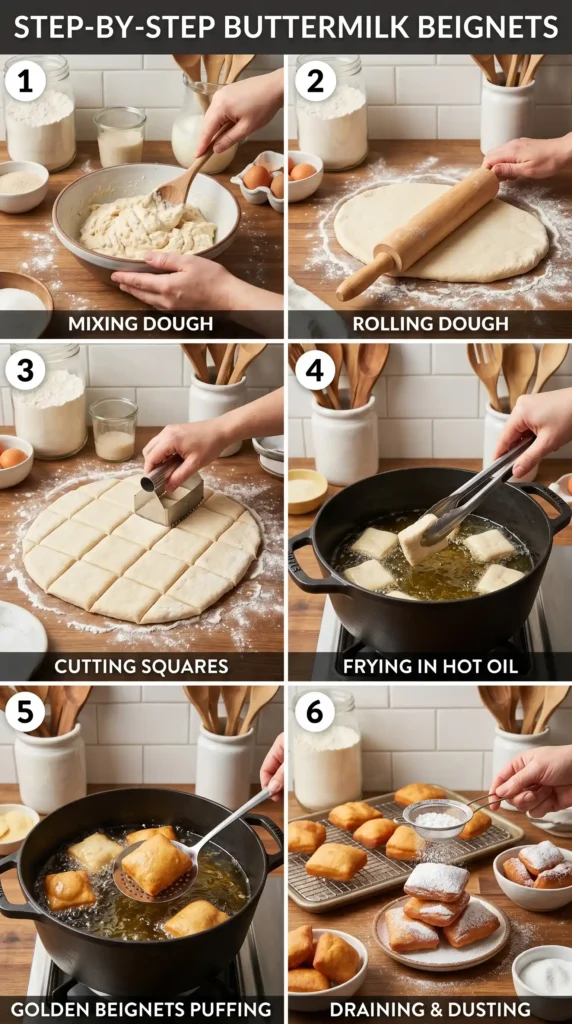
Fluffy Buttermilk Beignets : Every step here matters and each one builds toward that perfect light, golden, powdery result. Read through the full process once before starting — it makes the hands-on part go smoothly and confidently.
Step 1
Mix the Dry IngredientsIn a large mixing bowl, whisk together the 2 cups of all-purpose flour, 2 teaspoons baking powder, 1/4 teaspoon baking soda, 2 tablespoons granulated sugar, and 1/2 teaspoon salt. Whisk thoroughly for at least 30 seconds. This step distributes the leavening agents evenly throughout the flour, which is what gives you consistent rise and even texture in every beignet. If your baking powder clumps in one spot, some beignets will rise well and others will not. Take the 30 seconds — it matters more than it sounds.
Step 2
Mix the Wet IngredientsIn a separate bowl, whisk together the cold buttermilk, egg, melted butter, and vanilla extract until fully combined and smooth. The buttermilk should be cold from the fridge — cold buttermilk keeps the fat in the butter slightly firm, which helps create a more tender, layered dough texture. Make sure the melted butter has cooled slightly before adding it to the cold buttermilk, or the temperature difference may cause it to resolidify in small clumps. Whisk the wet mixture for about 20 seconds until everything looks uniform and slightly frothy.
Step 3
Combine Wet and Dry — GentlyPour the wet ingredients into the bowl of dry ingredients all at once. Using a rubber spatula or wooden spoon, fold everything together with slow, deliberate strokes until just combined. Stop mixing the moment you no longer see dry flour streaks. This is critical — overmixing develops gluten in the flour, which tightens the dough and produces tough, dense beignets rather than light, fluffy ones. A few small lumps in the batter are completely fine and actually a good sign. The dough will look slightly shaggy and sticky. That is exactly right.
Step 4
Rest the DoughCover the bowl loosely with plastic wrap or a clean kitchen towel and let the dough rest at room temperature for 10 minutes. This brief resting period allows the flour to fully hydrate, the leavening agents to begin activating, and the gluten to relax slightly. A relaxed dough rolls out more easily and produces a more tender final texture. Do not skip this step — it takes almost no effort and makes a real, noticeable difference in the finished beignets. Use these 10 minutes to heat your oil and set up your frying station.
Step 5
Heat the OilPour your 4 cups of neutral oil into a large, deep heavy-bottomed pot. Clip your thermometer to the side and heat the oil over medium heat until it reaches 355°F (180°C). This takes about 8 to 10 minutes depending on your pot and stove. Do not rush this with high heat — rapid heating can create hot spots in the oil where some areas are much hotter than others, leading to unevenly cooked beignets. Medium heat builds temperature gradually and more evenly. Keep the thermometer in the oil throughout frying and adjust the burner up or down as needed to maintain a steady temperature between 350°F and 360°F.
Step 6
Roll and Cut the DoughGenerously flour a clean work surface and turn the rested dough out onto it. Dust the top of the dough with flour as well and use a rolling pin to roll it gently to about 1/4 inch (6mm) thickness. Work from the center outward, turning the dough occasionally to prevent it from sticking to the surface. If it sticks, add a little more flour underneath. Once rolled, use a sharp knife or pizza cutter to cut the dough into squares approximately 2 to 2.5 inches on each side. Traditional beignets are square — do not worry about them being perfect, irregular edges actually fry up beautifully and give the beignets that characteristic rustic look.
Step 7
Fry in BatchesCarefully lower 4 to 5 beignet squares into the hot oil at a time — do not crowd the pot. Overcrowding drops the oil temperature rapidly, which causes the beignets to absorb excess grease rather than frying crisp and fast. Fry each batch for 1 to 1.5 minutes per side, turning once with a wire skimmer or slotted spoon, until both sides turn a deep, even golden brown. The beignets will puff dramatically as they hit the hot oil — this is the baking powder doing its job and it is extremely satisfying to watch. Between batches, let the oil return to 355°F before adding the next batch.
Step 8
Drain and Cool BrieflyUse your wire skimmer to transfer each finished batch of beignets directly to a wire cooling rack set over a paper towel-lined baking sheet. The wire rack keeps them elevated so excess oil drips away from all sides — if you drain them directly on paper towels, the bottom can sit in pooled grease and go soggy. Let each batch drain and cool for just 60 to 90 seconds before dusting with powdered sugar. You want them still hot when the sugar hits — the warmth helps the sugar adhere beautifully in that classic thick, snowy coating.
Step 9
Dust Generously with Powdered SugarUsing a fine mesh sieve, shower a generous — and by generous, I mean truly generous — amount of powdered sugar over the warm beignets. Traditional New Orleans beignets come with an almost comical amount of sugar on top, and that is not an accident. The thick sugar coating is part of the experience. Dust them, let the sugar settle for 10 seconds, then dust again. Serve immediately on a warm plate. Beignets are at their absolute peak within 5 to 10 minutes of frying. They are still good after that, but the first few minutes are pure magic.
Oil Safety Reminder: Never leave hot frying oil unattended. Keep a tight-fitting lid nearby in case of a grease flare-up — never use water on a grease fire. Keep children and pets away from the frying area. Use long tongs or a wire skimmer to add and remove beignets, keeping your hands safely away from the hot oil.Fluffy Buttermilk Beignets
No Thermometer? Test the oil by dropping a small piece of dough into it. If it sinks, rises immediately, and bubbles actively within 2 seconds, the oil is ready. If it sinks and stays down, the oil is too cool. If it browns within 30 seconds, the oil is too hot.Fluffy Buttermilk Beignets
Tips for the Fluffiest Beignets Every Time
Do Not Overwork the Dough
This is the single most common mistake with beignet dough. The moment you overmix, you develop too much gluten and the beignets bake up tough and chewy rather than light and airy. Mix until the flour disappears and then stop. A slightly lumpy, sticky dough is exactly what you want going into the fryer.
Keep Oil Temperature Steady
Oil temperature is everything. Below 350°F, beignets absorb grease and come out heavy. Above 370°F, they brown on the outside before cooking through. Check the thermometer between every batch and adjust your burner accordingly. If the temperature spikes, remove the pot from heat for 30 seconds before adding the next batch.
Fry Small Batches
Four to five beignets per batch is the maximum for a standard pot. More than that and the oil temperature drops too fast, resulting in greasy, dense beignets. Patience between batches produces dramatically better results than trying to rush through the whole batch at once. :/
Serving Suggestions
- Classic New Orleans style:Just powdered sugar, a lot of it, with chicory coffee or cafe au lait
- Chocolate lover:Serve alongside a warm dark chocolate dipping sauce
- Caramel apple:Pair with warm caramel sauce and a sprinkling of cinnamon sugar
- Berry compote:Spoon fresh strawberry or raspberry compote alongside for a fruity contrast
- Savory twist:Skip the sugar and serve with a creamy garlic aioli and fresh herbs
How to Store Leftover Beignets
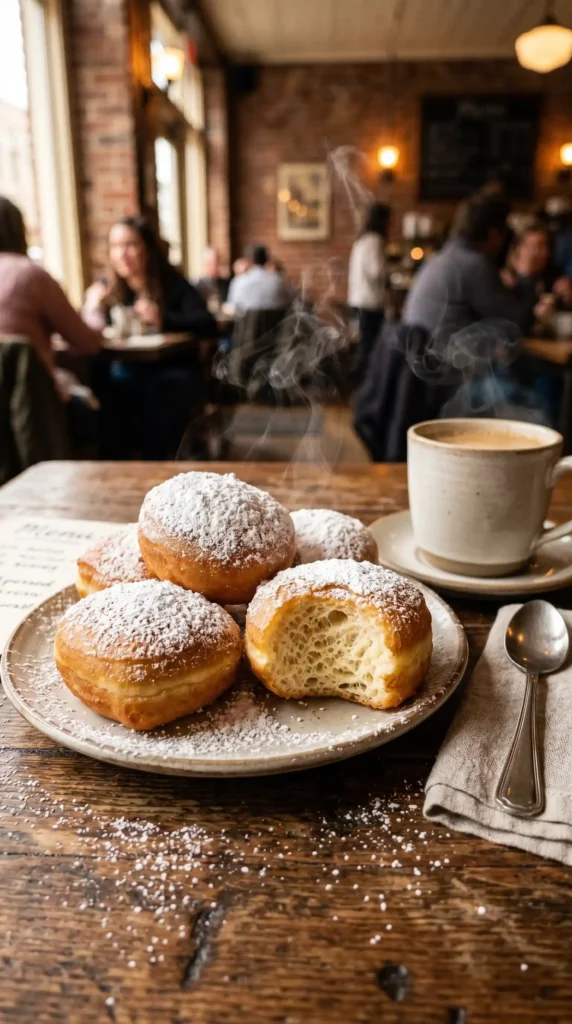
Beignets are genuinely best eaten immediately while hot and freshly dusted. That said, leftovers happen. Store cooled, undressed beignets in an airtight container at room temperature for up to 1 day. To reheat, place them on a baking sheet in a 350°F oven for 5 minutes, then dust freshly with powdered sugar before serving.
Avoid storing already-sugared beignets — the sugar absorbs moisture and turns sticky and wet overnight. Always dust with fresh powdered sugar right before serving, even for reheated ones.
Nutrition Info (Per Serving of 4 Beignets)
- Calories: approximately 280–320 kcal
- Protein: 5–6g
- Fat: 12–15g (primarily from frying oil)
- Total Carbohydrates: 38–42g
- Sugar: 10–14g (including powdered sugar)
- Fiber: 0.8g
Frequently Asked Questions
Can I make the beignet dough ahead of time?
Yes, with one important note. You can prepare the dough and refrigerate it covered for up to 8 hours before frying. Cold dough is actually easier to roll and cut than room temperature dough. When ready to fry, let the dough sit at room temperature for 10 minutes to take the chill off before rolling. Do not make the dough more than 8 hours ahead — beyond that, the baking powder loses its effectiveness and the beignets will not rise as dramatically when fried.
Can I bake Fluffy Buttermilk Beignets instead of frying them?
You can bake them at 400°F (200°C) for 10 to 12 minutes until golden, but the result is quite different from a fried beignet. Baked versions are more like fluffy dinner rolls — soft and pleasant but without the characteristic light, airy, crispy exterior that defines a true beignet. If you prefer to avoid frying, baked beignets still taste good and work well, but manage your expectations — they are a different experience entirely. Fluffy Buttermilk Beignets
What oil works best for frying beignets?
Any neutral oil with a high smoke point works well. Vegetable oil and canola oil are the most widely available and most affordable choices. Peanut oil is the traditional option used in New Orleans — it has a very high smoke point and adds a subtle, pleasant flavor. Avoid olive oil, coconut oil, or butter for frying as they have lower smoke points and will smoke or burn before reaching the correct frying temperature.
Why are my beignets not puffing up when they fry?
Three likely reasons: the dough was overmixed (which tightened the gluten and prevented rise), the oil temperature was too low (meaning the dough absorbed grease instead of puffing from steam), or the baking powder was old and lost its leavening power. Check your baking powder freshness by dropping a teaspoon into hot water — it should bubble vigorously. If it barely reacts, replace it before making this recipe.
Can I substitute regular milk for buttermilk?
Yes. Make a quick buttermilk substitute by adding 1 tablespoon of white vinegar or fresh lemon juice to 3/4 cup of regular whole milk. Stir and let it sit for 5 minutes — the milk will curdle slightly and thicken. This homemade buttermilk works perfectly in this recipe. Whole milk produces the best result; lower-fat milks work but give a slightly less rich flavor and texture.
How do I keep beignets warm while frying multiple batches?
Place a baking sheet in your oven set to its lowest temperature — usually 170°F to 200°F (75°C to 95°C). As you finish each batch, transfer the beignets to the warm oven on a wire rack. Do not dust them with powdered sugar until just before serving. Keeping them warm in the oven maintains their texture without overcooking them, and fresh powdered sugar right before serving always looks and tastes better than sugar that sat and absorbed into the dough.
Final Thoughts
Here is the truth about Fluffy Buttermilk Beignets: they feel like a special occasion food but require almost no special skill or equipment. A bowl, a pot of oil, a thermometer, and about 35 minutes stand between you and one of the most joyful bites in all of home cooking. That is a genuinely good deal.
Make them for a lazy weekend brunch. Make them for a dinner party dessert. Make them at midnight because sometimes that is exactly what a Tuesday needs. However you serve them, dust them with too much powdered sugar — it is not optional — and eat them while they are hot. That is the only rule that truly matters.
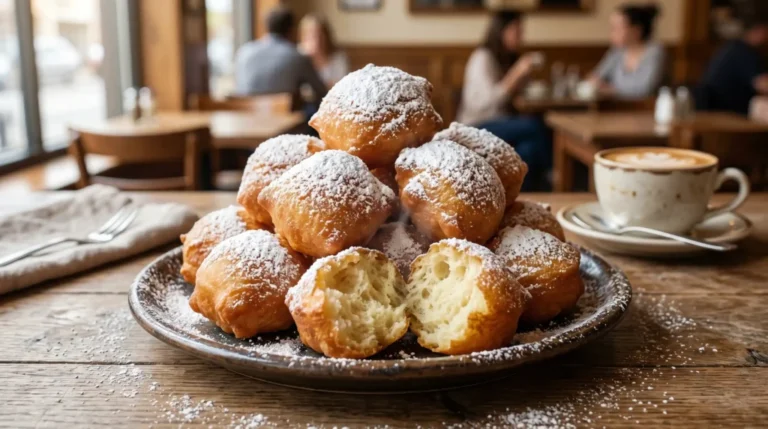
Fluffy Buttermilk Beignets
Ingredients
Method
- In a large mixing bowl, whisk together the flour, baking powder, baking soda, granulated sugar, and salt until thoroughly combined.
- In a separate bowl, whisk together the cold buttermilk, egg, melted butter, and vanilla extract until smooth.
- Pour the wet ingredients into the dry ingredients and fold gently until just combined. Be careful not to overmix.
- Cover the bowl with plastic wrap and let the dough rest for 10 minutes.
- Heat the oil in a deep pot, ensuring it reaches a temperature of 350°F to 360°F (175°C to 182°C).
- Roll the dough out on a floured surface to about 1/4 inch thickness and cut into 2 to 2.5 inch squares.
- Lower 4 to 5 beignet squares into the hot oil and fry for 1 to 1.5 minutes per side until golden brown.
- Transfer cooked beignets to a wire rack over a paper towel-lined sheet to drain oil.
- Dust generously with powdered sugar while warm and serve immediately.