
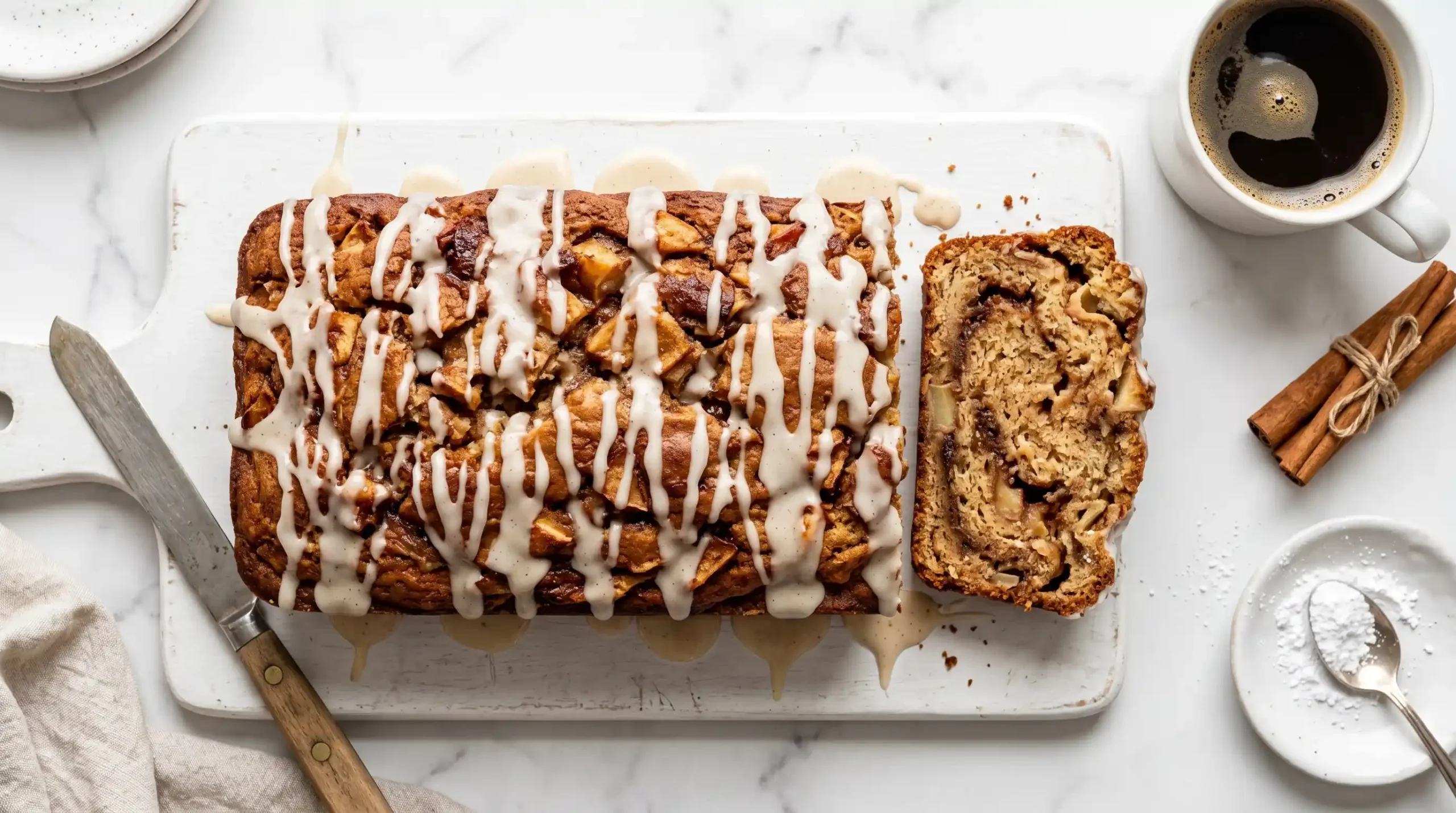
Apple fritters are wonderful. Banana bread is wonderful. Someone smarter than both of us figured out how to combine the spirit of an apple fritter — the warm spices, the tender apple pieces, the sweet glaze — into a quick bread loaf you can bake in your oven without a deep fryer in sight. The result is Spiced Apple Fritter Bread, and it genuinely lives up to every expectation that name creates.
I made this for the first time on a rainy October Saturday with a bag of apples that needed using and a genuine craving for something that would make the whole house smell like a bakery. It exceeded every expectation. It came out of the oven looking like something from a window display, and it tasted even better than it looked. That is a rare combination in home baking.
Have you ever wanted a recipe that works for breakfast, afternoon snacking, and dessert simultaneously? This is that recipe. Let us make it properly.
Why Spiced Apple Fritter Bread Works So Brilliantly
The name tells you the ambition: take the best parts of an apple fritter — the spiced apple pieces, the slightly crispy edges, the sweet glaze finish — and translate them into a loaf bread format that requires nothing more than a bowl, a loaf tin, and an oven. The result captures all of those fritter qualities without any of the frying complexity.
The brown sugar swirl layered through the centre of the loaf is the secret weapon. It creates distinct pockets of caramelised sweetness throughout the bread that taste different from the surrounding batter — denser, more toffee-like, and slightly gooey in the best possible way. When you slice the loaf and see that swirl pattern, the anticipation of the first bite is genuinely exciting.
IMO, the vanilla glaze poured over the warm loaf immediately after baking is the single step that transforms this from a good apple bread into something that actually evokes the fritter experience. It soaks very slightly into the warm surface and then sets into a thin, crackly, sweet shell as it cools — exactly the way a great fritter glaze behaves. 🙂
What You Need to Make It
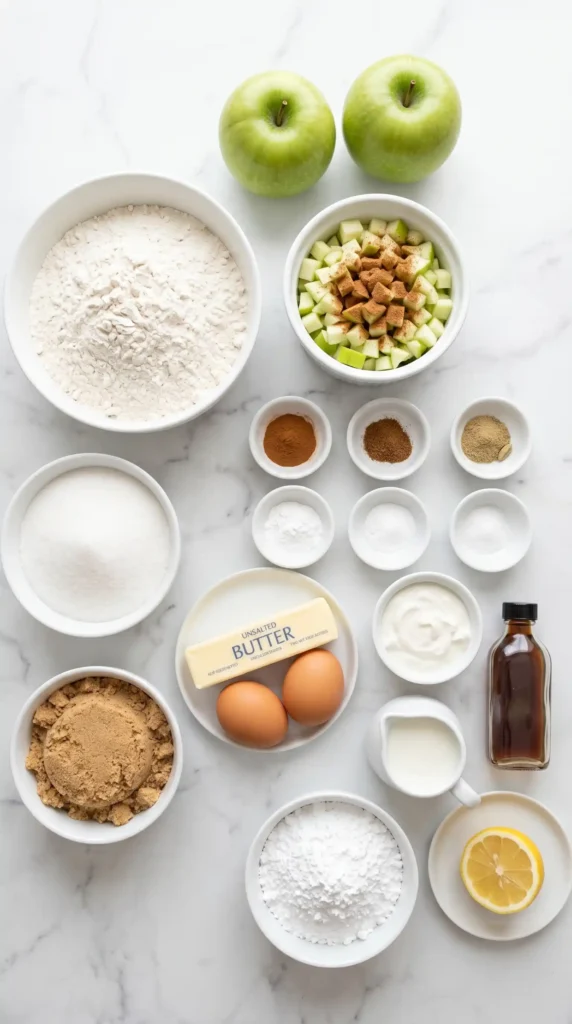
Everything here lives in a standard kitchen pantry plus a couple of apples. The apple choice matters more than people think. Use a firm variety — Granny Smith, Honeycrisp, or Braeburn — that holds its shape during baking rather than collapsing into wet, mushy pockets. Soft apples like Red Delicious disintegrate completely and make the bread dense and wet.
For the Apple Filling
- 2 medium firm apples (about 300g total), peeled, cored, and cut into 1cm dice — Granny Smith or Honeycrisp recommended
- 2 tablespoons (25g) granulated white sugar
- 1 and 1/2 teaspoons ground cinnamon
- 1/4 teaspoon ground nutmeg
- 1/4 teaspoon ground cardamom
- 1/2 teaspoon lemon juice (to prevent browning)
For the Brown Sugar Swirl
- 1/3 cup (65g) packed light brown sugar
- 1 teaspoon ground cinnamon
- 2 tablespoons (28g) unsalted butter, melted
Now For the Quick Bread Batter
- 1/3 cup (75g) unsalted butter, softened to room temperature
- 2/3 cup (130g) granulated white sugar
- 2 large eggs, room temperature
- 1 teaspoon pure vanilla extract
- 1/2 cup (120ml) whole milk, room temperature
- 1/3 cup (80g) sour cream
- 1 and 1/2 cups (190g) all-purpose flour
- 1 and 1/2 teaspoons baking powder
- 1/2 teaspoon baking soda
- 1 teaspoon ground cinnamon
- 1/4 teaspoon ground nutmeg
- 1/2 teaspoon salt
Now For the Vanilla Glaze
- 1 cup (120g) powdered sugar, sifted
- 2–3 tablespoons (30–45ml) whole milk or cream
- 1 teaspoon pure vanilla extract
- Pinch of salt
Apple Size Matters — Cut SmallCut the apple pieces to about 1cm dice — no larger. Larger apple chunks sit too heavily in the batter, sink to the bottom during baking, and create wet pockets that prevent the surrounding bread from setting properly. Small, even dice distribute throughout the loaf and bake into tender, flavourful pockets rather than dense, soggy clumps. Take the extra minute to cut them consistently.
How to Make Spiced Apple Fritter Bread Step by Step
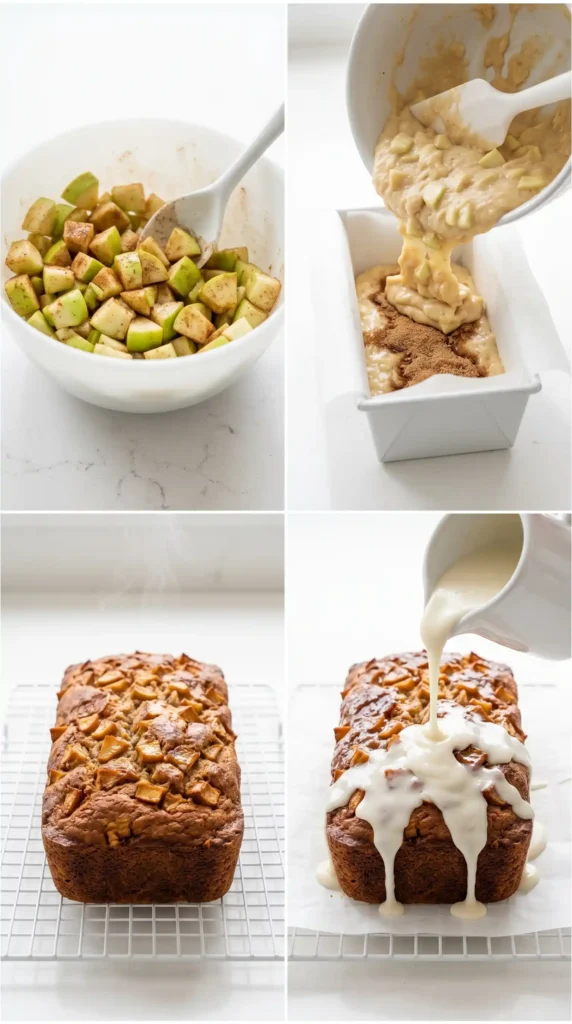
This is a two-bowl, one-loaf-tin recipe. The process runs in four stages: prepare the apples, make the brown sugar swirl, make the batter, then layer and bake. None of the individual steps require special equipment or advanced technique. Read through once before starting — the layering sequence in the pan moves quickly and you want to know it before your hands are full of batter.
Step 1: Prepare the Spiced Apple Filling
Peel and core the two apples, then cut them into a small, even dice — aim for pieces about 1cm on each side. Place them in a bowl and toss immediately with the lemon juice to prevent browning. Add the granulated sugar, cinnamon, nutmeg, and cardamom and toss everything together until every apple piece is lightly coated in the spice mixture. The sugar will begin drawing moisture from the apple pieces within a few minutes, which creates a light, fragrant syrup in the bowl. Set the apples aside while you prepare everything else.
The cardamom in this spice mix is the element that pushes this beyond a standard cinnamon apple bread into something that tastes genuinely exotic and layered. It adds a floral, slightly citrusy warmth that pairs beautifully with apple and cinnamon without overpowering either. If you do not have cardamom, the bread still tastes excellent — but the cardamom is worth buying for this recipe. FYI, it also works brilliantly in chai, rice pudding, and spiced biscuits if you are looking for other ways to use the jar.
Step 2: Make the Brown Sugar Swirl
In a small bowl, stir together the packed brown sugar, ground cinnamon, and melted butter until it looks like wet, fragrant sand. It should hold its shape briefly when pressed but flow slowly rather than sitting in a rigid clump. This mixture creates the spiral layers visible when you slice the finished loaf — the toffee-like veins of brown sugar caramelise against the surrounding batter during baking, which is what makes each slice look and taste distinct from a plain apple bread.
Step 3: Make the Batter
Preheat your oven to 175°C (350°F). Grease a standard 9×5-inch (23x13cm) loaf tin generously with butter and line the base and two long sides with parchment paper, leaving an overhang on each long side. The overhang acts as a handle for lifting the finished loaf cleanly out of the tin once cooled.
In a large bowl, beat the softened butter and granulated sugar together with a hand mixer or by hand for about 2 minutes until the mixture looks slightly pale and feels airy. Add the eggs one at a time, beating for 20 seconds after each addition. Add the vanilla extract, sour cream, and milk and mix until smooth and cohesive. The sour cream is doing significant work here — it adds moisture, a gentle tang, and a tenderising effect on the crumb that makes this bread stay soft for days rather than drying out after the first.
Add the flour, baking powder, baking soda, cinnamon, nutmeg, and salt to the wet mixture all at once. Switch to a rubber spatula and fold the dry ingredients in gently, using sweeping strokes around the bowl rather than vigorous stirring. Stop folding the moment no dry flour streaks remain. Overmixing develops gluten, which turns a tender quick bread into a dense, tunnel-filled loaf with a tough crumb. A lumpy batter is correct and desirable — smooth batter means overworked.
Now fold in three quarters of the spiced apple pieces using four or five gentle strokes of the spatula. Reserve the remaining quarter of apple pieces to press into the top of the loaf just before baking — those pieces caramelise on the surface and create the visible, golden apple top that makes the finished loaf so visually appealing and signals what the bread tastes like to anyone who sees it.
Step 4: Layer the Loaf
Pour half the batter into the prepared loaf tin and spread it into an even layer using the spatula. Spoon the entire brown sugar swirl mixture evenly over the batter layer, spreading it gently with the back of the spoon to cover the batter without pressing it in. Pour the remaining batter over the brown sugar layer and spread it gently to cover completely.
Press the reserved apple pieces into the top surface of the batter in a single layer, distributing them evenly across the entire loaf. They should sit on the surface rather than being pushed deep into the batter — you want them visible on top so they caramelise during baking. Use a toothpick or thin skewer to drag one or two gentle swirls through the top layer of batter — this pulls a little of the brown sugar layer up into the top batter, creating a subtle marbled pattern on the surface that becomes visible as the loaf bakes and rises.
Step 5: Bake the Loaf
Slide the loaf tin onto the centre rack of the preheated oven. Bake for 55–65 minutes. Check the loaf at the 45-minute mark — if the top surface looks like it is browning faster than the rest of the loaf, lay a loose piece of foil over the top for the remaining baking time. This prevents the apple pieces and brown sugar on the surface from over-caramelising and burning before the centre cooks through.
The loaf is done when a toothpick inserted into the centre comes out with just a few moist crumbs attached — not wet batter, and not completely dry. The internal temperature at the thickest point should read around 93°C (200°F) if you have a thermometer. The loaf will look deeply golden across the top, the edges will have pulled very slightly from the tin sides, and the surface will feel springy rather than soft when pressed lightly. Remove from the oven and place the tin on a wire rack.
Step 6: Make the Glaze and Finish the Loaf
While the loaf rests in the tin for 10 minutes, make the vanilla glaze. Whisk together the sifted powdered sugar, vanilla extract, pinch of salt, and 2 tablespoons of milk until completely smooth with no lumps. The glaze should pour in a thin, steady stream from a spoon — not thick and paste-like, but not so thin it runs off immediately. Add the third tablespoon of milk if it seems too thick. Taste it — it should be sweet, vanilla-forward, and just slightly salty.
After 10 minutes, lift the loaf from the tin using the parchment overhang and place it on the wire rack. While the loaf is still warm — not hot, but warm — pour the glaze slowly and evenly across the top, allowing it to run down the sides naturally. The warmth of the loaf helps the glaze soak very slightly into the surface before setting. As the loaf cools to room temperature over the next 20–30 minutes, the glaze sets from liquid to a thin, crackly, sweet shell that gives the finished Spiced Apple Fritter Bread its signature fritter-like finish.
Glaze Timing Is EverythingPour the glaze on a warm but not hot loaf — if the loaf is too hot, the glaze melts entirely and absorbs completely without forming any crust on the surface. If the loaf is completely cold, the glaze sits on top without adhering and slides off in sheets. Warm — about 10 minutes out of the oven — is exactly the right temperature for the glaze to partially absorb and partially set into that distinctive crackly fritter-style finish.
Variations Worth Trying
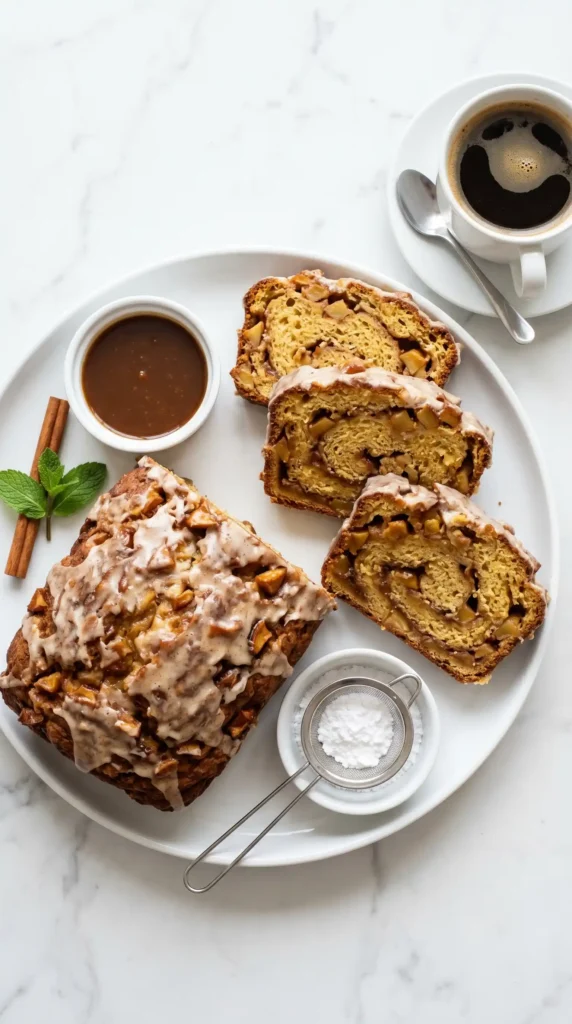
Caramel Apple Fritter Bread
Drizzle 3 tablespoons of good quality caramel sauce over the loaf after the vanilla glaze sets. The caramel adds richness and a deeper sweetness that plays beautifully against the warm spices and tart apple pieces. Use a salted caramel specifically — the salt cuts through the sweetness of both the bread and the glaze and makes the whole loaf taste more complex and intentional.
Pecan Crunch Topping
Before baking, mix 1/3 cup of roughly chopped pecans with a tablespoon of brown sugar and press them over the apple pieces on the top of the loaf. The pecans toast during baking and add a deeply crunchy, nutty layer to each slice that contrasts beautifully with the soft interior. This version needs an additional 3–5 minutes of baking time to ensure the nuts toast without burning. :/ Check them at the 55-minute mark.
Pear and Ginger Version
Swap the apples for firm Bosc or Anjou pears, cut to the same size dice. Replace the cardamom with 1/2 teaspoon of ground ginger and add a tablespoon of finely grated fresh ginger to the batter along with the eggs. Pear and ginger is a more delicate, floral combination than apple and cinnamon, and produces a lighter-tasting loaf that feels more suited to spring and early summer than to full autumn.
Storage and Make-Ahead Tips
Store Spiced Apple Fritter Bread loosely wrapped or in an airtight container at room temperature for up to 3 days. The sour cream in the batter keeps the crumb moist significantly longer than a standard quick bread — the loaf on day two actually tastes slightly better than day one as the flavours deepen and the apple pieces soften further. Refrigerate for up to 5 days and bring to room temperature before eating.
The loaf freezes extremely well. Slice it completely, wrap each slice individually in cling film, and freeze for up to 2 months. Thaw slices at room temperature for 30 minutes or microwave for 20–25 seconds. The glaze loses its crackly texture after freezing and becomes soft, but the flavour remains completely intact. The bread makes an excellent make-ahead breakfast option for busy weeks — pull a slice out the night before and it is ready in the morning.
Frequently Asked Questions
What apple variety works best for Spiced Apple Fritter Bread?
Granny Smith is the top recommendation — its tartness balances the sweetness of the brown sugar swirl and glaze, and its firm texture means the pieces stay distinct after baking rather than melting into the surrounding batter. Honeycrisp is an excellent alternative with slightly more natural sweetness and equally firm flesh. Avoid Red Delicious, Gala, or McIntosh, which are all too soft and high in moisture — they turn mushy during baking and make the surrounding bread dense and wet.
Why did my bread sink in the middle after baking?
Sinking almost always comes from one of four causes: underbaking, opening the oven door too early during baking, too much liquid in the batter, or overmixing which creates large air bubbles that collapse during cooling. Always use the toothpick test at the centre of the loaf — not the edges, which always bake faster. Do not open the oven door before 45 minutes. Mix the batter only until the flour disappears. Measure liquids with a scale or measuring cup, not by eye.
Can I make this recipe as muffins instead of a loaf?
Yes. Line a standard 12-cup muffin tin and fill each cup about two thirds full. Add a small teaspoon of brown sugar swirl into the centre of each muffin cup before topping with the remaining batter. Bake at 190°C (375°F) for 18–22 minutes until a toothpick comes out clean. Pour the glaze over warm muffins the same way as the loaf. The muffin format is excellent for gifting, bake sales, or portion-controlled snacking.
Can I use oil instead of butter in the batter?
Yes, and it actually produces a slightly moister loaf that stays tender for an extra day at room temperature. Replace the softened butter in the batter with 1/4 cup (60ml) of neutral vegetable oil. The flavour will be very slightly less rich and buttery, but the texture improves in terms of moisture retention. Do not replace the butter in the brown sugar swirl — it contributes to the caramelisation flavour of that layer and oil does not replicate this adequately.
How do I know when the loaf is fully baked through?
Use the toothpick test at the very centre of the loaf — the thickest, last-to-bake point. A toothpick inserted there should come out with a few moist crumbs but no wet, gooey batter. The internal temperature at the centre should read around 93°C (200°F) on an instant-read thermometer. The loaf top should feel springy and firm when pressed and the edges should have pulled very slightly from the tin sides. If the top looks dark but the centre is not set, cover with foil and continue baking.
Final Thoughts
This Spiced Apple Fritter Bread is one of those recipes that earns a permanent spot in your autumn baking rotation — not because it is complicated or impressive in a showy way, but because it consistently produces a loaf that tastes and smells extraordinary with a level of effort that any home baker can manage confidently on their first attempt.
The brown sugar swirl, the tender spiced apple pieces, the crackly vanilla glaze — every element earns its presence. Slice it warm, serve it with coffee, and watch it disappear before you even sit down properly. That is the standard it reliably meets every single time.
Go find your firmest apples and preheat that oven. Your house is about to smell incredible, and your weekend is about to improve significantly.
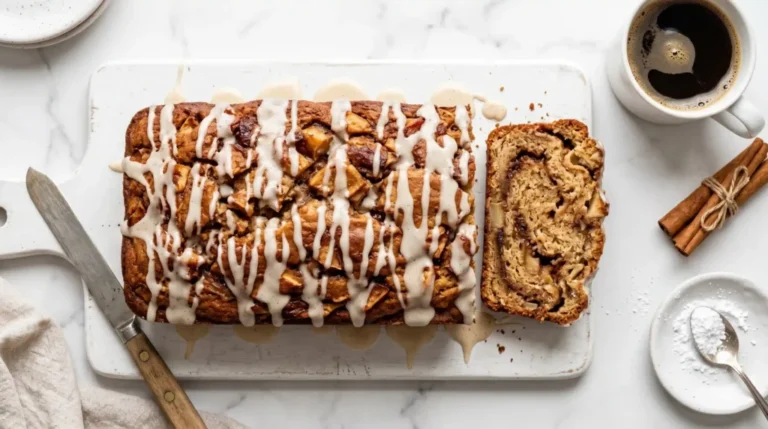
Spiced Apple Fritter Bread
Ingredients
Method
- Peel and core the apples, then cut them into a small, even dice — aim for pieces about 1cm on each side.
- Toss immediately with lemon juice to prevent browning, then add granulated sugar, cinnamon, nutmeg, and cardamom and mix until all pieces are coated.
- In a small bowl, mix brown sugar, ground cinnamon, and melted butter until it resembles wet sand.
- Preheat oven to 175°C (350°F). Grease a 9x5 inch loaf tin and line with parchment paper.
- In a large bowl, beat softened butter and granulated sugar for about 2 minutes until pale and airy.
- Add eggs one at a time, mixing for 20 seconds after each. Then mix in vanilla, sour cream, and milk until smooth.
- Mix in flour, baking powder, baking soda, cinnamon, nutmeg, and salt until just combined.
- Fold in three quarters of the spiced apple pieces.
- Pour half the batter into the prepared loaf tin, covering evenly.
- Spoon the brown sugar swirl over the batter layer.
- Cover with the remaining batter and press reserved apple pieces on top.
- Bake for 55-65 minutes, covering with foil if browning too quickly.
- Whisk together powdered sugar, vanilla, salt, and milk until smooth.
- After resting the loaf for 10 minutes, pour glaze over the warm loaf.