Most weeknight dinners feel like a compromise — fast but boring, or delicious but exhausting. Orzo With Lemon And Artichokes refuses to pick a side. It comes together in twenty-five minutes, tastes genuinely bright and restaurant-worthy, and uses ingredients you probably already have. I started making this on tired Tuesday nights and haven’t stopped since.
Servings: 4 | Prep Time: 10 minutes | Cook Time: 15 minutes | Total Time: 25 minutes
What Makes This Dish Actually Worth Making
Have you ever eaten something that tasted far more impressive than the effort you put into it? That’s exactly what Orzo With Lemon And Artichokes delivers every single time. The lemon does heavy lifting, the artichokes bring a subtle nuttiness, and the orzo ties it all together into something cohesive and satisfying.
This isn’t a complicated technique dish. There’s no roasting, no fancy equipment, no babysitting a sauce for an hour. You boil pasta, sauté a few things in one pan, and combine them. That’s genuinely it. IMO, every home cook needs at least one recipe this reliable in their rotation.
Ingredients You’ll Need
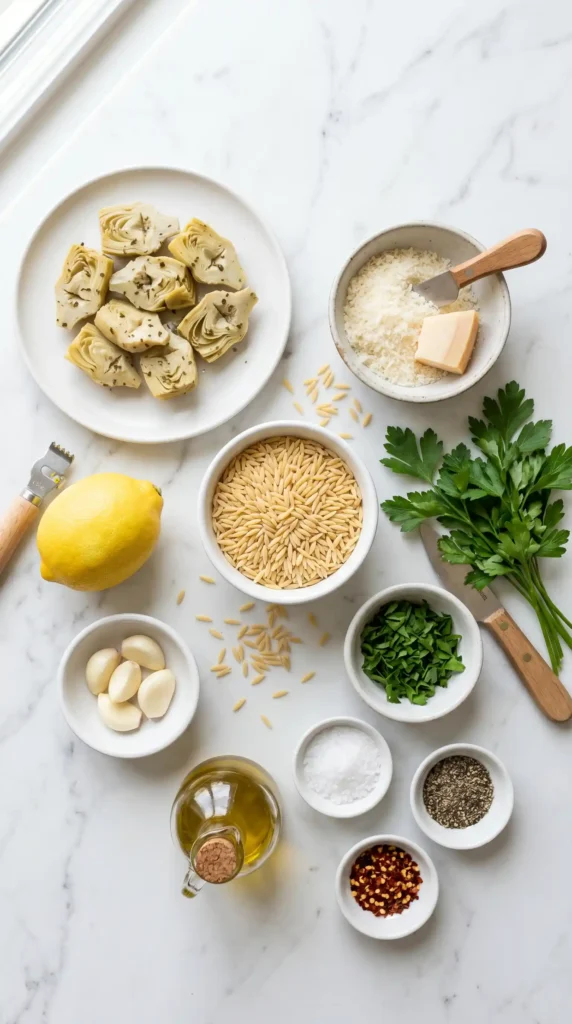
Simple, pantry-friendly, and purposeful. Every item here earns its place.
- 1 1/2 cups orzo pasta
- 1 can (14 oz) artichoke hearts, drained and quartered
- 3 tablespoons extra virgin olive oil
- 4 cloves garlic, freshly minced
- 1 large lemon (zest and juice — about 3 tablespoons juice and 1 teaspoon zest)
- 1/4 cup fresh parsley, chopped
- 1/2 cup grated Parmesan cheese
- 1/2 teaspoon salt (plus more for pasta water)
- 1/4 teaspoon black pepper
- 1/4 teaspoon red pepper flakes (optional, but recommended)
Short list. Big flavor. Nothing here feels random.
How to Make Orzo With Lemon And Artichokes
Step 1: Salt and Boil the Pasta Water
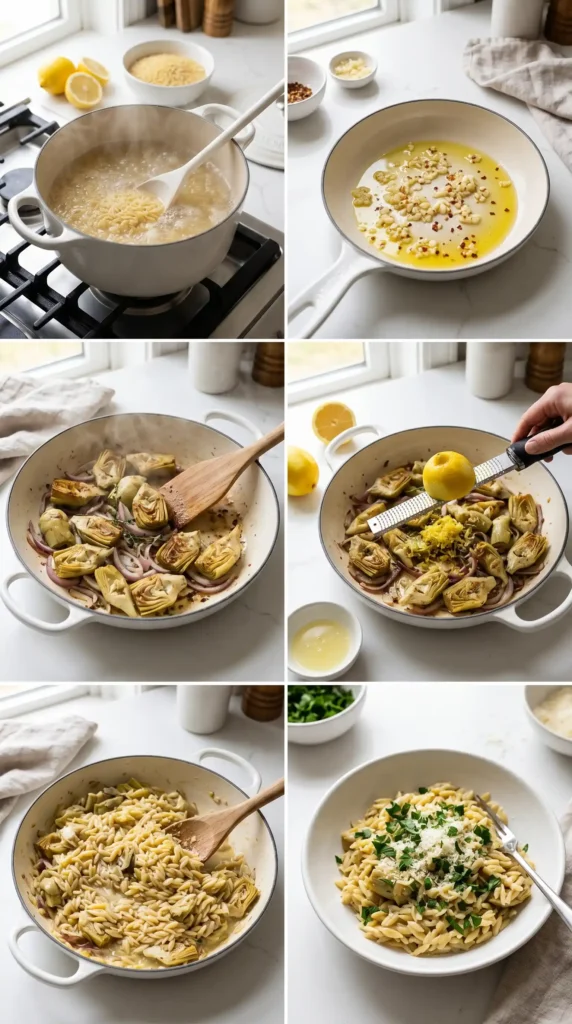
Fill a large pot with water and bring it to a full, rolling boil over high heat. Add a generous amount of salt — we’re talking at least one teaspoon, ideally more. Pasta water should taste mildly salty, like a light broth. This is the only opportunity you have to season the orzo itself from the inside out, and skipping it results in a noticeably flat-tasting dish.
Once the water boils, add the orzo and give it a quick stir to prevent clumping. Orzo loves to stick together in the first thirty seconds, so one good stir makes a real difference. Set a timer and don’t walk too far from the stove.
Step 2: Cook the Orzo to Al Dente
Cook the orzo according to package instructions, usually 8 to 10 minutes, but start checking it at the 7-minute mark. You’re looking for al dente — firm enough to hold a slight bite but not hard or chalky in the center. Al dente orzo holds up beautifully when you toss it with the other ingredients. Fully soft orzo turns mushy once it meets the warm pan.
When it reaches that perfect texture, drain it immediately through a colander. Don’t rinse it. Rinsing washes away the surface starch that helps the lemon and olive oil cling to each grain. Set the drained orzo aside and move quickly to the skillet while it’s still warm.
Step 3: Heat the Olive Oil
Place a large skillet over medium heat and add the three tablespoons of extra virgin olive oil. Let the oil heat until it shimmers slightly across the surface — about sixty to ninety seconds. Shimmering oil means the pan is properly heated and ready to cook evenly rather than letting ingredients sit in cool fat and absorb grease.
Don’t rush to high heat here. Medium heat gives you control over the garlic in the next step. Garlic in too-hot oil burns in seconds, and burnt garlic is bitter and ruins the whole dish. Patience at this stage pays off in a big way.
Step 4: Sauté the Garlic
Add the four minced garlic cloves to the hot oil. Stir immediately and keep stirring gently for one to two minutes. The garlic should turn lightly golden and fragrant — not brown, not dark, just softened and aromatic. The moment you smell that warm, toasty garlic scent fill your kitchen, you’re right where you want to be.
Watch it closely the entire time. Garlic goes from perfect to burnt remarkably fast at medium heat. If it starts darkening too quickly, reduce the heat immediately. A slightly lower temperature with an extra thirty seconds of cooking beats burnt garlic every time.
Step 5: Add the Artichoke Hearts
Add the drained, quartered artichoke hearts directly into the skillet with the garlic. Spread them out in a single layer and let them cook undisturbed for about two minutes before stirring. That initial contact with the hot pan gives the artichokes a slight golden edge that adds depth to their naturally mild, nutty flavor.
After two minutes, stir and continue cooking for another two minutes, turning occasionally so all sides get some heat. The goal isn’t to cook the artichokes through — they’re already cooked from the can. The goal is to warm them completely, get a little color on them, and let them absorb that garlicky olive oil. That’s where the flavor transfer happens.
Step 6: Add the Lemon Zest and Juice
Reduce the heat to low before adding the lemon. First, add the lemon zest and stir it into the artichoke and garlic mixture. The zest carries the most concentrated citrus flavor and a subtle floral note that lemon juice alone doesn’t deliver. Cooking the zest briefly in the oil helps release its aromatic oils into the dish.
Then squeeze in the fresh lemon juice — about three tablespoons from one large lemon. Stir everything together and let the acidity lift the bottom of the pan slightly. FYI, bottled lemon juice works in a pinch but tastes noticeably flatter than fresh. The brightness in this dish comes from fresh lemon, so it’s worth the thirty seconds of squeezing. :/
Step 7: Combine the Orzo With the Skillet
Add the drained orzo directly into the skillet and toss everything together thoroughly. Use a wooden spoon or silicone spatula to coat every grain of orzo in the lemony, garlicky, artichoke-infused oil. Keep the heat on low as you combine everything — just enough to maintain warmth without overcooking the orzo further.
This step is where the dish comes together. The warm oil clings to the orzo, the artichoke pieces nestle between the pasta grains, and the lemon distributes evenly through the whole skillet. Taste a spoonful right now and adjust the salt and pepper to your preference. Add a pinch more salt if it tastes flat, or a squeeze more lemon if it needs brightness.
Step 8: Finish With Parsley and Parmesan
Remove the skillet from the heat entirely. Add the chopped fresh parsley and grated Parmesan cheese. Fold them in gently rather than stirring aggressively — you want to keep the artichoke pieces intact and avoid breaking them down into mush.
The Parmesan melts into the warm orzo and creates a light, creamy coating without becoming heavy or gluey. The fresh parsley adds color and a clean, herby brightness that cuts through the richness beautifully. Give it one final taste and add the optional red pepper flakes if you want a gentle kick of heat. Serve immediately while warm.
Tips That Genuinely Improve the Dish
These aren’t generic filler tips — each one makes a measurable difference:
- Salt the pasta water generously. Under-salted water produces bland orzo no matter how much you season later.
- Don’t rinse the orzo. Surface starch helps the sauce cling. Rinsed orzo slides right past the flavor.
- Watch the garlic constantly. One distracted moment and it burns. Burnt garlic is not salvageable.
- Use fresh lemon. Bottled juice is noticeably weaker. Fresh makes the whole dish taste alive.
- Finish off heat before adding cheese. Direct high heat makes Parmesan clump. Off-heat melting gives you a smooth, even coat.
Variations Worth Exploring
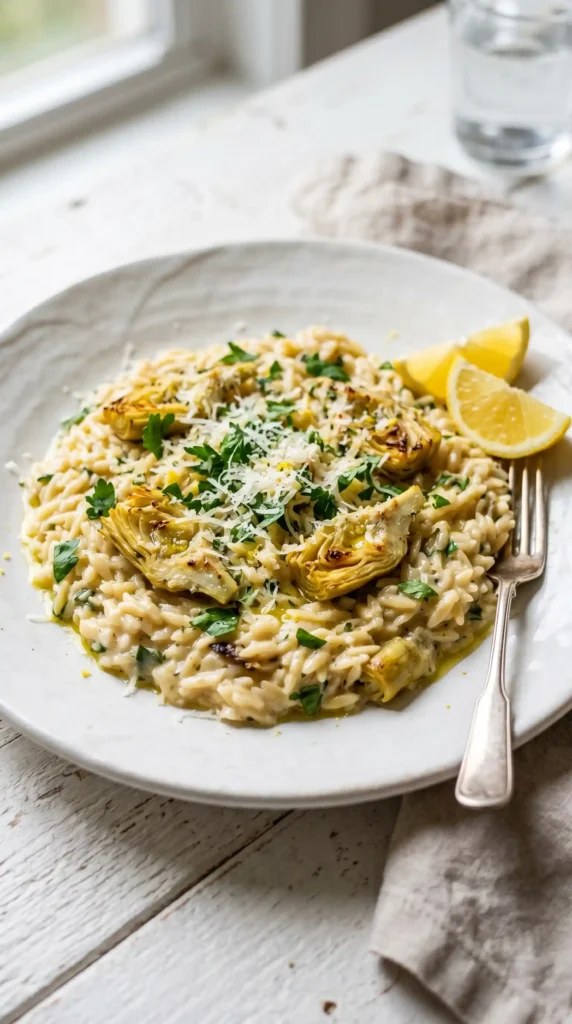
Orzo With Lemon And Artichokes works as a canvas for many directions:
- Add protein: Stir in grilled chicken, sautéed shrimp, or canned chickpeas for a complete one-bowl meal.
- Vegetable additions: Toss in baby spinach right at the end — it wilts in the residual heat beautifully. Cherry tomatoes also work well, added with the artichokes.
- Cheese swap: Crumbled feta instead of Parmesan gives a tangier, saltier profile. Goat cheese adds creaminess.
- Herb swap: Fresh basil, dill, or mint all work well in place of parsley for a different character.
- Vegan version: Replace Parmesan with three tablespoons of nutritional yeast for a cheesy flavor without dairy.
Storing and Reheating
Store leftovers in an airtight container in the refrigerator for up to three days. Orzo absorbs liquid as it sits, so the reheated version will be slightly thicker than fresh. Add a splash of water or a small drizzle of olive oil when reheating to loosen it back up.
Reheat on the stovetop over low heat rather than the microwave — the stovetop gives you more control and heats more evenly. The microwave tends to dry out the edges while the center stays cold. Either way, a fresh squeeze of lemon right before serving brings back most of the brightness.
Frequently Asked Questions
Q1: Can I make Orzo With Lemon And Artichokes ahead of time? Yes, and it reheats well. Cook everything through, let it cool completely, and refrigerate in an airtight container for up to three days. Add a splash of water or olive oil when reheating and a fresh squeeze of lemon before serving to restore brightness.
Q2: Can I use frozen artichoke hearts instead of canned? Absolutely. Thaw them completely and pat them dry before adding to the skillet. Frozen artichokes have a slightly softer texture than canned but work well in this recipe. Avoid marinated artichoke hearts — the flavored brine changes the flavor profile significantly.
Q3: What can I serve alongside this dish to make it a full meal? A simple green salad with a lemon vinaigrette pairs perfectly. Grilled chicken or shrimp on the side turns it into a heartier dinner. A glass of chilled white wine — something crisp like Pinot Grigio — complements the lemon beautifully.
Q4: Can I use a different pasta if I don’t have orzo? Small pasta shapes like ditalini, stelline, or even couscous work as substitutes. Larger pasta shapes change the texture balance significantly, so stick to small shapes for the best results.
Q5: Is this recipe gluten-free? Standard orzo contains gluten. You can find gluten-free orzo at most well-stocked grocery stores or online. The rest of the ingredients in this recipe are naturally gluten-free, so the swap is straightforward.
Final Thoughts
Orzo With Lemon And Artichokes proves that fast weeknight cooking doesn’t have to mean boring. Twenty-five minutes gets you something bright, satisfying, and genuinely delicious — the kind of meal that makes people ask what you did to make pasta taste that good.
Cook it this week. Make it on a Tuesday when you’re tired and the fridge looks empty. You’ll be surprised how much a little lemon, good olive oil, and a can of artichokes can accomplish.

Orzo With Lemon And Artichokes
Ingredients
Method
- Fill a large pot with water and bring it to a full, rolling boil over high heat. Add a generous amount of salt — at least one teaspoon.
- Once the water boils, add the orzo and give it a quick stir to prevent clumping. Set a timer.
- Cook the orzo according to package instructions, usually 8 to 10 minutes.
- Drain it immediately and do not rinse.
- Place a large skillet over medium heat and add the olive oil until it shimmers.
- Add the minced garlic and sauté for one to two minutes until golden and fragrant.
- Add the drained artichoke hearts and cook undisturbed for two minutes, then stir and continue cooking for another two minutes.
- Reduce the heat to low and add lemon zest and juice, stirring to combine.
- Add the drained orzo and toss everything thoroughly.
- Remove from heat, add chopped parsley, and Parmesan, folding them in gently.
- Serve immediately, optionally adding red pepper flakes for heat.