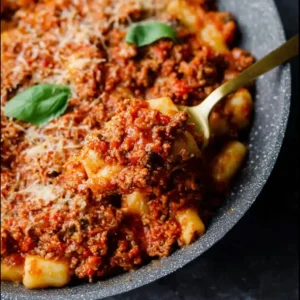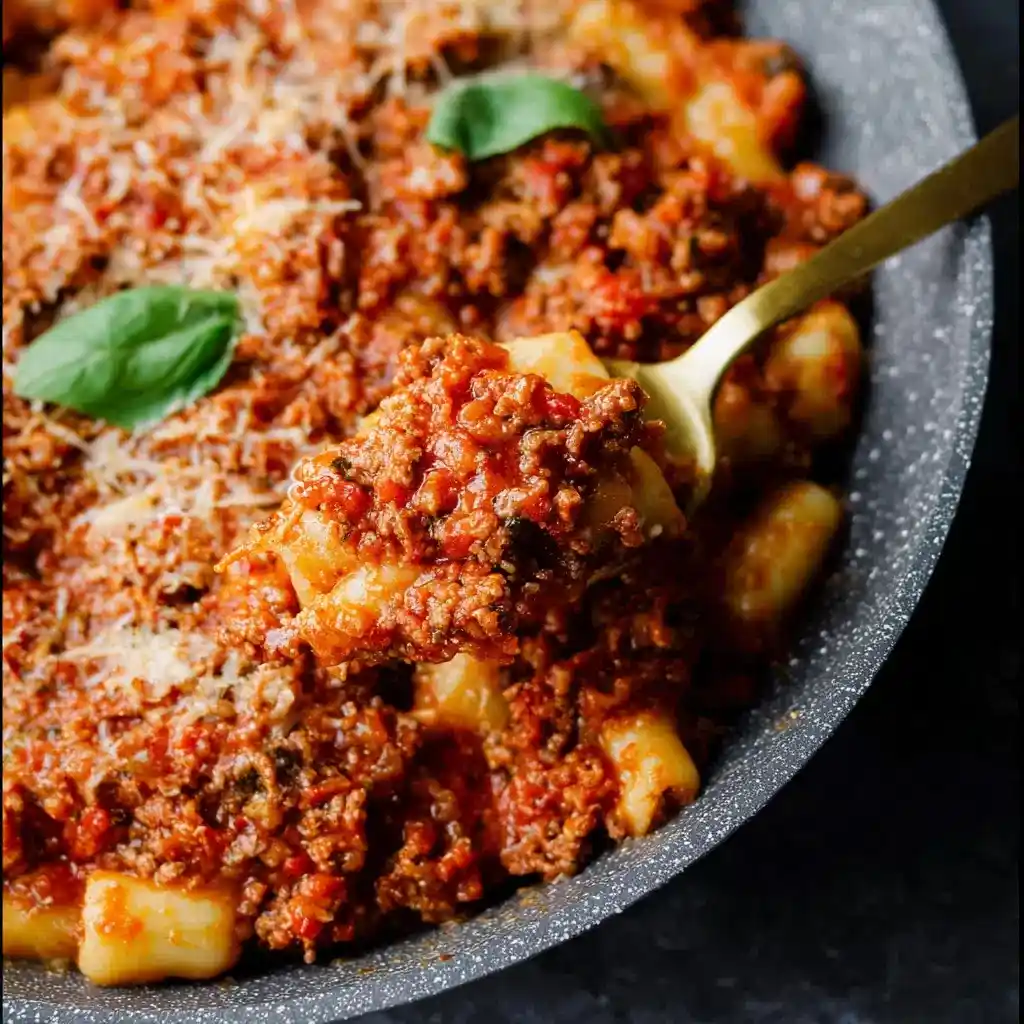
Fast dinners have their place. This Bolognese Sauce isn’t one of them, and honestly, that’s exactly why it’s so good.
I learned this recipe during a phase where I refused to order Italian takeout ever again. Two hours of simmering later, I understood why restaurants charge so much for a good bowl of pasta.
Servings: 6 Prep time: 20 minutes Cook time: 2 hours 15 minutes Total time: about 2 hours 35 minutes
Why This Bolognese Sauce Beats Jarred Sauce Every Time
Have you ever wondered why homemade Bolognese tastes nothing like the jarred stuff? It comes down to time, layers of flavor, and a few ingredients most jars skip entirely.
Pancetta, real aromatics, and a long simmer build a depth jarred sauce simply can’t fake. IMO, once you taste the difference side by side, there’s no going back.
What You’ll Need
This recipe uses real ingredients, nothing fancy or hard to track down. A trip to a decent grocery store covers everything on this list.
You’ll need:
- Carrots, chopped
- Onion, chopped
- Celery stalks, chopped
- Garlic cloves
- Pancetta
- Ground beef (80/20)
- Crushed tomatoes
- Tomato paste
- Chicken broth
- Whole milk
- Salt and pepper
Exact measurements sit at the bottom of this article, ready for whenever you’re actually standing in the kitchen instead of just reading recipes on your phone.
A Quick Note on Ingredients
Pancetta brings a salty, savory depth that regular bacon can’t quite replicate. It’s not strictly mandatory, but skipping it means missing out on one of the sauce’s signature flavor notes.
The 80/20 ground beef matters here too. Leaner beef leaves the sauce dry and less rich, while that extra fat renders down and adds body to every single bite.
How to Make Bolognese Sauce
Grab a food processor and a large skillet, because this recipe rewards patience over speed. I’ll walk you through every step so your sauce turns out rich and restaurant-worthy.
Step 1: Process the Vegetables
Add the chopped carrots, onion, celery, and garlic to a food processor. Pulse until the vegetables turn coarsely chopped, stopping before they turn into mush or baby food.
This step saves serious time compared to hand-chopping everything. Just don’t overprocess, since finely pureed vegetables lose texture and basically disappear into the sauce instead of adding body.
Step 2: Process the Pancetta
Add the pancetta to your food processor and pulse until it’s coarsely chopped too. This gives you small, even pieces that cook quickly and distribute evenly throughout the sauce.
Step 3: Crisp the Pancetta
Heat a large skillet over medium-high heat and add your chopped pancetta. Cook for about five to six minutes, stirring occasionally, until it starts turning crisp and golden around the edges.
Remove the pancetta from the skillet and set it aside on a plate. Don’t wipe out the pan, since that rendered fat is packed with flavor you’ll want to keep.
Step 4: Brown the Ground Beef
Add the ground beef directly into the same skillet you used for the pancetta. Cook it over medium-high heat, breaking the meat into small crumbles with a wooden spoon as it browns.
Keep cooking until no pink remains and the beef looks fully cooked through. Those browned bits stuck to the bottom of the pan? That’s flavor, so don’t scrape them away yet.
Step 5: Bring Everything Back Together
Return the processed vegetables and crisped pancetta to the skillet with the browned beef. Stir everything together, letting the vegetables soften slightly as they mingle with the meat.
Pour in a splash of the chicken broth at this point to deglaze the pan. Scrape up all those browned bits from the bottom, since they’ll dissolve right into the sauce and boost the flavor significantly.
Step 6: Add the Tomatoes and Broth
Stir in the crushed tomatoes, tomato paste, and remaining chicken broth. Mix everything thoroughly until the tomato paste fully dissolves into the sauce instead of sitting in clumps.
Reduce the heat down to low once everything’s combined. A gentle simmer, not a rolling boil, is what you’re aiming for from this point forward.
Step 7: Simmer Low and Slow
Let the sauce simmer uncovered for about two hours, stirring occasionally to prevent sticking. This long simmer is non-negotiable if you want that deep, melded flavor Bolognese is famous for.
Have you ever rushed a sauce and regretted it later? Trust me, this is one recipe where cutting the simmer time short leaves you with a noticeably thinner, less flavorful result.
Check on it every 20 to 30 minutes, giving it a stir and adjusting the heat if it starts bubbling too aggressively. The sauce should reduce and thicken gradually over these two hours.
Step 8: Stir in the Milk
During the last 15 minutes of cooking, stir the whole milk into the sauce. This might sound like an odd addition, but it rounds out the acidity from the tomatoes and adds a subtle creaminess.
Skip this step, and your sauce turns out noticeably more acidic and one-dimensional. It’s a small addition that makes a genuinely big difference in the final flavor.
Step 9: Season and Taste
Season your sauce with salt and pepper to taste, tasting as you go. Every batch of tomatoes and pancetta brings a slightly different saltiness, so trust your palate over rigid measurements here.
Step 10: Serve Warm Over Pasta
Ladle your finished Bolognese Sauce generously over your favorite cooked pasta. Wide noodles hold onto that rich sauce far better than thin ones, so choose your pasta shape wisely.
Serving Suggestions
This sauce deserves a pasta shape that can actually hold onto it. Here’s how I like to serve mine:
- Best pasta pairings: Tagliatelle, pappardelle, or fettuccine for maximum sauce coverage
- Cheese finish: Freshly grated Parmesan or Pecorino Romano on top
- Extra flavor: A drizzle of olive oil or fresh basil and parsley
- Complete meal: Pair with garlic bread or a crisp green salad
Storage Tips
Bolognese Sauce actually improves with a little time, making it a fantastic make-ahead option. Here’s how to store leftovers properly:
- Refrigerator: Store in an airtight container for up to 4 days
- Freezer: Freeze for up to 3 months, thawing overnight before reheating
- Reheating: Warm gently on the stovetop, adding broth or water if it’s thickened too much
FYI, leftovers often taste even better the next day once the flavors have had extra time to meld together.
Fun Variations to Try
Once you’ve mastered the classic version, feel free to experiment. I’ve tried several of these myself, and they all bring something different to the table.
- Pork and veal blend: Substitute part of the beef with ground veal for a richer flavor
- Spicy kick: Add crushed red pepper flakes for some heat
- Creamy finish: Stir in a splash of cream at the very end for extra silkiness
- Bacon lovers’ version: Double the pancetta or add smoked bacon for more depth
Why stick to one version when this base recipe handles so many directions well? Adjust it based on whatever you’re craving that night.
Frequently Asked Questions
Can I make Bolognese sauce ahead of time? Yes, it tastes even better the next day once the flavors have fully melded together.
Can I freeze Bolognese sauce? Absolutely, freeze it in airtight containers for up to 3 months.
What pasta works best with Bolognese? Wide pasta shapes like tagliatelle, pappardelle, or fettuccine hold the sauce best.
Can I use ground chicken or turkey instead of beef? Yes, though the sauce turns out lighter and less rich than the traditional version.
Do I really need the milk in this sauce? Milk balances the acidity from the tomatoes and adds creaminess, so it’s highly recommended.
How long should I simmer the sauce? At least two hours on low heat for the best flavor and thickest texture.
Is pancetta absolutely necessary? It adds real depth, but you can substitute bacon or skip it if needed.
Wrapping It Up
This Bolognese Sauce rewards patience with a rich, deeply flavorful result that jarred sauce simply can’t match. Between the crisped pancetta, slow simmer, and that final touch of milk, every element earns its place in the pot.
So clear your schedule for a couple hours and give this one a real shot 🙂 Once that first forkful of pasta hits your plate, you’ll understand exactly why this sauce has earned a permanent spot in my regular dinner rotation.