
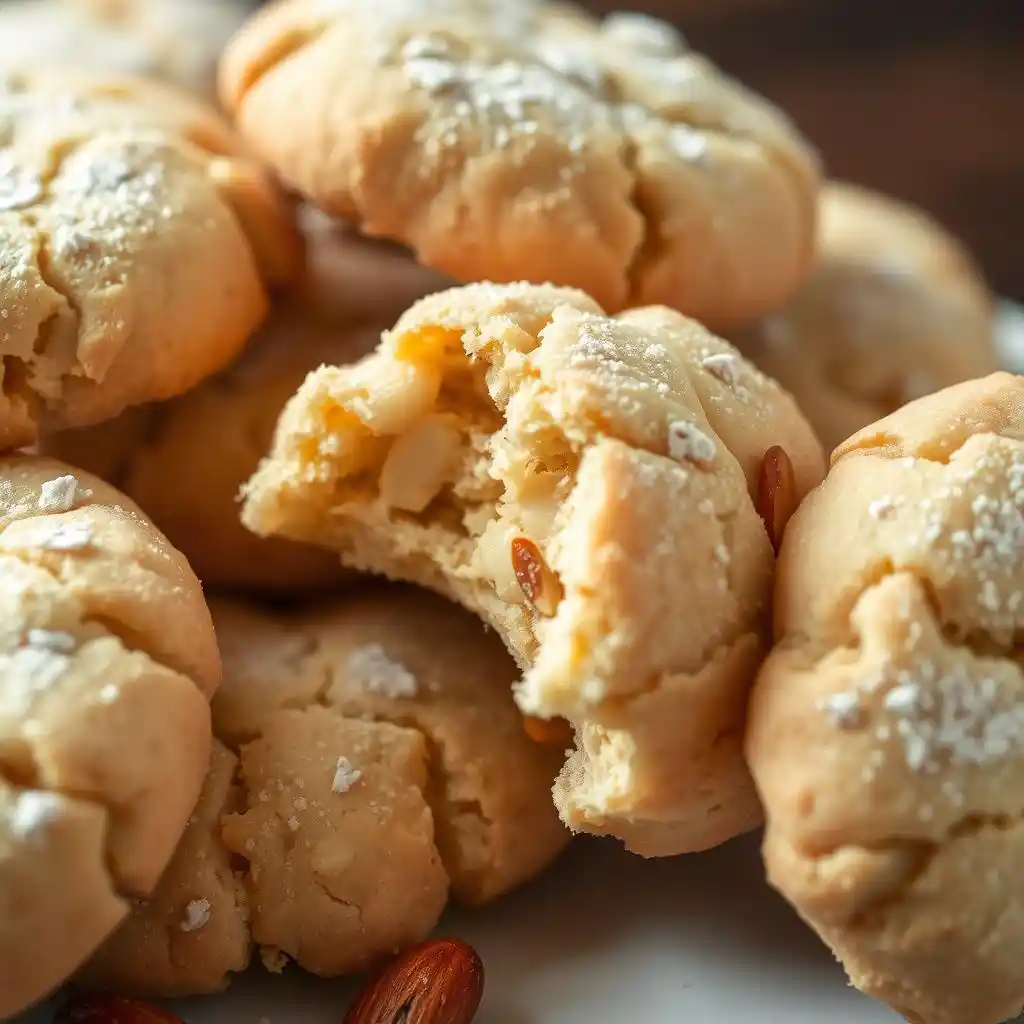
Picture a cookie so delicate it practically dissolves before you finish chewing. Almond meltaway cookies do exactly that, and once you try one, regular cookies feel a little boring.
I started making these during a holiday baking marathon a few years back. They quickly became the first thing to disappear off every dessert tray.
This recipe takes about 20 minutes of hands-on prep, plus a short chill. It yields roughly 36 cookies, perfect for gifting or just keeping to yourself.
Prep time: 20 minutes. Chill time: 30 minutes. Bake time: 12-14 minutes. Yield: about 36 cookies.
What Makes a Cookie a “Meltaway”
The name isn’t marketing fluff, these cookies genuinely melt on your tongue. That texture comes from a specific ratio of butter to flour, plus a generous coating of powdered sugar.
Have you ever bitten into a cookie that felt more like sand than a solid bite? That’s the meltaway magic, and it’s oddly satisfying every single time.
- Buttery, crumbly texture unlike a typical crisp cookie
- Subtle almond flavor from both extract and chopped nuts
- Not overly sweet, despite the powdered sugar coating
- Only six ingredients, so nothing complicated here
Ingredient Quantities You’ll Need
Here’s the full list. Short and simple, which is honestly part of the appeal.
- Salted butter: 1 cup (227 grams), high quality
- Granulated white sugar: 1/2 cup (100 grams)
- All-purpose flour: 2 cups (250 grams)
- Whole almonds: 1 cup, toasted and finely chopped
- Almond extract: 1/2 teaspoon
- Powdered sugar: 1 cup, for coating
FYI, salted butter matters more here than in most cookie recipes. It balances the sweetness in a way unsalted butter just doesn’t quite manage.
Why Ingredient Quality Actually Matters Here
With only six ingredients, there’s nowhere for a subpar product to hide. Every single item pulls real weight in the final flavor and texture.
Choosing Your Butter and Almonds
Go with a high-quality, full-fat salted butter if you can find one. Cheaper butters often contain more water, which throws off the texture you’re aiming for.
Toast your almonds before chopping them. This one small step wakes up their natural oils and makes the nutty flavor noticeably more pronounced throughout the cookie.
The Role of Almond Extract
Almond extract is potent stuff, so a little goes a long way. Don’t be tempted to double it thinking more is better, since it can quickly turn bitter and overpowering.
Step-by-Step Preparation Process
Let’s walk through this slowly, since a few small details make a real difference in the final texture. Nothing here is hard, it just rewards patience.
Getting Your Butter Ready
Start with butter at cool room temperature, soft enough to press but not greasy or melted. This matters because overly soft butter creates flat, greasy cookies instead of that signature crumbly bite.
Cream the butter and granulated sugar together until light and fluffy. This usually takes about two to three minutes with a hand mixer, and the mixture should visibly lighten in color.
Building the Dough
Add the almond extract to the creamed butter mixture and mix until fully combined. The smell alone at this point is genuinely a good sign you’re on the right track.
Gradually add your flour in two separate additions rather than dumping it all in at once. This helps prevent overmixing, which is the number one cause of tough, dense meltaways.
Fold in your toasted, chopped almonds gently with a spatula. Stir just until they’re evenly distributed, since overworking the dough here undoes all your careful creaming work.
Chilling the Dough
Cover the dough and refrigerate it for at least 30 minutes before baking. Chilled dough holds its shape far better in the oven and prevents unwanted spreading.
Skipping this step is tempting when you’re impatient, but trust me, it’s not worth it. Flat, spread-out cookies lose that soft, rounded shape that makes these so charming.
Shaping and Baking
Preheat your oven to 350°F and line a baking sheet with parchment paper. Roll the chilled dough into small balls, about one inch in diameter, spacing them two inches apart.
Bake for 12-14 minutes, watching closely toward the end. You’re looking for cookies that are set but still pale, since overbaking dries out that delicate meltaway texture completely.
The Powdered Sugar Coating
Let the cookies rest on the baking sheet for five minutes after removing them from the oven. This short rest keeps them from falling apart when you handle them next.
While still slightly warm, gently toss the cookies in powdered sugar inside a paper bag or shallow bowl. Once they’ve cooled completely, give them a second light coating for that classic snow-dusted look.
Common Mistakes That Ruin the Texture
A few small missteps can turn a perfect batch into a disappointing one. Here’s what to watch for.
- Skipping the chill time, which leads to flat, spread-out cookies
- Overmixing the dough, resulting in tough, dense cookies instead of crumbly ones
- Overbaking, which dries out the delicate texture entirely
- Using cold, hard butter, making it nearly impossible to cream properly
IMO, overbaking is the mistake people make most often. These cookies should look almost underdone when you pull them out, since they firm up while cooling.
Storage and Freshness Tips
These cookies actually hold up quite well if stored properly. Here’s how to keep them tasting fresh for as long as possible.
| Storage Method | Duration | Notes |
|---|---|---|
| Room temperature, airtight container | Up to 1 week | Add a slice of bread to keep them soft |
| Refrigerated | Up to 3 weeks | Bring to room temperature before serving |
| Frozen, baked cookies | Up to 3 months | Freeze in a single layer first |
| Frozen, raw dough balls | Up to 3 months | Bake straight from frozen, add 1-2 minutes |
Freezing the raw dough is honestly a great move if you like having fresh cookies on demand. Just scoop, freeze, and bake a few whenever the craving hits.
Fun Variations to Try
Once you’ve mastered the base recipe, this dough becomes a great starting point for experimenting. Here are a few directions worth trying.
- Chocolate lovers: press a chocolate chip into the center before baking
- Citrus twist: add fresh lemon or orange zest to the dough
- Spiced version: mix in a pinch of cinnamon and nutmeg for fall
- Peppermint holiday: fold in crushed candy canes for a festive crunch
Have you ever tried wrapping the dough around a small piece of chocolate before rolling it into a ball? It’s an easy way to surprise whoever bites into it.
Serving Suggestions
These cookies pair beautifully with warm drinks, given their delicate, not-too-sweet flavor. A few of my favorite pairings below.
- Hot tea or coffee for an afternoon treat
- Warm milk for kids after dinner
- Hot chocolate during colder months
- A holiday dessert platter alongside other festive cookies
Arrange them on a plate with a light dusting of extra powdered sugar for presentation. They look effortlessly elegant without any extra work.
Frequently Asked Questions
What are almond meltaway cookies exactly? They’re soft, buttery cookies with a delicate, crumbly texture that seems to dissolve as you eat them. The flavor comes from almond extract and chopped toasted almonds.
How do I get that signature melt-in-your-mouth texture? Use quality butter, avoid overmixing, and don’t overbake them. The powdered sugar coating also plays a big role in that final texture and taste.
Can I make these cookies gluten-free? Yes, swap the all-purpose flour for a gluten-free flour blend or almond flour. Check that your other ingredients are certified gluten-free as well.
How long do these cookies stay fresh? Stored in an airtight container at room temperature, they last about a week. Refrigerating extends that to roughly three weeks.
Can I substitute the almond extract? Vanilla extract works as a substitute, though it changes the overall flavor profile. Vanilla bean paste is another solid option if you have it on hand.
Are these difficult for beginner bakers? Not at all, the technique is simple and forgiving. The main thing to watch is not overmixing the dough and not overbaking the cookies.
What’s the difference between these and Mexican wedding cookies? Almond meltaways lean heavily on almond extract and chopped almonds for flavor. Mexican wedding cookies traditionally use ground pecans or walnuts instead.
Final Thoughts
Almond meltaway cookies prove that a short ingredient list can still produce something genuinely impressive. Butter, sugar, flour, almonds, and a little extract come together into something far greater than the sum of its parts.
Will these become your new go-to holiday cookie? Once that first one dissolves on your tongue, I have a feeling you already know the answer.
Bake a batch this week, share a few, and keep the rest for yourself. You’ve earned them
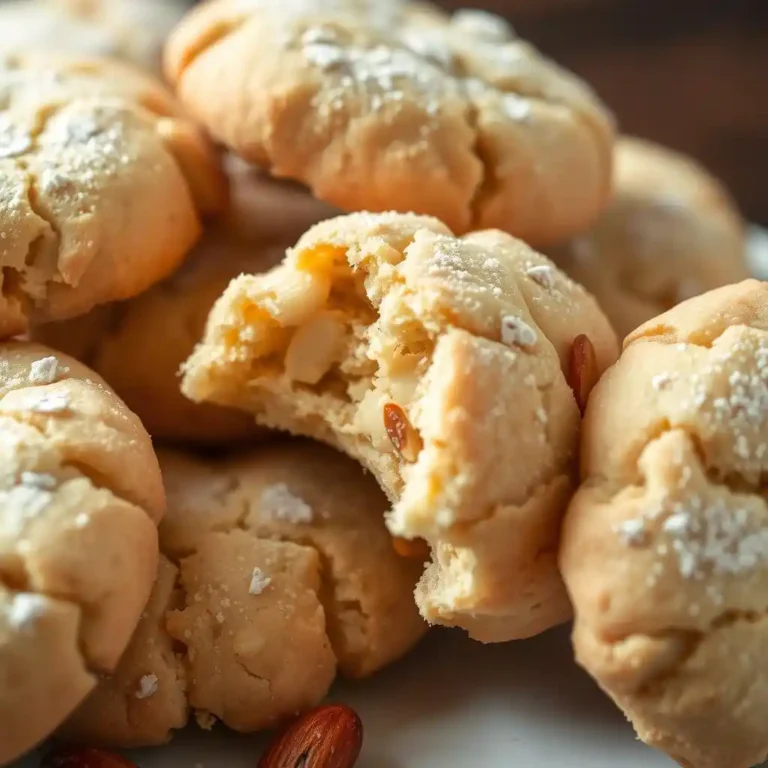
Almond Meltaway Cookies
Ingredients
Method
- Start with butter at cool room temperature, soft enough to press but not greasy.
- Cream the butter and granulated sugar together until light and fluffy for about 2-3 minutes.
- Add the almond extract to the creamed butter mixture and mix until fully combined.
- Gradually add the flour in two separate additions to prevent overmixing.
- Fold in the toasted, chopped almonds gently with a spatula.
- Cover the dough and refrigerate for at least 30 minutes.
- Preheat the oven to 350°F and line a baking sheet with parchment paper.
- Roll the chilled dough into small balls, about one inch in diameter, spacing them two inches apart.
- Bake for 12-14 minutes, until set but still pale.
- Let the cookies rest on the baking sheet for 5 minutes.
- While still warm, gently toss the cookies in powdered sugar, then give them a second coating once cooled.