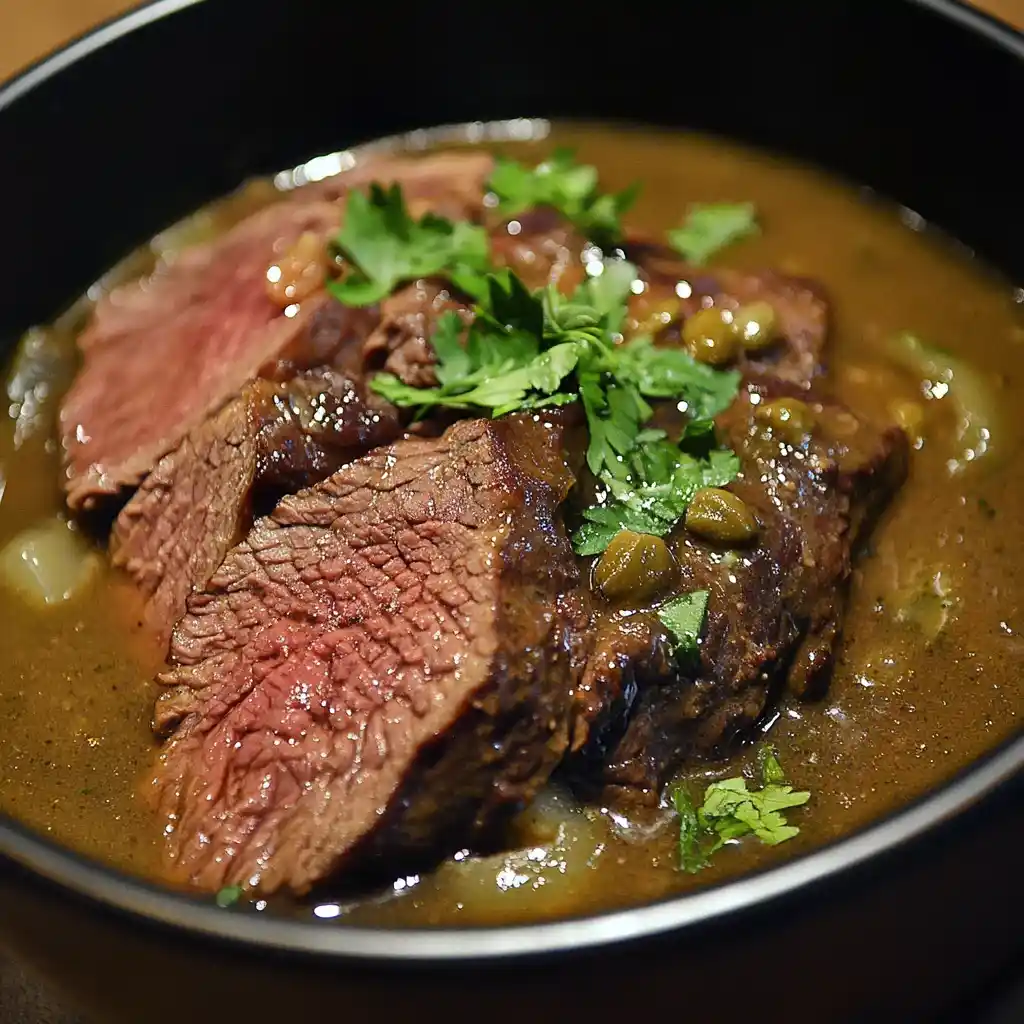
Cold weather hits, and suddenly all I want is a pot of Belgian-Style Slow-Cooked Beef Stew bubbling away in the oven. This dish turns tough beef into something fork-tender, all while your kitchen fills with a smell that pulls everyone toward the table. I’ve made this dozens of times, and it never disappoints.
Servings: 6 Prep time: 25 minutes Cook time: 3 hours 20 minutes Total time: 3 hours 45 minutes
What Makes This Stew Genuinely Belgian
Belgian beef stew, often called carbonade flamande, gets its signature depth from dark ale instead of red wine. Have you ever wondered why Belgian cooking leans so heavily on beer? The country practically runs on it, so it makes sense that beer shows up in the pot too.
That dark ale, combined with a touch of brown sugar and a splash of vinegar, creates a sauce that’s rich, slightly sweet, and pleasantly tangy all at once. This balance of flavors sets it apart from a standard American-style beef stew. IMO, that tang from the vinegar is what makes people go back for a second bowl.
What You’ll Need for Belgian-Style Slow-Cooked Beef Stew
Nothing here is hard to track down, though the dark ale might mean an extra stop if your pantry runs dry.
- chuck steak or stewing beef, cut into thick slices — 3 pounds
- dark ale — 1 1/2 cups
- brown sugar — 2 tablespoons
- fresh herb mix (parsley, tarragon, chives), chopped — 1/4 cup
- bay leaf — 1
- flour, toasted — 3 tablespoons
- butter — 3 tablespoons
- onions, sliced — 3 large
- vinegar — 2 tablespoons
- oil, for browning — 2 tablespoons
- thyme sprigs — 4
- capers — 2 tablespoons
- salt and pepper — to taste
- water — as needed, to just cover ingredients
No dark ale on hand? Beef broth with a splash of balsamic vinegar gets you close enough to the same depth.
How to Make Belgian-Style Slow-Cooked Beef Stew
This recipe unfolds in six clear stages. Nothing here is complicated, but each step builds flavor that you can’t shortcut without noticing the difference later.
Step 1: Prep the Oven and Season the Beef
Preheat your oven to 300 degrees Fahrenheit well before you start cooking, since this low, steady heat is what makes the beef so tender. Slow cooking at a lower temperature breaks down tough connective tissue gradually, rather than forcing it with high heat. Rushing this step almost always leaves you with chewy, disappointing beef.
While the oven heats, cut your chuck steak or stewing beef into thick, even slices, roughly an inch and a half wide. Season every piece generously with salt on all sides. This early seasoning step matters more than people realize, since it helps beef develop a deep, flavorful crust once it hits the hot pan.
Step 2: Sear the Beef in Batches
Heat oil in a large, heavy-bottomed pot or Dutch oven over medium-high heat until it shimmers. Add the beef in small batches, giving each piece enough room to brown properly instead of steaming in a crowded pot. Crowding the pot traps moisture and prevents that deep, caramelized crust from forming.
Sear each piece for about two to three minutes per side, turning until every surface turns a deep golden brown. Transfer the browned beef to a plate and set it aside while you work through the remaining batches. Don’t panic about the browned bits stuck to the bottom of the pot, since those little bits carry huge flavor for later.
Step 3: Build the Onion Base
Lower the heat to medium-low and add the butter directly into the same pot you used for searing. Once it melts completely, add the sliced onions and stir them through the butter and any leftover beef drippings. Those drippings mix into the onions, adding another layer of savory flavor to the base.
Cook the onions slowly for about 15 minutes, stirring every few minutes so they soften and turn golden without burning. Patience matters here, since rushed onions taste sharp and raw instead of sweet and mellow. This slow caramelization builds the backbone of your stew’s flavor.
Step 4: Layer Everything Back Together
Sprinkle the toasted flour evenly over the softened onions and stir it in thoroughly. This coats everything in a light layer of flour that thickens the stew as it cooks, without leaving lumps or a raw flour taste. Toasting the flour beforehand in a dry pan adds a subtle nutty note that plain flour just can’t match.
Return the seared beef to the pot, nestling the pieces into the onion mixture. Scatter your fresh herb mix over the top, letting the parsley, tarragon, and chives settle into the layers below. Think of this stage as stacking flavor, one layer at a time, before the liquid goes in.
Step 5: Add the Liquid and Seasoning
Pour the vinegar directly over the layered ingredients, followed by the brown sugar, thyme sprigs, and bay leaf. Season everything generously with salt and pepper, keeping in mind that flavors mellow out during the long cooking time ahead. Pour in the dark ale next, letting it settle around the beef and onions.
Add just enough water to bring the liquid level up so it barely covers the beef and onions. Adding too much water dilutes the sauce, so stick close to that “just covered” mark rather than filling the pot generously. This balance keeps the finished stew thick and rich instead of watery.
Step 6: Slow-Cook, Rest, and Serve
Cover the pot with a tight-fitting lid and transfer it carefully into your preheated oven. Let it cook undisturbed for about 3 hours, resisting the urge to check on it constantly, since opening the oven repeatedly slows the cooking process. The beef should turn fork-tender and practically fall apart by the time it’s finished.
Remove the pot from the oven and fish out the bay leaf and thyme sprigs, since they’ve already given up their flavor. Stir in a small handful of fresh chopped herbs along with the capers for a final burst of brightness. Ladle the stew into bowls while it’s still hot, and watch everyone gather around the table without needing a second invitation.
Tips That Actually Improve This Stew
- Don’t rush the searing step. Those browned edges create the flavor foundation for everything that follows.
- Use a heavy pot with a tight lid so heat distributes evenly throughout the long cook time.
- Let leftovers cool completely before storing, since this helps the stew hold its texture better.
- Reheat gently on the stovetop rather than the microwave for the best texture.
- Taste before serving and adjust salt, since the flavor mellows significantly after hours of cooking.
Equipment You’ll Want on Hand
- Large pot or Dutch oven with a tight-fitting lid
- Wooden spoon for stirring and scraping up browned bits
- Measuring cups and spoons for accurate quantities
- Sharp knife for slicing the beef and onions
- Cutting board for safe prep work
Variations Worth Trying
- Vegetarian version: Swap beef for hearty mushrooms, carrots, and potatoes for a plant-based take.
- Spicy twist: Add a pinch of red pepper flakes or a diced jalapeño for extra heat.
- Herb swap: Try rosemary or oregano instead of the traditional parsley and tarragon combination.
- Gluten-free option: Use a gluten-free flour blend, or skip the flour entirely for a slightly thinner stew.
- Beer-free version: Replace the dark ale with rich beef broth and a splash of balsamic vinegar.
What to Serve With Belgian-Style Slow-Cooked Beef Stew
Creamy mashed potatoes soak up the rich sauce beautifully and remain the classic pairing for good reason. A warm, crusty baguette works well for mopping up every last bit of gravy. A simple green salad on the side balances out the richness of the stew nicely.
Frequently Asked Questions
Can I use a different type of meat for this stew? Yes. Brisket or even pork shoulder work well as substitutes, as long as you choose a cut that benefits from long, slow cooking.
How can I make this stew ahead of time? Prepare it a day in advance and store it in the refrigerator overnight. The flavors deepen significantly after resting, making it even better the next day.
What can I serve alongside this stew? Mashed potatoes, crusty bread, or a fresh green salad all pair well. Each option complements the rich, tangy sauce in its own way.
Can I freeze leftovers? Absolutely. Let the stew cool completely, then transfer it to an airtight container and freeze for up to three months.
Is this stew gluten-free? It can be, as long as you use a gluten-free flour blend for thickening or skip the flour step altogether. The remaining ingredients are naturally gluten-free.
Why does my stew taste bitter instead of rich? This usually happens when the dark ale is overly hoppy or the onions burned during caramelizing. Choose a malty, less bitter ale and keep the onion heat low and steady.
Final Thoughts
Belgian-Style Slow-Cooked Beef Stew rewards patience with a rich, tangy, deeply savory payoff that’s hard to match. The searing, the slow caramelized onions, and hours in the oven all add up to something genuinely worth the wait. Make a pot this weekend, and don’t be shocked when it becomes a regular request all winter long.
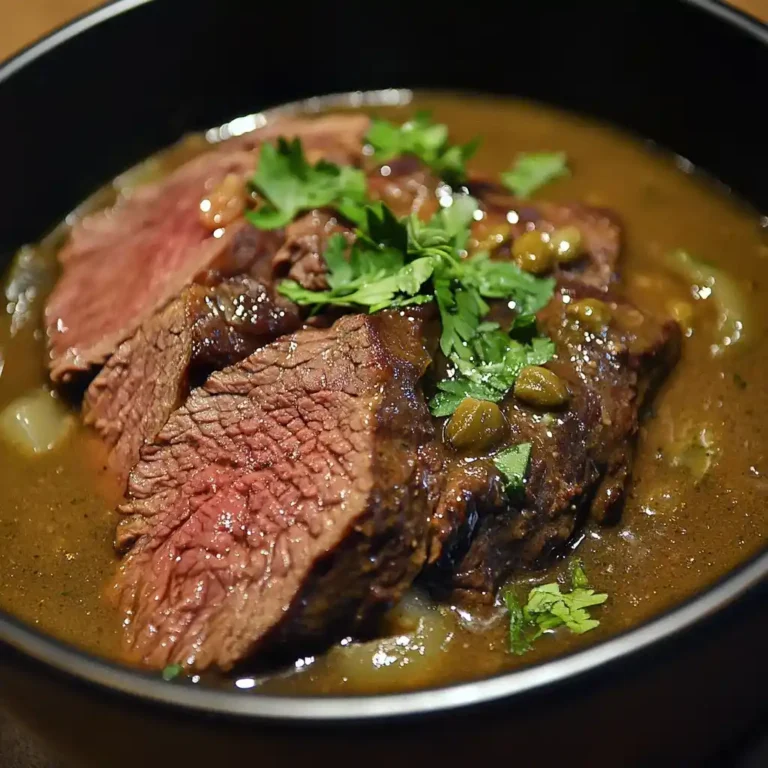
Belgian-Style Slow-Cooked Beef Stew
Ingredients
Method
- Preheat your oven to 300°F.
- Cut the chuck steak into thick slices and season generously with salt.
- Heat oil in a pot over medium-high heat, then add the beef in small batches, browning for 2-3 minutes on each side.
- Transfer the browned beef to a plate.
- Lower heat to medium-low, add butter, then add sliced onions and cook slowly for about 15 minutes until soft and golden.
- Sprinkle toasted flour over the onions and stir well. Return the beef to the pot and top with the herb mix.
- Add vinegar, brown sugar, thyme, bay leaf, then season with salt and pepper. Pour the dark ale over the ingredients, followed by enough water to just cover.
- Cover the pot and transfer it to the oven, cooking for about 3 hours until the beef is fork-tender.
- Remove from the oven, discard bay leaf and thyme sprigs, then stir in fresh herbs and capers.
Notes
Belgian-Style Slow-Cooked Beef Stew
Ingredients
Method
- Preheat your oven to 300 degrees Fahrenheit well before you start cooking.
- Cut your chuck steak into thick slices and season generously with salt on all sides.
- Heat oil in a large pot over medium-high heat until it shimmers.
- Add the beef in small batches, searing for 2-3 minutes per side until deep golden brown.
- Transfer the browned beef to a plate and set it aside.
- Lower the heat to medium-low and add butter directly into the pot.
- Add the sliced onions and cook slowly for about 15 minutes until soft and golden.
- Sprinkle the toasted flour over the onions and stir it in thoroughly.
- Return the seared beef to the pot and top with the fresh herb mix.
- Pour vinegar over the ingredients, followed by brown sugar, thyme, and bay leaf.
- Season with salt and pepper, then pour in the dark ale and just enough water to cover.
- Cover the pot with a tight-fitting lid and transfer it to the oven.
- Cook undisturbed for about 3 hours until the beef is fork-tender.
- Remove from the oven, discard bay leaf and thyme sprigs, and stir in fresh herbs and capers.