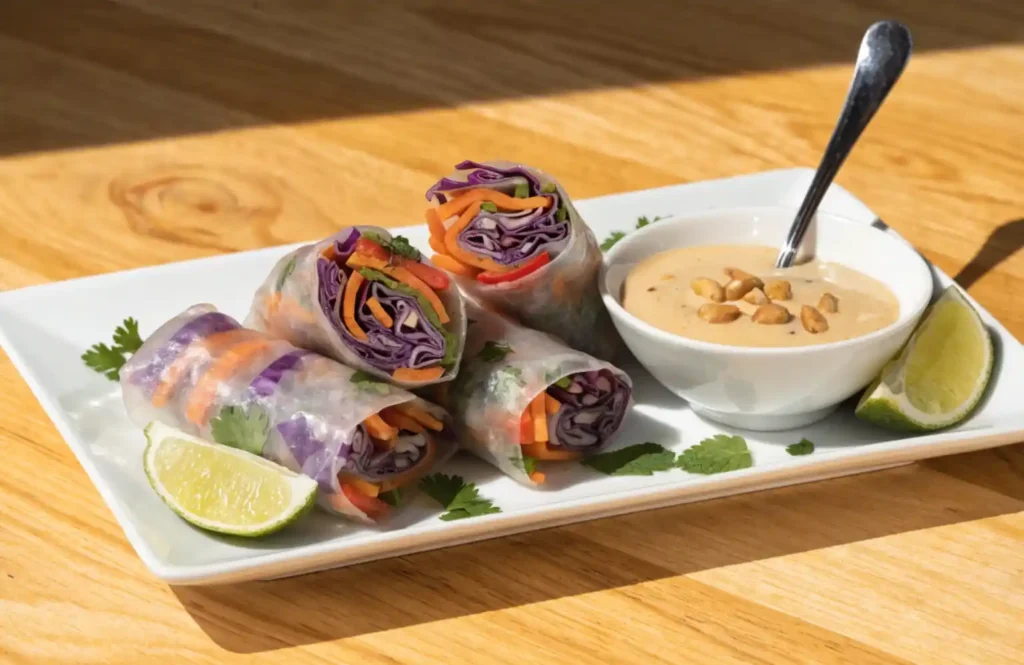
Those translucent, veggie-packed rolls from your favorite Thai restaurant? You can totally make them at home. These healthy spring rolls are fresh, crunchy, and way better than takeout.
I’m going to show you exactly how to nail them every single time.
Prep Time: 25 minutes
Cook Time: 0 minutes
Total Time: 25 minutes
Servings: 8 spring rolls
Why This Spring Roll Recipe Works Perfectly
Here’s what makes this easy spring roll recipe foolproof. The technique is straightforward once you understand how rice paper works.
These fresh spring rolls recipe gems are naturally gluten-free, low-calorie, and packed with vegetables. You control exactly what goes inside them.
I spent years ordering these at restaurants before realizing how simple they are. First time I made them at home, I felt like I’d unlocked a cheat code.
The rolling technique intimidates people initially. But honestly? It’s easier than wrapping a burrito once you get the hang of it. 🙂
Gathering Your Ingredients
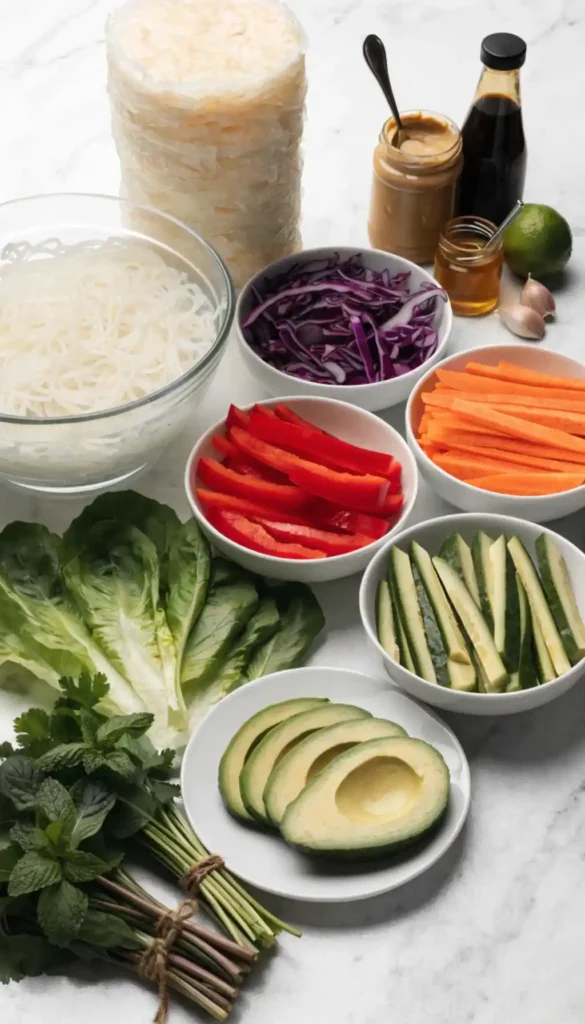
Let’s break down what you need for these vegan spring rolls. Everything is available at regular grocery stores.
For the Spring Rolls:
- 8 rice paper wrappers (8-9 inch rounds)
- 4 ounces rice vermicelli noodles
- 1 cup shredded purple cabbage
- 1 cup shredded carrots
- 1 red bell pepper, julienned
- 1 English cucumber, julienned
- 1 cup fresh mint leaves
- 1 cup fresh cilantro leaves
- 1 cup fresh basil leaves
- 8 large butter lettuce leaves
- 1 ripe avocado, sliced thin (optional)
- 8 ounces cooked shrimp or tofu (optional)
For the Peanut Dipping Sauce:
- ¼ cup creamy peanut butter
- 2 tablespoons soy sauce
- 1 tablespoon rice vinegar
- 1 tablespoon lime juice
- 1 tablespoon honey or maple syrup
- 1 teaspoon sesame oil
- 1 clove garlic, minced
- 2-3 tablespoons warm water
- Red pepper flakes (optional)
Understanding Rice Paper Wrappers
Rice paper sheets are the foundation of authentic Asian spring rolls. They come dried and need rehydration before use.
Buy them at Asian markets or most regular grocery stores now. They’re usually near the Asian foods section.
The wrappers are brittle when dry. Water transforms them into soft, pliable sheets that stick to themselves.
Different brands have slightly different textures. I prefer the ones labeled “for fresh spring rolls” – they’re usually thinner and more delicate.
Prepping Your Vegetables Properly
Uniform vegetable cuts are essential for easy rolling. Everything should be roughly the same size and shape.
Julienne means cutting into thin matchstick shapes. Use a mandoline slicer if you have one – it makes this step ridiculously fast.
Cut vegetables about 3-4 inches long. Too long and they poke through the wrapper. Too short and they don’t distribute well.
Dry your vegetables thoroughly after washing. Excess water makes the rice paper too wet and prone to tearing.
Cooking the Rice Noodles
Boil water and pour it over the rice vermicelli in a heatproof bowl. Let them soak for 5-7 minutes until tender.
Drain and rinse under cold water immediately. This stops the cooking and prevents them from clumping together.
Cut the noodles with kitchen shears into shorter lengths. Long noodles are difficult to manage when rolling.
Toss them with a tiny bit of sesame oil. This prevents sticking while you assemble your veggie spring rolls.
Setting Up Your Rolling Station
Organization makes the rolling process smooth and stress-free. Set up everything within arm’s reach before you start.
Fill a large, shallow dish with warm water. You’ll use this to soften the rice paper wrappers.
Arrange all your fillings in separate bowls or on a large platter. Visual access to everything helps you work quickly.
Have a damp kitchen towel ready. Place finished rolls on it so they don’t stick to the plate.
The Rice Paper Hydration Technique
This step makes or breaks your spring roll sheets recipes. Too little water and they tear. Too much and they become gloppy.
Dip one rice paper wrapper into warm water for 2-3 seconds. Just a quick dunk, not a long soak.
Lay it on a clean, flat surface like a cutting board. The wrapper continues softening as you work.
Wait 30 seconds before adding filling. It should feel soft and pliable but not falling apart.
Have you noticed how the wrapper transforms from brittle to flexible? That’s the magic of rice paper working.
Building Your First Spring Roll
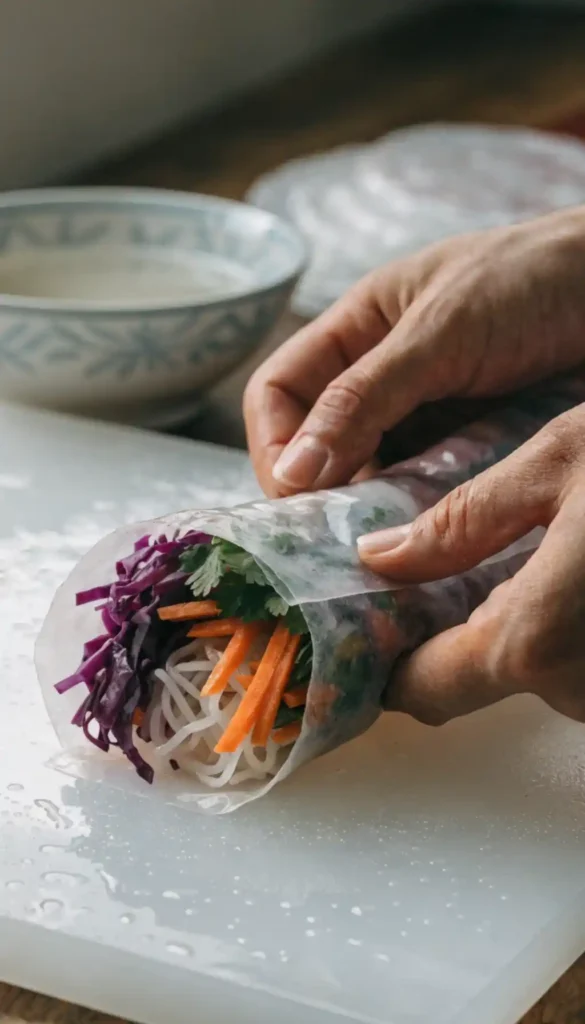
Place a lettuce leaf on the lower third of the wrapper. This creates a barrier preventing filling from breaking through.
Layer a small amount of noodles on the lettuce. Maybe 2 tablespoons – less is more when you’re starting.
Add thin strips of vegetables. I like alternating colors for visual appeal. Purple cabbage, orange carrots, red peppers, green cucumber.
Top with fresh herbs generously. Don’t be shy with mint, cilantro, and basil. They add incredible flavor.
If using protein, add shrimp or tofu now. Place it where you’ll roll from for best presentation.
The Rolling Technique That Works
Fold the bottom edge of the wrapper over the filling. Pull it tight to compress everything together.
Fold in both sides like you’re wrapping a burrito. This seals the edges and prevents filling from escaping.
Continue rolling away from yourself, keeping tension on the wrapper. The rice paper sticks to itself naturally.
The roll should feel firm but not so tight that vegetables poke through. Gentle, even pressure is the goal.
IMO, your first few rolls will be ugly. That’s completely normal. Number five or six will look professional.
Making the Perfect Dipping Sauce
While spring rolls are good alone, this spring roll dipping sauce takes them to legendary status.
Whisk peanut butter, soy sauce, rice vinegar, lime juice, and honey in a bowl. The mixture will be thick initially.
Add minced garlic and sesame oil. These add depth and authentic Asian flavor.
Gradually whisk in warm water until you reach desired consistency. I like it pourable but not watery.
Taste and adjust. Need more tang? Add lime juice. Want it sweeter? Add honey. More savory? Increase soy sauce.
Alternative Sauce Options
Not a peanut fan? These spring roll sauce recipe alternatives work beautifully too.
Sweet Chili Sauce: Mix 2 tablespoons sweet chili sauce with 1 tablespoon lime juice. Simple and tangy.
Hoisin Ginger: Combine 3 tablespoons hoisin sauce with 1 teaspoon grated ginger and lime juice. Rich and complex.
Soy-Lime: Whisk equal parts soy sauce and lime juice with a touch of honey. Clean and bright.
Spicy Mayo: Mix mayo with sriracha and a squeeze of lime. Creamy with heat.
Spring Roll Filling Ideas Beyond Basics
These vegetarian spring rolls adapt to countless filling combinations. Let me share tested variations.
Tropical Version: Mango strips, cucumber, mint, basil, and crushed peanuts. Refreshing and slightly sweet.
Rainbow Veggie: Every colorful vegetable you can find. Purple cabbage, orange carrots, yellow peppers, green cucumber, red radish.
Protein-Packed: Grilled chicken, edamame, and extra vegetables. More substantial and filling.
Tofu Crunch: Crispy baked tofu, pickled vegetables, and peanuts. Texture contrast is incredible.
Making Them Ahead for Parties
These Thai spring rolls are perfect make-ahead appetizers. Here’s how to prep them successfully.
Assemble rolls up to 4 hours before serving. Cover them with a damp paper towel to prevent drying.
Wrap the whole platter tightly with plastic wrap. Refrigerate until ready to serve.
Don’t stack them directly on top of each other. They stick together and tear when separated.
Make the sauce up to 3 days ahead. Store in an airtight container in the refrigerator.
Storage Tips That Actually Work
Leftover summer rolls recipe portions store surprisingly well with proper technique.
Wrap each roll individually in plastic wrap. This prevents them from sticking together and drying out.
Store in an airtight container for up to 24 hours. After that, the wrapper gets tough and chewy.
Don’t freeze spring rolls. The vegetables release water when thawed, making everything soggy and gross. :/
Bring them to room temperature before serving. They taste better slightly cool rather than ice cold.
Common Rolling Mistakes to Avoid
Let me save you from the frustrations I encountered while learning these Asian spring rolls recipes.
Overfilling: Too much filling creates bulky rolls that won’t seal properly. Start with less than you think you need.
Soaking Too Long: Rice paper that’s too wet tears easily. Quick dip is all you need.
Not Drying Vegetables: Wet vegetables make soggy wrappers. Pat everything dry thoroughly.
Rolling Too Tight: Aggressive rolling tears the delicate wrapper. Gentle, firm pressure works best.
Skipping the Lettuce: Without lettuce, fillings poke through the wrapper. It’s essential protection.
Veg Spring Rolls Recipes Variations
Want to customize these healthy spring rolls recipe options? Here are flavor profiles that work.
Mediterranean Twist: Hummus, cucumbers, tomatoes, olives, and fresh dill. Unexpected but delicious.
Mexican-Inspired: Black beans, corn, avocado, cilantro, and lime. Serve with salsa for dipping.
Korean Style: Kimchi, cucumber, carrots, and sesame seeds. Spicy, tangy, and amazing.
Breakfast Version: Scrambled eggs, avocado, and fresh herbs. Sounds weird but trust me on this.
Nutritional Benefits Worth Noting
These vegan spring rolls pack impressive nutrition into each translucent package.
One roll has roughly 80-100 calories depending on filling choices. That’s incredibly light for how satisfying they are.
The vegetables provide fiber, vitamins, and minerals. Fresh herbs add antioxidants and anti-inflammatory compounds.
Rice paper is naturally gluten-free and fat-free. The wrapper contributes minimal calories.
Adding protein like shrimp or tofu creates a balanced, complete meal. Not just empty appetizer calories.
Serving Suggestions for Different Occasions
These fresh spring rolls work for countless situations. Here’s how to present them impressively.
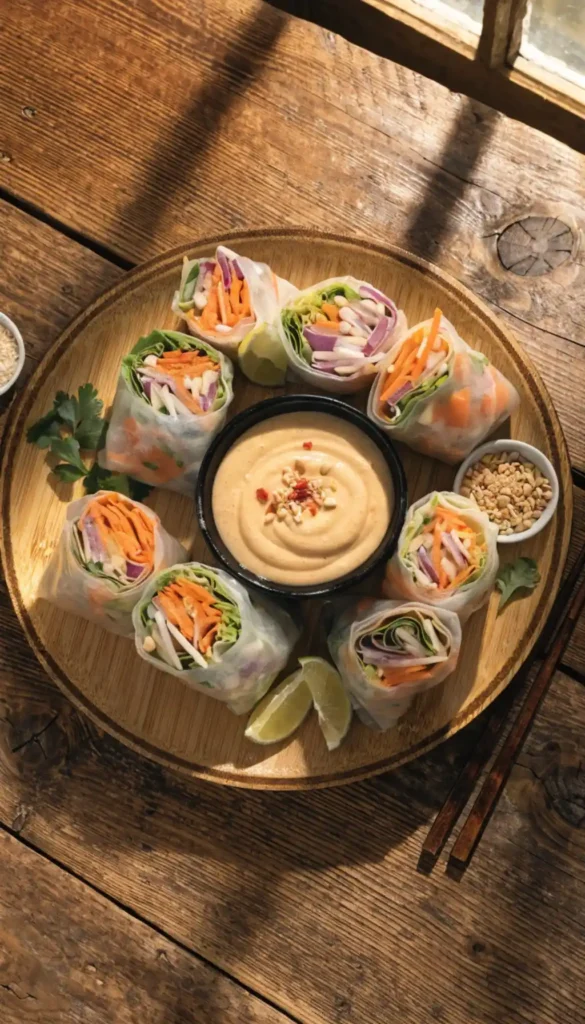
Appetizer Platter: Arrange on a white plate with sauce in the center. Garnish with fresh herbs and lime wedges.
Lunch Box: Pack individually wrapped rolls with sauce in a separate container. Perfect portable lunch.
Party Food: Slice rolls in half diagonally. Guests can grab smaller portions easily with toothpicks.
Light Dinner: Serve 3-4 rolls per person with soup. Complete, satisfying meal without heaviness.
Pairing with Other Dishes
These Thai appetizer options complement many other recipes beautifully.
Serve alongside tom yum soup or miso soup. The hot-cold contrast works wonderfully.
Pair with satay skewers and edamame. Complete Thai-inspired appetizer spread.
Add to a Buddha bowl with rice and more vegetables. Spring rolls as a component rather than solo act.
Include in a mezze platter with hummus, olives, and pita. Cross-cultural but totally works.
Why Homemade Beats Restaurant Versions
Have you noticed how restaurant spring rolls sometimes taste fishy or have wilted herbs? Making them at home eliminates these issues.
You choose exactly which vegetables go inside. No mystery ingredients or skimped portions.
Fresh herbs make all the difference. Restaurants often use old, browning herbs. Yours will be vibrant.
The cost is maybe $12 for 8 rolls at home. Restaurants charge $8-12 for just 2-3 rolls.
Teaching Others to Roll
Spring roll parties are actually super fun. Get friends involved in the rolling process.
Set up a rolling station with all components organized. People customize their own rolls.
Demonstrate the technique once, then let everyone practice. It becomes a fun activity rather than just eating.
FYI, kids love making these. The hands-on assembly keeps them engaged and they’ll actually eat vegetables.
Final Thoughts on Spring Roll Success
Making healthy spring rolls at home is easier than you’d expect. The technique requires practice but becomes second nature quickly.
Fresh vegetables, aromatic herbs, and that perfect peanut sauce create something truly special. Light yet satisfying in every bite.
These prove healthy food doesn’t have to be boring or complicated. Simple ingredients, proper technique, incredible results.
So grab those rice papers and start rolling. Your homemade spring roll game is about to be legendary.
Healthy Spring Rolls Recipe: Fresh, Light, and Ridiculously Delicious
8
servings95
kcal25
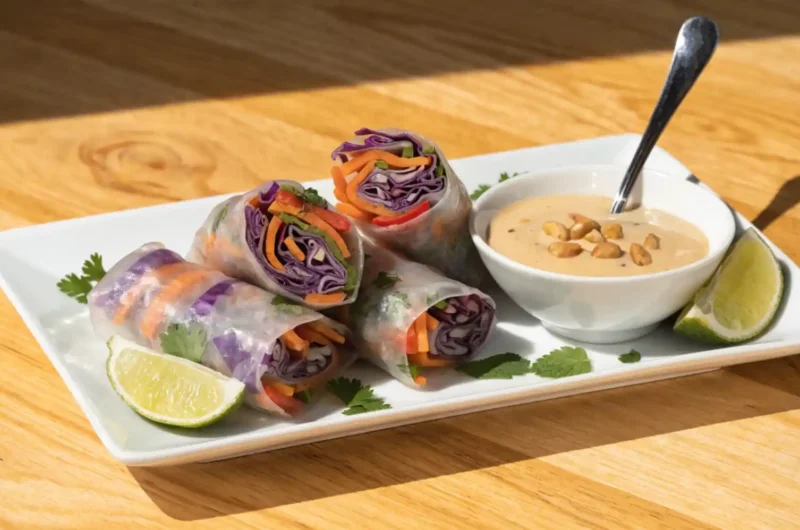
minutesFresh, healthy spring rolls wrapped in translucent rice paper and filled with crisp vegetables, rice noodles, and fresh herbs. These Vietnamese-inspired rolls are naturally vegan, gluten-free, and served with creamy peanut dipping sauce. Light, refreshing, and endlessly customizable, they make perfect appetizers or light meals. No cooking required beyond boiling noodles.
Ingredients
8 rice paper wrappers (8-9 inch)
4 oz rice vermicelli noodles
1 cup shredded purple cabbage
1 cup shredded carrots
1 red bell pepper, julienned
1 English cucumber, julienned
1 cup fresh mint leaves
1 cup fresh cilantro leaves
1 cup fresh basil leaves
8 butter lettuce leaves
1 avocado, sliced (optional)
¼ cup peanut butter
2 tbsp soy sauce
1 tbsp rice vinegar
1 tbsp lime juice
1 tbsp honey
1 tsp sesame oil
1 clove garlic, minced
2-3 tbsp warm water
Directions
- Boil water and pour over rice noodles, soak 5-7 minutes
- Drain noodles, rinse with cold water
- Cut noodles into shorter lengths with scissors
- Julienne all vegetables into thin matchsticks
- Pat vegetables dry thoroughly
- Wash and dry all fresh herbs
- Fill large shallow dish with warm water
- Dip one rice paper wrapper for 2-3 seconds
- Lay wrapper on clean, flat surface
- Wait 30 seconds for wrapper to soften
- Place lettuce leaf on lower third of wrapper
- Add small amount of noodles on lettuce
- Layer vegetables in colorful strips
- Add generous amount of fresh herbs
- Fold bottom edge over filling tightly
- Fold in both sides like a burrito
- Continue rolling away from yourself
- Place finished roll on damp towel
- Repeat with remaining wrappers
- Whisk peanut butter, soy sauce, vinegar, lime, honey
- Add sesame oil and minced garlic to sauce
- Gradually add warm water until pourable
- Serve rolls with peanut dipping sauce
FAQs
Why do my rice paper wrappers keep tearing? You’re either soaking them too long or handling them when they’re too wet. Dip for only 2-3 seconds, then let them rest on your work surface for 30 seconds before filling. The wrapper continues softening during this rest period.
Can I make spring rolls without rice noodles? Absolutely! Skip the noodles for a lower-carb option, or substitute with spiralized zucchini. You can also use cooked quinoa or cauliflower rice as alternatives. The rolls will be different but still delicious.
How do I keep spring rolls from sticking together? Place them on a damp towel or parchment paper, not directly on a plate. Don’t let them touch each other. If storing, wrap each roll individually in plastic wrap before refrigerating.
Can I use regular lettuce instead of butter lettuce? Butter lettuce works best because it’s soft and pliable. Regular iceberg or romaine is too crunchy and can tear the wrapper. If you must substitute, use the most tender inner leaves you can find.
What’s the difference between spring rolls and summer rolls? They’re the same thing! Different regions use different names. Fresh spring rolls, summer rolls, and Vietnamese spring rolls all refer to these unfried, rice paper-wrapped rolls. Fried spring rolls are a completely different dish.