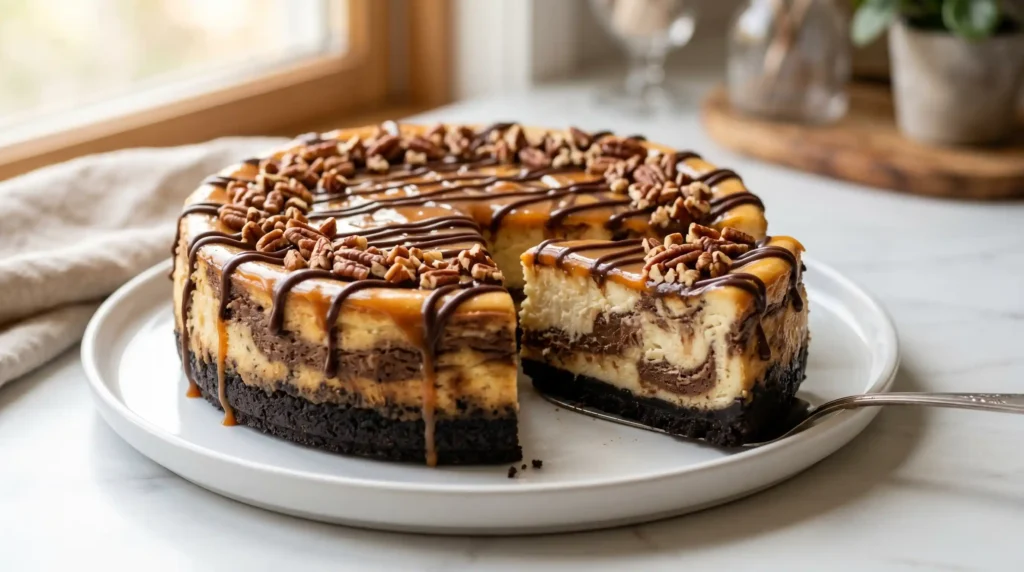
Some desserts are pleasant. Some are memorable. And then there is Decadent Turtle Fudge Cheesecake — a dessert that makes people put down their forks, close their eyes briefly, and look genuinely moved by what just happened in their mouths. Layers of chocolate, caramel, cream cheese, and toasted pecans combining in a single slice that tastes like someone distilled every great dessert into one extraordinarily indulgent experience.
I made this for a birthday dinner expecting to impress. What I received was a table of adults going completely silent for nearly a full minute after the first bite. The kind of silence that speaks clearly without any words. I have since made this for every major celebration in my life because nothing else comes close to the reaction it consistently generates.
Have you ever made a dessert and thought — yes, this is why baking exists? This is that dessert. Let us build it layer by glorious layer.
What Does “Turtle” Mean in This Cheesecake?
The turtle refers to the classic turtle candy — a confection made from a cluster of toasted pecans covered in caramel and dipped in chocolate, named for its resemblance to a turtle shell. Turtle desserts take those three flavours — chocolate, caramel, and pecan — and apply them to other formats. Turtle brownies, turtle cookies, turtle cheesecake. The combination works because each element plays a distinct role.
Chocolate provides depth and slight bitterness. Caramel provides sweet, buttery richness with a faintly salty edge. Pecans provide a toasted, earthy crunch that prevents the whole thing from becoming overwhelmingly sweet. Together, the three create a flavour balance that keeps every bite interesting and every mouthful worth savouring.
Adding cheesecake to this combination brings a tangy, creamy counterpoint that grounds all three flavours and makes the whole dessert feel sophisticated rather than just sweet. IMO, this is the most successful translation of the turtle flavour profile into a dessert format that exists. Not modest praise, but entirely warranted. 🙂
Everything You Need
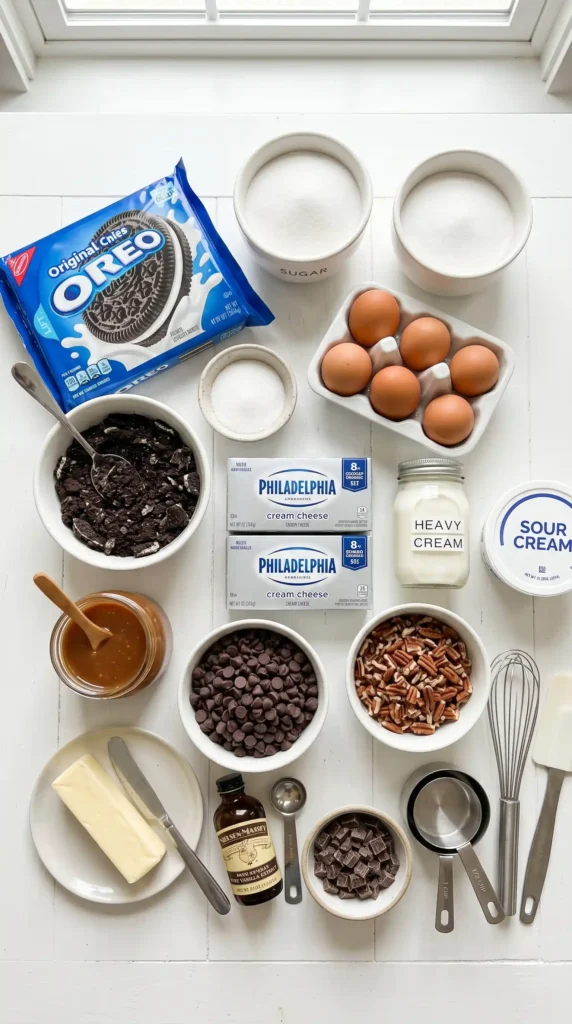
Four components: the Oreo chocolate crust, the cream cheese filling, the fudge swirl, and the turtle toppings. The crust and filling come together quickly. The homemade caramel sauce is optional — a good quality store-bought salted caramel works beautifully — but homemade caramel is genuinely worth making if you have 15 minutes. It tastes dramatically better than anything in a jar.
For the Chocolate Oreo Crust
- 24 Oreo cookies (about 260g), processed to fine crumbs — filling included
- 5 tablespoons (70g) unsalted butter, melted
- Pinch of salt
For the Cream Cheese Filling
- 675g (24oz / 3 packages) full-fat cream cheese, softened to room temperature
- 1 cup (200g) granulated white sugar
- 3 large eggs, room temperature
- 1 cup (240g) full-fat sour cream, room temperature
- 2 teaspoons pure vanilla extract
- 2 tablespoons all-purpose flour (stabilises the filling and prevents cracking)
- Pinch of salt
Now For the Fudge Swirl
- 1/2 cup (85g) semi-sweet chocolate chips
- 1/3 cup (80ml) heavy cream
- 1 tablespoon light corn syrup or golden syrup (for gloss)
- 1/4 teaspoon pure vanilla extract
Now For the Turtle Toppings
- 1/2 cup (85g) semi-sweet chocolate chips + 2 tablespoons heavy cream (for the fudge drizzle)
- 3/4 cup (180ml) good quality salted caramel sauce — store-bought or homemade
- 1 and 1/2 cups (170g) pecan halves, toasted
- Flaky sea salt for finishing
Room Temperature Ingredients Are Non-Negotiable HereA cheesecake made with cold cream cheese, cold eggs, and cold sour cream will crack during baking. Cold cream cheese produces a lumpy batter with unincorporated pockets that expand at different rates in the oven, creating cracks across the surface. Cold eggs cause the filling to curdle slightly. Everything must be genuinely room temperature — pull cream cheese and eggs from the fridge at least 90 minutes before baking. FYI — this is the single most important instruction in this entire recipe.
How to Make Decadent Turtle Fudge Cheesecake Step by Step
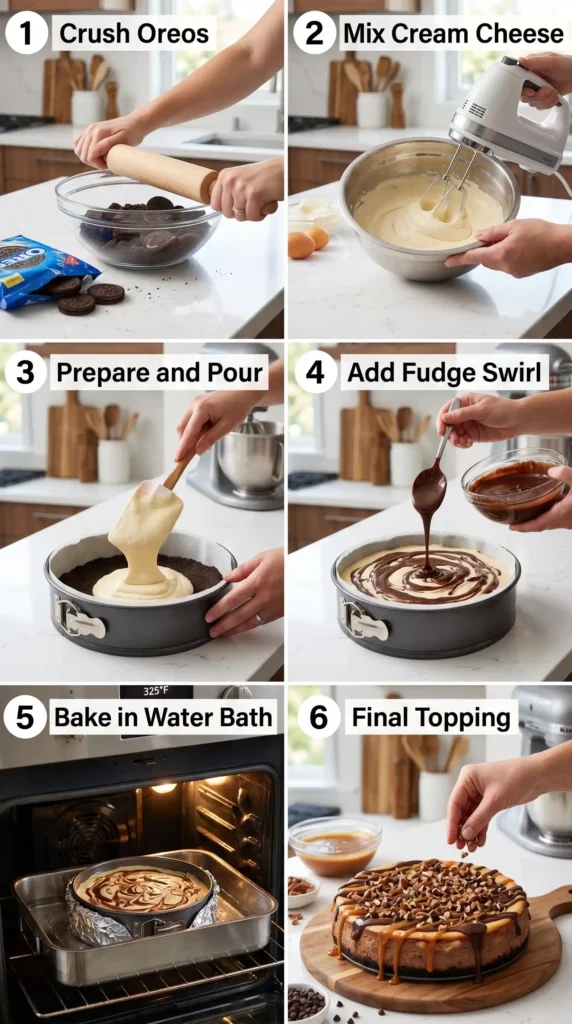
The process runs in four stages: make the crust, make the fudge swirl, make the filling, bake and chill. The baking uses a water bath — which sounds intimidating but involves wrapping the springform pan in foil and sitting it in a tray of hot water. That humidity prevents cracking without any additional skill. Read through the complete process once before starting.
Step 1: Make the Oreo Crust
Preheat your oven to 175°C (350°F). Process 24 Oreo cookies — filling and all — in a food processor until they become fine, uniform crumbs. If you do not have a food processor, place them in a zip-lock bag and crush thoroughly with a rolling pin. The Oreo filling melts during baking and acts as additional binding for the crust — do not remove it.
Combine the Oreo crumbs with the melted butter and pinch of salt in a bowl. Stir until every crumb is coated in butter and the mixture holds its shape when pressed between your fingers. Press this mixture firmly into the base of a 23cm (9-inch) springform pan and about 4–5cm up the sides to create a deep crust that holds the generous filling. Press very firmly — a loosely pressed crust crumbles when sliced. Bake for 10 minutes, then cool while you make the filling.
Step 2: Make the Fudge Swirl
Place the 1/2 cup of chocolate chips and corn syrup in a heatproof bowl. Heat the 1/3 cup of heavy cream in a small saucepan over medium heat until just simmering — small bubbles at the edges, not a rolling boil. Pour the hot cream over the chocolate chips and let the mixture sit undisturbed for 2 minutes. Stir gently from the centre outward until smooth and glossy. Add the vanilla extract and stir again. Allow the ganache to cool for 10 minutes — it should be thick, pourable, and not steaming before you use it in the filling. Set aside.
Step 3: Make the Cream Cheese Filling
In a large mixing bowl, beat the room-temperature cream cheese with a hand mixer or stand mixer on medium speed for about 2 minutes until completely smooth and slightly fluffy. Any remaining lumps will not smooth out once the other ingredients are added — if the cream cheese looks at all lumpy after 2 minutes, beat for another 60 seconds before proceeding.
Add the granulated sugar and beat for another 60 seconds until fully incorporated. Add the eggs one at a time, beating on low speed for about 15 seconds after each addition. Low speed after adding the eggs is critical — beating on high incorporates too much air into the batter, which forms bubbles that rise and collapse during baking and cause cracking. The goal from this point forward is thorough mixing with minimal air incorporation.
Add the sour cream, vanilla extract, flour, and pinch of salt. Beat on low speed for 30 seconds until fully combined and the filling looks smooth, thick, and slightly glossy. Taste it — it should be rich, slightly tangy, sweet, and vanilla-forward. Set aside 1/3 cup of the filling in a small bowl for mixing with the fudge swirl.
Step 4: Create the Fudge Swirl Layer
Mix the cooled fudge ganache into the reserved 1/3 cup of cream cheese filling and stir until fully combined and dark brown throughout. Pour the main cream cheese filling into the cooled Oreo crust and smooth the top with a spatula. Spoon the chocolate-cream cheese fudge mixture in several dollops across the top of the filling. Use a thin skewer or toothpick to drag the fudge mixture through the filling in long, sweeping figure-eight motions to create a visible swirl pattern throughout the top layer.
Work with a light touch — two or three gentle passes through the filling creates a beautiful swirl without over-mixing the two layers into a uniform brown that loses the visual contrast. The swirl should look distinct and dramatic when viewed from above — dark chocolate ribbons cutting through the pale cream cheese filling.
Step 5: Bake With a Water Bath
Wrap the outside of the springform pan tightly in two or three layers of heavy-duty aluminium foil — bring the foil up the sides of the pan to prevent water from seeping in during baking. Place the wrapped springform pan inside a large roasting tin. Pour boiling water into the roasting tin until it reaches about halfway up the sides of the springform pan — approximately 2.5–3cm of water. This water bath creates steam in the oven that keeps the cheesecake moist and prevents the surface from drying and cracking during baking.
Carefully transfer the entire setup to the preheated oven. Bake at 175°C for 60–70 minutes. The cheesecake is done when the edges look completely set and the centre still shows a gentle 5–6cm wobble when you give the pan a small shake — like a set custard, not a liquid. It will look slightly underdone in the centre. That is correct. The cheesecake continues setting as it cools and chills.
Step 6: Cool and Chill
Turn off the oven and prop the door open slightly with a wooden spoon. Leave the cheesecake inside the cooling oven for 1 hour. This gradual cooling prevents the dramatic temperature change that causes cheesecakes to crack across the surface as the filling contracts rapidly. After 1 hour, remove the cheesecake from the water bath, place it on a wire rack, run a thin knife around the inner edge of the springform ring to loosen the sides, and allow it to cool completely to room temperature — about 2 more hours.
Cover the pan loosely with cling film and refrigerate for at least 8 hours or overnight. The cheesecake must be completely set and cold before the toppings go on — warm or insufficiently chilled cheesecake cannot support the weight of the caramel and pecans without sagging and losing its shape. Patience at this stage produces the cleanest slices and the most structurally impressive result.
Step 7: Add the Turtle Toppings
Remove the fully chilled Decadent Turtle Fudge Cheesecake from the refrigerator. Release and remove the springform ring. Make the fudge drizzle by combining the remaining chocolate chips with 2 tablespoons of heavy cream — microwave in 30-second intervals, stirring between each, until smooth. Allow to cool for 5 minutes until slightly thickened.
Pour the caramel sauce over the top of the cheesecake, encouraging it to drip slightly over the edges for a dramatic visual effect. Arrange the toasted pecan halves across the entire surface — either in a neat pattern or a beautiful rustic pile, depending on your preference. Drizzle the warm fudge sauce over the pecans in thin, overlapping lines. Finish with a generous pinch of flaky sea salt over the entire surface. The salt cuts through the richness of the caramel and chocolate and adds a final flavour note that makes this cheesecake taste as complex as it looks.
Toasting the Pecans — Never Skip This StepRaw pecans taste mild and slightly bitter. Toasted pecans taste nutty, rich, and deeply caramelised — a completely different ingredient. Spread them on a baking tray and toast at 175°C for 8–10 minutes until you can smell them from across the kitchen. Let them cool completely before adding to the cheesecake — warm nuts on a cold caramel topping cause the caramel to melt and run.
Variations Worth Making
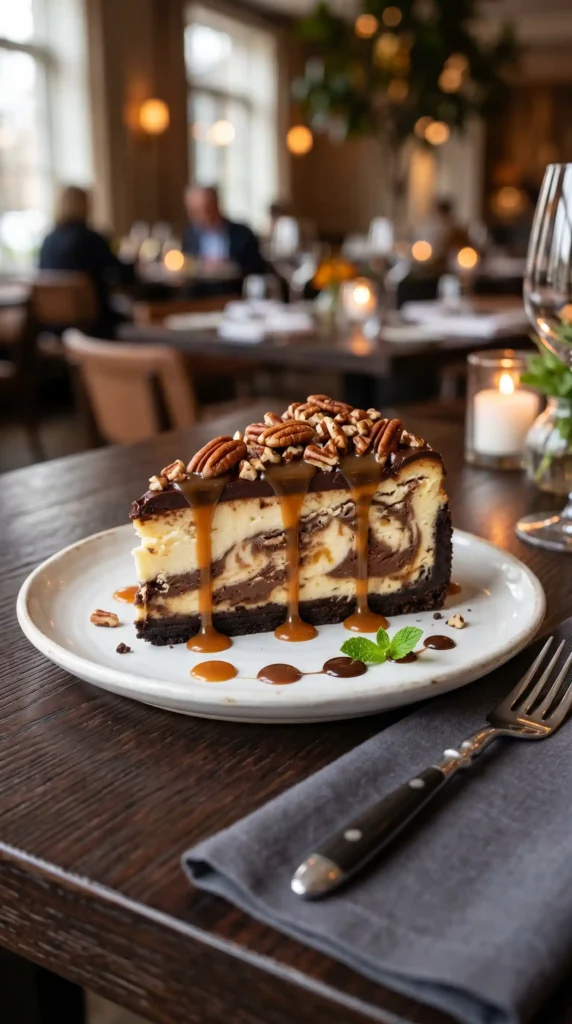
White Chocolate Turtle Cheesecake
Replace the chocolate Oreo crust with a graham cracker and toasted pecan crust. Swap the fudge swirl for a white chocolate ganache swirl using white chocolate chips. Use a butterscotch sauce instead of caramel for a deeper, more toffee-forward flavour. This variation is lighter in colour and flavour but equally indulgent — the white chocolate and butterscotch combination with the pecans produces a beautifully golden dessert that looks as impressive as it tastes.
Mini Turtle Cheesecakes
Divide the crust and filling evenly between 12 standard muffin tins lined with cupcake liners. Reduce the baking time to 20–25 minutes at 165°C — no water bath needed for mini cheesecakes since the small size prevents cracking without humidity. Top each cooled mini cheesecake with a spoonful of caramel, a few pecan halves, and a drizzle of fudge. These individual portions work perfectly for parties and gatherings where plating a full cheesecake is impractical.
Espresso Turtle Cheesecake
Add 2 teaspoons of instant espresso powder dissolved in a teaspoon of hot water to the cream cheese filling along with the vanilla. The espresso deepens the chocolate flavour of the fudge swirl significantly and adds a slightly bitter, roasted note that makes the caramel and pecan toppings taste even sweeter and more complex by contrast. This adult version of the turtle cheesecake is genuinely extraordinary and works beautifully for evening dinner parties where you want the dessert to feel sophisticated.
Storage Tips
Store the finished Decadent Turtle Fudge Cheesecake covered loosely in the refrigerator for up to 5 days. The caramel and fudge toppings hold well without running or separating when kept cold. Bring individual slices to room temperature for 15–20 minutes before eating — cold cheesecake tastes muted and flat compared to a slice that has had time to warm slightly and allows all the flavour compounds to become fully aromatic.
The cheesecake freezes well without the caramel, pecan, and fudge toppings. Freeze the fully baked and chilled cheesecake wrapped tightly in two layers of cling film and then foil for up to 2 months. Thaw overnight in the refrigerator and apply the turtle toppings fresh before serving. The filling texture after thawing is virtually identical to the freshly made version.
Frequently Asked Questions
How do I prevent my turtle fudge cheesecake from cracking?
Three techniques prevent cracking reliably: use all room-temperature ingredients so the batter mixes without air pockets or uneven expansion; use a water bath during baking to maintain consistent humidity that prevents the surface from drying and contracting; and cool the cheesecake gradually inside the turned-off oven for one hour before exposing it to room temperature. The most common cause of cracking is over-beating after the eggs are added, which incorporates excess air — always beat on low speed from the egg stage onward.
Can I make the turtle fudge cheesecake without a water bath?
Yes, but the risk of cracking increases significantly. If you choose to skip the water bath, reduce the oven temperature to 150°C (300°F) and extend the baking time by 15–20 minutes. Place a separate tray of hot water on the lower oven rack to create some steam without the full submersion method. Cool the cheesecake gradually in the oven as described. Even with these adjustments, a surface crack or two is possible — the turtle toppings will cover any imperfections, so it is not a disaster, just slightly less ideal.
Can I use store-bought caramel sauce for the topping?
Yes. A high-quality store-bought salted caramel sauce works very well and saves 15 minutes of cooking time. Look for caramel sauces with butter listed as an ingredient — they have more depth and a more authentic flavour than pure sugar-based syrups. Avoid thin, very sweet caramel topping sauces designed for ice cream, which run off the cheesecake surface too quickly and do not have enough body to stay in place during serving. A thick, pourable caramel that holds its shape briefly on a spoon is the right consistency.
Why did my cheesecake crack even with a water bath?
Cracks after using a water bath usually mean: water seeped into the pan (fix with additional layers of foil or use an oven bag to waterproof the springform), the oven temperature was too high and the cheesecake cooked too fast, the cheesecake was over-baked past the correct wobble stage, or it was moved from the oven to a cool counter too quickly without the gradual cooling step. Any one of these causes cracking independently — check all four if your water bath result still cracked.
How far in advance can I make this cheesecake?
The baked and chilled cheesecake base — without toppings — keeps refrigerated for up to 3 days before the event, making this an excellent make-ahead dessert for celebrations. Apply the caramel sauce, pecans, and fudge drizzle on the day of serving for the freshest presentation. The pecan topping maintains the best crunch when added within a few hours of serving rather than the night before, when the caramel can cause them to soften slightly as they absorb moisture.
Final Thoughts
This Decadent Turtle Fudge Cheesecake earns its title with every single layer. The chocolate Oreo crust, the silky cream cheese filling threaded through with fudge swirl, the caramel pooling over toasted pecans on top, the flaky salt finishing everything — it is a dessert that delivers on every level simultaneously and leaves people genuinely impressed. Not just satisfied. Genuinely impressed.
It takes patience — the chilling time is real and the water bath is worth the extra five minutes of preparation — but none of it is difficult. Every step is achievable and every step rewards you with a result that looks and tastes like a professional bakery produced it.
Pull that cream cheese from the fridge right now. Toast those pecans. Make the most extraordinary cheesecake of your baking career. And when people ask how you made it — accept the compliment calmly and completely without giving away how straightforward it actually was.
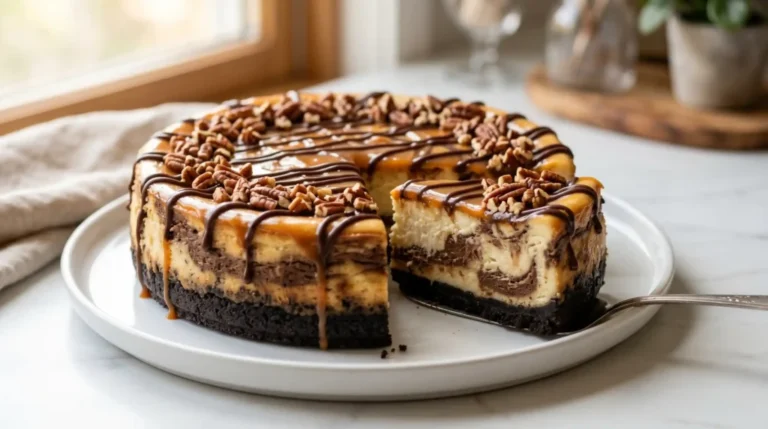
Decadent Turtle Fudge Cheesecake
Ingredients
Method
- Preheat your oven to 175°C (350°F).
- Process the Oreo cookies in a food processor until they become fine crumbs. Combine the crumbs with the melted butter and a pinch of salt.
- Press this mixture firmly into the base and sides of a 23cm (9-inch) springform pan.
- Bake for 10 minutes, then cool while preparing the filling.
- Heat the heavy cream until just simmering, then pour over the chocolate chips and corn syrup. Stir until smooth and allow to cool.
- In a large mixing bowl, beat the room-temperature cream cheese until smooth.
- Add the granulated sugar and mix well before adding the eggs one at a time while mixing on low speed.
- Incorporate the sour cream, vanilla extract, flour, and salt until combined.
- Set aside 1/3 cup of the filling.
- Mix the fudge swirl into the reserved cream cheese filling, then pour the main filling into the cooled crust.
- Spoon the fudge mixture into the filling, creating a swirl pattern.
- Wrap the springform pan in foil and place it inside a roasting tin. Pour boiling water into the tin until halfway up the sides of the springform pan.
- Bake for 60-70 minutes until the edges are set and the center has a slight wobble.
- Cool the cheesecake gradually in the turned-off oven for 1 hour, then cool it at room temperature for 2 hours.
- Refrigerate for at least 8 hours or overnight.
- Prepare the fudge drizzle using remaining chocolate chips and heavy cream. Pour caramel over the cheesecake and sprinkle with toasted pecans and flaky sea salt.