Servings: 12–16 | Prep Time: 20 minutes | Bake Time: 55–65 minutes | Total Time: ~1 hour 30 minutes
The Only Cake That Makes People Go Completely Silent at the Table
Some cakes look impressive. This one tastes impressive. Kentucky Butter Cake is the kind of dessert that makes a room go quiet — not because it’s fancy, but because it’s that good. Rich, buttery, and soaked in a warm sugar glaze, it’s pure comfort in every slice.
I first made this for a Sunday family dinner and my aunt asked if I’d bought it from a bakery. I hadn’t. That moment sealed this recipe in my regular rotation forever.
What Exactly Is Kentucky Butter Cake?
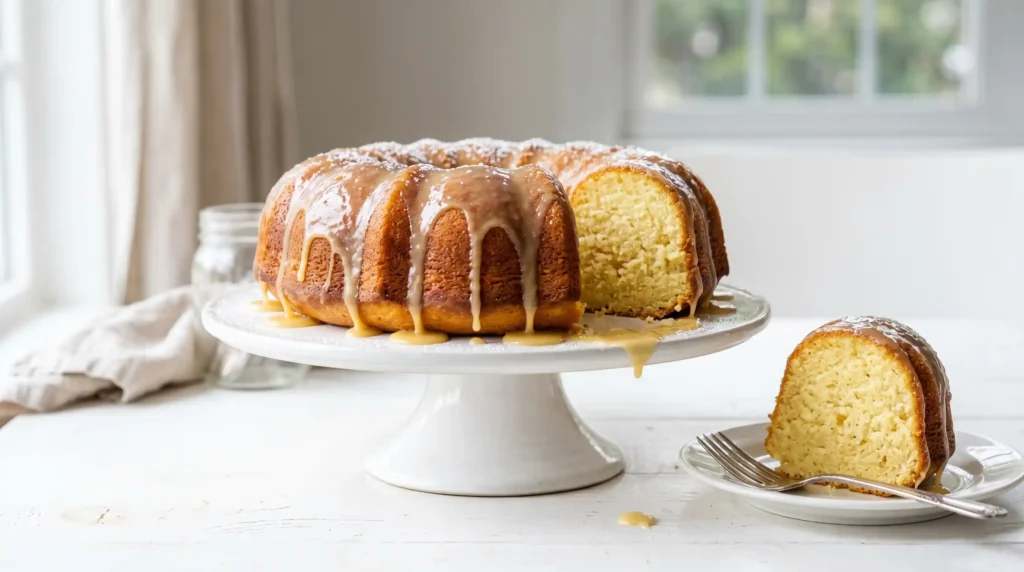
If you’ve never made this before, here’s the short version. Kentucky Butter Cake is a dense, moist vanilla bundt cake with one secret weapon — a warm butter-sugar glaze poured over it while it’s still hot in the pan.
That glaze soaks through the poke holes you make in the cake, creating this incredibly rich, tender interior. The outside develops a delicate sugar crust as everything sets. It’s one of those recipes that sounds simple on paper but delivers results that feel genuinely special.
Ingredients You’ll Need
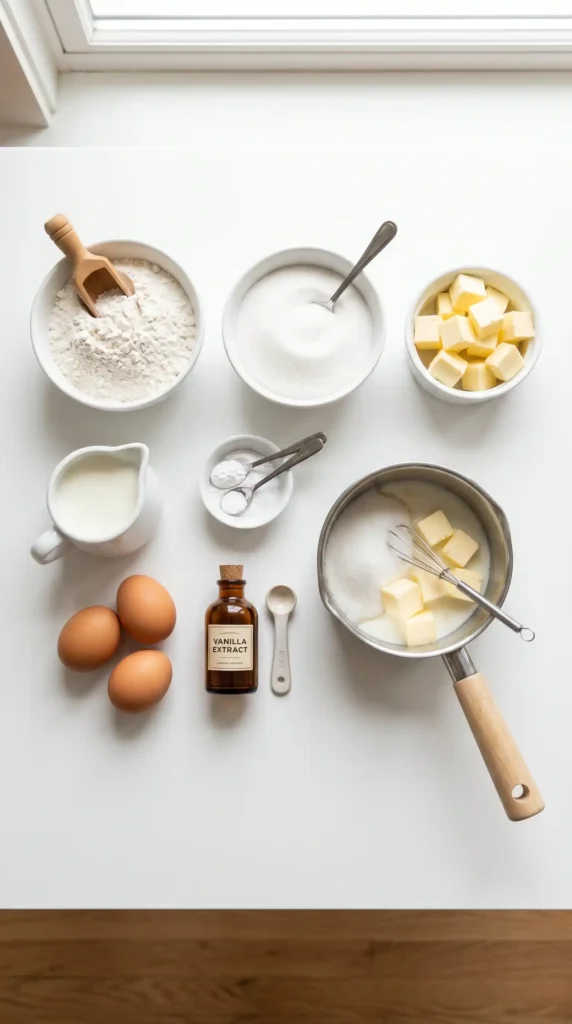
For the Cake
- 3 cups all-purpose flour
- 2 cups granulated sugar
- 1 tsp salt
- 1 tsp baking powder
- ½ tsp baking soda
- 1 cup unsalted butter, softened
- 1 cup buttermilk
- 4 large eggs
- 2 tsp vanilla extract
For the Butter Glaze
- ¾ cup granulated sugar
- ⅓ cup unsalted butter
- 3 tbsp water
- 2 tsp vanilla extract
Two things to note before you start: Use room-temperature butter for the batter — cold butter won’t cream properly. And don’t skip the buttermilk. It gives this cake its signature tender crumb that regular milk simply cannot replicate.
Step-by-Step: How to Make Kentucky Butter Cake
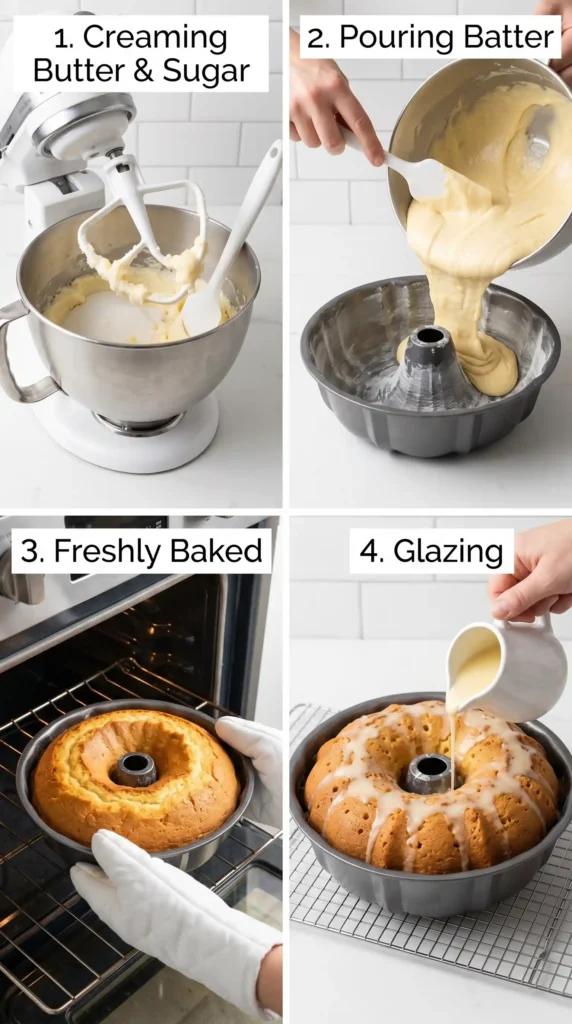
Step 1: Prepare Your Pan and Preheat the Oven
Preheat your oven to 325°F (165°C). This lower temperature is intentional — it lets the cake bake through slowly and evenly without the outside browning too fast.
Now prep your bundt pan. Grease it generously with softened butter or shortening, making sure to get into every crevice and ridge of the pan. Then dust it lightly with flour and tap out the excess. A well-prepped bundt pan is the difference between a cake that releases cleanly and one that tears apart when you flip it. Don’t rush this step.
Step 2: Combine the Dry Ingredients
Add the flour, granulated sugar, salt, baking powder, and baking soda into a large mixing bowl. Whisk them together thoroughly for about 30 to 45 seconds until everything is evenly blended throughout.
This dry whisk step matters. Baking powder and baking soda need to be evenly distributed through the flour so the cake rises consistently. Uneven distribution causes patchy rising or dense spots — not what you want from a cake this good.
Step 3: Add the Wet Ingredients
Add the softened butter, buttermilk, eggs, and vanilla extract directly into the bowl with your dry ingredients. Using a hand mixer or stand mixer, beat everything together starting on low speed for 30 seconds, then increase to medium speed.
Beat the batter for a full 3 minutes on medium speed. This is longer than most recipes call for, and it’s intentional. The extended mixing time fully incorporates air into the batter and gives the cake that smooth, slightly dense crumb that Kentucky Butter Cake is known for. The batter should look thick, creamy, and uniform when done.
Step 4: Pour the Batter and Bake
Pour the batter into your prepared bundt pan, filling it no more than two-thirds full to give the cake room to rise. Spread the top smooth with a spatula and tap the pan on the counter a couple of times to release any large air pockets.
Place the pan on the center rack of your oven. Bake for 55 to 65 minutes. At the 55-minute mark, insert a toothpick into the thickest part of the cake. If it comes out clean or with just 1 to 2 dry crumbs, the cake is done. If you see wet batter, close the oven and check again in 5-minute intervals.
Avoid opening the oven door before the 50-minute mark. Every time you open it, you let heat escape and risk the cake sinking in the center. Patience really is a virtue when baking this one.
Step 5: Make the Butter Glaze
Start the glaze about 10 minutes before the cake finishes baking, so it’s warm and ready to pour immediately. Add the granulated sugar, butter, and water into a small saucepan over low heat.
Stir the mixture gently and continuously as the butter melts and the sugar dissolves into the liquid. This should take about 3 to 4 minutes. Do not let the mixture boil. Boiling it changes the texture and can cause the glaze to crystallize instead of staying smooth and silky. Once the sugar fully dissolves and the butter is melted through, remove the saucepan from heat immediately. Stir in the vanilla extract and set it aside.
Step 6: Poke Holes and Soak the Cake
This is the step that makes all the difference — the one most people don’t expect when they first read this recipe. As soon as the cake comes out of the oven, leave it in the pan. Do not remove it yet.
Using a wooden skewer, chopstick, or fork, poke holes all over the surface of the cake while it’s still hot and sitting in the pan. Go deep — you want the holes to reach all the way through so the glaze can travel down into the center of the cake.
Now pour the warm butter glaze slowly and evenly over the entire surface of the cake. Pour a little at a time, pausing to let each pour absorb before adding more. This step takes 2 to 3 minutes of slow, steady pouring. Resist the urge to rush it.
Once all the glaze is poured, leave the cake in the pan for 20 to 30 minutes to allow it to absorb fully. You’ll notice the glaze disappear into the cake as it cools slightly. The outside will start to form a thin, delicate sugar crust. That’s exactly what you want.
Step 7: Remove and Serve
After the resting period, place a large serving plate upside-down over the top of your bundt pan. Hold them together firmly and flip in one smooth, confident motion. Let the pan sit for a minute before lifting it off — gravity helps the cake release fully.
If any sections of glaze or crust stuck to the pan, simply press them back onto the cake with your fingers. Nobody will notice, and FYI, this happens to almost everyone the first time. Dust lightly with powdered sugar for a bakery-style finish, then slice and serve warm or at room temperature.
Tips for the Best Kentucky Butter Cake Every Time
- Grease the bundt pan thoroughly. This is the single biggest failure point for bundt cakes. Take an extra minute on this step.
- Use full-fat buttermilk. Low-fat versions don’t deliver the same tenderness or flavor depth.
- Pour the glaze while the cake is still hot. A cooled cake won’t absorb the glaze properly, and you’ll lose that signature moist interior.
- Let it rest overnight. The flavors deepen significantly by the next day, and the texture becomes even richer. IMO, this cake is better on day two.
- Don’t boil the glaze. Keep the heat low and stir constantly. A boiled glaze turns grainy and gritty instead of smooth.
How to Store Kentucky Butter Cake
This cake stores beautifully. Cover it with a cake dome or wrap it tightly in plastic wrap and store it at room temperature for up to 3 days. The glaze keeps the crumb moist throughout, so it won’t dry out.
For longer storage, refrigerate it for up to 5 days. Bring slices back to room temperature before eating — cold bundt cake doesn’t show off its best texture. You can also freeze unglazed cake layers for up to 2 months and add fresh glaze after thawing.
Variations Worth Trying
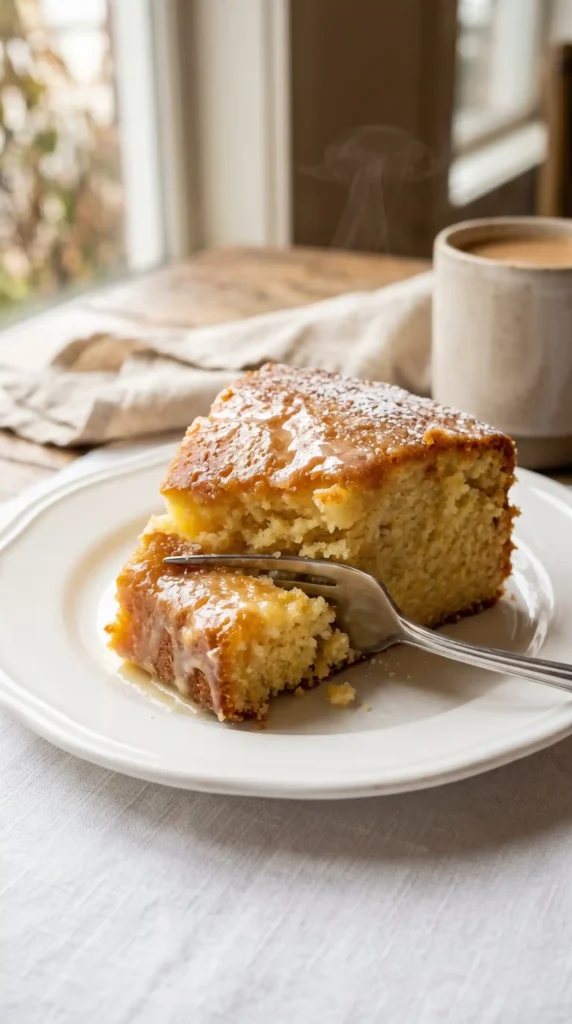
The base recipe is genuinely perfect, but a few small tweaks can take it in interesting directions:
- Add 1 tsp of almond extract alongside the vanilla for a subtle, nutty depth of flavor.
- Substitute brown sugar for granulated sugar in the glaze for a richer, more caramel-like finish.
- Stir ½ cup of finely chopped pecans into the batter for added texture.
- Add a simple powdered sugar glaze on top of the butter glaze once the cake is plated for extra visual impact.
FAQs About Kentucky Butter Cake
Why did my cake stick to the bundt pan?
Almost always a pan prep issue. Make sure you grease every single groove of the bundt pan with softened butter or shortening — not cooking spray, which doesn’t coat as thoroughly. Then flour it completely. Let the cake rest in the pan for the full 20–30 minutes after glazing before flipping.
Can I make Kentucky Butter Cake without buttermilk?
Yes. Add 1 tablespoon of white vinegar or lemon juice to a measuring cup, fill it to 1 cup with regular whole milk, stir, and let it sit for 5 minutes. It works as a substitute, though real buttermilk gives a slightly richer crumb.
Why does my glaze turn grainy?
Grainy glaze means the sugar recrystallized, usually because the heat was too high or the mixture boiled. Keep the heat on low, stir constantly, and remove the pan the moment the butter melts and sugar dissolves. Don’t let it sit on the heat any longer than needed.
Can I make this cake in a regular cake pan instead of a bundt pan?
You can use a 9×13-inch baking pan, but the bundt pan is really part of what makes this cake work. The hole in the center helps the cake bake evenly all the way through, and the surface-to-volume ratio of a bundt means more of that glazed crust per slice.
How do I know when the glaze is done?
The glaze is ready when the butter has fully melted and you can no longer feel any sugar granules when you stir. Run a spoon through it — it should feel completely smooth. If you still feel grittiness, keep stirring over low heat for another minute.
Final Thoughts
Kentucky Butter Cake is proof that the best recipes don’t need to be complicated. A handful of pantry staples, a warm glaze, and a little patience produce something that genuinely impresses everyone who tries it.
The buttery interior, the delicate sugar crust, the way every slice holds together perfectly — it all comes from following the steps with care. This one earns its place in your permanent baking lineup. Your oven is waiting. Go make it.
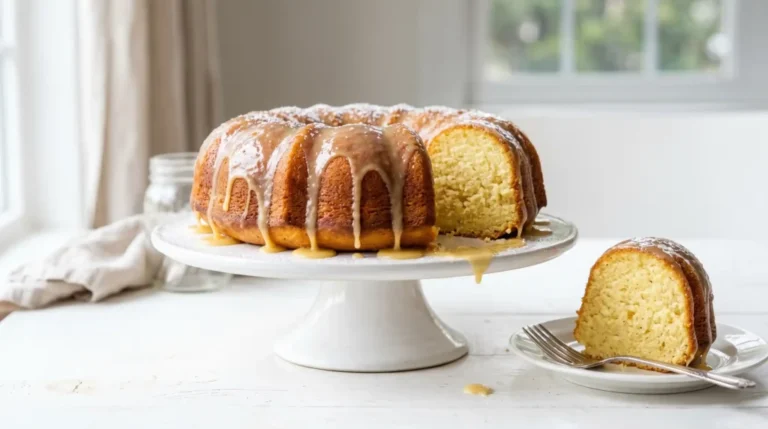
Kentucky Butter Cake
Ingredients
Method
- Preheat your oven to 325°F (165°C) and grease a bundt pan with softened butter or shortening, then dust it with flour.
- In a large mixing bowl, whisk together the flour, sugar, salt, baking powder, and baking soda.
- Add the softened butter, buttermilk, eggs, and vanilla to the dry ingredients and mix with a hand or stand mixer on low speed for 30 seconds, then medium speed for 3 minutes.
- Pour the batter into the prepared bundt pan, filling it no more than two-thirds full.
- Bake for 55 to 65 minutes, checking for doneness with a toothpick at the 55-minute mark.
- In a small saucepan, combine sugar, butter, and water, heating gently until the sugar dissolves and the butter melts, about 3 to 4 minutes. Stir in vanilla extract off heat.
- After baking, leave the cake in the pan and poke holes in the top with a wooden skewer.
- Pour the warm glaze over the cake gradually, allowing it to soak in. Let the cake rest in the pan for 20-30 minutes.
- Carefully flip the cake onto a serving plate, dust with powdered sugar, and serve warm or at room temperature.