Servings: 12–16 slices Prep Time: 25 minutes Total Time: About 2 hours (includes baking and cooling)
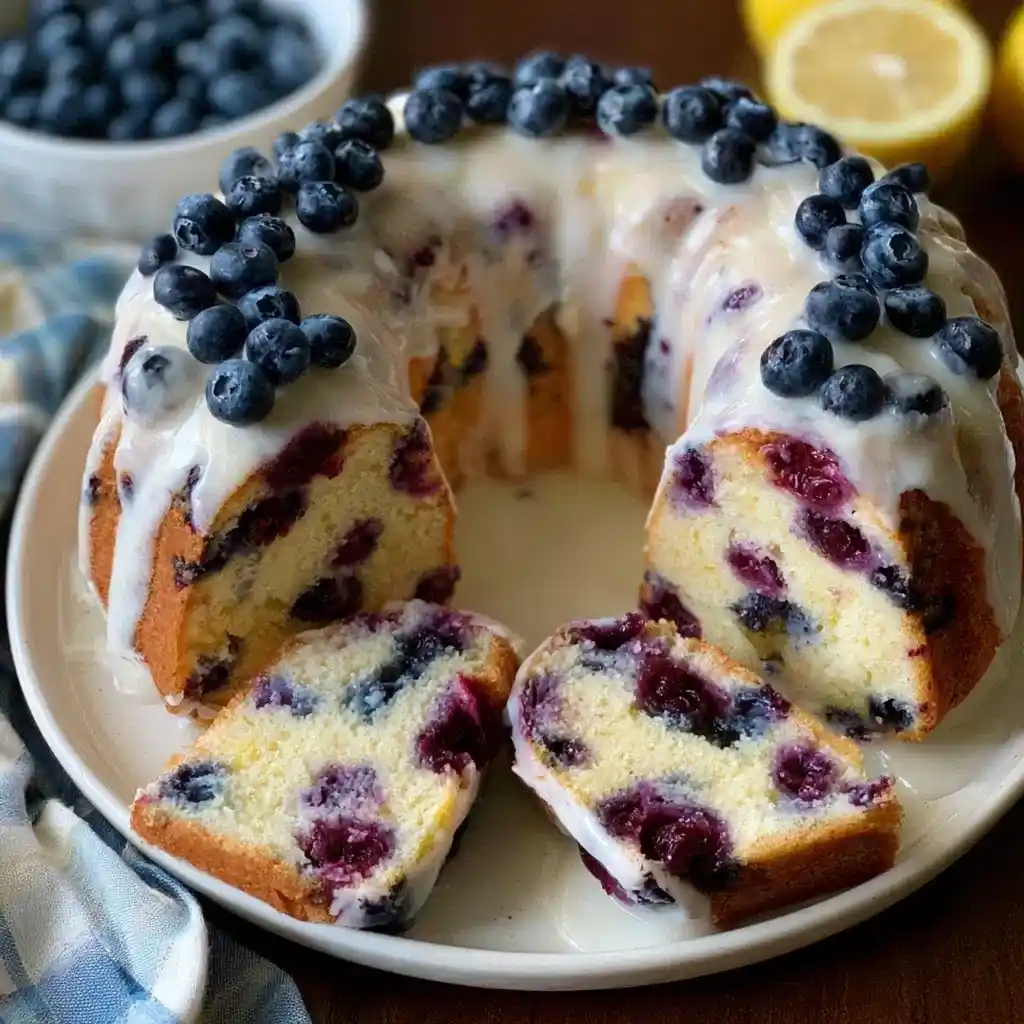
Buttery, dense, and loaded with juicy blueberries, Lemon Blueberry Pound Cake is the dessert that makes people ask for the recipe before they even finish their slice. It’s rich enough to feel special, yet simple enough for a random Tuesday. Have you ever made one dessert that instantly became your signature bake? This is mine.
I started making this cake for brunch gatherings, and it never lasts past the first hour. The bright lemon glaze against those bursting berries just hits different every single time.
Why This Cake Works So Well
Lemon and blueberry are basically a flavor match made in heaven. The citrus cuts through the richness of the butter, while the berries add little pockets of tart sweetness. That balance is exactly what makes pound cake feel less heavy than a regular layer cake.
IMO, bundt cakes also just look more impressive with barely any extra effort. Nobody needs to know how easy this actually is 🙂
What You’ll Need
Here’s everything going into your batter and glaze. Nothing complicated, just classic pantry staples working together.
For the cake:
- Salted butter, room temperature – 1 1/4 cups (2 1/2 sticks)
- Granulated sugar – 3 cups
- Large eggs, room temperature – 6
- Cake flour – 3 cups
- Buttermilk, room temperature – 1/4 cup
- Lemon extract – 2 teaspoons
- Lemon zest – 1 teaspoon
- Fresh blueberries – 2 cups
For the glaze:
- Confectioners’ sugar – 2 cups
- Lemon juice – 1/4 cup
That’s the whole list. Nothing you can’t find at a regular grocery store.
Let’s Make This Cake, Step by Step
Step One: Preheat and Prep Your Pan
Preheat your oven to 325°F before doing anything else. This gives the oven plenty of time to reach an even temperature by the time your batter is ready. Meanwhile, grease a 10-inch bundt pan thoroughly with non-stick spray.
Get into every groove and crevice of the pan, since bundt pans are notorious for sticking. Skipping this step is how beautiful cakes turn into crumbled disasters on the counter.
Step Two: Cream the Butter
Add your room temperature butter to a stand mixer and beat it on medium speed until smooth. This usually takes about two minutes. Room temperature butter is non-negotiable here, since cold butter just won’t cream properly.
Have you ever tried creaming cold butter and ended up with lumpy batter? Save yourself the frustration and let that butter sit out ahead of time.
Step Three: Add the Sugar Gradually
Slowly add the granulated sugar to the creamed butter while the mixer runs on medium speed. Beat until the mixture turns light, fluffy, and noticeably pale in color. This step usually takes three to five minutes total.
Don’t rush this part. Properly creamed butter and sugar trap air pockets that give your pound cake its signature tender crumb.
Step Four: Incorporate the Eggs
Add the eggs one at a time, mixing well after each addition before adding the next. Scrape down the bowl periodically to make sure everything blends evenly. This slow approach keeps the batter smooth instead of curdled.
Room temperature eggs matter here too. Cold eggs can cause the butter mixture to seize up and look strangely broken.
Step Five: Mix in the Flour
Slowly add the cake flour to the batter, mixing on low speed until just combined. Overmixing at this stage develops too much gluten, which leads to a tougher, denser texture than you actually want. Stop as soon as the flour disappears into the batter.
Cake flour makes a real difference here compared to all-purpose. It’s lighter and produces that soft, tender crumb pound cake is known for.
Step Six: Add the Buttermilk
Pour in the buttermilk and mix just until it’s incorporated into the batter. This adds moisture and a subtle tang that balances all that sweetness. Buttermilk is one of those small ingredients that quietly does a lot of heavy lifting.
Avoid overmixing at this stage as well. A few extra seconds of mixing can undo all that careful work from the earlier steps.
Step Seven: Add Lemon Flavor
Mix in the lemon extract, then gently fold in the lemon zest by hand. Folding rather than beating keeps the batter light and prevents overworking it. The zest adds little bursts of citrus oil that intensify the overall lemon flavor.
FYI, zesting your lemon before juicing it is way easier than trying to zest a juiced, floppy lemon later.
Step Eight: Fold in the Blueberries
Gently fold the fresh blueberries into the batter using a spatula. Work carefully here to avoid breaking the berries, which can turn your batter an unappetizing shade of purple-gray. A light hand really does matter in this step.
If your blueberries tend to sink, toss them lightly in a spoonful of flour before folding them in. This small trick helps them stay suspended throughout the batter instead of settling at the bottom.
Step Nine: Bake the Cake
Pour the batter evenly into your prepared bundt pan and smooth the top with a spatula. Bake for 85 to 90 minutes, or until a toothpick inserted into the center comes out with just a few moist crumbs. Every oven runs a little differently, so start checking around the 80-minute mark.
Resist the urge to open the oven door too early. A rush of cold air can cause the cake to sink in the middle.
Step Ten: Cool Completely
Let the cake cool completely in the pan before attempting to remove it. This usually takes about an hour or more depending on your kitchen temperature. Rushing this step risks the cake breaking apart when you flip it out.
Once cooled, invert the pan onto a serving plate and gently tap to release the cake. Patience pays off here, I promise.
Step Eleven: Make the Glaze
Whisk together the confectioners’ sugar and lemon juice until completely smooth. Adjust the consistency by adding a touch more sugar for thickness or a splash more juice for a thinner drizzle. You want it pourable but not watery.
Step Twelve: Glaze and Serve
Pour the glaze evenly over the cooled cake, letting it drip naturally down the sides. Allow the glaze to set for about ten minutes before slicing. This short wait keeps the glaze from smearing all over your knife.
Getting the Texture Just Right
Pound cake lives and dies by its density and moisture. Overbaking dries it out fast, while underbaking leaves a gummy center nobody wants. Check for doneness a few minutes early just to be safe.
Overmixing the batter is another common trap. It develops too much gluten and turns your tender pound cake into something closer to bread. Mix just until ingredients combine, then stop.
A Few Variations Worth Trying
This recipe is a fantastic base for experimenting once you’ve nailed the original version. Here are some twists worth testing in your own kitchen.
- Swap blueberries for raspberries for a tarter finish
- Add a cream cheese swirl for extra richness
- Mix in poppy seeds for a lemon-poppy variation
- Use orange zest instead of lemon for a different citrus profile
Each variation keeps the same buttery base while shifting the flavor just enough to feel new. That’s what makes this recipe worth keeping in your regular rotation.
Storing Leftovers
Store leftover cake covered at room temperature for up to three days. If you want it to last longer, refrigerate it for five to six days instead. The glaze holds up surprisingly well in the fridge too.
For longer storage, wrap individual slices and freeze them for up to two months. Thaw at room temperature before serving, and it’ll taste nearly as fresh as day one.
Frequently Asked Questions
Can I use frozen blueberries instead of fresh? Yes, frozen blueberries work fine, but don’t thaw them before folding them into the batter. Adding them frozen helps prevent excess color bleeding into the cake.
Why did my blueberries sink to the bottom? This usually happens when berries aren’t coated before mixing. Toss them lightly in flour first to help them stay suspended throughout the batter.
Can I use all-purpose flour instead of cake flour? Yes, all-purpose flour works as a substitute, though the texture turns out slightly denser. Cake flour gives you a lighter, more tender crumb overall.
How do I know when the cake is fully baked? A toothpick inserted into the center should come out with a few moist crumbs, not wet batter. If it’s still gooey, give it another five to ten minutes.
Can I skip the glaze entirely? Yes, the cake still tastes great without it, but the glaze adds extra lemon flavor and moisture. I’d only skip it if you’re serving the cake with ice cream or whipped cream instead.
Why is my pound cake turning out dry? Overbaking is the most common culprit, along with measuring too much flour. Spoon your flour into the measuring cup instead of scooping directly from the bag.
Wrapping It Up
Lemon Blueberry Pound Cake earns its spot as a go-to dessert because it balances rich, buttery texture with bright citrus and juicy berries in every bite. From creaming the butter to that final glaze drizzle, each step actually pays off in the final slice. Bake one this weekend, and don’t be surprised when everyone asks for the recipe before they’ve even finished their piece.