Let’s address the room immediately — a lot of people have complicated feelings about liver. Maybe you had it overcooked as a kid and swore it off for life. Maybe someone in your family loves it and you never understood why. Either way, a properly made Liver and Onions recipe has a genuinely strong case to change your mind.
I grew up watching my grandmother make this dish every Sunday. The smell of butter, caramelized onions, and sizzling liver filled the whole house. I will be honest — I was skeptical for years. Then I tried it done right and understood immediately why this dish has survived generations.
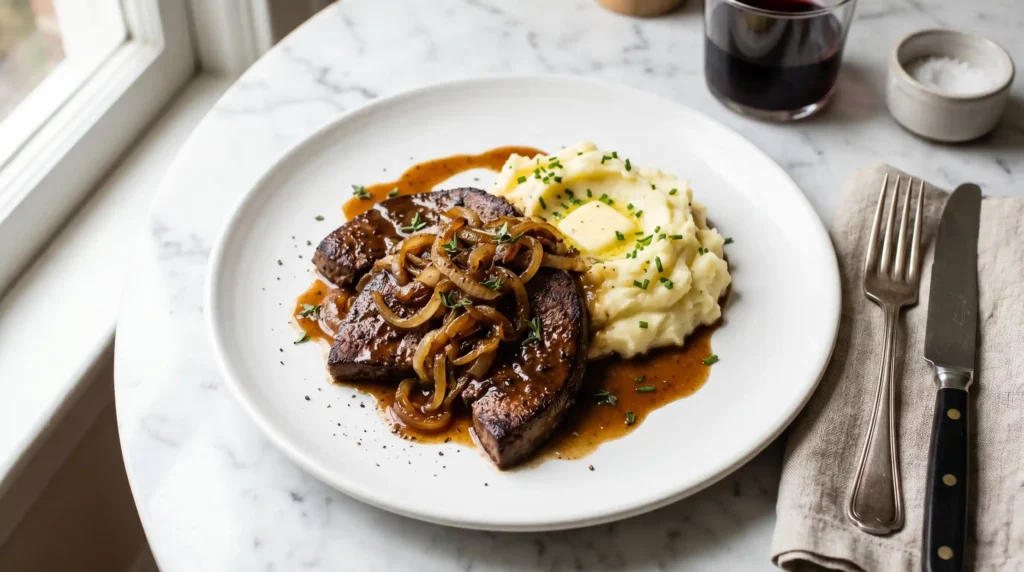
Tender, pan-seared liver with sweet, deeply caramelized onions and a savory pan gravy. It takes under 30 minutes of active cooking and costs very little. This guide covers everything from choosing the right liver to nailing the perfect sear every single time.
Choosing the Right Liver for This Recipe
Not all liver is the same, and the type you choose significantly affects the flavor intensity and final texture of the dish. Knowing the difference saves you from buying the wrong thing and being disappointed before you even start cooking.
Beef Liver vs Chicken Liver vs Calf Liver:
- [object Object]The premium option. Milder flavor, more tender texture, lighter pink color. This is what most restaurants use and it produces the least ‘livery’ result. Worth the extra cost for first-timers.
- [object Object]Stronger, more assertive flavor and a firmer texture. Much more affordable than calf liver. Works excellently in this recipe when properly soaked to tame the intensity. The most commonly used option.
- [object Object]Smaller, creamier, and milder than beef liver. Requires a different cooking approach — best for pates and sauteed preparations rather than the traditional sliced Liver and Onions format.
IMO, beef liver is the best everyday choice for this recipe. It has full flavor, great nutritional density, and you can buy it at any butcher or grocery store for very little money. Soak it properly and it competes with calf liver easily.
Why Liver and Onions Is Genuinely Good for You
Liver has a reputation as a health food, and that reputation is completely earned. It consistently ranks as one of the most nutrient-dense foods on the planet — not by a small margin, by a very large one.
- Vitamin A: A single serving of beef liver provides over 500% of the daily recommended value
- Vitamin B12: Essential for nerve function and energy production — liver contains extraordinary amounts
- Iron: One of the richest dietary sources of heme iron, which your body absorbs far more efficiently than plant-based iron
- Copper: Critical for immune function and connective tissue health
- Folate: Important for cell growth and particularly valuable during pregnancy
- High-quality protein: Liver delivers complete protein with all essential amino acids
The onions in this recipe add their own nutritional value — quercetin, vitamin C, and prebiotic fiber. Together, liver and onions create a genuinely balanced, nutrient-packed meal that has sustained families for centuries. That’s not an accident.
Liver and Onions Recipe Ingredients
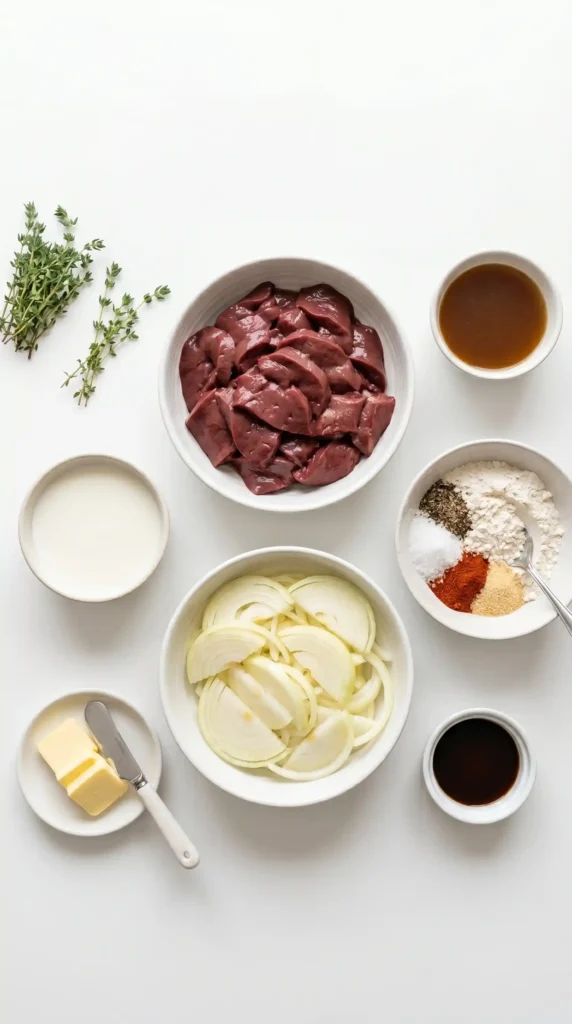
This recipe uses simple, affordable ingredients that you can find anywhere. Nothing exotic, nothing obscure — just real food cooked properly.
Main Ingredients:
- 500g (about 1 lb) beef liver, sliced about 1 cm thick
- 2 large yellow onions, sliced into thin half-rings (about 3 cups sliced)
- 1 cup whole milk (for soaking the liver)
- 3 tablespoons unsalted butter, divided
- 1 tablespoon olive oil or vegetable oil
- 1/2 cup all-purpose flour (for dredging)
- 1/2 teaspoon salt
- 1/2 teaspoon ground black pepper
- 1/2 teaspoon garlic powder
- 1/4 teaspoon paprika (smoked or sweet, your preference)
For the Pan Sauce (Optional but Highly Recommended):
- 1/2 cup beef broth or stock
- 1 teaspoon Worcestershire sauce
- 1 tablespoon fresh thyme leaves or 1/2 teaspoon dried thyme
- Salt and pepper to taste
FYI — the milk soak is not optional if you want a mild, approachable result. Skipping it is the single biggest reason people end up with bitter, overpowering liver. The milk draws out blood and tones down the metallic edge that makes people dislike liver in the first place.
How to Make Liver and Onions — Complete Step-by-Step Process
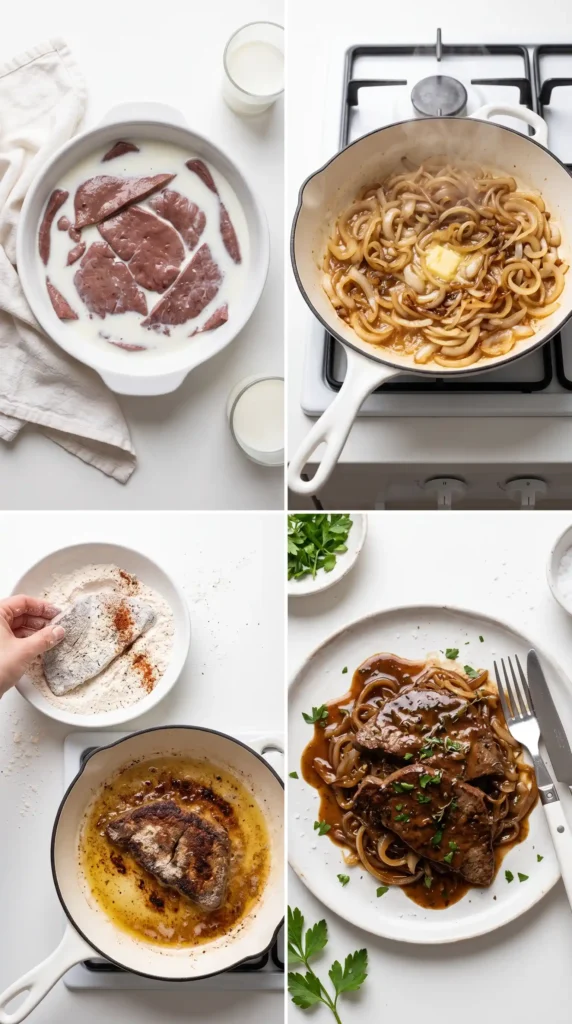
The process runs in four clean stages: soaking the liver, caramelizing the onions, searing the liver, and finishing with the pan sauce. Each stage builds on the last, and together they produce a dish that tastes far more complex than the ingredients suggest.
Stage 1 – Soaking the Liver
Remove your liver slices from the packaging and place them in a shallow bowl or baking dish. Make sure they lay flat and do not overlap — overlapping prevents the milk from reaching all surfaces evenly.
Pour the 1 cup of whole milk over the liver slices, making sure every piece has contact with the milk. If your bowl is small and the milk does not fully cover the slices, turn the liver halfway through the soaking time to ensure both sides get exposure.
Cover the bowl with plastic wrap and refrigerate for a minimum of 30 minutes. One hour produces even better results. During this time, the milk draws out blood from the liver and neutralizes the compounds responsible for that sharp, metallic bitterness that puts people off.
After soaking, remove the liver slices from the milk and pat them thoroughly dry using paper towels. Press firmly on both sides to remove as much surface moisture as possible. Dry liver sears properly and develops a good crust. Wet liver steams instead of searing and comes out grey and unappetizing. Do not skip the drying step.
Stage 2 — Caramelizing the Onions
Place a large, heavy skillet — cast iron or stainless steel work best — over medium-low heat. Add 2 tablespoons of the butter and let it melt completely. Swirl the pan to coat the surface evenly.
Add all the sliced onions to the pan at once. They will look like a very large amount at first — that is completely normal. Onions shrink dramatically as they cook and release their moisture. Stir to coat them evenly in the butter.
Cook the onions over medium-low heat, stirring every 3-4 minutes. The goal is slow caramelization — you want the natural sugars in the onion to develop and deepen in color over time, not to cook fast and char on the outside while remaining raw inside. This process takes 20-25 minutes. Do not rush it with high heat.
After about 15 minutes, the onions will have shrunk significantly and turned a soft, translucent pale gold. Keep going. Stir more frequently at this point — every 2 minutes — as they become more susceptible to burning as the sugars concentrate.
After 20-25 minutes, the onions should be a deep amber-brown color, completely soft, and intensely sweet-smelling. This is properly caramelized. Season them lightly with a pinch of salt and a turn of black pepper. Remove the onions from the pan and set aside in a bowl. Leave any remaining butter and fond (brown bits) in the pan — you will build the pan sauce from this later.
Stage 3 — Dredging and Searing the Liver
Prepare the Seasoned Flour
While the onions caramelize, make the dredging mixture. In a shallow bowl or plate, combine the flour, salt, black pepper, garlic powder, and paprika. Stir well so the seasonings are evenly mixed throughout the flour.
Place each liver slice into the seasoned flour and coat both sides lightly. Press gently so the flour sticks evenly, then shake off any excess. You want a thin coating rather than a thick crust. Once coated, place the slices on a clean plate.
Heat the Pan Properly
Return the skillet to medium-high heat. Add the remaining butter along with the oil. Using both helps prevent burning while still giving rich flavor. Heat the pan until the butter melts and the foam begins to settle, which means the skillet is hot enough for searing.
Sear the Liver
Arrange the liver slices in a single layer in the hot skillet. Avoid overcrowding the pan because crowded slices will steam instead of sear. If necessary, cook them in batches.
Let the liver cook undisturbed for 2–3 minutes on the first side. Do not move or flip the slices too early. Once the edges look cooked halfway up, carefully flip them using tongs.
Cook the second side for about 2 more minutes. The liver should feel firm but still slightly soft in the center. A faint hint of pink inside is ideal. Fully grey liver usually means it has overcooked and become tough.
Rest Before Serving
Remove the liver from the skillet immediately and place it on a plate. The residual heat will continue cooking it slightly after removal. Cover loosely with foil to keep warm while you finish the sauce.
Stage 4 — Building the Pan Sauce
With the liver resting, return the skillet to medium heat. You should see brown fond and residual fat in the pan from both the onions and the liver sear. This is flavor — do not wipe it out.
Pour in the 1/2 cup of beef broth and the teaspoon of Worcestershire sauce. Use a wooden spoon or spatula to scrape up all the browned bits from the bottom of the pan as the liquid heats. Those bits dissolve into the sauce and add incredible depth of flavor.
Let the sauce simmer for 2-3 minutes, stirring occasionally, until it reduces slightly and thickens to a consistency that coats the back of a spoon. Add the thyme and stir through. Taste the sauce and adjust salt and pepper as needed.
Return the caramelized onions to the pan and stir them into the sauce. Let everything simmer together for one more minute so the onions warm through and absorb the sauce flavor. Taste once more and adjust seasoning if needed.
Place the seared liver slices back into the pan on top of the onion sauce. Spoon the onions and sauce generously over the liver pieces. Let everything rest together in the pan off the heat for 1 minute before serving. This final rest lets the liver absorb some of the sauce flavor before it hits the plate.
What to Serve With Liver and Onions
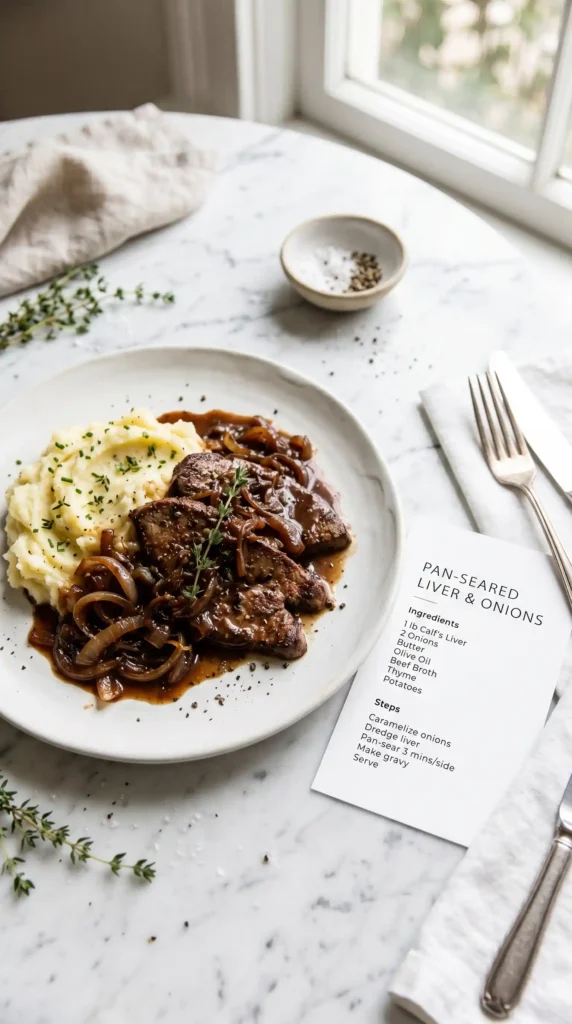
This dish pairs best with sides that soak up the rich pan sauce. Here are the most classic and satisfying options.
- [object Object]The ultimate pairing. Creamy, buttery mash absorbs the onion sauce perfectly and balances the richness of the liver.
- [object Object]A simpler option that works beautifully — spoon the liver, onions, and sauce generously over the top.
- [object Object]Ideal for mopping up every last drop of that pan sauce. A thick slice of sourdough or French bread works perfectly.
- [object Object]Green beans, roasted carrots, or steamed broccoli provide a fresh, slightly bitter counterpoint to the richness of the dish.
- [object Object]Buttered egg noodles with the liver and onions spooned on top is a Central European classic and absolutely delicious.
Tips for Perfect Liver and Onions Every Time
- [object Object]This single step transforms the flavor from sharp and metallic to mild and rich. Do not skip it.
- [object Object]Aim for consistent 1 cm thickness so every piece sears and cooks at the same rate.
- [object Object]Slightly pink in the center is the target. Overcooked liver is tough, dry, and unpleasant — this is the main reason people say they do not like liver.
- [object Object]Cast iron or stainless steel retains heat properly and gives you the crust you need. Non-stick pans do not get hot enough for a good sear.
- [object Object]Fast, high-heat onions are not the same as properly caramelized ones. The sweetness only develops over time.
Frequently Asked Questions About Liver and Onions
How do I remove the bitterness from liver before cooking?
The milk soak is the most effective method. Submerge the liver slices in whole milk for 30 minutes to an hour in the refrigerator. The milk draws out blood and neutralizes the metallic compounds that cause bitterness. Pat the liver completely dry after soaking before dredging and cooking.
Why does my liver always come out tough and chewy?
Overcooking is the culprit every single time. Liver cooks very fast — 2 to 3 minutes per side over medium-high heat is enough. Cook it until just barely pink in the center and pull it from the heat. It continues cooking from residual heat after leaving the pan, so take it off just before it looks done.
Can I use chicken liver instead of beef liver?
Yes, though the dish changes character significantly. Chicken liver is smaller, creamier, and considerably milder than beef liver. It cooks even faster — about 90 seconds per side. The same milk soak and seasoned flour dredge apply. Chicken liver and onions is a legitimate dish in its own right.
Should I remove the membrane from the liver before cooking?
Yes, always. The thin outer membrane on liver shrinks during cooking, which causes the slice to curl up in the pan and cook unevenly. Use a sharp paring knife to carefully peel away the membrane before soaking. It takes about 30 seconds per slice and makes a real difference in the final result.
Can I make Liver and Onions ahead of time?
You can caramelize the onions up to 3 days ahead and store them refrigerated — they reheat beautifully. The liver itself is best cooked fresh and served immediately. Reheated liver tends to overcook during reheating and loses its tender texture. Cook the liver just before serving for the best result every time.
Final Thoughts on Liver and Onions
Liver and Onions is the kind of recipe that rewards people who give it a genuine chance. It is affordable, deeply nutritious, and when cooked correctly — soaked in milk, seared quickly over high heat, paired with properly caramelized onions — it is genuinely delicious.
The keys are simple: soak the liver, dry it thoroughly, sear it fast and hot, and pull it off the heat while it is still just barely pink inside. Do those things consistently and you get a result that surprises even the most committed liver skeptics at the table. Make it this week. Serve it over mashed potatoes with a generous spoonful of that onion pan sauce. Then sit back and wait for someone at the table to say they never knew liver could taste like this. That moment alone makes the whole recipe worth learning.
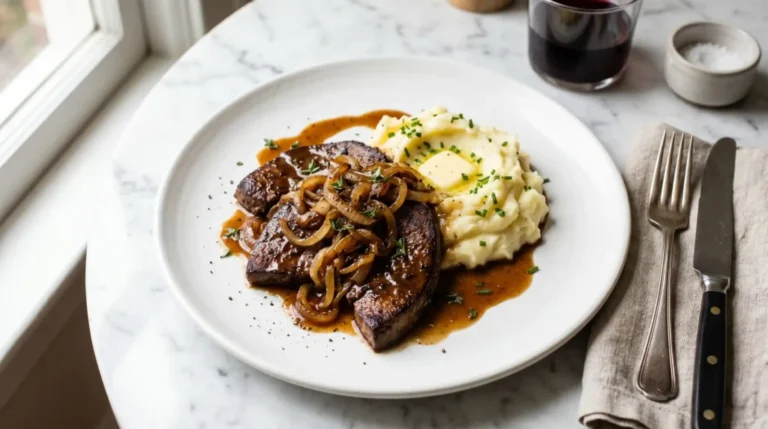
Liver and Onions
Ingredients
Method
- Remove your liver slices from the packaging and place them in a shallow bowl or baking dish, ensuring they lay flat.
- Pour the whole milk over the liver slices, ensuring all pieces have contact with the milk. Refrigerate for a minimum of 30 minutes.
- After soaking, pat the liver slices dry using paper towels to remove excess moisture.
- Heat a large skillet over medium-low heat and add 2 tablespoons of butter until melted.
- Add the sliced onions and stir to coat them evenly in the butter.
- Cook the onions for 20-25 minutes, stirring every 3-4 minutes until they are deeply caramelized and amber-brown.
- Combine flour, salt, black pepper, garlic powder, and paprika in a shallow dish.
- Dredge each liver slice in the seasoned flour, shaking off excess, and set aside.
- Heat the skillet to medium-high and add the remaining butter and oil until melted.
- Sear the liver slices on each side for 2-3 minutes until lightly pink in the center. Remove and keep warm.
- Return skillet to medium heat and add beef broth and Worcestershire sauce, scraping up browned bits from the pan.
- Add the thyme, season to taste, and return the caramelized onions to the pan.
- Rest the liver slices in the pan with onions for 1 minute before serving.