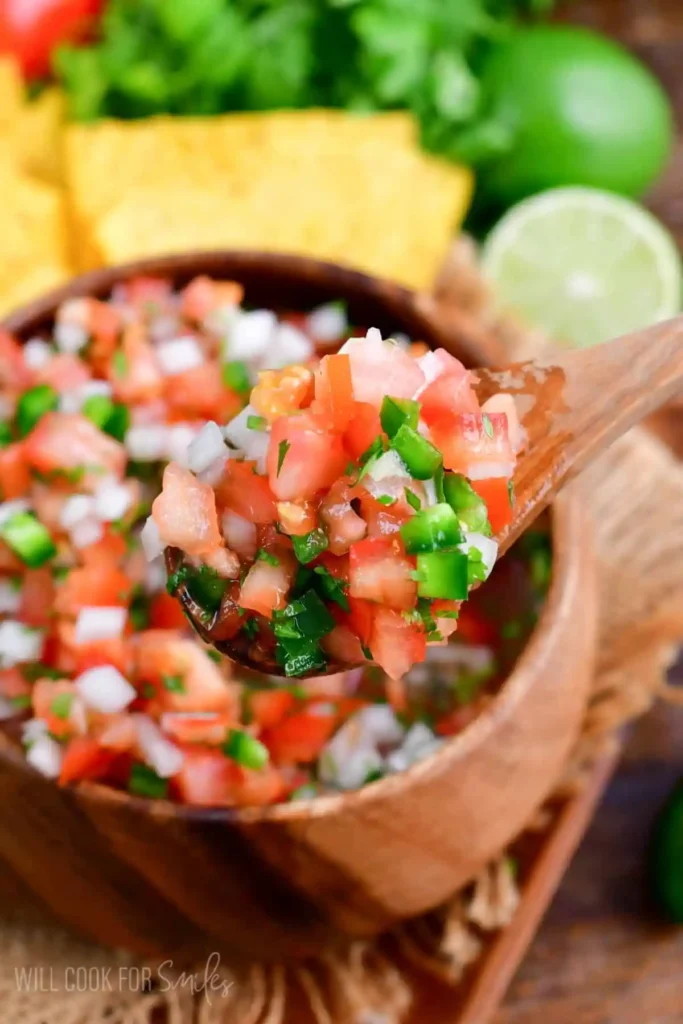
Once you make real Pico de Gallo at home, that jarred stuff from the grocery store starts tasting like tomato-flavored regret. This recipe takes ten minutes, a cutting board, and zero cooking skills whatsoever.
I started making this after one too many soggy, watery chip dips at parties. Homemade pico fixed that problem instantly, and honestly, I haven’t bought a jar since.
Prep time: 15 minutes Cook time: none Total time: 15 minutes Servings: 6 (about 3 cups)
What Exactly Is Pico de Gallo?
Pico de Gallo is a fresh, uncooked Mexican salsa built from diced tomatoes, onion, jalapeño, garlic, cilantro, and lime juice. Unlike blended salsas, everything here stays chunky and distinct.
Have you ever wondered why it’s called “rooster’s beak”? Nobody knows for sure, IMO the most fun theory is that eating it with a pinch of thumb and finger looks like a little beak.
Pico de Gallo vs. Regular Salsa
People mix these terms up constantly, so let’s clear it up. The difference comes down to texture and technique, not flavor.
- Pico de Gallo is always chopped by hand and served raw and chunky.
- Salsa often gets blended or simmered, giving it a smoother, saucier consistency.
- Pico holds its shape on a taco; blended salsa slides right off.
- Pico tastes brighter and fresher since nothing gets cooked down.
Neither one is “better,” but they’re built for different jobs. Use pico when you want texture and crunch.
What You’ll Need
Here’s everything for this Pico de Gallo recipe, no fancy substitutions required:
- 4 medium tomatoes, diced
- 1/2 cup white onion, finely diced
- 1 jalapeño, seeded and minced
- 2 cloves garlic, minced
- 1/3 cup fresh cilantro, chopped
- 2 tablespoons fresh lime juice
- 1/2 teaspoon salt, or to taste
That’s it. No cooking, no obscure grocery run, no excuse not to make this tonight.
How to Make Pico de Gallo
People overcomplicate this recipe constantly. It’s genuinely just chop, mix, and wait. Let’s break it down step by step so nothing gets rushed.
Step 1: Prep Your Tomatoes First
Cut the tomatoes in half and scoop out the watery seed pockets with a spoon. Skipping this step leaves you with a soupy, watered-down pico instead of a chunky one.
Dice the tomato flesh into small, even pieces and drop them into a mixing bowl. Even pieces matter here since giant tomato chunks make the pico awkward to scoop with a chip.
Step 2: Dice the Onion Small
Finely dice the white onion, aiming for pieces noticeably smaller than the tomato. Onion has a sharper bite than tomato, so smaller pieces keep the flavor balanced instead of overwhelming.
Toss the onion into the bowl with the tomatoes. If raw onion isn’t your thing, soak the diced pieces in cold water for five minutes first to mellow the sharpness.
Step 3: Handle the Jalapeño Carefully
Slice the jalapeño lengthwise and scrape out the seeds and white membrane with a spoon. This is where most of the heat lives, so removing it keeps things milder.
Mince the jalapeño finely and add it to the bowl. Want more heat? Leave a few seeds in. Want it milder? Use half a pepper instead of the whole thing.
Step 4: Mince the Garlic
Mince the garlic cloves as finely as you can manage. Large garlic chunks turn overpowering fast in a raw dish like this one, so fine is the way to go here.
Add the minced garlic straight into the bowl with everything else. Fresh garlic makes a noticeable difference over the pre-minced jarred kind, so skip the shortcut if you can.
Step 5: Add the Cilantro, Lime, and Salt
Roughly chop the cilantro and sprinkle it over the mixture. Squeeze the fresh lime juice directly on top, followed by the salt. Bottled lime juice works in a pinch, but fresh juice tastes noticeably brighter.
Step 6: Stir and Let It Rest
Stir everything together gently until it’s evenly combined. Let the bowl sit at room temperature for about ten minutes before serving. This resting period lets the salt draw juice out of the tomatoes and lets all the flavors actually mingle.
Taste it before serving and adjust as needed. Add more lime for brightness, more salt if it tastes flat, or more jalapeño if you’re feeling brave.
Pro Tips for the Best Pico
- Remove tomato seeds every time. This single step prevents 90% of watery pico disasters.
- Taste as you go. Every batch of jalapeños has different heat levels, so never trust the pepper blindly.
- Let it rest before serving. Fresh-mixed pico tastes fine, but rested pico tastes noticeably better after ten minutes.
- Use a serrated knife on tomatoes. It slices through the skin cleanly instead of squashing the fruit.
Ways to Serve Pico de Gallo
This condiment goes on basically everything Mexican-inspired, and honestly, plenty of things that aren’t. Once you have a bowl ready, meal ideas write themselves.
- Scoop it up with tortilla chips as a simple party appetizer.
- Pile it onto tacos, burritos, or quesadillas for instant freshness.
- Spoon it over scrambled eggs or breakfast tacos in the morning.
- Add it to a burrito bowl alongside rice, beans, and grilled chicken.
- Serve it over grilled fish or steak for a bright, acidic contrast.
Storing Pico de Gallo
Store leftover pico in a glass container with a tight lid. Tomatoes are acidic, and glass handles that better than plastic over time. Refrigerate it and plan to use it within three days.
Freezing isn’t recommended here. The fresh vegetables turn mushy and watery once thawed, and nobody wants sad, soggy pico. Just make a fresh batch instead; it takes ten minutes anyway.
Pico de Gallo FAQs
What’s the difference between Pico de Gallo and salsa?
Pico de Gallo is always chunky and raw, while salsa is often blended smooth or cooked down. Both use similar ingredients, but the texture and preparation set them apart completely.
Can I substitute parsley for cilantro?
Yes, parsley works if you’re not a cilantro fan or if it tastes soapy to you, which happens to some people genetically. The flavor will be milder and less citrusy, but still fresh.
How spicy is Pico de Gallo?
It’s typically mild since jalapeños sit on the lower end of the heat scale. Removing the seeds and membrane lowers the heat even further if you’re sensitive to spice.
Can I make Pico de Gallo ahead of time?
Yes, but it tastes best within the first day or two. The tomatoes release more liquid over time, so drain a little excess before serving if it sits longer.
Why is my Pico de Gallo watery?
Watery pico usually means the tomato seeds weren’t removed or the mixture sat too long before serving. Scoop out seeds thoroughly and drain any extra liquid before scooping it onto chips.
Can I add other ingredients to my Pico de Gallo?
Absolutely, this recipe is flexible. Diced mango, avocado, or corn all make tasty additions if you want to switch things up.
Final Thoughts
This Pico de Gallo recipe takes fifteen minutes and delivers a fresher, brighter flavor than anything from a jar. It’s crunchy, zesty, and endlessly versatile on tacos, chips, eggs, or literally anything that needs a flavor boost. FYI, once you make it fresh, jarred salsa starts tasting like a sad compromise.
Grab a knife, dice up those veggies, and give this a try tonight. Your tacos, and probably your entire dinner table, will thank you for it
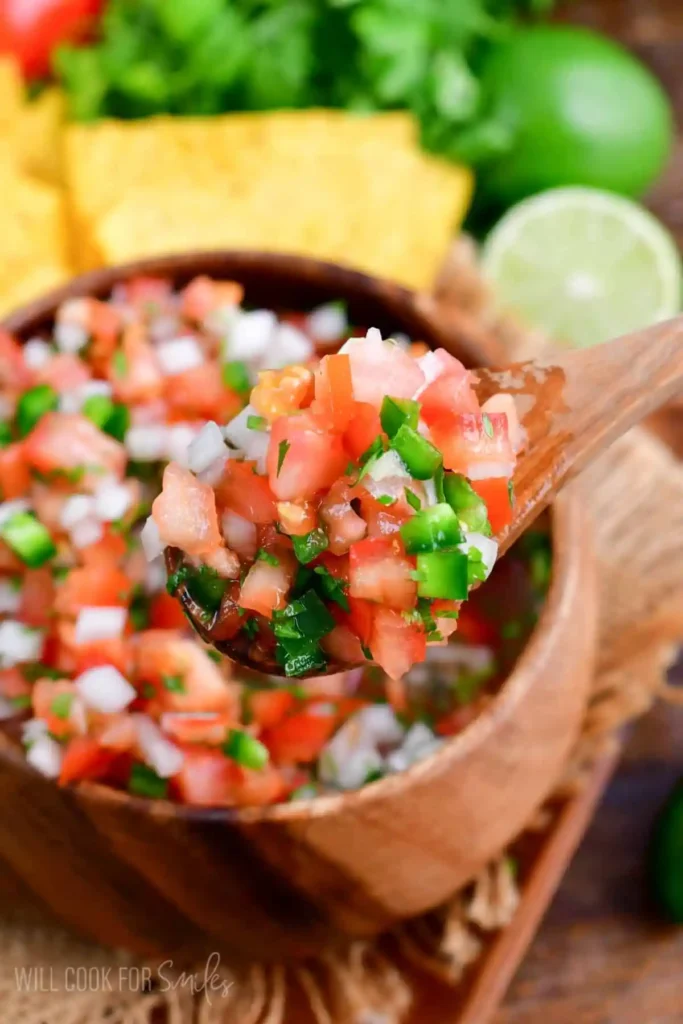
Pico de Gallo
Ingredients
Method
- Cut the tomatoes in half and scoop out the watery seed pockets with a spoon.
- Dice the tomato flesh into small, even pieces and drop them into a mixing bowl.
- Finely dice the white onion, and toss into the bowl with the tomatoes.
- Slice the jalapeño lengthwise, remove the seeds and membrane, then mince finely and add to the bowl.
- Mince the garlic cloves and add to the bowl with the other ingredients.
- Roughly chop the cilantro and sprinkle over the mixture, then squeeze the lime juice and add salt.
- Gently stir everything together until evenly combined, then let the bowl sit for about ten minutes before serving.