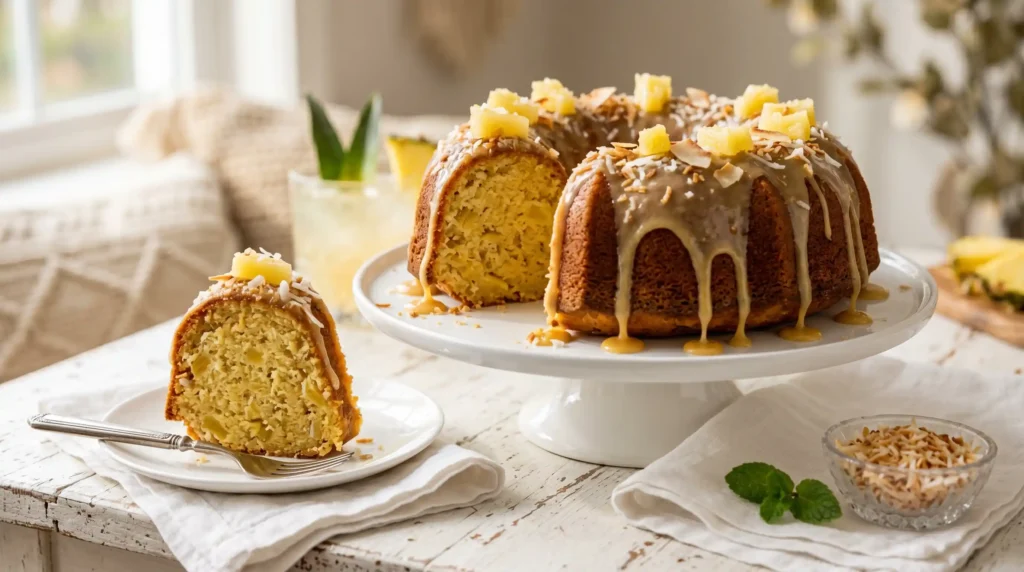
That’s exactly what a Pina Colada Pound Cake delivers — no blender, no cocktail glass required. I first made this on a gray February afternoon when I desperately needed something that felt like summer, and honestly? It worked. My kitchen smelled like a resort poolside for two hours.
This cake packs crushed pineapple, shredded coconut, and coconut milk straight into the batter. The result is moist, fragrant, and completely addictive. If you love tropical flavors and you love pound cake, this recipe is going to become your new obsession.
Why This Cake Actually Works
Great question. Pineapple is acidic and contains bromelain — an enzyme that can break down proteins and potentially mess with baked goods if you’re not careful. But crushed pineapple, well-drained, adds moisture and sweetness without creating structural problems in this batter.
The coconut milk replaces regular milk and gives the crumb a subtle richness you just can’t get from water or even whole milk. Shredded coconut adds chew and texture between the soft crumb layers. Together, these three tropical ingredients create a cake that tastes genuinely different from anything else in your baking rotation.
IMO, the optional coconut extract is actually worth using. It amplifies the coconut flavor without making the cake taste artificial — just more tropical, more fragrant, more vacation-in-a-slice. Don’t skip it if you have it.
“This is the cake you make when you need people to think you went on a tropical vacation instead of just turning on the oven.”
Full Ingredients List with Quantities
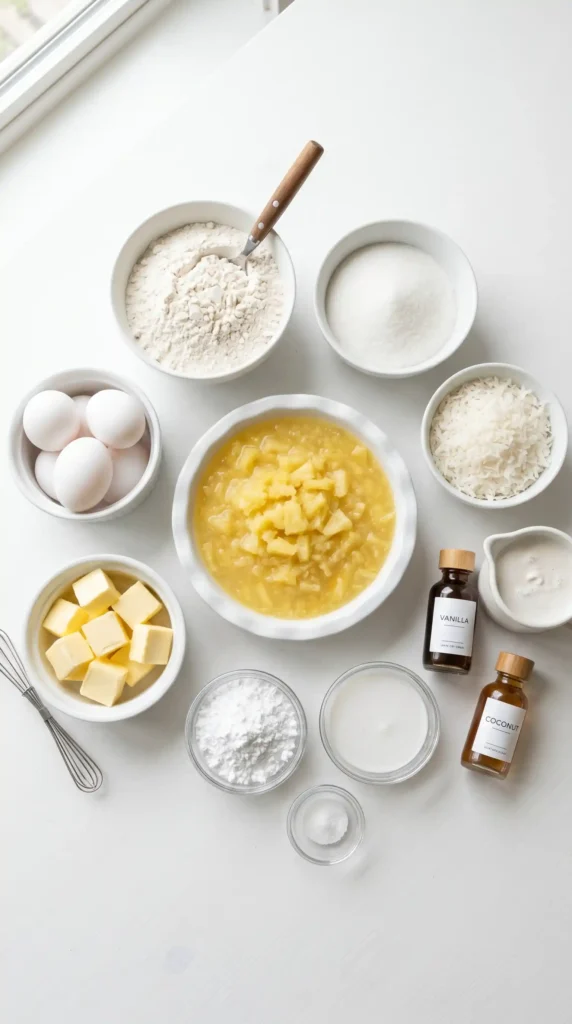
Before you start, pull everything out and let the butter and eggs reach room temperature. Cold butter won’t cream properly and cold eggs can cause the batter to split. Give them at least 45 minutes on the counter. This small step makes a real difference in the final texture.
For the Cake (Serves 10–12)
- 1 cup (2 sticks / 225g) unsalted butter, softened
- 1¾ cups (350g) granulated sugar
- 4 large eggs, room temperature
- 2 cups (240g) all-purpose flour
- 1 tsp baking powder
- 1 tsp salt
- ½ cup (120ml) coconut milk (full-fat, well-shaken)
- 1 cup (240g) crushed pineapple, well drained
- ½ cup (45g) shredded coconut (sweetened or unsweetened)
- 1 tsp pure vanilla extract
- ½ tsp coconut extract (optional but recommended)
For the Optional Pineapple Glaze
- 1 cup (120g) powdered sugar
- 2–3 tbsp pineapple juice or coconut milk
A Note on the Pineapple
Drain that pineapple thoroughly. Press it through a fine mesh strainer or squeeze it in a clean kitchen towel. Excess pineapple juice in the batter adds too much liquid and can prevent the cake from setting cleanly in the center. Drain it well and you’ll have zero problems.
How to Make Pina Colada Pound Cake — Step by Step
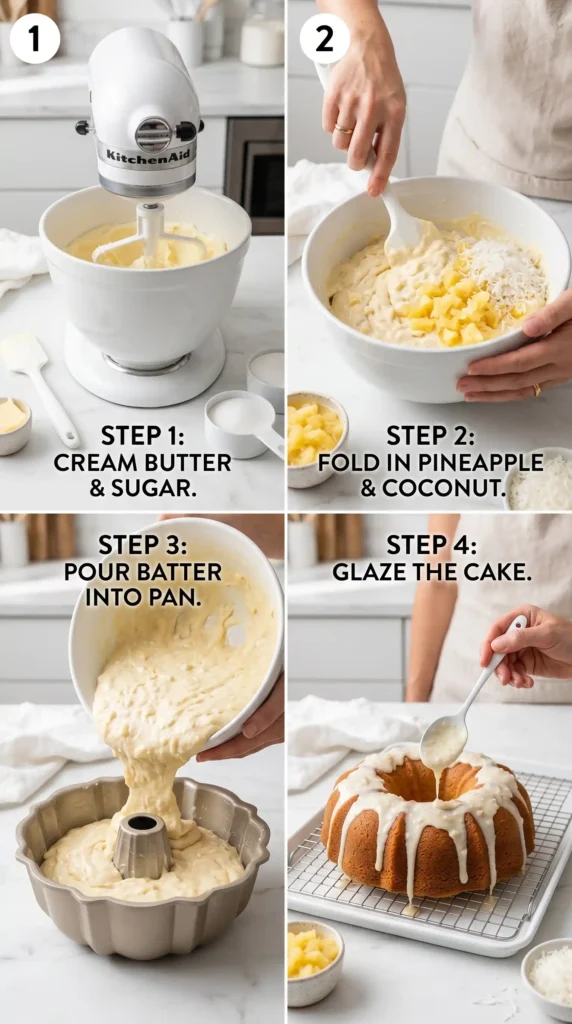
This recipe comes together in about 20 minutes of active prep. There’s no fancy technique, no tricky timing, and no special equipment beyond a mixer and a loaf or Bundt pan. Work through each step in order and you’ll have a gorgeous tropical cake cooling on your rack in under two hours.
Step 1: Preheat the Oven and Prep Your Pan
Set your oven to 325°F (165°C). While it heats up, grease your loaf pan or Bundt pan with softened butter, making sure to coat every corner and groove. Then dust with flour and tap out the excess. A properly greased pan is non-negotiable for this cake — the pineapple in the batter makes it slightly stickier than a standard pound cake, so take your time here.
Step 2: Cream the Butter and Sugar Until Genuinely Fluffy
Add the 1 cup of softened butter to your stand mixer or a large bowl. Beat on medium speed for about 2 minutes until smooth and pale. Then add all 1¾ cups of granulated sugar gradually and beat on medium-high for 3 to 4 full minutes. The mixture should look very light — almost white — and feel noticeably fluffy. This step traps air into the batter, which gives this cake its lift. Under-creaming leads to a flat, dense cake that no amount of tropical flavor can save.
Step 3: Add Eggs One at a Time
With the mixer running on medium-low, add 4 eggs one at a time. Let each egg incorporate fully — about 30 to 40 seconds — before adding the next. Crack each egg into a small cup first to catch any shells. By the time all four eggs are in, the batter should look smooth and slightly thickened. If it looks a little curdled at this point, don’t panic — it will pull together once the flour goes in.
Step 4: Whisk the Dry Ingredients Separately
In a separate medium bowl, whisk together 2 cups of all-purpose flour, 1 teaspoon of baking powder, and 1 teaspoon of salt. Whisking the dry ingredients separately ensures the baking powder and salt distribute evenly through the flour before they hit the wet batter. This simple step prevents pockets of leavening from clumping together in the finished cake, which gives you a more even crumb and consistent rise across the whole loaf.
Step 5: Alternate Flour and Coconut Milk
Reduce your mixer to low speed. Add the dry ingredients to the butter mixture in three additions, alternating with the ½ cup of coconut milk in two additions. The pattern goes: flour, coconut milk, flour, coconut milk, flour. After each addition, mix only until the dry streaks just disappear — no more. Overmixing at this stage develops too much gluten and makes the cake tough and chewy instead of tender. Stop the moment the batter looks uniform.
Step 6: Fold in the Tropical Mix-ins
Switch to a rubber spatula. Add 1 teaspoon vanilla extract and the ½ teaspoon coconut extract. Then add the 1 cup of drained crushed pineapple and the ½ cup of shredded coconut. Fold everything together with slow, deliberate strokes — about 8 to 10 folds — just until the mix-ins are evenly distributed through the batter. These folds need to be gentle because aggressive stirring knocks out the air you spent all that time beating in. Think of folding as tucking the ingredients in, not stirring them.
Step 7: Pour, Smooth, and Bake
Scrape the batter into your prepared pan and smooth the top with a spatula. Tap the pan a few times on the counter to release any large air bubbles. Slide it into the center rack of your preheated oven. Bake for 60 to 70 minutes, and resist opening the oven door in the first 50 minutes. Start testing at the 60-minute mark by inserting a toothpick into the thickest part — it should come out clean or with just a few dry crumbs. A wet toothpick means the center needs more time; give it 5-minute increments and test again.
Step 8: Cool and Add the Glaze
Remove the cake from the oven and let it cool in the pan on a wire rack for 10 to 15 minutes. Run a thin knife around the edges to loosen, then carefully turn it out onto the rack to cool completely. For the glaze, whisk together 1 cup of powdered sugar and 2 to 3 tablespoons of pineapple juice or coconut milk until smooth and pourable. Drizzle it over the warm cake and let it set for about 10 minutes before slicing. The glaze soaks slightly into the warm cake and adds a lovely sticky-sweet finish.
Tips for the Perfect Bake Every Time
These tips come from making this cake more times than I care to admit. Each one removes a potential failure point and gets you closer to that perfect golden loaf on the first try.
Drain the pineapple very well. Too much juice loosens the batter and prevents a clean set in the center. Press it through a strainer until almost dry.
Use full-fat coconut milk. The fat content matters for richness and texture. Light coconut milk works but produces a noticeably less tender crumb.
Don’t skip the creaming time. Three to four minutes on medium-high — use a timer. Under-creamed butter and sugar means the cake won’t rise properly.
Stop mixing as soon as the flour disappears. Overmixing is the number one cause of a tough, rubbery pound cake. Mix on the lowest speed and stop early.
Sweetened vs. unsweetened coconut. Sweetened shredded coconut gives a softer, moister texture and more flavor. Unsweetened is less sweet and drier — both work, but sweetened is the crowd-pleaser.
The cake tastes better the next day. Wrap tightly in plastic and rest at room temperature overnight. The pineapple and coconut flavors develop and deepen significantly.
Sweetened vs. Unsweetened Coconut — Which Should You Use?
Here’s the honest comparison. Both work in this recipe, but they produce slightly different results. Use this to decide based on what you have and what you prefer.
How to Serve the Pina Colada Pound Cake
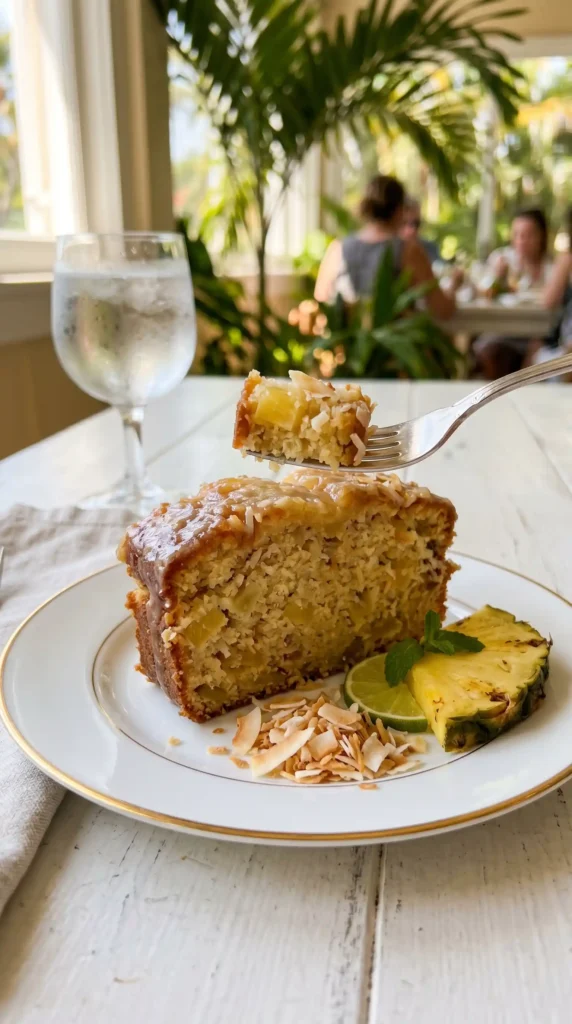
This cake honestly doesn’t need anything — a clean slice and a cup of coffee is already a perfect afternoon. But if you want to lean into the tropical theme, here are the best serving ideas I’ve tried personally.
Vanilla ice cream + toasted coconutFresh pineapple slicesWhipped cream + lime zestExtra pineapple glaze drizzleWarm with caramel sauceSliced thin for a summer tea party
Have you ever tried toasting a thick slice of this cake in a dry skillet for about 90 seconds per side? The outside caramelizes and the coconut bits get toasty and fragrant. Pair it with a scoop of mango sorbet and you’ve basically invented a new dessert.
Storage and Make-Ahead Notes
The Pina Colada Pound Cake keeps very well because the pineapple and coconut fat keep the crumb moist for days. At room temperature, wrapped tightly, it stays fresh for 3 to 4 days. In the refrigerator, it lasts up to a week — let slices warm up for 15 minutes before eating since the cold firms the crumb.
Freezing works beautifully. Wrap individual slices in plastic, then seal in a freezer bag and freeze for up to 3 months. Thaw at room temperature, still wrapped. The pineapple filling holds its texture after freezing better than most fruit-based cakes. FYI — the glaze does not freeze well, so add it fresh after thawing.
Frequently Asked Questions
Can I add rum to make it taste more like an actual Pina Colada?
Absolutely — and a lot of people do. Add 2 tablespoons of white or coconut rum to the batter along with the extracts. The alcohol mostly bakes off, leaving behind the rum flavor without making the cake boozy. You can also add 1 to 2 teaspoons of rum extract (non-alcoholic) for the same effect if you prefer to keep it alcohol-free. Either way, it deepens the cocktail flavor without changing the bake time or texture noticeably.
Can I use fresh pineapple instead of canned?
You can, but there’s a catch. Fresh pineapple contains active bromelain — an enzyme that breaks down proteins and can interfere with the cake’s structure, leaving it gummy or dense in the center. To neutralize it, cook fresh pineapple briefly in a pan for 3 to 4 minutes before using it. This deactivates the enzyme. Canned pineapple has already been heat-processed, so it doesn’t have this problem — which is why it’s the more reliable choice for baking.
Why did my Pina Colada Pound Cake turn out wet in the middle?
The most likely cause is excess liquid from undrained pineapple. Even a small amount of extra juice throws off the batter ratio and prevents the center from setting. Always drain and press the pineapple before using it. A wet center can also mean underbaking — use a toothpick and test in the thickest part. If your oven runs cool, the bake may need an extra 5 to 10 minutes. Get an oven thermometer if you bake regularly.
Can I make this Pina Colada Pound Cake gluten-free?
Yes, with a good quality 1-to-1 gluten-free flour blend that contains xanthan gum. Substitute the all-purpose flour at an equal ratio. The texture will be slightly different — a bit more dense and potentially a touch more moist — but the tropical flavor comes through just as strongly. Avoid single-grain gluten-free flours like almond or oat flour alone; they won’t provide enough structure for a pound cake batter of this weight.
Can I use a Bundt pan or does this have to be a loaf pan?
Both work perfectly. A Bundt pan gives you a more impressive presentation and allows the heat to travel through the center hole, which can actually help the cake bake more evenly. If you use a Bundt pan, grease and flour every groove extremely thoroughly — this batter is stickier than a standard pound cake due to the pineapple and coconut. Bake time stays the same at 60 to 70 minutes; start testing at 60 minutes.
How do I stop the shredded coconut from burning on top?
If the coconut on top starts browning too fast before the cake is fully baked, tent the pan loosely with a sheet of aluminum foil. Just lay it over the top without pressing it down — this reflects heat away from the surface and slows browning while the interior continues to cook through. Remove the foil for the last 5 to 10 minutes if you want a slightly golden top.
The Final Word
The Pina Colada Pound Cake is one of those recipes that surprises people. They expect a standard pound cake and then they taste pineapple, coconut, and that vanilla-coconut fragrance all at once. Reactions are always the same: “Wait. What is in this?”
Dense without being heavy, tropical without being over-the-top, and genuinely easy to put together — this cake earns a permanent spot in any baker’s rotation. Make it in summer for cookouts. Make it in winter when you need a mental escape. Make it on a Tuesday because you can.
The recipe is forgiving, the flavors are crowd-pleasing, and the glaze takes it from great to excellent. Go make it — and maybe double the batch, because this one goes fast.
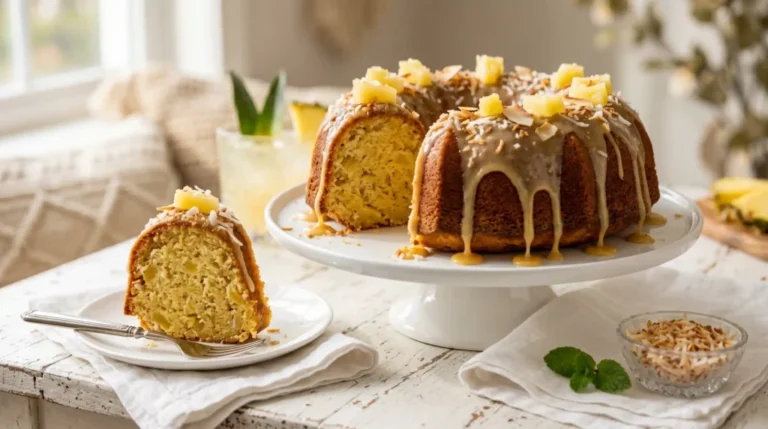
Pina Colada Pound Cake
Ingredients
Method
- Preheat the oven to 325°F (165°C) and prepare your loaf or Bundt pan by greasing it with softened butter and dusting with flour.
- In a stand mixer, cream the softened butter for about 2 minutes until smooth and pale.
- Gradually add the granulated sugar and beat on medium-high for 3 to 4 minutes until the mixture is light and fluffy.
- Add the eggs one at a time, incorporating each fully before adding the next.
- In a separate bowl, whisk together the flour, baking powder, and salt.
- With the mixer on low, alternate adding the dry ingredients and coconut milk, mixing only until the dry ingredients disappear.
- Gently fold in vanilla extract, coconut extract, drained pineapple, and shredded coconut.
- Pour the batter into the prepared pan and smooth the top.
- Bake in the preheated oven for 60 to 70 minutes. Check for doneness with a toothpick.
- Remove the cake from the oven and let it cool in the pan for 10 to 15 minutes before turning it onto a wire rack.
- For the glaze, whisk together powdered sugar and pineapple juice or coconut milk until smooth, then drizzle over the cooled cake.