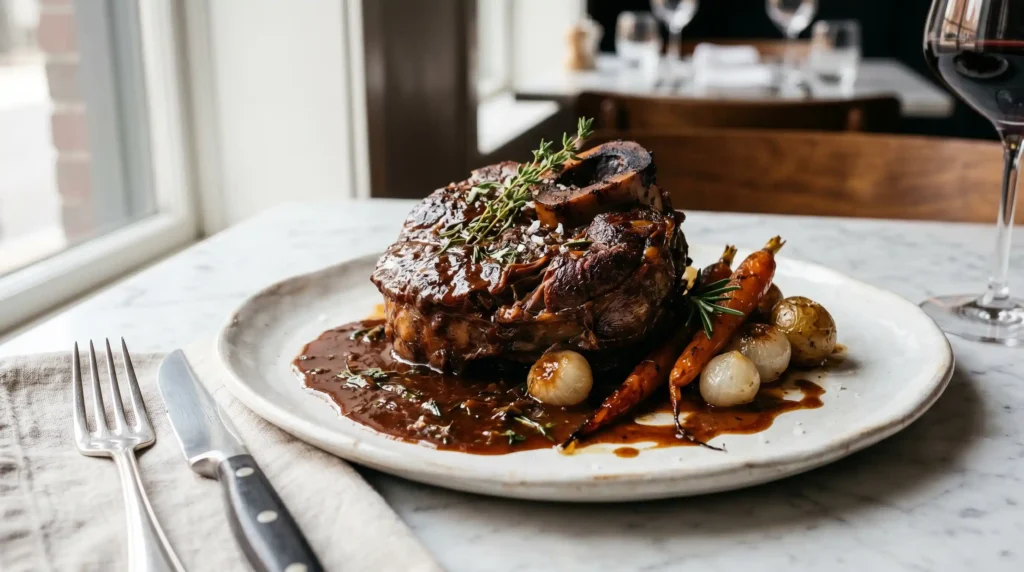
Prep Time: 20 minutes | Cook Time: 3.5 to 4 hours | Servings: 4 people
You know that moment when you pull something out of the oven and the whole kitchen smells so good your neighbors start reconsidering their dinner plans? That is exactly what happens every single time I make a roasted beef shank. This cut is criminally underrated, and honestly, I am here to fix that.
The roasted beef shank is budget-friendly, packed with deep flavor, and requires almost zero cooking skill — just patience and a working oven. Let me walk you through everything, from the ingredient list to the final plating.
What Exactly is a Beef Shank?
The beef shank comes from the leg of the cow. It is a tough, muscular cut that is loaded with connective tissue and collagen. Sounds like a red flag, right? Wrong. That collagen is your best friend here.
When you roast it low and slow, all that collagen breaks down into gelatin. The result? Ridiculously tender, juicy, flavorful meat that practically slides off the bone. IMO, it is one of the most rewarding cuts to cook.
Ingredients You Will Need
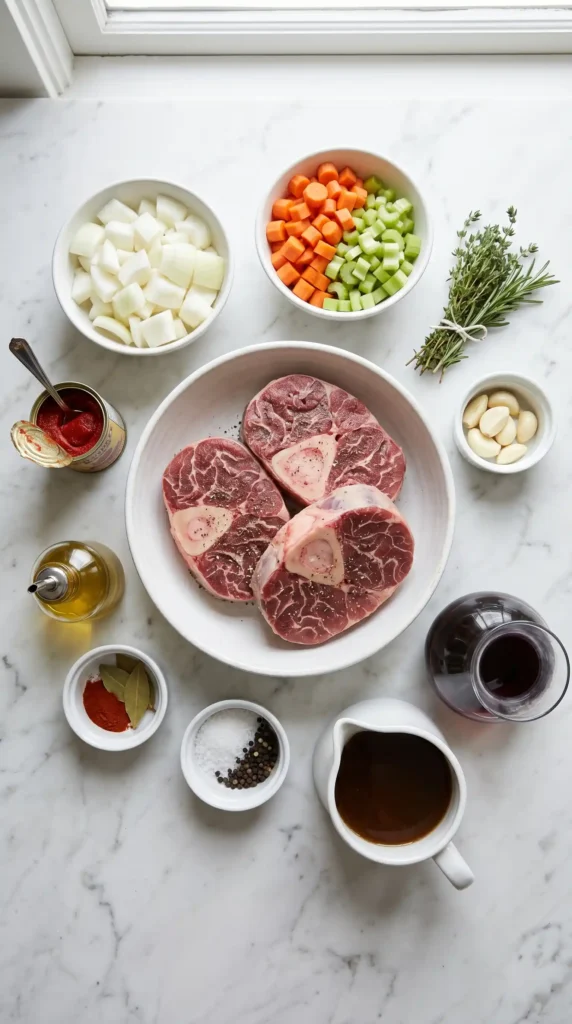
Here is everything you need to make this roasted beef shank recipe. Nothing fancy, nothing you need to drive to three specialty stores for.
Main Ingredients
- 2 beef shanks (about 1.5 lbs / 680g each, cross-cut or whole)
- 2 tablespoons olive oil
- 1 teaspoon salt (adjust to taste)
- 1 teaspoon black pepper
- 1 teaspoon smoked paprika
- 1 teaspoon garlic powder
- 1/2 teaspoon onion powder
- 1/2 teaspoon dried thyme
- 1/2 teaspoon dried rosemary
For the Braising Liquid
- 1 large onion, roughly chopped
- 4 garlic cloves, smashed
- 2 medium carrots, cut into chunks
- 2 celery stalks, roughly chopped
- 2 cups (480ml) beef broth
- 1 cup (240ml) red wine (or extra beef broth if you prefer)
- 2 tablespoons tomato paste
- 2 bay leaves
- Fresh thyme sprigs (3 to 4 sprigs)
Equipment You Need
- A large Dutch oven or oven-safe heavy pot with a lid
- A sharp knife and cutting board
- Tongs for searing
- Aluminum foil (as a backup lid if needed)
How to Make Roasted Beef Shank: Step-by-Step
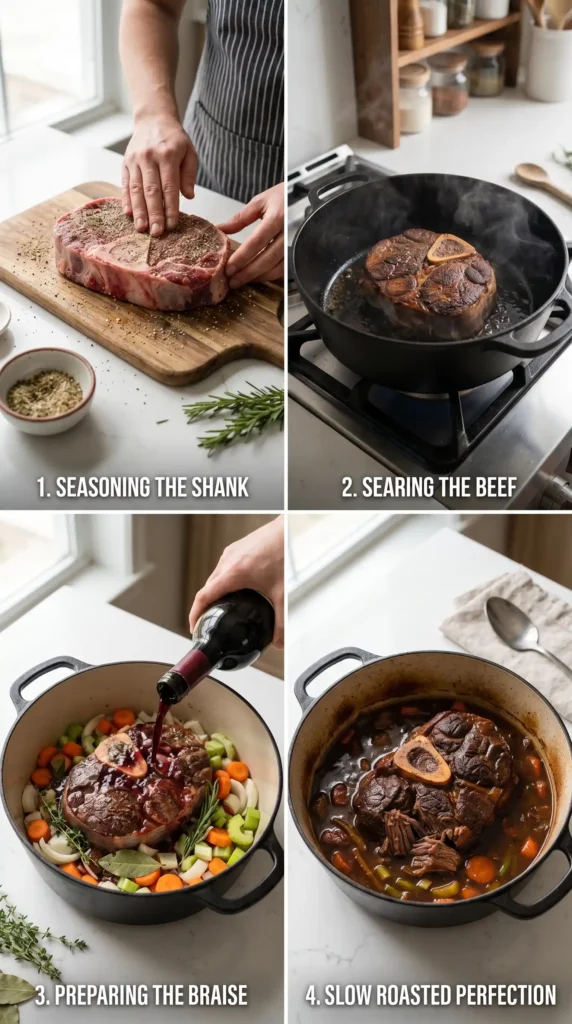
Here is where the magic happens. Follow these steps carefully and you will end up with a roasted beef shank that tastes like it came from a serious restaurant kitchen — without the restaurant price tag.
Step 1: Preheat Your Oven
Set your oven to 325°F (165°C). Low and slow is the key with a beef shank. High heat will toughen the meat and dry it out — not the vibe we are going for here. Give the oven a full 15 minutes to preheat properly.
Step 2: Season the Meat Generously
Pat your beef shanks completely dry using paper towels. Moisture is the enemy of a good sear. Mix together the salt, black pepper, smoked paprika, garlic powder, onion powder, thyme, and rosemary in a small bowl. Rub this spice blend all over the shanks — every side, every crevice.
Do not skip the drying step. Seriously, it makes a huge difference. A dry surface gives you that gorgeous, deeply browned crust that adds so much flavor to the final dish.
Step 3: Sear the Beef Shanks
Heat the olive oil in your Dutch oven over medium-high heat on the stovetop. Once the oil is hot and shimmering — not smoking — carefully add the beef shanks. You want to hear that satisfying sizzle the moment they hit the pan.
Sear each side for about 3 to 4 minutes without moving the meat. Resist the urge to poke or flip them too early. A proper sear builds the Maillard reaction crust — that is the brown layer responsible for deep, roasted flavor. Sear all sides, including the edges if possible. Remove the shanks and set them aside on a plate.
Step 4: Build the Braising Base
In the same pot, add the chopped onion, carrots, and celery. Cook them over medium heat for about 4 to 5 minutes, stirring occasionally, until they start to soften and pick up some color. This is your aromatic base, and it builds the body of your sauce.
Add the smashed garlic cloves and cook for another minute until fragrant. Then add the tomato paste and stir it into the vegetables. Let it cook for 2 minutes — this caramelizes the paste slightly and removes the raw tomato flavor. FYI, this one step is what separates a good braise from a great one.
Step 5: Deglaze and Add the Liquid
Pour in the red wine first. Use a wooden spoon to scrape up all those caramelized bits from the bottom of the pot — that is pure concentrated flavor right there. Let the wine bubble and reduce for about 2 to 3 minutes.
Then add the beef broth. Drop in the bay leaves and fresh thyme sprigs. Stir everything together gently. The liquid should come about halfway up the sides of the shanks — not covering them completely.
Step 6: Return the Shanks and Cover the Pot
Nestle the seared beef shanks back into the braising liquid. Make sure they are partially submerged. Place the lid tightly on the Dutch oven. If your lid does not seal perfectly, cover the top with aluminum foil first, then set the lid on top.
This sealed environment creates steam inside the pot, which keeps the meat moist and tender throughout the long cooking process. Have you ever noticed how slow-cooked meats always taste more comforting? This is exactly why.
Step 7: Slow Roast in the Oven
Slide the covered Dutch oven into your preheated oven. Let it roast at 325°F (165°C) for 3.5 to 4 hours. The longer you go, the more tender the meat gets.
Around the 2.5 hour mark, carefully open the oven and lift the lid. Spoon some of the braising liquid over the tops of the shanks to baste them. This keeps the exposed parts from drying out. Replace the lid and continue cooking.
The roasted beef shank is done when the meat pulls apart easily with a fork and practically slides off the bone. If it still offers resistance, give it another 30 minutes. Do not rush this step — patience is the secret ingredient.
Step 8: Rest and Serve
Once done, remove the pot from the oven and let the shanks rest in the braising liquid for 10 to 15 minutes before serving. This resting time lets the juices redistribute through the meat. Remove and discard the bay leaves and thyme sprigs.
You can strain the braising liquid and reduce it on the stovetop over high heat for 5 to 8 minutes to create a rich, glossy sauce to drizzle over the shanks. Highly recommended — do not skip this part.
What to Serve With Roasted Beef Shank
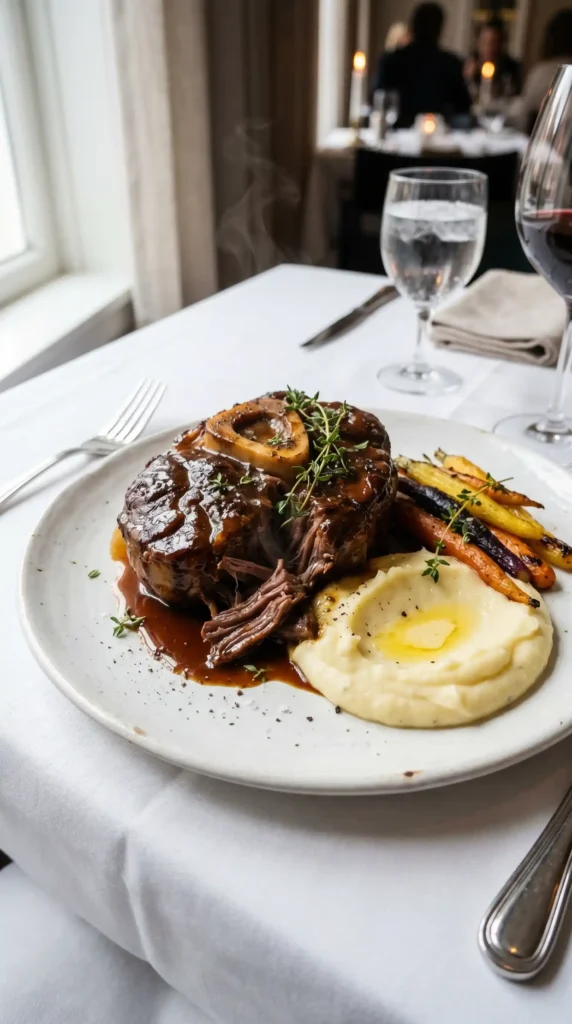
This dish pairs beautifully with a range of sides. Here are some of my personal favorites:
- Creamy mashed potatoes — they soak up the sauce beautifully
- Polenta or soft grits — incredibly comforting combination
- Roasted root vegetables — carrots, parsnips, or potatoes
- Crusty bread to mop up every last drop of that sauce
- Steamed rice or egg noodles for a heartier plate
Pro Tips for the Perfect Roasted Beef Shank
A few extra pointers to make sure this comes out perfect every single time:
- Always sear the meat first — skipping this step is the number one beginner mistake.
- Use a heavy pot with a tight lid for the best steam retention.
- Do not lift the lid every 20 minutes out of curiosity — every peek releases steam and drops the oven temperature.
- Leftover roasted beef shank tastes even better the next day once the flavors have melded overnight.
- If you do not drink wine, replace it with extra beef broth or a splash of balsamic vinegar.
Frequently Asked Questions
Q1: Can I make roasted beef shank without wine?
Absolutely, yes. Just swap out the red wine with an equal amount of beef broth. You can also add a splash of balsamic vinegar (about 1 tablespoon) to get some of that depth and acidity the wine would have provided. The result is still excellent.
Q2: How do I know when the beef shank is fully cooked?
The best test is the fork test. Gently push a fork into the thickest part of the meat and twist. If the meat pulls apart easily and feels completely tender with zero resistance, it is done. The internal temperature should reach around 200 to 205°F (93 to 96°C) for that perfect braised texture.
Q3: Can I cook this in a slow cooker instead?
Yes, you can. Sear the shanks and build the braising base on the stovetop as described, then transfer everything to a slow cooker. Cook on LOW for 8 to 10 hours or HIGH for 5 to 6 hours. The oven version gives a slightly more developed crust and flavor, but the slow cooker is a perfectly great option if you prefer hands-off cooking.
Q4: How do I store leftover roasted beef shank?
Store leftovers in an airtight container along with some of the braising liquid to keep the meat moist. It keeps in the fridge for up to 4 days. You can also freeze it for up to 3 months. Reheat gently on the stovetop over low heat or in the oven at 300°F (150°C) covered with foil.
Q5: What is the difference between beef shank and osso buco?
Great question. Osso buco is specifically a cross-cut veal shank braised in a Milanese style with white wine, tomatoes, and gremolata. A roasted beef shank uses beef instead of veal and is often prepared with red wine and heartier aromatics. The technique is similar, but the flavors are richer and bolder with beef.
Final Thoughts
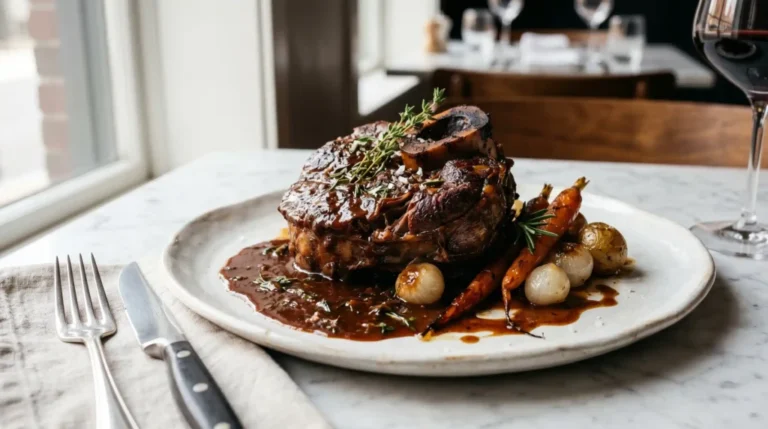
The roasted beef shank is one of those recipes that makes you look like you spent your entire weekend cooking — when really the oven did most of the heavy lifting. It is affordable, deeply flavorful, and genuinely impressive on the table.
Whether you are cooking for your family on a Sunday or hosting friends for dinner, this dish never disappoints. The fall-off-the-bone texture, the rich braising sauce, the smell that fills your entire home — yeah, this one is a winner every time. So go ahead, grab those shanks, and give your oven something meaningful to do. I promise you will not regret it.
Roasted Beef Shank
Ingredients
Method
- Preheat your oven to 325°F (165°C).
- Pat the beef shanks dry and season with salt, black pepper, smoked paprika, garlic powder, onion powder, thyme, and rosemary.
- Heat olive oil in a large Dutch oven over medium-high heat and sear the beef shanks until browned on all sides.
- Remove the shanks and set aside. In the same pot, add onion, carrots, and celery, and cook for 4 to 5 minutes.
- Add smashed garlic and cook for another minute. Incorporate tomato paste and let it cook for 2 minutes.
- Pour in the red wine, deglaze the pot, and then add the beef broth along with bay leaves and thyme sprigs.
- Nestle the seared beef shanks back into the braising liquid.
- Cover the pot and roast in the oven for 3.5 to 4 hours, basting with liquid halfway through.
- Remove the pot from the oven and let shanks rest in the braising liquid for 10 to 15 minutes before serving.
- Strain and reduce braising liquid for a rich sauce if desired.