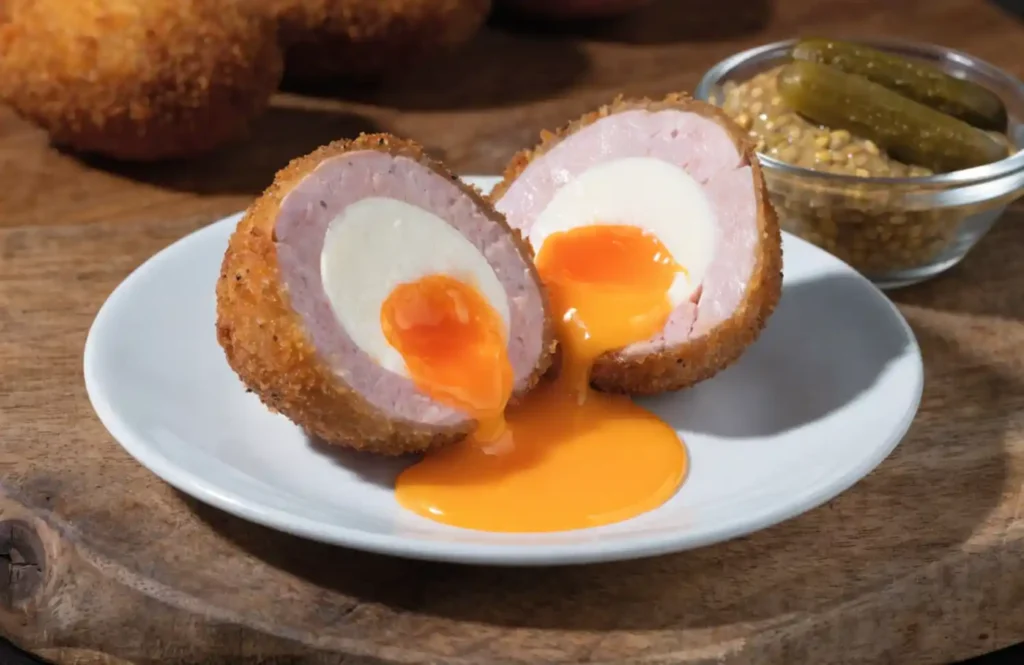
That crispy, golden ball with a perfectly cooked egg wrapped in savory sausage? You can make authentic scotch eggs at home. This recipe delivers British pub-quality results without the deep fryer drama.
I’m going to show you how to nail this iconic snack. Get ready for the most impressive appetizer you’ll ever serve.
Prep Time: 20 minutes
Cook Time: 25 minutes
Total Time: 45 minutes
Servings: 6 scotch eggs
Why This Scotch Eggs Recipe Works
Here’s what makes this scottish eggs recipe absolutely foolproof. The soft-boiled eggs create that gorgeous runny yolk center everyone loves.
The sausage layer stays moist and flavorful without falling apart. The triple breading ensures maximum crunch.
I first tried scotch eggs at a London pub and became obsessed. Making them at home seemed intimidating until I learned the tricks.
The combination of creamy egg, savory meat, and crispy coating is pure magic. Every bite delivers textural contrast and flavor.
Understanding Traditional Scotch Eggs
Despite the name, scotch eggs aren’t actually Scottish. The London department store Fortnum & Mason claims to have invented them.
They’re classic british food often served in pubs as savory snacks. Perfect with a pint of beer.
Traditional english food versions use pork sausage meat. Modern variations experiment with different meats and seasonings.
The eggs can be soft-boiled or hard-boiled. Soft-boiled creates that Instagram-worthy runny yolk moment.
Have you noticed how restaurant scotch eggs always look so perfect? Proper technique makes all the difference.
The Essential Ingredients
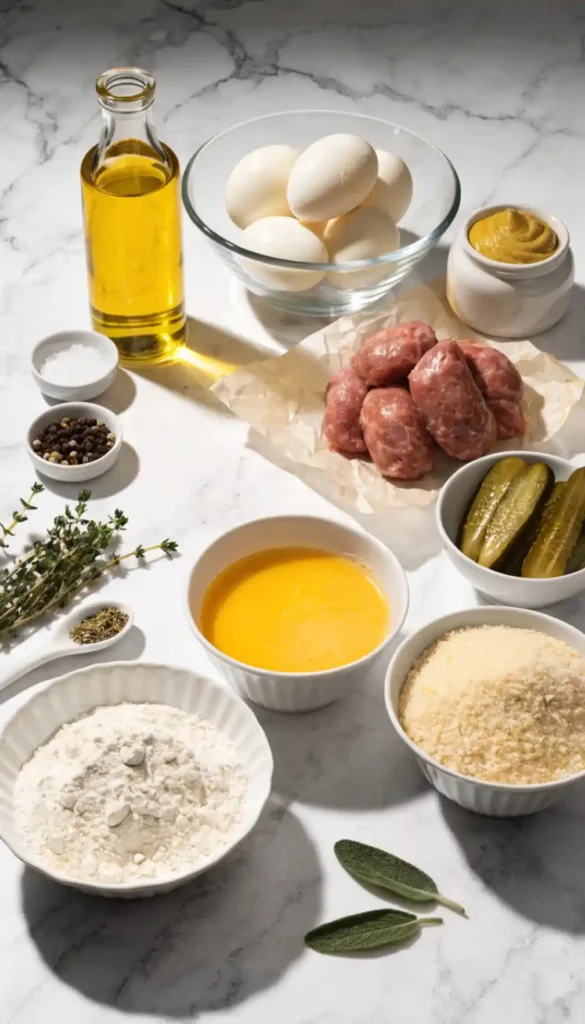
Let’s break down what you need for these delicious appetizer recipes. Quality ingredients create noticeable difference.
For the Scotch Eggs:
- 6 large eggs (plus 2 for breading)
- 1 pound pork sausage meat
- 2 teaspoons fresh sage, chopped
- 1 teaspoon fresh thyme
- ½ teaspoon garlic powder
- ½ teaspoon salt
- ¼ teaspoon black pepper
Now For the Breading:
- ½ cup all-purpose flour
- 2 eggs, beaten
- 1½ cups panko breadcrumbs
- Vegetable oil for frying
For Serving:
- Mustard (Dijon or whole grain)
- Pickles
- Fresh salad
Choosing Your Sausage
Traditional recipes use plain pork sausage meat. Remove it from casings if using links.
Italian sausage adds herbs and spices. The fennel flavor works beautifully.
Chicken or turkey sausage creates lighter versions. They’re less traditional but still delicious.
Add your own seasonings to plain sausage. Fresh herbs elevate the flavor significantly.
I prefer mixing in chopped sage and thyme. The herby notes complement eggs perfectly.
Boiling the Eggs Perfectly
Bring a pot of water to a rolling boil. Add eggs gently with a slotted spoon.
For soft-boiled eggs with runny yolks, cook exactly 6 minutes. Set a timer – seconds matter here. :/
For jammy yolks (my preference), cook for 7 minutes. For hard-boiled, go 9-10 minutes.
Immediately transfer eggs to an ice bath. This stops the cooking process instantly.
Peel the eggs carefully once completely cool. Wet hands make peeling easier.
Preparing the Sausage Mixture
Mix sausage meat with chopped herbs and seasonings in a bowl. Use your hands for best results.
Don’t overmix or the sausage becomes tough. Mix just until everything is evenly distributed.
Divide the mixture into 6 equal portions. Roll each into a ball.
Flatten each portion into a thin patty. Make them wide enough to completely wrap the eggs.
Keep the sausage cold until ready to use. Cold meat is easier to work with.
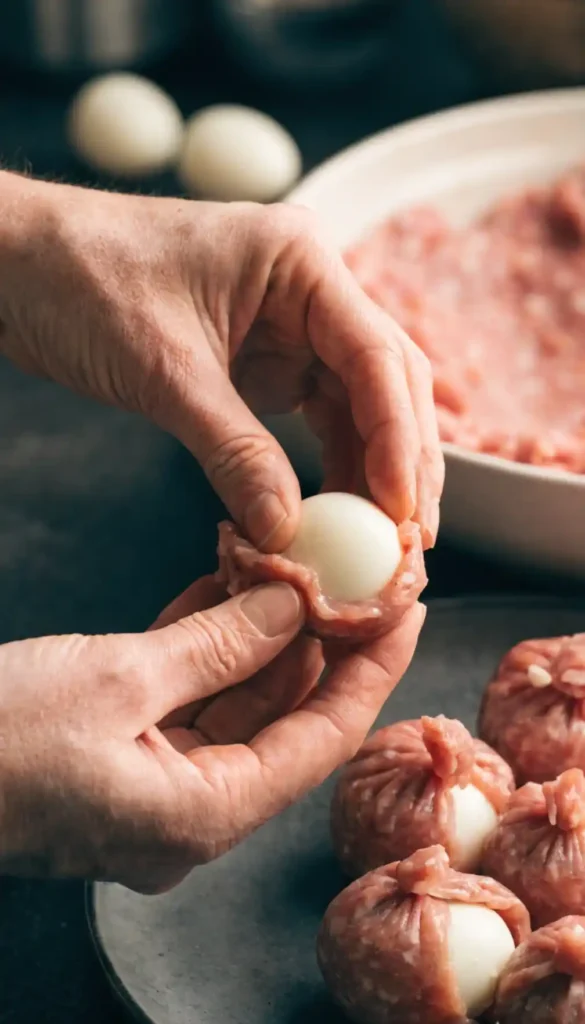
Wrapping Technique That Works
Flour your hands lightly to prevent sticking. Place a sausage patty in your palm.
Set a peeled egg in the center. Carefully wrap the sausage around it.
Seal any gaps or cracks completely. The sausage should cover every bit of egg.
Roll gently between your palms to create a smooth ball. Even shape ensures even cooking.
This is the trickiest part. Take your time and don’t rush it.
Place wrapped eggs on a plate and refrigerate for 15 minutes. This firms everything up.
Setting Up the Breading Station
Arrange three shallow bowls in a row. This creates efficient assembly line.
Bowl 1: All-purpose flour
Bowl 2: Beaten eggs with splash of water
Bowl 3: Panko breadcrumbs
Season flour with salt and pepper. This adds flavor to the first coating layer.
Have a clean plate ready for breaded eggs. You’ll need somewhere to set them.
The Triple Breading Process
Roll each sausage-wrapped egg in flour first. Coat completely and shake off excess.
Dip in beaten egg wash. Let excess drip back into bowl.
Roll in panko breadcrumbs. Press firmly to adhere the crumbs.
For extra crunchy coating, repeat the egg and breadcrumb steps. Double breading creates superior crunch.
Let breaded eggs rest for 10 minutes. The coating sets and sticks better.
Deep Frying to Golden Perfection
Heat 3 inches of oil in a deep pot to 350°F. Use a thermometer for accuracy.
Carefully lower 2-3 eggs into hot oil using a slotted spoon. Don’t overcrowd.
Fry for 6-7 minutes, turning occasionally for even browning. They should be deep golden.
The sausage needs to reach 160°F internally. Check with an instant-read thermometer.
Remove to paper towels to drain. Let rest for 5 minutes before cutting.
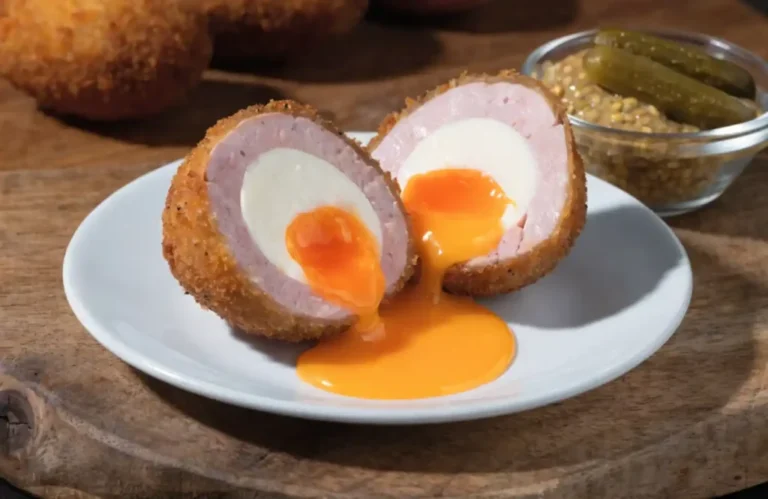
Cut in half to reveal that gorgeous center. The yolk should be perfectly cooked.
Baking Alternative Method
Want to skip deep frying? Bake them at 400°F for 25-30 minutes.
Place breaded eggs on a greased baking sheet. Spray generously with cooking oil.
Turn halfway through baking. This ensures even browning on all sides.
The texture differs from fried but still tastes excellent. Significantly lighter too.
FYI, baked versions save serious calories. Health-conscious folks appreciate this option.
Scotch Eggs Air Fryer Method
Preheat air fryer to 390°F. Spray basket with oil.
Place scotch eggs in basket without touching. Cook for 15-18 minutes.
Turn every 5 minutes for even browning. Spray with oil halfway through.
Check internal temperature reaches 160°F. The coating should be golden and crispy.
This method is easiest and creates least mess. Plus cleanup is a breeze.
Quail Egg Variation
Quail eggs recipe versions make adorable bite-sized appetizers. Use 12 quail eggs instead of 6 large.
Boil quail eggs for exactly 2 minutes 30 seconds. They cook much faster.
Use less sausage per egg – about 2 tablespoons. Wrap carefully as they’re delicate.
Fry for 4-5 minutes total. They cook faster than regular scotch eggs.
These make impressive party food. Guests love the cute size.

Serving Suggestions
Traditional service includes strong mustard for dipping. Dijon or whole grain both work perfectly.
Serve with pickles and fresh salad. The acidity cuts through rich sausage.
They’re excellent for picnics and packed lunches. Travel well at room temperature.
Add them to brunch spreads. They’re impressive and delicious morning food.
Slice them for appetizer platters. Show off that beautiful cross-section.
Storage and Reheating
Store cooked scotch eggs refrigerated for up to 3 days. Keep them in airtight containers.
Reheat in a 350°F oven for 10-12 minutes. This restores crispiness.
Never microwave them. The coating becomes soggy rubber instantly.
You can freeze cooked scotch eggs for up to 2 months. Thaw overnight before reheating.
IMO, they taste best fresh or within a day. The coating stays crispiest.
Common Mistakes to Avoid
Overcooking the eggs makes them dry and chalky. Time them precisely.
Not sealing the sausage completely causes leaks during cooking. Check for gaps.
Using warm sausage meat makes it hard to wrap. Keep everything cold.
Skipping the rest time causes breading to fall off. Patience pays off.
Frying at wrong temperature creates greasy or undercooked results. Use a thermometer.
What Makes Them Scottish?
Despite the name confusion, these aren’t really scottish recipes in origin. The name likely comes from “scotching” meaning scoring meat.
Some say they were Scottish pub food centuries ago. The true origin remains debated.
They’re quintessentially British regardless of exact origin. Every pub serves them.
The name stuck and now nobody questions it. Marketing wins again.
Perfect for Every Occasion
Pack them for picnics as portable protein. They don’t need refrigeration for a few hours.
Serve at parties as interesting food recipes. Guests always ask for the recipe.
Make them for game day. They’re substantial and satisfying.
Include them in breakfast spreads. Who says eggs are only for morning?
They work for fancy dinner parties too. Slice and plate elegantly.
Budget-Friendly Protein
Each scotch egg costs maybe $1 to make. Store-bought versions charge $3-4 each.
The ingredients are basic and affordable. Nothing exotic or expensive required.
Make a big batch for meal prep. They keep well all week.
This qualifies as economical egg recipes that feed people well. Protein-packed and filling.
Why Homemade Beats Store-Bought
Store-bought scotch eggs use mystery meat. You know exactly what goes into yours.
The eggs are often overcooked and rubbery. Yours will be perfectly done.
Commercial versions lack proper seasoning. Yours bursts with flavor.
Fresh homemade tastes infinitely better. No contest whatsoever.
Final Thoughts on Scotch Egg Perfection
This scotch eggs recipe proves British pub food is totally achievable at home. The technique looks harder than it actually is.
The combination of runny yolk, savory sausage, and crispy coating creates pure satisfaction. Every component works in harmony.
Once you nail these, you’ll make them constantly. They’re too impressive and delicious not to repeat.
So boil those eggs and get wrapping. Your new favorite snack is about to happen.
FAQs
Can I make scotch eggs ahead of time? Yes! Wrap eggs in sausage and bread them up to 24 hours ahead. Store refrigerated, then fry or bake when ready. They also reheat well for 2-3 days.
Why did my scotch egg fall apart? Common causes: sausage wasn’t sealed properly around egg, coating wasn’t pressed firmly, or oil temperature was too low. Make sure to refrigerate wrapped eggs before breading.
Can I use different types of meat? Absolutely! Try ground beef, lamb, turkey, or chicken. Season well since these meats can be bland. Ground beef works particularly well with herbs and spices.
How do I get the yolk runny? Boil eggs for exactly 6 minutes, then immediately ice bath. Don’t fry longer than 7 minutes or the yolk continues cooking from residual heat.
Can I bake instead of fry? Yes! Bake at 400°F for 25-30 minutes, turning halfway. Spray generously with oil for browning. The texture differs but still tastes great and saves calories.
Scotch Eggs
Ingredients
Method
- Bring a pot of water to a rolling boil. Add eggs gently with a slotted spoon.
- For soft-boiled eggs with runny yolks, cook for exactly 6 minutes. For jammy yolks, cook for 7 minutes. For hard-boiled, cook 9-10 minutes.
- Immediately transfer eggs to an ice bath to stop cooking.
- Once cool, carefully peel the eggs.
- Mix sausage meat with chopped herbs and seasonings in a bowl, using hands to combine.
- Divide the mixture into 6 equal portions and flatten each into a thin patty.
- Place a sausage patty in your palm, set a peeled egg in the center, and carefully wrap the sausage around it.
- Seal any gaps completely. Roll gently to form a smooth ball and refrigerate for 15 minutes.
- Arrange three shallow bowls: Bowl 1 with flour, Bowl 2 with beaten eggs, and Bowl 3 with panko breadcrumbs.
- Season the flour with salt and pepper for added flavor.
- Roll each sausage-wrapped egg in flour, dip in the egg wash, and then roll in panko breadcrumbs.
- For extra crunch, repeat the egg and breadcrumb steps.
- Let breaded eggs rest for 10 minutes.
- Heat 3 inches of oil in a deep pot to 350°F.
- Carefully lower 2-3 eggs into the hot oil and fry for 6-7 minutes, turning occasionally.
- Remove to paper towels to drain and let rest for 5 minutes before cutting.
- Bake at 400°F for 25-30 minutes, turning halfway for even browning.
- For air frying, preheat to 390°F and cook for 15-18 minutes, turning halfway through.