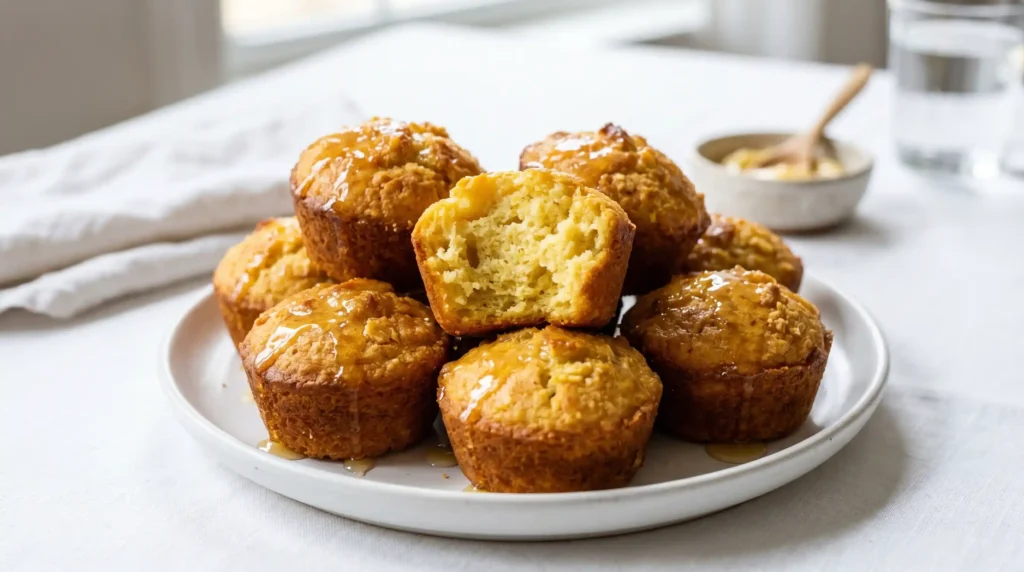
Every great Southern table has a bread basket situation. A basket of something warm, slightly sweet, and designed to disappear before the main course arrives because nobody has any self-control in the presence of fresh fried cornbread. Southern-Style Honey Butter Cornbread Poppers are the bite-sized version of that experience — golden-crusted, soft-centred, warm from the oil, and brushed with a honey butter that turns a great snack into something you actively plan your schedule around.
I first encountered cornbread poppers at a Southern cookout where they disappeared from the serving table faster than the host could fry new batches. The key distinction from standard cornbread muffins was the frying — the high heat produced a crispy exterior that baking alone cannot replicate, and the honey butter applied immediately while they were still warm soaked into the crust and produced a sweet, slightly caramelised finish that baked cornbread simply does not develop.
Have you ever made something that required so little effort it felt almost dishonest given how well it was received? These are that recipe. Let us make them properly.
Why Cornbread Poppers Beat Regular Cornbread Every Time
Standard cornbread is excellent. But it requires a pan, an oven, a 20-minute bake, and produces a large format that you then have to cut into pieces that inevitably crumble. Cornbread poppers require a pot of oil and produce individual, already-portioned, bite-sized pieces that have a completely different textural experience — the frying creates a crispy exterior that baking cannot replicate and that dramatically improves the overall eating experience.
The honey butter application is the other defining difference. Brushing warm cornbread poppers with honey butter immediately after frying allows the butter to melt into the porous fried crust and the honey to seep slightly into the warm interior — producing a sweet, glossy finish that integrates with the cornbread rather than sitting on top of it. Standard cornbread with butter and honey applied after baking does not produce the same integrated result.
The buttermilk in this batter is the ingredient that makes the interior genuinely Southern rather than just generic cornbread. Buttermilk reacts with the baking powder to produce a lighter, more tender crumb than regular milk and adds the slight tang that authentic Southern cornbread consistently delivers. IMO, buttermilk is non-negotiable here and any milk-only substitution changes the character of the result in a way that is noticeable to anyone familiar with the real thing.
What You Need
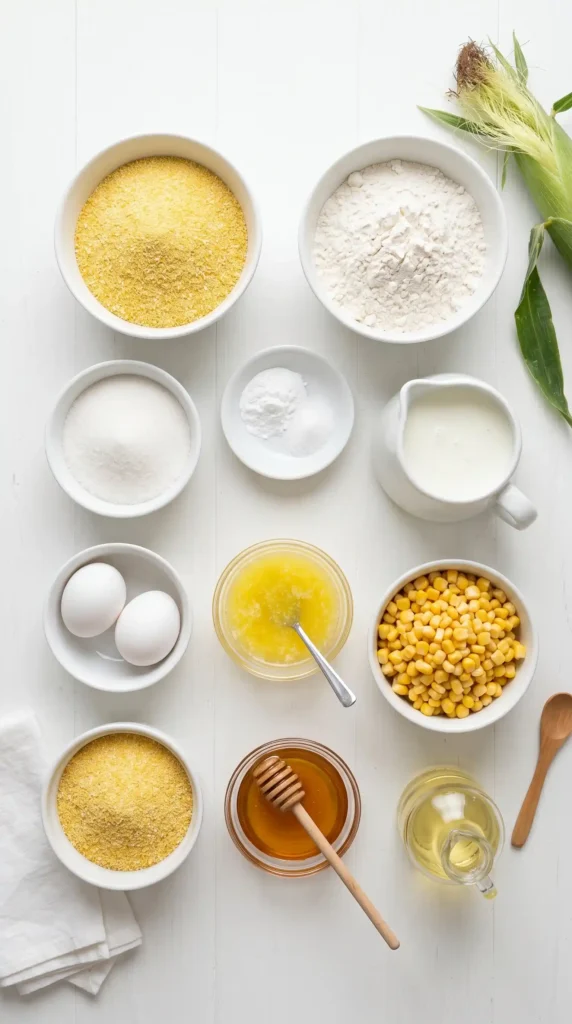
Ten ingredients for the batter and honey butter combined. The corn kernels in the batter are optional but genuinely worth adding — they provide pops of sweet corn flavour and slight textural variation in each bite that plain cornbread batter does not deliver. Use fresh corn in summer, drained canned corn in any other season.
For the Cornbread Batter
- 1 cup (130g) yellow cornmeal — fine-ground produces a smoother texture; medium-ground produces more textural bite; both work well
- 1 cup (125g) all-purpose flour
- 1/4 cup (50g) granulated white sugar
- 1 tablespoon baking powder
- 1/2 teaspoon salt
- 1 cup (240ml) buttermilk — full-fat for the best flavour and texture
- 2 large eggs
- 1/4 cup (57g) unsalted butter, melted and slightly cooled
- 1/2 cup (about 80g) sweet corn kernels, fresh or drained canned (optional but highly recommended)
For the Honey Butter
- 1/4 cup (57g) unsalted butter, melted
- 2 tablespoons honey — a good quality honey; darker, more robust honeys like buckwheat produce a deeper, more complex sweetness while lighter honeys like acacia produce a more delicate note
- Pinch of flaky sea salt (optional — the sweet-salty contrast on warm cornbread is remarkable)
Npw For Frying
- Vegetable oil, sunflower oil, or peanut oil — enough to fill your pot or skillet to a depth of approximately 5cm
Do Not Overmix the Batter — Lumps Are Fine, Gluten Development Is NotCornbread batter requires the same restraint as muffin batter: mix until the dry ingredients just disappear into the wet and stop immediately. Overmixing develops the gluten in the flour, producing tight, tough cornbread poppers with a dense, chewy interior rather than the soft, fluffy centre that makes these genuinely good. A few small lumps in the batter are completely fine and preferable to a smooth batter produced by extra stirring. FYI — this is the most common mistake and the most avoidable one in this recipe.
How to Make Southern-Style Honey Butter Cornbread Poppers Step by Step
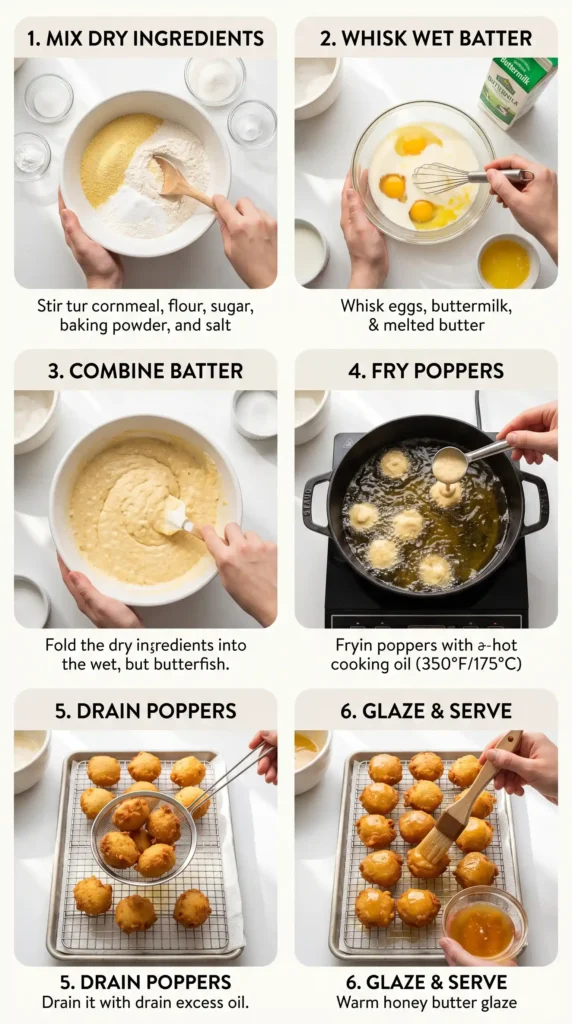
Four stages: make the batter, heat the oil to the correct temperature, fry the poppers in batches, then brush with honey butter. The entire active process runs about 30 minutes. The frying temperature is the most critical variable — too cold and the poppers absorb excess oil and taste greasy; too hot and the outside burns before the inside cooks through. A kitchen thermometer removes all guesswork.
Step 1: Make the Cornbread Batter
In a large mixing bowl, whisk together the cornmeal, flour, sugar, baking powder, and salt until the dry ingredients are fully combined and the baking powder is evenly distributed throughout. This dry whisking step ensures the leavener is spread throughout the flour before liquid is added — concentrated pockets of baking powder produce uneven rising and irregular popper shapes during frying.
In a separate medium bowl, whisk together the buttermilk, eggs, and melted butter until fully combined. The melted butter should be cool enough that it does not scramble the eggs when combined — if the butter is very hot, let it sit for 2 minutes before adding the buttermilk and eggs. Pour the wet ingredients over the dry ingredients and stir with a rubber spatula using as few strokes as possible — aim for 12–15 strokes maximum, stopping the moment the dry streaks disappear.
If using corn kernels, fold them in gently with two or three additional strokes. The finished batter should look thick — thicker than pancake batter, similar to a soft cookie dough in consistency. It should hold a rough shape when scooped with a spoon rather than running freely off the spoon. If it looks too thin to hold its shape, add a tablespoon of cornmeal and fold briefly. Set the batter aside and move to heating the oil.
Step 2: Heat the Oil
Pour the neutral oil into a heavy-bottomed pot or deep skillet to a depth of approximately 5cm. Heat over medium-high heat until the oil reaches 175°C (350°F). Use a kitchen thermometer for accuracy — clip a candy or fry thermometer to the side of the pot and monitor it as the oil heats. The correct temperature produces a popper that begins sizzling and rising to the surface almost immediately on contact with the oil.
To test the temperature without a thermometer, drop a small pea-sized piece of batter into the oil. At the correct temperature, it should sizzle actively and rise to the surface within 3–4 seconds. If it sinks and sits without sizzling, the oil is too cold. If it immediately browns in under 10 seconds, the oil is too hot. Both conditions produce inferior poppers — adjust the heat and wait 2 minutes before testing again.
Step 3: Fry the Poppers in Batches
Using two teaspoons or a small cookie scoop, carefully drop spoonfuls of batter into the hot oil — aim for pieces roughly the size of a large grape. Do not crowd the pot. Fry a maximum of 6–8 poppers per batch depending on your pot size — crowding the oil drops the temperature dramatically and produces pale, greasy poppers rather than golden, crispy ones. Leave space between each popper for the oil to circulate freely.
Each popper will sink briefly when added, then rise to the surface as the interior air expands and the exterior begins to set. Fry for 2–3 minutes, turning the poppers with a slotted spoon every 30–40 seconds so all sides develop even, golden colour. The finished popper should look deeply golden-brown all over and feel firm rather than soft when pressed very gently with the back of a spoon. Do not underfry — a pale popper has an undercooked, doughy interior that no honey butter can fix.
Remove each batch with a slotted spoon and place on a wire rack set over paper towels — a wire rack rather than paper towels directly prevents the bottom of the popper from becoming soggy as steam escapes. Allow each batch to drain for 60 seconds before adding the honey butter. Return the oil to the correct frying temperature between batches — it will drop by 5–15°C with each batch, so allow 1–2 minutes for it to recover before adding the next batch.
Step 4: Make and Apply the Honey Butter
Combine the melted butter and honey in a small bowl and whisk together briefly until completely combined. Add the pinch of flaky sea salt if using. The honey butter should look smooth, slightly golden, and fluid enough to brush easily. If the butter cools and thickens while you work through multiple batches, place the bowl over a small saucepan of warm water for 30 seconds to re-liquefy it.
Brush the honey butter generously over each warm popper immediately after it drains — while the surface is still hot enough to allow the butter to melt in and the honey to soak into the crust slightly. Work with a pastry brush, coating every surface including the bottom of each popper. The warm cornbread absorbs the honey butter into its porous crust as you apply it — apply two coats on each popper for a more intensely flavoured result. Serve the finished Southern-Style Honey Butter Cornbread Poppers immediately while they are at their warmest and crispiest.
Variations Worth Making
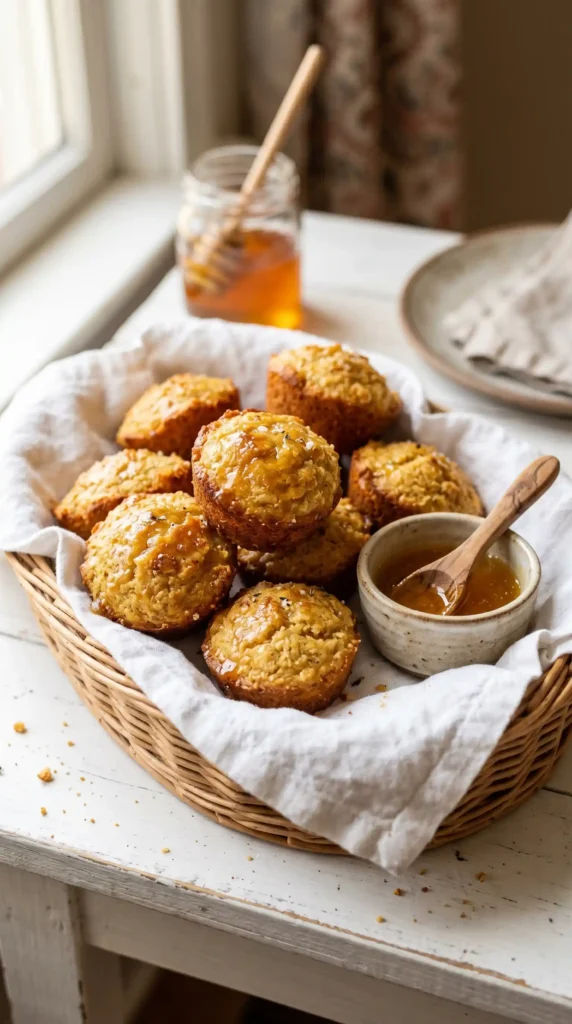
Cheddar Jalapeño Poppers
Add 1/2 cup of shredded sharp cheddar and 2 tablespoons of finely diced jalapeño to the batter. The cheese melts inside during frying and the jalapeño provides a heat that contrasts beautifully with the honey butter glaze.
Hot Honey Butter Version
Replace the regular honey in the glaze with hot honey — store-bought or homemade by warming honey with red pepper flakes. The spicy-sweet glaze on crispy cornbread produces a genuinely addictive flavour combination.
Bacon Corn Poppers
Add 3 tablespoons of finely crumbled cooked bacon to the batter alongside the corn kernels. The bacon provides a smoky, salty note that makes the honey butter even more effective as a sweet-savoury contrast. Use a smoked honey for the glaze to amplify the bacon note.
Baked Version
Drop the batter into greased mini muffin tins and bake at 200°C for 12–14 minutes. The baked version lacks the crispy exterior of the fried version but produces a tender, fluffy popper that suits those who prefer to avoid frying. Apply honey butter immediately out of the oven.
Serving Suggestions and Storage Tips
Serve Southern-Style Honey Butter Cornbread Poppers in a warm basket lined with a cloth napkin — the cloth keeps the warmth in and the presentation looks genuinely inviting. Serve alongside a dipping sauce if desired: ranch dressing, spicy butter, or a chilli-lime mayo all complement the sweet cornbread beautifully. These suit BBQs, game day spreads, holiday tables, and any gathering where something warm and snackable improves the atmosphere.
These poppers taste best within 30 minutes of frying when the exterior is at maximum crispness. If making ahead, re-crisp them in an oven at 190°C for 5–8 minutes or in an air fryer at 180°C for 3–4 minutes. Apply fresh honey butter after reheating rather than before — reheated honey butter-brushed poppers can taste slightly overly sweet. Store unfrosted poppers at room temperature for up to 24 hours in an airtight container.
Frequently Asked Questions
Can I bake these instead of frying them?
Yes. Grease a 24-cup mini muffin tin generously with butter or non-stick spray. Fill each cup about two-thirds full with batter. Bake at 200°C (400°F) for 12–14 minutes until a toothpick comes out clean and the tops look golden. The baked version produces a tender, fluffy interior without the crispy exterior of the fried version. Apply the honey butter immediately as they come out of the oven for the same integrated sweet-butter finish. The baked version is a convenient alternative for large batches when frying multiple batches is impractical.
Can I substitute regular milk for buttermilk?
Yes. To make a buttermilk substitute, add 1 tablespoon of white vinegar or fresh lemon juice to 1 cup of regular whole milk. Stir and let sit for 5 minutes until the milk curdles slightly — this creates a tangy, acidic liquid that reacts with the baking powder and functions very similarly to real buttermilk. The flavour is slightly milder than authentic buttermilk but produces a nearly identical texture in the finished poppers. Full-fat regular milk produces a noticeably better result than low-fat for this substitution.
How do I keep cornbread poppers warm for a party?
Place finished batches on a wire rack on a baking sheet in an oven set to its lowest setting — 90–100°C (200°F). This holds the poppers warm for up to 45 minutes without continuing to cook them or making them soggy. Do not stack them in a covered bowl, which traps steam and softens the crispy exterior within minutes. Apply the honey butter just before serving from the holding oven rather than before storing in the warm oven, which can cause the honey to darken and turn sticky.
What oil is best for frying cornbread poppers?
Neutral-flavoured oils with high smoke points work best — vegetable oil, sunflower oil, or peanut oil all perform well. Peanut oil produces the crispiest result and a very slightly nutty background note that some people prefer. Avoid olive oil, which has too low a smoke point for the required 175°C frying temperature and imparts a pronounced flavour that competes with the cornbread and honey butter. Canola oil is a widely available neutral option that works well and is budget-friendly for the larger quantities that frying requires.
Can I make the batter ahead of time?
The batter can be refrigerated for up to 2 hours before frying, though it should be used as soon as possible after mixing for the best leavening result. The baking powder in the batter begins reacting with the buttermilk as soon as they combine — waiting too long before frying means some of the leavening gas dissipates before the batter reaches the hot oil, producing slightly denser poppers with less lift. If preparing ahead, combine the dry and wet ingredients separately and mix them together 5–10 minutes before you are ready to fry for the freshest, airiest result.
Final Thoughts
These Southern-Style Honey Butter Cornbread Poppers earn their place as the most reliably popular snack at any gathering they appear at. The crispy golden exterior from frying, the soft fluffy interior from buttermilk and proper batter technique, and the sweet-buttery glaze applied while still warm — all three elements come together into something that tastes exactly like Southern comfort food should taste. Generous, warm, and impossible to eat just one of.
Keep the oil at the right temperature. Do not overmix the batter. Brush the honey butter on immediately while warm. Fry in small batches. These four decisions produce consistently excellent poppers regardless of how many batches you make or how busy the kitchen gets during the process.
Heat that oil, mix that batter with restraint, and make approximately twice as many as you think you need — because the first basket will disappear before the second one is finished frying, and experience teaches that lesson faster than any recipe instructions ever could. IMO, that is the most reliable outcome in Southern-style snack cooking.