Sticky fingers, empty plates, and two people fighting over the last rib. That’s what happens every time I make this Chinese spare ribs recipe. If you’ve never tried it at home, get ready, because this one’s about to become a regular in your dinner rotation.
I started making these after one too many soggy takeout orders. The ribs were chewy, the sauce tasted like bottled syrup, and I thought, surely I can do better than that. Turns out, I could, and so can you.
Servings: 4. Prep time: 20 minutes. Marinating time: at least 2 hours, overnight if you can swing it. Cook time: about 1 hour 45 minutes.
Why This Chinese Spare Ribs Recipe Works
The magic here is balance. You get salty soy sauce, sweet honey, and warm five-spice all working together instead of fighting each other. Have you ever bitten into ribs that tasted like pure sugar and nothing else? Not here.
Every ingredient earns its spot in the marinade. Nothing is filler, and nothing gets lost. The result is a glaze that clings to the meat instead of pooling at the bottom of the pan.
Ingredients for Chinese Spare Ribs
Here’s everything you’ll need to pull this off, with exact amounts so you’re not guessing:
- 3 pounds St. Louis style pork spare ribs, cut into individual pieces
- 1/2 cup soy sauce
- 1/4 cup honey
- 3 tablespoons hoisin sauce
- 2 teaspoons Chinese five-spice powder
- 2 tablespoons brown sugar
- 1/2 teaspoon red pepper flakes
- 4 cloves garlic, minced
- 1 teaspoon ground ginger
- 2 to 3 drops red food coloring (totally optional)
- 1 tablespoon cornstarch
- 1 tablespoon sesame seeds, for garnish
- 2 green onions, sliced, for garnish
FYI, if you can’t find St. Louis style ribs, baby back ribs work fine too. Just keep an eye on the cook time since they’re thinner.
How to Make Chinese Spare Ribs
Step 1: Build the Marinade
Grab a mixing bowl big enough to fit all your ribs later. Whisk together the soy sauce, honey, hoisin sauce, and five-spice powder until it looks smooth and glossy. Add the brown sugar, red pepper flakes, garlic, and ginger, then stir until everything dissolves into one cohesive sauce. This marinade is doing most of the heavy lifting flavor-wise, so don’t rush this part.
Step 2: Prep the Ribs
Pat the ribs dry with paper towels first. This might feel like an unnecessary step, but trust me, it helps the marinade actually stick instead of sliding right off. If your ribs came as a full rack, slice between the bones so each piece is separate. Smaller pieces soak up more flavor and cook more evenly, which is exactly what you want.
Step 3: Marinate Properly
Place the ribs in a large dish or a resealable bag and pour the marinade over them. Massage it in with your hands, yes, actually get in there. Cover and refrigerate for at least 2 hours, though overnight gives you noticeably deeper flavor. IMO, this is the step people skip and immediately regret.
Step 4: Roast Low and Slow
Preheat your oven to 300 degrees Fahrenheit. Line a large baking sheet with foil, then arrange the ribs in a single layer, reserving the leftover marinade for later. Cover the pan tightly with more foil and roast for about 1 hour and 30 minutes. This slow, gentle heat is what breaks down the connective tissue and gives you that fall-off-the-bone texture everyone loves.
Step 5: Thicken the Glaze
While the ribs roast, pour the reserved marinade into a small saucepan. Whisk in the cornstarch and bring the mixture to a gentle simmer over medium heat. Stir constantly for 2 to 3 minutes until it thickens into a glossy glaze. Set it aside; you’ll need it again in a few minutes.
Step 6: Broil for That Sticky Finish
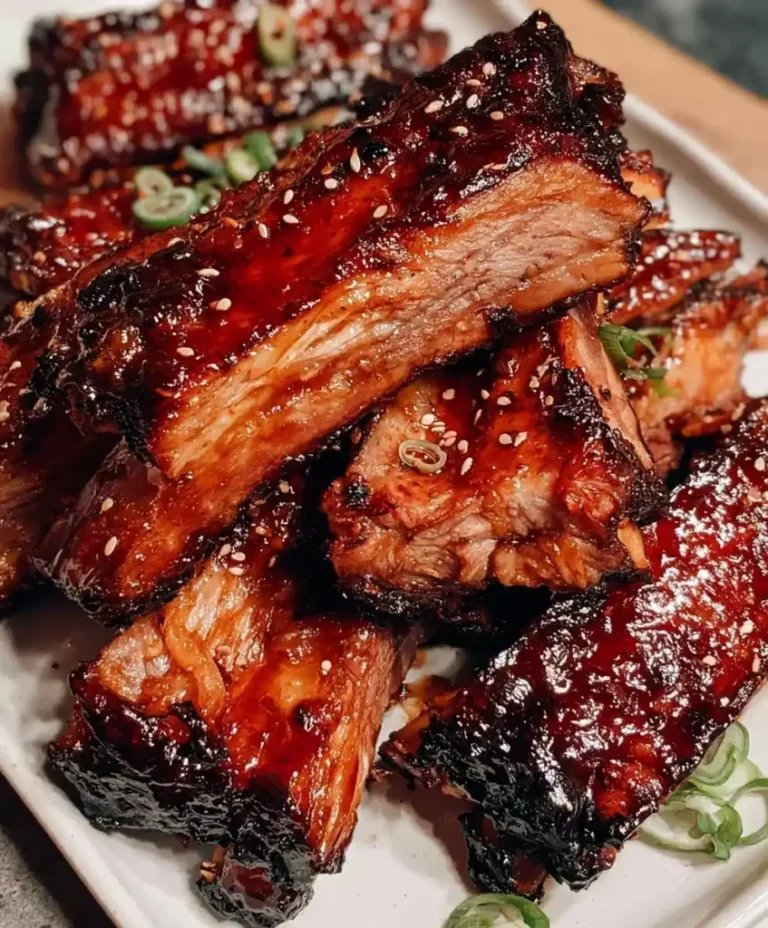
Uncover the ribs and brush them generously with the thickened glaze. Switch your oven to broil and slide the pan back in for 5 to 6 minutes, watching closely the entire time. Nobody wants burnt ribs after all that patience. You’re looking for a deep caramelized color, not a charcoal briquette.
Step 7: Garnish and Serve
Pull the ribs out once they’re glossy and slightly charred at the edges. Scatter sesame seeds and sliced green onions over the top for color and crunch. Serve them warm, and maybe grab extra napkins because things are about to get messy 🙂
Pro Tips for the Best Chinese Spare Ribs
A few small habits make a noticeable difference here:
- Marinate longer than you think you need to. Two hours is the minimum, not the goal.
- Pat the ribs dry before marinating so the sauce actually adheres.
- Don’t walk away during broiling. Sugar burns fast, and five seconds too long ruins the whole batch.
- Use a meat thermometer if you’re unsure; ribs are done around 195 to 203 degrees Fahrenheit for that tender texture.
Easy Variations Worth Trying
Once you’ve made the base recipe, feel free to play around:
- Swap soy sauce for coconut aminos if you want a soy-free version.
- Add a splash of pineapple juice to the marinade for extra sweetness and tang.
- Toss in a little liquid smoke for a backyard barbecue flavor without firing up a grill.
- Finish the ribs on a hot grill instead of broiling for a charred, smoky edge.
What to Serve with Chinese Spare Ribs
These ribs are rich, so lighter sides balance the plate nicely. Steamed jasmine rice soaks up extra glaze beautifully. Stir-fried bok choy or steamed broccoli adds color and a bit of crunch. A cold cucumber salad on the side cuts through the sweetness and keeps things from feeling heavy.
FAQs About Chinese Spare Ribs
Can I use a slow cooker instead of the oven? Yes. Cook the marinated ribs on low for 6 hours, then finish under the broiler with the thickened glaze exactly as described above.
Can I make the marinade ahead of time? Absolutely. It keeps well in the fridge for up to 3 days in a sealed container, which makes weeknight cooking much faster.
How spicy is this recipe? Not very, as written. The red pepper flakes add warmth rather than heat, but feel free to double them if you like a stronger kick.
How do I store and reheat leftovers? Keep leftover ribs in an airtight container in the fridge for up to 3 days. Reheat gently in a 300 degree oven until warmed through so they don’t dry out.
Can I freeze Chinese spare ribs? Yes, they freeze well for up to 3 months. Wrap them tightly, thaw overnight in the fridge, then reheat low and slow.
What cut of ribs works best? St. Louis style spare ribs give the best balance of meat and fat, though baby back ribs are a solid substitute if that’s what your store has.
Final Thoughts
This Chinese spare ribs recipe turns a handful of pantry staples into something that tastes like it took a lot more effort than it actually did. The marinade does the work, the oven does the rest, and you get to take all the credit. Give it a try this weekend, and don’t be surprised when everyone asks for the recipe before dinner’s even over.
Chinese Spare Ribs
Ingredients
Method
- Whisk together the soy sauce, honey, hoisin sauce, and five-spice powder until smooth and glossy.
- Add the brown sugar, red pepper flakes, garlic, and ginger, and stir until dissolves.
- Pat the ribs dry with paper towels and slice between the bones into individual pieces.
- Place ribs in a large dish or resealable bag and pour marinade over them.
- Massage the marinade into the ribs, cover, and refrigerate for at least 2 hours, preferably overnight.
- Preheat your oven to 300 degrees Fahrenheit.
- Line a large baking sheet with foil, arrange the ribs in a single layer, and cover with more foil.
- Roast for about 1 hour and 30 minutes.
- Pour reserved marinade into a saucepan, whisk in cornstarch, and bring to a gentle simmer over medium heat.
- Stir constantly for 2 to 3 minutes until thickened into a glaze.
- Uncover the ribs and brush them generously with the thickened glaze.
- Switch your oven to broil and cook for 5 to 6 minutes, watching closely.
- Scatter sesame seeds and sliced green onions over the ribs and serve warm.