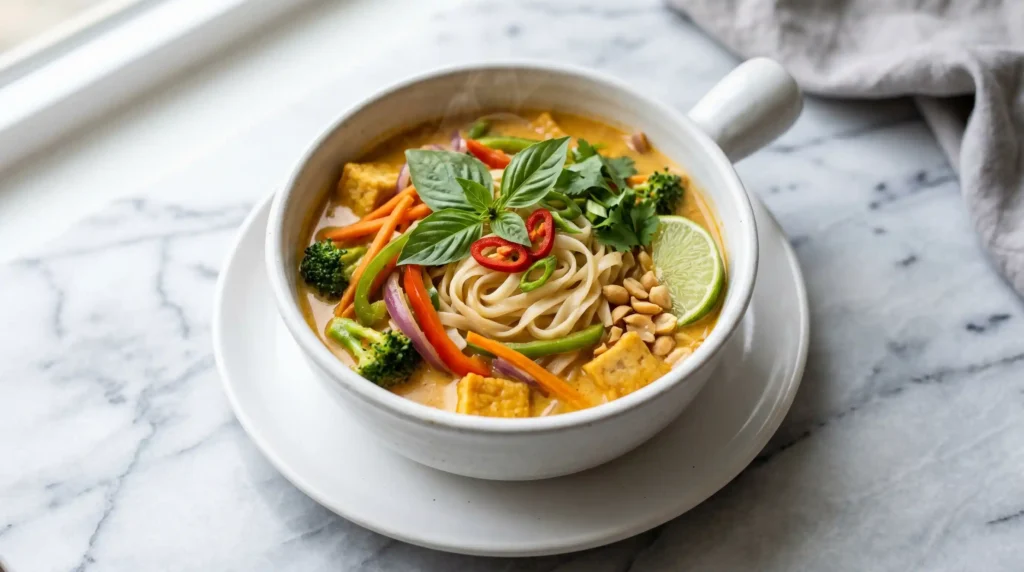
Servings: 4 | Prep Time: 10 minutes | Cook Time: 15–20 minutes | Total Time: ~30 minutes
Some nights you want takeout but your wallet disagrees. That is exactly when this Thai Red Curry Noodles recipe saves the day. Rich coconut broth, silky rice noodles, and that deep, aromatic red curry paste — all on your table faster than any delivery app can manage.
I made this on a rainy Wednesday with whatever vegetables I had left in the fridge. It has been on regular rotation ever since, and honestly, I have zero regrets.
Why Thai Red Curry Noodles Belong in Your Weekly Rotation
This is not a complicated dish. It is a smart one. Thai Red Curry Noodles hit every flavor note — creamy, spicy, tangy, and just a touch sweet — without requiring a pantry full of hard-to-find ingredients.
The red curry paste does the heavy lifting. One or two tablespoons transform a plain pot of coconut milk into something deeply fragrant and full of complexity. Have you ever wondered how restaurant-quality Thai food gets that layered depth? Red curry paste is almost always the answer.
Ingredients You’ll Need
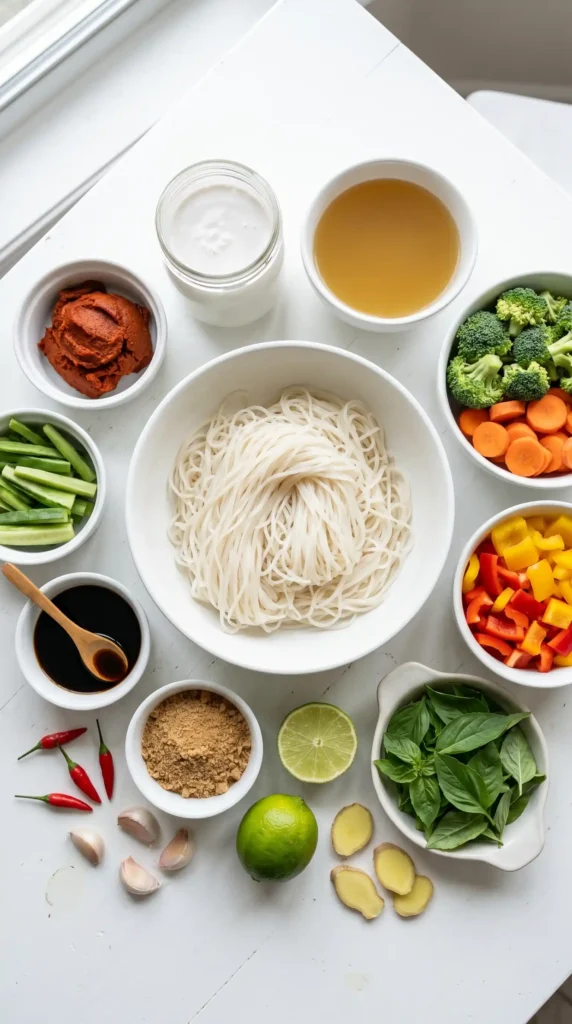
Main Ingredients
- 8 oz rice noodles
- 14 oz coconut milk
- 2 to 3 tablespoons red curry paste
- 1 cup vegetable broth
- 1 cup mixed vegetables (bell peppers, carrots, and broccoli work great)
- 2 tablespoons soy sauce
- 1 tablespoon brown sugar
- 1 tablespoon lime juice
- Fresh basil leaves for garnish
Picking the Right Ingredients
Choosing Your Red Curry Paste
Not all red curry pastes taste the same. Thai Kitchen and Maesri are two solid grocery store options, but if you have access to an Asian grocery store, a fresh Thai brand will deliver noticeably better flavor. Start with 2 tablespoons if you are sensitive to heat, and go up to 3 if you like it spicy.
FYI — different brands vary wildly in heat level. Taste your paste before using it so you know what you are working with. A paste that looks mild can absolutely surprise you.
Rice Noodles: Which Kind?
Use medium-width rice noodles (about 3mm) for this recipe. They hold up well in the broth without turning mushy. Thin vermicelli noodles work too, but they absorb liquid faster and can clump if you are not quick about combining them with the broth.
Avoid using regular wheat noodles here. They work fine in a pinch, but they change the texture of the dish entirely and make it feel heavier than it should.
Coconut Milk — Full Fat vs. Light
Full-fat coconut milk wins every single time. Light coconut milk gives you a thinner, less creamy broth that struggles to carry the curry paste flavors properly. Full-fat coconut milk creates that silky, luxurious base that makes Thai Red Curry Noodles so satisfying. This is one area where cutting calories costs you the whole experience.
Making Thai Red Curry Noodles: Step-by-Step
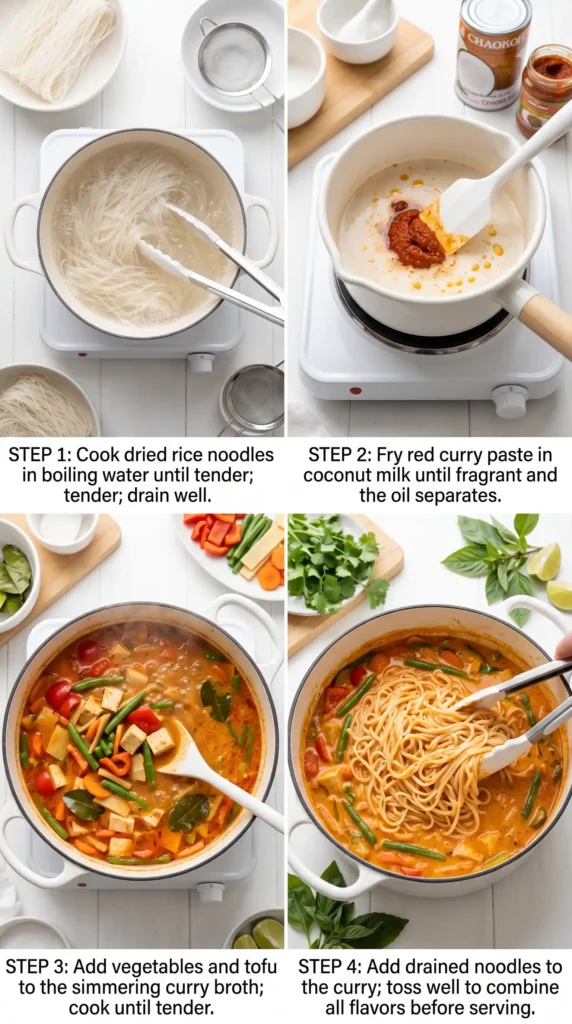
Step 1 — Cook the Rice Noodles First
Bring a pot of water to a boil and cook your 8 oz of rice noodles according to the package instructions. Most medium rice noodles take 6 to 8 minutes. Cook them until just al dente — slightly firm at the center, not fully soft.
They will continue softening once you add them to the hot curry broth, so pulling them slightly early prevents them from becoming overcooked and mushy. Drain them well and toss with a tiny drizzle of oil to stop them from sticking together. Set aside.
Step 2 — Warm the Coconut Milk
Pour your 14 oz of coconut milk into a large pot or deep skillet. Heat it over medium heat, stirring occasionally. You want it warm and loose — not boiling. Heating it gently prevents the coconut milk from separating, which can happen when you blast it over high heat too fast.
Watch for small bubbles forming around the edges of the pot. That is your signal that the coconut milk is ready for the next step. Do not walk away from the stove at this point.
Step 3 — Bloom the Red Curry Paste
This step makes the biggest difference in final flavor. Add 2 to 3 tablespoons of red curry paste directly into the warm coconut milk. Stir constantly and cook for 1 to 2 minutes — you will notice the oil from the paste starting to separate slightly and the whole kitchen will start smelling incredible.
Blooming the paste in the coconut milk activates the aromatics inside it — lemongrass, galangal, chili — and distributes the flavor through the entire base. Skipping this step and just dumping everything in together produces a noticeably flatter result.
Step 4 — Build the Broth
Pour in 1 cup of vegetable broth and stir to combine with the curry-infused coconut milk. Add 1 cup of your mixed vegetables — sliced bell peppers, carrots, and broccoli florets all work well here. Bring the pot to a gentle simmer over medium heat.
Add 2 tablespoons of soy sauce and 1 tablespoon of brown sugar. The soy sauce delivers that umami depth, while the brown sugar rounds out the heat and acidity. Stir everything together and let the mixture simmer for 5 to 7 minutes, or until the vegetables are just tender but still have a slight bite.
Step 5 — Taste and Adjust
Before adding the noodles, taste the broth. This is the most important step most home cooks skip. Does it need more salt? Add a splash more soy sauce. Too spicy? A little extra brown sugar tones it down. Too sweet? Squeeze in a bit more lime. Getting the broth right before the noodles go in guarantees a great final result.
The balance you want is creamy, savory, slightly sweet, and bright from the lime. When you hit that balance, you will know it immediately.
Step 6 — Add the Noodles and Lime Juice
Add your drained rice noodles directly into the simmering broth. Add 1 tablespoon of fresh lime juice at the same time. Stir gently to coat every noodle in the curry broth and heat everything through for about 1 to 2 minutes.
Do not over-stir or you will break the noodles apart. Use tongs or chopsticks to gently fold the noodles into the broth rather than aggressive mixing with a spoon. The noodles should absorb some of the broth and turn from pale to a slightly golden, curry-tinted color.
Step 7 — Serve Immediately
Ladle the Thai Red Curry Noodles into bowls right away. Top each bowl generously with fresh basil leaves. The basil adds a bright, aromatic finish that lifts the whole dish and adds a pop of green color that makes it look as good as it tastes.
Serve hot. This dish does not hold well — the noodles continue absorbing the broth as it sits, and you can go from perfect to stodgy pretty quickly. Serve fast and enjoy immediately
Customize It Your Way
One of the best things about this recipe is how easy it is to adapt. Here are some popular variations worth trying:
- Add protein: Toss in shrimp, sliced chicken, or tofu. Add raw protein right after blooming the curry paste so it cooks through in the broth.
- Extra heat: Add a teaspoon of chili flakes or a fresh sliced Thai chili along with the curry paste.
- More vegetables: Mushrooms, snap peas, baby bok choy, and zucchini all work beautifully in this broth.
- Garnish upgrades: Crushed roasted peanuts, sliced scallions, a drizzle of chili oil, or extra lime wedges on the side all elevate the final presentation.
- Noodle swap: Swap rice noodles for udon or soba for a different texture and character entirely.
Storing and Reheating Leftovers
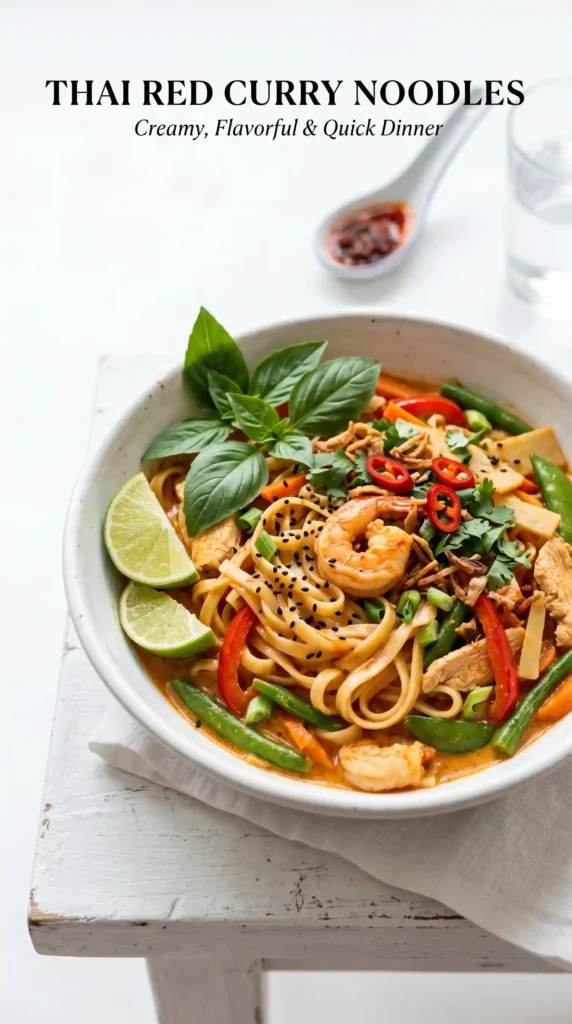
Store leftover Thai Red Curry Noodles in an airtight container in the fridge for up to 2 days. Keep in mind that the noodles will absorb more broth as they sit, so leftover portions will be thicker and denser than when you first made them.
To reheat, add a splash of vegetable broth or coconut milk to the container and warm gently in a pot over medium-low heat, stirring to loosen everything up. IMO, reheating on the stovetop always beats the microwave for texture and flavor.
Frequently Asked Questions
Q: Can I make this recipe vegan? Yes, it is already fully vegan as written. Just double-check your red curry paste brand — some contain shrimp paste as an ingredient. Mae Ploy and Thai Kitchen both offer vegan-friendly options that work well for this recipe.
Q: How spicy is this dish? The heat level depends entirely on your curry paste brand and how much you use. Starting at 2 tablespoons gives you a mild to medium heat. Using 3 tablespoons pushes it into medium-hot territory. Taste the paste before using it and adjust based on your preference.
Q: Can I use regular pasta instead of rice noodles? You can in a pinch, but rice noodles really are the right call here. They absorb the broth flavors better and keep the dish light. Regular pasta changes the texture significantly and makes the dish feel heavier than it should be.
Q: Can I make the broth ahead of time? Absolutely. Make the curry broth up to 2 days in advance and store it separately from the noodles. Cook fresh noodles when you are ready to serve, combine them with the reheated broth, and finish with lime juice and basil. This is actually the best meal prep approach for this recipe.
Q: What vegetables work best in this recipe? Bell peppers, carrots, and broccoli are the standard go-to combination, but this recipe handles almost any vegetable well. Mushrooms add an earthy depth, snap peas add crunch, and baby bok choy wilts down beautifully into the broth. Use whatever looks freshest.
Final Thoughts
Thai Red Curry Noodles prove that a deeply flavorful, restaurant-quality meal does not require hours in the kitchen or a long list of specialty ingredients. You need good curry paste, full-fat coconut milk, and about 30 minutes. That is genuinely the whole formula.
Bloom your paste. Taste your broth. Do not overcook the noodles. Follow those three rules and you will land a bowl that impresses every single time.
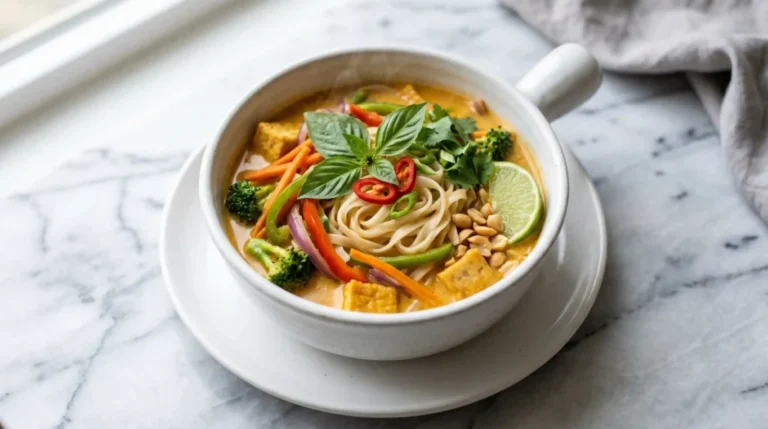
Thai Red Curry Noodles
Ingredients
Method
- Bring a pot of water to a boil and cook the rice noodles according to package instructions (about 6 to 8 minutes) until just al dente. Drain and toss with a tiny drizzle of oil. Set aside.
- In a large pot or deep skillet, warm the coconut milk over medium heat, stirring occasionally, until you see small bubbles forming around the edges.
- Add 2 to 3 tablespoons of red curry paste to the warm coconut milk and stir constantly for 1 to 2 minutes until the oil separates and the aroma is fragrant.
- Pour in the vegetable broth and stir to combine. Add the mixed vegetables and bring to a gentle simmer. Stir in soy sauce and brown sugar, and let it simmer for 5 to 7 minutes until the vegetables are tender.
- Taste the broth and adjust seasoning with more soy sauce, brown sugar, or lime juice as needed.
- Add the drained rice noodles and lime juice directly into the simmering broth and gently stir to coat the noodles, heating for 1 to 2 minutes.
- Serve immediately in bowls, garnished with fresh basil leaves.