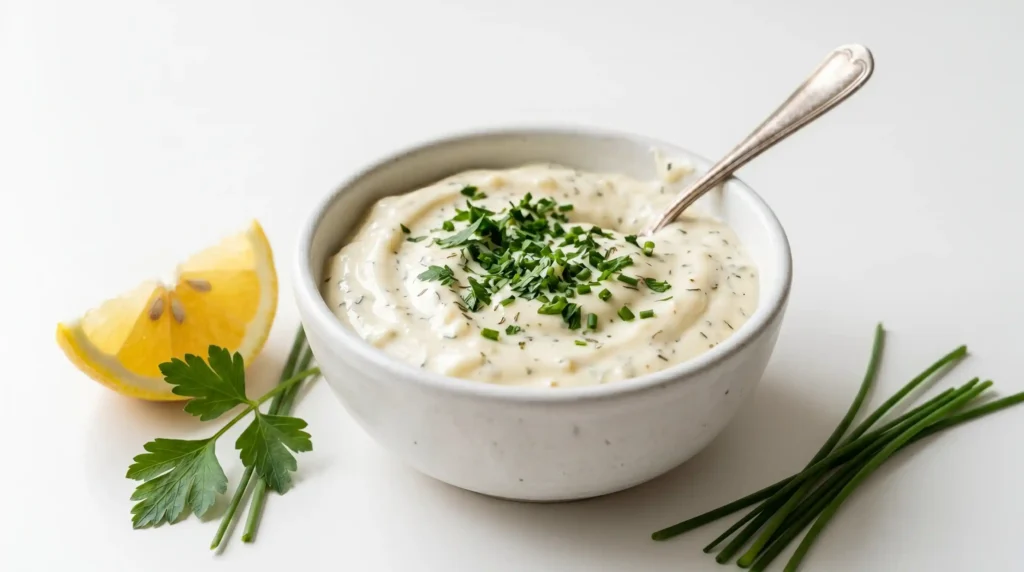
The gap between a good meal and a great one is often a sauce. Not a complicated sauce with thirty steps — just a creamy, punchy, herb-loaded condiment that makes everything it touches taste intentional rather than assembled. Garlic Herb Mayo Sauce is exactly that condiment. Five minutes, a bowl, and a handful of fresh ingredients, and you have something that will replace every bottled sauce in your fridge within a week.
I started making this when I got tired of the flavour vacuum that store-bought mayo creates on every sandwich and as a dip. I wanted something that tasted alive — garlic-forward, brightly herby, tangy from lemon, with a complexity that standard mayo completely lacks. One test batch and I never looked back. This sauce now lives permanently in my fridge and probably goes on things it was not originally intended for. I have no regrets.
Have you ever made a simple sauce that immediately improved everything around it? This is that sauce and it takes the same amount of time as pouring from a jar. Let us make it properly.
Why Garlic Herb Mayo Sauce Beats Every Store-Bought Version
Store-bought garlic mayo exists. It is not terrible. But it is made with dried garlic powder, stabilisers, and flavourings that produce a flat, slightly artificial garlic note rather than the bright, pungent, genuinely garlicky flavour that fresh garlic delivers. The difference between garlic powder mayo and fresh-garlic mayo is the difference between garlic-flavoured and garlic. These are meaningfully different things.
Fresh herbs do the same thing. Parsley from a jar tastes dusty and vaguely herby. Fresh parsley in a mayo sauce tastes green, vibrant, and alive in a way that gives the sauce a genuinely fresh quality that no shelf-stable product can match. The lemon juice and zest add brightness that cuts through the fat of the mayo and keeps every bite tasting fresh rather than cloying.
The Dijon mustard is the element that makes people unable to identify exactly why this tastes better than standard garlic mayo. It does not read as mustard in the finished sauce — it provides an emulsifying boost that gives the sauce a slightly silkier texture, a faint tangy backbone, and a depth that elevates the overall flavour profile without announcing itself. IMO, a garlic herb mayo without Dijon is like a pizza without cheese — technically still pizza, but conspicuously missing something.
Every Single Thing You Can Use This Sauce On
The honest answer is: everything. But here are the most revelatory applications, starting from the obvious and moving toward the genuinely surprising.
Sandwiches and Burgers
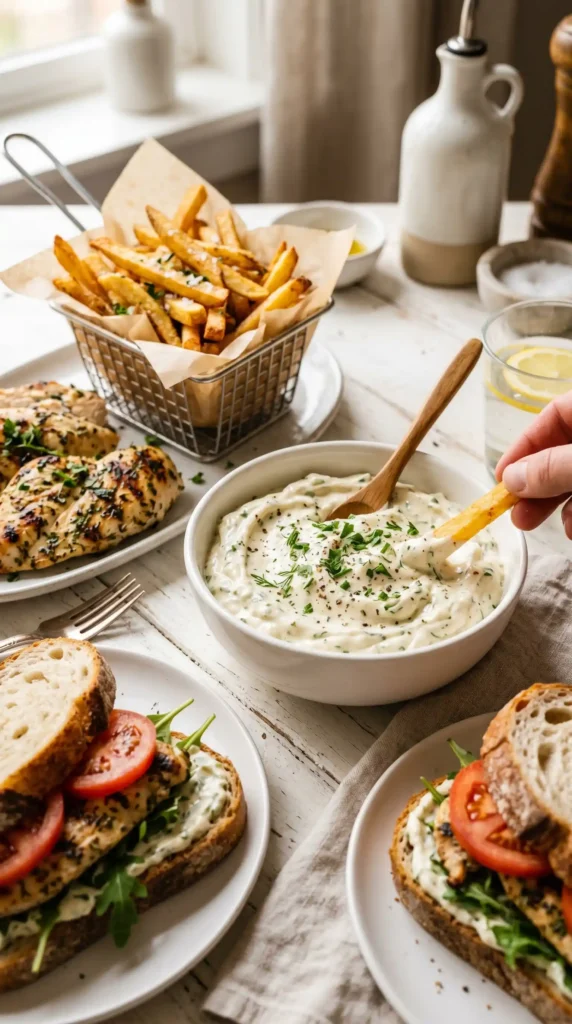
The primary use and the one that converts most people on first taste. Spread generously on both sides of the bread before adding any filling.
Dipping Sauce
Fries, onion rings, chicken tenders, roasted vegetables, and crudités all improve dramatically. The herb notes make it more interesting than plain mayo.
Grilled Chicken and Fish
Spread a thin layer over grilled chicken breast or white fish before serving. It adds moisture and flavour to both in a way that butter alone cannot.
Roasted Vegetables
Toss florets of broccoli or cauliflower in a tablespoon before roasting at high heat. The mayo crisps against the surface and creates a deeply golden, herb-scented coating.
Potato Salad Base
Replace plain mayo in any potato salad recipe with this version. The garlic and herb notes eliminate the need for most other seasonings.
Egg and Tuna Salad
Use it wherever you would use plain mayo in egg salad or tuna salad. The herb and garlic flavours integrate perfectly and eliminate the blandness of the mayo-only version.
What You Need
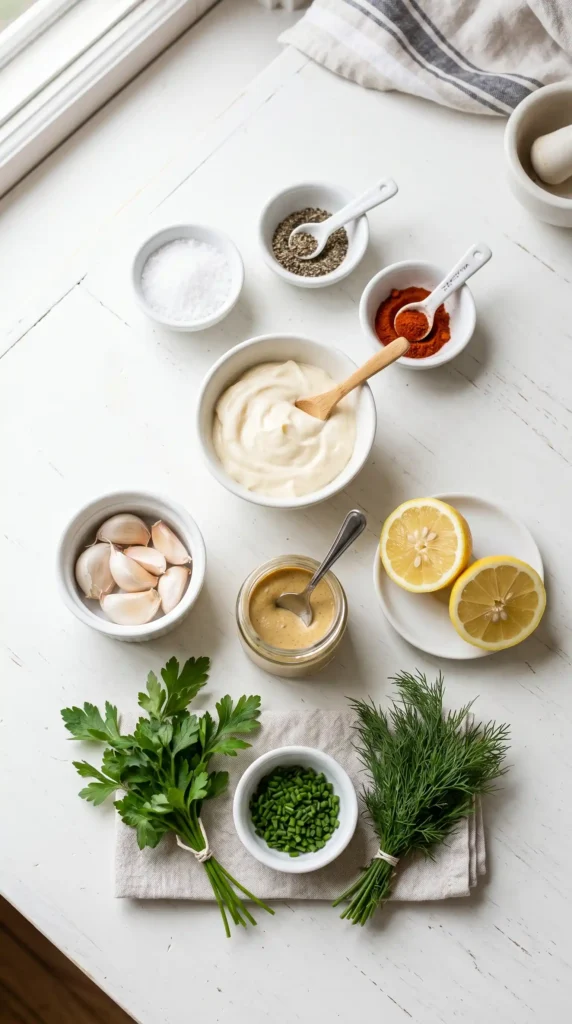
Ten ingredients, most of which live in a standard kitchen. The mayonnaise base matters — use a full-fat, good-quality mayonnaise rather than a reduced-fat or whipped version. Reduced-fat mayo contains more water and less fat, producing a thinner, less stable sauce that tastes weaker and separates faster. The fat in full-fat mayo carries the garlic and herb flavours and gives the sauce its characteristic richness.
The Core Ingredients
- 1 cup (230g) full-fat good quality mayonnaise — Hellmann’s, Duke’s, or Kewpie all work well; Kewpie produces the richest, most rounded base
- 3 garlic cloves, very finely minced or pressed through a garlic press — fine mincing is critical since visible chunks of garlic disrupt the texture
- 1 and 1/2 tablespoons fresh lemon juice (about half a medium lemon)
- 1/2 teaspoon lemon zest — adds a bright, floral citrus note that the juice alone cannot deliver
- 1 tablespoon Dijon mustard
- 3 tablespoons fresh flat-leaf parsley, very finely chopped
- 2 tablespoons fresh chives, finely sliced — or the green tops of spring onions
- 1 teaspoon fresh dill, finely chopped (optional — adds a subtle herby complexity)
- 1/2 teaspoon smoked paprika
- 1/4 teaspoon salt
- 1/4 teaspoon black pepper
- Pinch of cayenne pepper (optional, for a very subtle background heat)
Microplane the Garlic — Do Not Just Mince ItA garlic press or a fine microplane produces a smooth garlic paste that distributes invisibly and evenly throughout the mayo. Standard knife-mincing, no matter how fine, leaves small garlic pieces that create sharp, uneven bursts of garlic flavour rather than the smooth, integrated garlic note you want throughout every bite. FYI — the texture difference is significant. If you do not have a microplane, use the back of a knife to smear the minced garlic into a paste against the cutting board before adding it to the mayo.
How to Make Garlic Herb Mayo Sauce Step by Step
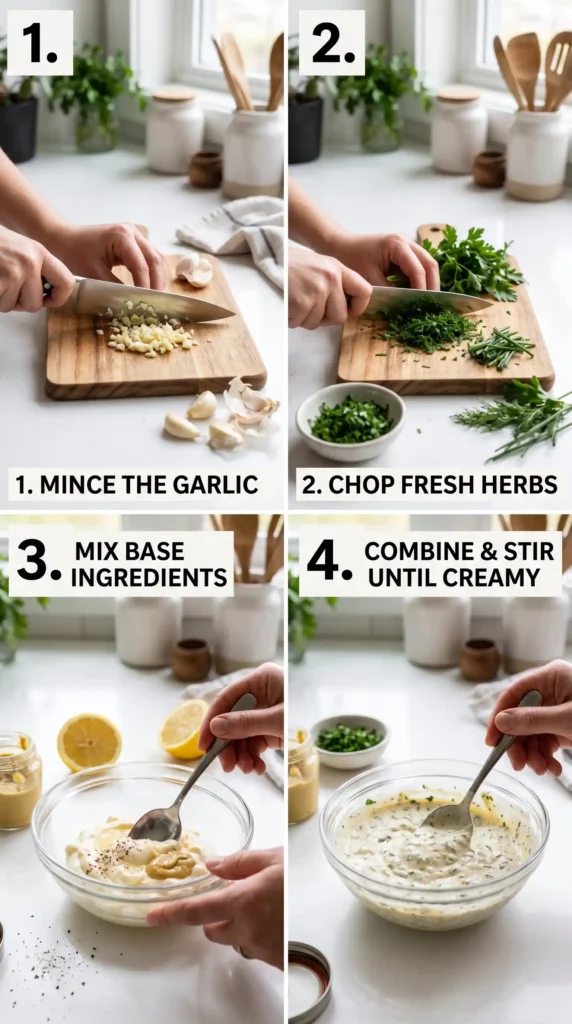
This recipe takes five minutes start to finish. The steps are genuinely simple — the quality of the finished sauce comes from the quality of the ingredients and the thoroughness of the mixing rather than from any complex technique. That said, doing each step properly produces a noticeably better result than rushing through them. Let us walk through each stage in detail.
Step 1: Prepare the Garlic
The garlic preparation is the single step that most significantly affects the finished sauce. Peel the three garlic cloves and run them through a garlic press directly into a small bowl — catch every drop of the press, including the juice. If you do not have a garlic press, mince the garlic as finely as possible with a sharp knife, then use the flat side of the knife blade to repeatedly smear the pile of minced garlic across the cutting board, pressing down firmly with the blade as you drag it away from you. Repeat this smearing motion four or five times until the garlic forms a smooth, wet paste rather than a pile of distinct pieces.
Add a very small pinch of salt to the garlic paste at this stage and work it in with your fingertip or the knife blade — the salt helps break down the garlic cells and draws out the oils that carry the garlic flavour, producing a slightly more mellow, integrated garlic note rather than the sharp, raw bite of unprepared minced garlic. This preparation step takes an additional 30 seconds and produces a noticeably smoother garlic flavour in the finished sauce.
Step 2: Chop the Fresh Herbs
Place the flat-leaf parsley and chives on a cutting board. Run a sharp knife through them with a rocking motion, keeping the tip of the blade on the board and lifting the handle in short, rapid strokes until the herbs are very finely chopped — you want pieces no larger than 2–3mm across. This level of fineness ensures the herbs distribute evenly throughout the sauce rather than clumping together, and means no guest gets an unpleasantly large mouthful of herb.
The freshness of the herbs matters. If you are using parsley that has been sitting in the fridge for several days, check that it still smells bright and herby when you rub a leaf between your fingers — parsley that smells flat or faintly musty has lost its volatile aromatic compounds and will not contribute the vibrant green freshness to the sauce that you are aiming for. Same principle applies to the chives and dill. Fresh herbs are essential here; this is not the recipe to use the sad herb at the back of your fridge.
Step 3: Combine Everything
In a medium bowl, combine the full-fat mayonnaise, garlic paste, lemon juice, lemon zest, and Dijon mustard. Whisk everything together thoroughly — not just a few quick stirs, but a proper 30–45 seconds of vigorous whisking that fully incorporates the mustard and lemon juice into the mayo and produces a uniform, slightly lighter-looking base. The lemon juice will loosen the mayo slightly and the mustard will give it a faintly yellow tint throughout.
Add the finely chopped parsley, chives, and dill if using to the whisked mayo base. Add the smoked paprika, salt, black pepper, and cayenne if using. Fold everything together with a rubber spatula using gentle, thorough strokes until every herb is evenly distributed throughout the sauce and the smoked paprika has coloured the sauce a very faint warm gold throughout. Taste the sauce now — this tasting step is essential.
The sauce should taste creamy, brightly garlicky, fresh from the herbs and lemon, and slightly smoky from the paprika. If the garlic feels too strong, balance it with a small squeeze of lemon juice. If the sauce tastes flat, adjust it with a pinch of salt. For a brighter herb flavor, simply add a bit more chopped parsley.Adjust until the sauce tastes assertive and well-rounded — it should have a clear personality of its own, not just taste like complicated mayo.
Step 4: Rest and Let the Flavours Develop
Transfer the finished sauce to a clean jar or airtight container. You can use it immediately — it already tastes excellent right after mixing — but 15–30 minutes of resting in the refrigerator significantly improves the flavour. During resting, the garlic mellows slightly from sharp and raw to more integrated and rounded, the herbs release more of their aromatic oils into the mayo base, and the lemon brightens the entire flavour profile as it permeates throughout.
After resting, stir the sauce briefly before serving since the herbs and garlic may have settled slightly toward the bottom of the container during chilling. Taste one more time after resting — you will notice the difference from the just-mixed version. The garlic tastes more integrated, the herbs taste more present throughout, and the whole sauce tastes more cohesive and complete. This is the version worth serving.
The Difference Between Fresh Lemon Juice and Bottled — It Matters HereFresh lemon juice contains aromatic compounds and volatile citrus oils that bottled juice loses during pasteurisation and storage. In a sauce this simple, with so few ingredients, every single element counts. Bottled lemon juice adds acidity. Fresh lemon juice adds acidity plus brightness, freshness, and a genuine citrus note that makes the sauce taste alive rather than just sour. Use fresh.
Variations Worth Making
Roasted Garlic Version
Replace the raw minced garlic with the soft, caramelised paste from a full roasted garlic head — cut the top off a whole garlic head, drizzle with olive oil, wrap in foil, and roast at 200°C for 35–40 minutes until the cloves are soft and golden throughout. Squeeze the entire head to push the paste out and fold it into the mayo. Roasted garlic produces a sweeter, deeper, more mellow garlic flavour that is completely different from raw garlic’s sharpness.
Chipotle Herb Mayo
Add 1 tablespoon of chipotle peppers in adobo sauce, finely minced, to the base recipe. Replace the smoked paprika with an extra teaspoon of the adobo sauce. The chipotle adds smoky heat and a slightly earthy depth that transforms this from a fresh herb sauce into a bold, smoky condiment with genuine kick. This version works especially well with grilled chicken, fish tacos, and roasted sweet potato.
Lemon Basil Mayo
Replace the parsley and chives with 3 tablespoons of fresh basil, very finely chopped. Add an extra half teaspoon of lemon zest and reduce the garlic to 2 cloves. The basil version has a more distinctly Italian-inspired flavour profile — sweet, aromatic, and bright — that works beautifully with grilled fish, tomato-based dishes, caprese salads, and any Mediterranean-inspired food. This is a lighter-tasting version that suits summer cooking especially well.
Storage Tips
Store Garlic Herb Mayo Sauce in an airtight jar or container in the refrigerator for up to 7 days. The sauce is at its absolute best on days two and three, when the garlic has fully mellowed and the herbs have infused throughout the entire mayo base. By day five or six, the garlic may have become more pungent and the herbs may have lost some of their vibrancy — still entirely usable, but past its peak.
Always use a clean spoon when removing sauce from the container — double-dipping food directly into the jar introduces bacteria that significantly shortens the sauce’s refrigerator life. Keep the jar covered when not in use since the garlic can impart its aroma to other items in the fridge. The sauce does not freeze well — mayo separates during freezing and thawing into an oily, grainy mess regardless of technique.
Frequently Asked Questions
Can I use garlic powder instead of fresh garlic?
Yes, though the flavour difference is noticeable. Use 1/2 teaspoon of garlic powder in place of 3 fresh garlic cloves — garlic powder is more concentrated but lacks the fresh, pungent, slightly sharp quality of raw garlic. For a version that sits between the two, use 1 clove of fresh minced garlic plus 1/4 teaspoon of garlic powder. This gives you the fresh garlic sharpness alongside the more mellow powder note and works well when you want a slightly less assertive garlic presence in the finished sauce.
Can I make Garlic Herb Mayo Sauce vegan?
Yes. Use a vegan mayonnaise made from plant-based oils — several brands make excellent versions using aquafaba (chickpea water) as the emulsifying base rather than egg yolk. Vegan mayo is slightly thinner than egg-based mayo in some brands, so the finished sauce may be looser in consistency. All other ingredients are naturally vegan, including the fresh herbs, lemon, Dijon mustard, and paprika. The flavour result is essentially identical to the original version.
How do I make the garlic flavour less sharp?
Three approaches soften sharp garlic flavour. First, allow the sauce to rest in the refrigerator for at least 30 minutes before serving — the garlic mellows significantly during resting. Second, reduce the quantity from 3 cloves to 2. Third, use roasted garlic instead of raw — the caramelisation process converts the sharp sulphur compounds in raw garlic into sweeter, mellower flavour molecules that produce a completely different garlic note. Any one of these works; combining all three produces the mildest possible garlic flavour while maintaining the garlic character.
What is the best mayonnaise to use as the base?
Kewpie Japanese mayonnaise produces the richest, most rounded base because it uses only egg yolks rather than whole eggs and adds a small amount of MSG and rice vinegar — the result is creamier, slightly more complex, and subtly sweeter than American-style mayo. Hellmann’s (Best Foods in the US) makes an excellent standard mayo that balances richness with a clean flavour that does not compete with the garlic and herbs. Duke’s has a tangier profile that adds character. Avoid generic store-brand mayo, which often tastes flat and underseasoned.
Can I add other herbs to this recipe?
Yes — the base recipe with parsley and chives is a starting point, not a strict formula. Tarragon adds a subtle anise note that works beautifully in a French-inspired direction. Basil adds a sweet, aromatic quality perfect for Mediterranean applications. Cilantro produces a more pungent, distinctly Latin-inspired flavour that pairs well with Mexican and Asian dishes. Fresh mint works well with lamb and grilled meats. The guiding principle is to keep the total herb quantity at about 4–5 tablespoons regardless of which herbs you choose, to maintain the right herb-to-mayo balance.
Final Thoughts
This Garlic Herb Mayo Sauce earns the title of most useful five-minute recipe in your kitchen repertoire. It upgrades sandwiches, transforms dips, improves grilled proteins, enhances roasted vegetables, and replaces the bland functionality of plain mayo with something that actually has a flavour identity worth experiencing. The five minutes it takes to make is the best five minutes of improvement available to any meal.
Make it once and it replaces the store-bought garlic mayo in your fridge permanently. Make it twice and you will start finding new applications for it that you never considered. Keep it in your fridge as a standing ingredient and the quality of your casual cooking will increase noticeably — and everyone who eats at your table will notice without knowing exactly why.
Mince that garlic properly. Chop those herbs finely. Taste it before you put it away. And then spread it on something immediately because waiting for a proper occasion is genuinely unnecessary when this takes five minutes to make again whenever you run out.
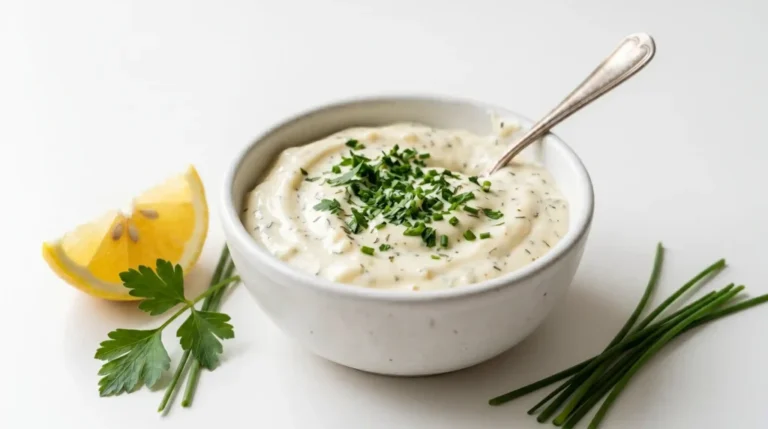
Garlic Herb Mayo Sauce
Ingredients
Method
- Peel the garlic cloves and run them through a garlic press directly into a small bowl. Alternatively, mince garlic finely and make a paste with a knife.
- Add a very small pinch of salt to the garlic paste and work it in with your fingertip or knife blade.
- Chop the parsley and chives finely using a sharp knife.
- In a medium bowl, combine the mayonnaise, garlic paste, lemon juice, lemon zest, and Dijon mustard. Whisk thoroughly.
- Add the chopped herbs, smoked paprika, salt, black pepper, and cayenne if using. Fold everything together gently until evenly distributed.
- Transfer to an airtight container and let the sauce rest in the refrigerator for at least 15-30 minutes for flavors to develop.
- Stir briefly before serving and taste for adjustments.