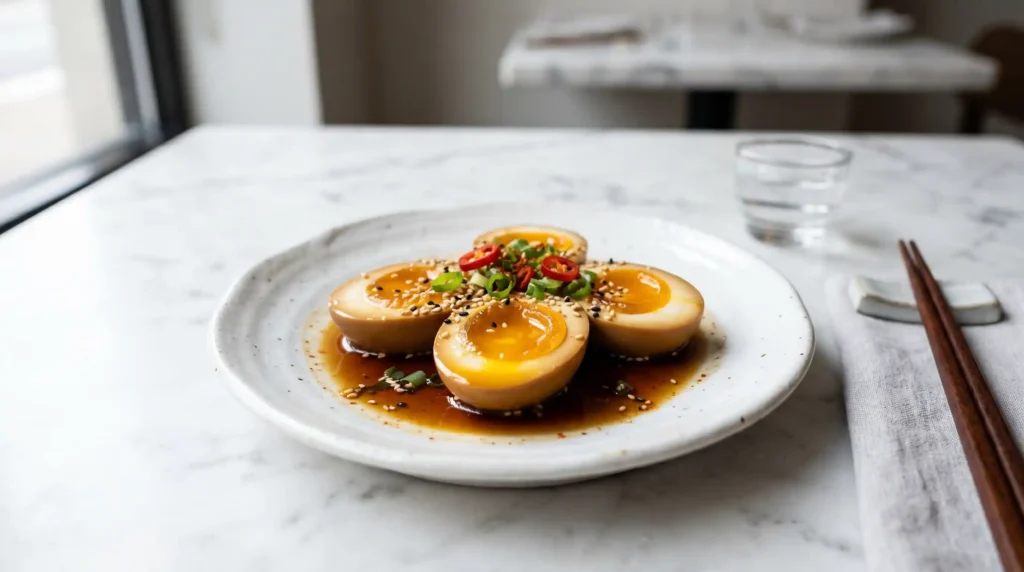
Servings: 6 eggs (serves 2-3) | Prep Time: 10 minutes | Cook Time: 7 minutes | Marinating Time: At least 4 hours (overnight is best) | Total Active Time: About 20 minutes
Some recipes change the way you think about a single ingredient forever. Korean Mayak Eggs did that to me with eggs. I tried them for the first time at a Korean restaurant, and I genuinely could not believe what I was eating. A simple egg — somehow transformed into something deeply savory, silky, and completely addictive.
Mayak (마약) literally translates to ‘narcotic’ in Korean. That name is not an accident. These eggs are so good they border on dangerous. Once you make a batch, you will find yourself sneaking one out of the fridge at midnight. Fair warning.
The best part? The whole recipe takes about 20 minutes of actual work. The marinade does everything else while you sleep. Let me show you exactly how to make them.
What Are Korean Mayak Eggs, Exactly?
Korean Mayak Eggs are soft-boiled eggs marinated in a bold, savory sauce made from soy sauce, sesame oil, garlic, and a few other pantry staples. The eggs soak up the marinade for hours, turning the whites a gorgeous deep amber while the yolk stays jammy and golden.
They are a staple banchan (Korean side dish) and have exploded in popularity globally thanks to food content creators sharing them online. But Koreans have been making these at home for generations — this is not a trend, it’s a tradition.
You serve them over rice, use them as ramen toppers, eat them straight from the container, or slice them onto toast. The versatility alone makes this recipe worth learning.
Korean Mayak Eggs Ingredients
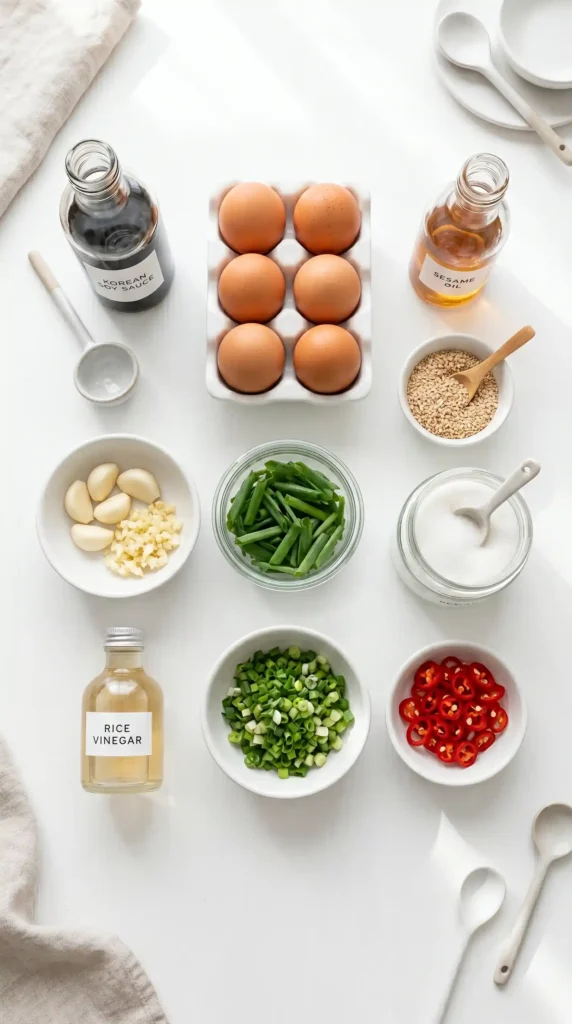
The ingredient list is short and most of it lives in a well-stocked Asian pantry. If you cook Korean or Japanese food occasionally, you probably already have most of this.
For the Eggs:
- 6 large eggs (room temperature works best)
- Water for boiling
- Ice and cold water for the ice bath
For the Marinade:
- 1/2 cup soy sauce (use regular or low-sodium — both work)
- 1/2 cup water
- 3 tablespoons sugar (white or brown, your choice)
- 2 tablespoons sesame oil
- 3 cloves garlic, finely minced
- 3 stalks green onion, thinly sliced
- 1-2 red or green chilies, thinly sliced (adjust to your spice tolerance)
- 1 tablespoon toasted sesame seeds
- 1 teaspoon rice vinegar (optional, adds a subtle brightness)
FYI — the chili is optional if you want a milder version, but it genuinely adds a lot of character to the marinade. Even a little bit of heat cuts through the soy richness beautifully.
How to Make Korean Mayak Eggs – The Full Process
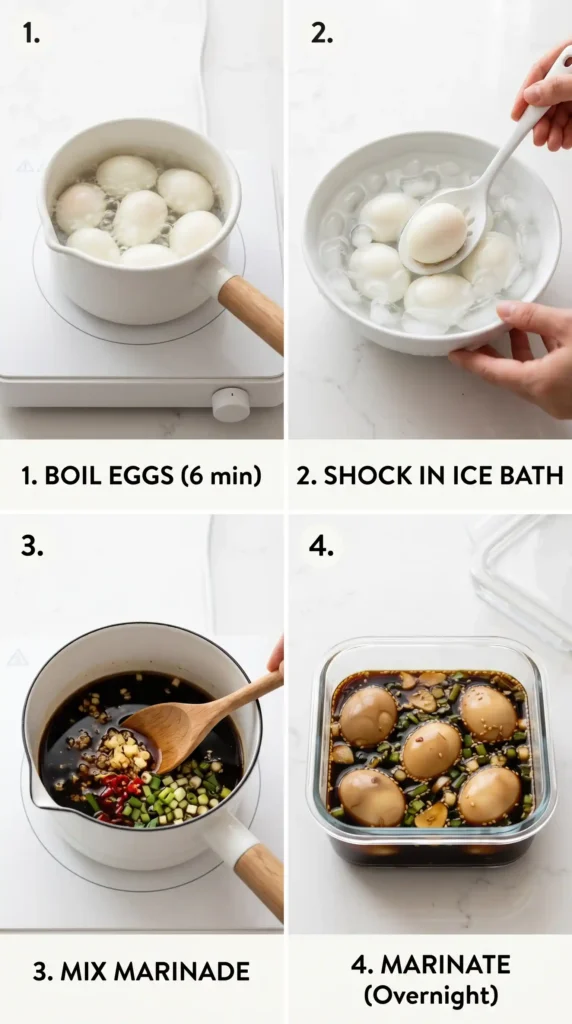
This recipe has two stages: cooking the eggs perfectly and building the marinade. Neither step is complicated, but both deserve your full attention. Get either one wrong and the whole thing suffers. So let’s get it right.
Stage 1 — Cooking the Perfect Soft-Boiled Eggs
Bring the Eggs to Room Temperature
The eggs are the foundation of Korean Mayak Eggs, so texture matters. You want firm whites with soft, jammy yolks that absorb the marinade beautifully. For best results, let the eggs sit at room temperature for 15–20 minutes before cooking. This helps prevent cracking when they enter the boiling water.
Boil the Eggs
Fill a medium saucepan with enough water to fully cover the eggs and bring it to a full rolling boil over high heat. Wait until the water is actively boiling before adding the eggs.
Using a spoon or ladle, gently lower each egg into the water one at a time to avoid cracking. Start the timer as soon as the last egg goes in. Cook the eggs for exactly 7 minutes for the ideal jammy center. Six minutes gives a runnier yolk, while eight minutes creates a firmer texture.
Prepare the Ice Bath
While the eggs cook, prepare a large bowl filled with ice and cold water. Once the timer rings, immediately transfer the eggs into the ice bath using a slotted spoon. Let them cool for at least 5 minutes. This stops the cooking process instantly and also makes peeling easier.
Peel the Eggs Carefully
After chilling, gently crack the wider end of each egg and peel under cold running water. The water helps separate the shell from the egg white for a cleaner peel. Once peeled, pat the eggs dry with paper towels and handle them carefully since soft-boiled eggs are more delicate than hard-boiled ones.
Stage 2 — Making the Marinade
The marinade is where all the flavor lives. It takes about 5 minutes to put together and the result is a deeply savory, aromatic liquid that slowly transforms plain eggs into something extraordinary.
Combine the 1/2 cup of soy sauce and 1/2 cup of water in a small saucepan. The water dilutes the salt level so the eggs do not end up overpoweringly salty after a long soak. Stir to combine.
Add the 3 tablespoons of sugar to the soy sauce and water mixture. Place the saucepan over medium heat and stir gently until the sugar fully dissolves. This only takes about 2-3 minutes. Do not boil the mixture — just heat it enough for the sugar to melt.
Remove the saucepan from the heat and let the base marinade cool down to room temperature. Adding the garlic and sesame oil to hot liquid cooks them slightly and dulls their flavor. You want everything fresh and bright, so patience matters here.
Once the marinade base is cool, add the 3 cloves of minced garlic, the sliced green onions, and the sliced chilies. Stir everything together. The raw garlic and fresh onion go in now so they stay punchy and aromatic rather than mellow and cooked.
Add the 2 tablespoons of sesame oil and the 1 tablespoon of toasted sesame seeds. If you are using the optional rice vinegar, add 1 teaspoon now. Stir the whole marinade one final time to bring everything together.
Stage 3 — Marinating the Eggs
Place your peeled soft-boiled eggs into a clean zip-lock bag or an airtight container with a lid. A zip-lock bag works especially well because it lets you use less marinade while still coating every egg completely.
Pour the cooled marinade over the eggs. If using a bag, press out the excess air before sealing so the eggs sit fully submerged in the liquid. If using a container, make sure the marinade covers the eggs as much as possible.
Refrigerate the eggs for a minimum of 4 hours. Overnight marinating (8-12 hours) produces significantly more flavor and gives the whites that beautiful deep amber color that Korean Mayak Eggs are known for. The longer they sit, the more intense the flavor becomes.
Turn the bag or gently stir the container once or twice during marinating if you remember. This ensures even color and flavor on all sides of each egg. It is not essential, but it helps.
After marinating, remove the eggs from the liquid. Slice them in half lengthwise and serve immediately over hot steamed rice. Drizzle a little of the remaining marinade over the top as a sauce. Add a sprinkle of sesame seeds and extra green onion if you want a polished finish.
How to Serve Korean Mayak Eggs
These eggs are incredibly versatile. Here are the best ways to use them once they finish marinating.
- [object Object]The classic. Halve two eggs over a bowl of hot rice, add a spoonful of marinade, and call it a perfect meal.
- [object Object]Slice one egg and lay it on top of a bowl of ramen or any noodle soup. It takes the bowl from good to great.
- [object Object]Halve the eggs and serve them over avocado toast, grain bowls, or bibimbap for extra depth.
- [object Object]Completely acceptable. IMO, this is the most honest way to eat them.
- [object Object]They travel well and add protein and flavor to any packed lunch.
How Long Do Korean Mayak Eggs Last?
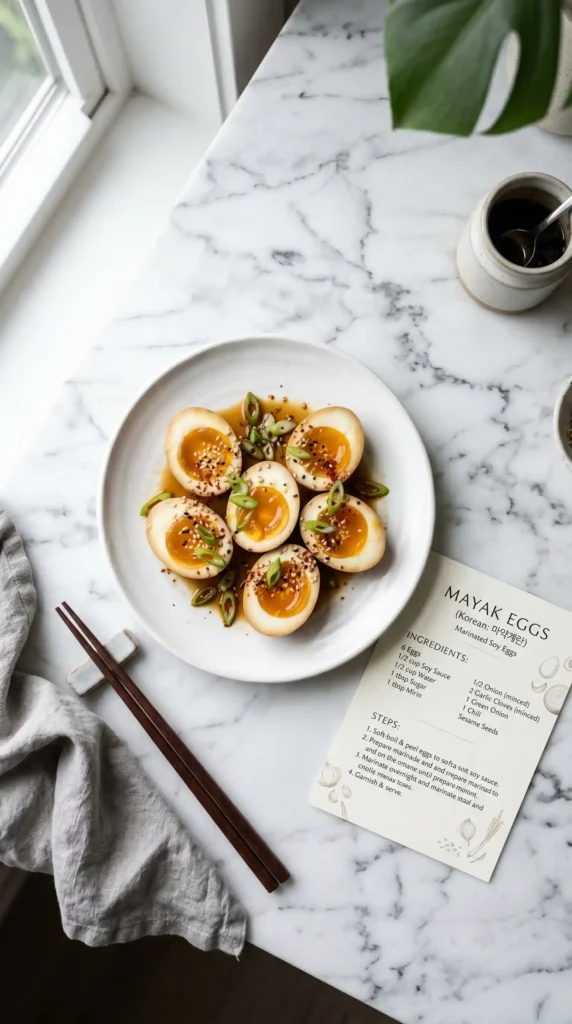
In the marinade: Keep the eggs submerged in the marinade in the fridge for up to 5 days. The flavor intensifies over time, so day 2 or 3 often tastes even better than day 1.
Out of the marinade: Once you remove the eggs from the liquid, eat them within 24 hours for the best texture. The whites can toughen slightly if they sit too long exposed to air.
Can you freeze them? No. Freezing destroys the texture of the soft-boiled egg completely. Make fresh batches — they are quick enough that it is not a hardship.
Tips for Perfect Korean Mayak Eggs Every Time
- [object Object]Fresher eggs are harder to peel. Slightly older eggs (5-7 days old) actually peel more cleanly. Counterintuitive but true.
- [object Object]For jammy yolks, do not deviate. Set a proper timer, not a mental one.
- [object Object]Hot liquid kills the brightness of raw garlic and sesame oil. Patience pays off.
- [object Object]Less marinade needed, and every egg gets fully coated without gaps.
- [object Object]It stops cooking immediately and makes peeling dramatically easier.
Frequently Asked Questions About Korean Mayak Eggs
1. Why are they called Mayak eggs?
Mayak means ‘narcotic’ or ‘drug’ in Korean. The name reflects just how addictive these eggs are — once you try them, stopping at one feels genuinely impossible. It is a playful, hyperbolic name that most people who make them agree is completely earned.
Can I use hard-boiled eggs instead of soft-boiled?
You can, but the result is notably less impressive. Hard-boiled eggs do not absorb the marinade as deeply, and the texture is much less interesting. The jammy, slightly custardy yolk is what makes Korean Mayak Eggs special. Soft-boiled is non-negotiable if you want the authentic experience.
How long should I marinate them for the best flavor?
The minimum is 4 hours, but overnight (8-12 hours) gives you the best flavor and the deepest color on the whites. Some people marinate for up to 24 hours for an even more intense result. Beyond 24 hours, the whites can start to get rubbery from the salt, so do not push past that.
Can I reuse the marinade for a second batch?
Yes, you can reuse it once. After the first batch of eggs, strain the marinade into a clean container and refrigerate. For the next batch, bring it to a brief boil to kill any bacteria, let it cool completely, then use it again. Add a fresh splash of sesame oil and some new green onion before using.
My eggs turned out too salty — what went wrong?
This usually means the marinade had too much soy sauce relative to water, or the eggs marinated for too long. Always use the 1:1 ratio of soy sauce to water. And if you know you are sensitive to salt, use low-sodium soy sauce and reduce the marinating time to 4-6 hours instead of overnight.
Final Thoughts on Korean Mayak Eggs
Korean Mayak Eggs are one of those recipes that punches way above its weight. The ingredients are cheap, the technique is simple, and the result is something you will genuinely be proud to put on the table.
The key is nailing your soft-boil at exactly 7 minutes, cooling the marinade before adding your aromatics, and giving the eggs enough time to soak. Do those three things and you get perfect results every single batch. Make your first batch this week. Eat them over rice on the first night, sneak one at midnight, and then make another batch because somehow they disappear faster than you expected. You have been warned.
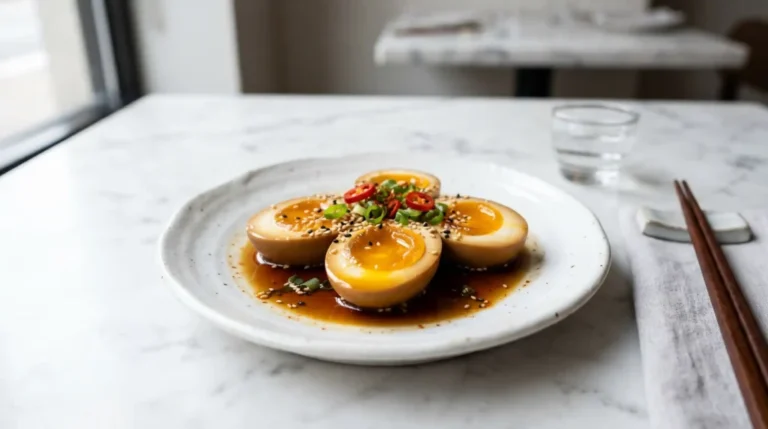
Korean Mayak Eggs
Ingredients
Method
- Bring the eggs to room temperature, letting them sit for 15-20 minutes.
- Fill a medium saucepan with water and bring it to a rolling boil.
- Gently lower each egg into the boiling water and cook for exactly 7 minutes.
- Prepare an ice bath while the eggs are cooking.
- Transfer the eggs to the ice bath for at least 5 minutes once cooked.
- Gently peel the eggs under cold running water and pat dry.
- In a small saucepan, combine soy sauce and water.
- Add sugar and heat until dissolved, but do not boil.
- Remove from heat and let the marinade cool to room temperature.
- Add minced garlic, sliced green onions, and chilies to the cooled marinade.
- Stir in sesame oil and toasted sesame seeds.
- If using, add rice vinegar and stir everything together.
- Place peeled eggs in a zip-lock bag or airtight container.
- Pour the cooled marinade over the eggs, ensuring they are submerged.
- Refrigerate the eggs for at least 4 hours, preferably overnight.
- After marinating, slice the eggs in half and serve over rice.