The weeknight dinner decision at 5:30pm is one of the more reliably stressful moments in domestic life. You need a dinner that actually tastes good. It should use ingredients you already have on hand. It should be ready in under 40 minutes. Most importantly, it should not leave you with a mountain of dishes afterward.
Sloppy Joe Potato Skillet checks every one of those boxes. It’s quick, satisfying, and made in a single pan. Better yet, the rich, savoury sauce is so good that people often reach for seconds before their first serving has even cooled.
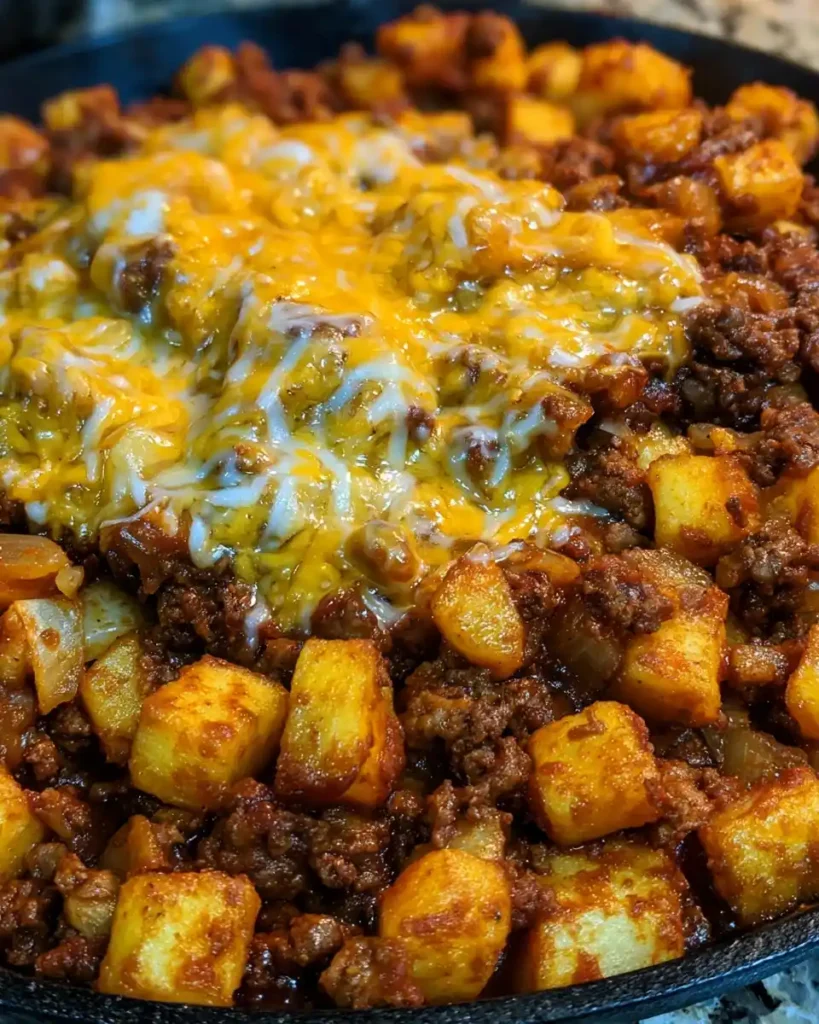
I first started making this on nights when a sloppy joe sounded perfect, but assembling sandwiches felt like more effort than I wanted to give. Swapping the traditional bun for crispy air-fried potatoes transforms the classic filling into a complete one-pan meal. The result is hearty, comforting, and deeply satisfying. It delivers all the familiar sloppy joe flavours while feeling a little lighter than the sandwich version.The melted cheddar under the broiler seals the deal in the most visually appealing way possible.
Have you ever made something for convenience that turned out to be so good you made it intentionally after that? That is the Sloppy Joe Potato Skillet trajectory for most people who try it. Let us make it.
Why the Sloppy Joe Potato Skillet Format Beats the Original Sandwich
Traditional sloppy joes have one major weakness: the bun quickly becomes soggy. The rich sauce soaks into the bread, causing it to fall apart long before the meal is finished. Crispy potato cubes solve that problem beautifully. They absorb plenty of flavour while keeping their texture, creating a more satisfying bite from start to finish.
Potatoes also make the dish far more substantial. The same amount of sloppy joe filling that would serve four sandwiches becomes a hearty skillet dinner when paired with five medium potatoes. The combination is filling enough to stand on its own, without needing extra side dishes to round out the meal.
The finishing touch is a layer of broiled cheddar cheese. As it melts and bubbles over the skillet, the dish transforms from a simple weeknight meal into something that looks and feels special. Best of all, the broiling step takes only a few minutes but adds tremendous flavour, texture, and visual appeal. It’s a small effort that delivers a big payoff.
Understanding the Sloppy Joe Sauce — What Each Ingredient Does
Seven sauce ingredients, each performing a specific role. Understanding what each element contributes helps you adjust the sauce to your preferred flavour — more tangy, more smoky, more sweet — without guessing. The proportions in this recipe produce a balanced, assertive sauce that suits all ages. Here is the breakdown:
Tomato Sauce (8oz can)
The foundational volume of the sauce. Provides the liquid body, tomato acidity, and deep red colour. Without it, the other sauce ingredients produce a glaze rather than a proper sloppy joe sauce.
Ketchup (1/4 cup)
Adds sweetness, additional tomato concentration, and the slightly vinegary tang that distinguishes sloppy joe sauce from plain tomato sauce. Use a quality ketchup — the flavour difference between generic and quality brands is significant at this quantity.
BBQ Sauce (2 tbsp)
The smokiness element. Provides a background char-note and sweetness that makes the sauce taste more complex than its ingredients suggest. A smoked BBQ sauce produces the strongest result; sweet BBQ produces a milder version.
Mustard (1 tbsp)
The acidity and tang balancer. Cuts through the richness of the ground beef and the sweetness of the ketchup and BBQ sauce. Yellow mustard produces the most classic result; Dijon produces a more complex, slightly spicier note.
Worcestershire (1–2 tbsp)
The umami layer. Adds the specific fermented, savoury depth that makes sloppy joe sauce taste distinctly more complex than a plain tomato-beef mixture. This is the ingredient most people cannot identify when they taste the finished dish.
Garlic + Seasonings
The flavour foundation beneath the sauce. Salt, pepper, onion powder, and paprika season the meat before the sauce goes in — under-seasoned meat produces a sauce that tastes like the condiments rather than a cohesive dish.
What You Need
Sixteen ingredients across the potato seasoning and the skillet components. Every ingredient is a grocery staple — nothing requires a specialist store or advance ordering. The full quantity list below produces exactly 4 servings at genuinely satisfying portion sizes.
For the Crispy Seasoned Potatoes
- 5 small to medium potatoes (about 700g total), peeled and diced into 2cm cubes
- 2 tablespoons olive oil
- Salt and pepper to taste
- 1/2 teaspoon garlic powder
- 1/2 teaspoon paprika
For the Sloppy Joe Mixture
- 1 pound (450g) ground beef — 80/20 or 85/15 fat ratio; leaner ground beef produces a less flavourful sauce
- 1 medium onion, finely chopped
- 1 tablespoon minced garlic
- 1 can (8oz / 227g) tomato sauce
- 1/4 cup ketchup
- 2 tablespoons BBQ sauce
- 1 tablespoon yellow mustard
- 1–2 tablespoons Worcestershire sauce (start with 1, add more to taste)
- 1/2 teaspoon salt + 1/2 teaspoon black pepper (for the beef)
- 1 teaspoon onion powder
- 1 teaspoon paprika
Now For the Cheesy Topping
- 1 cup (about 115g) shredded cheddar cheese — sharp cheddar for more flavour; mild cheddar for a more neutral topping
Air Fryer vs Oven for the Potatoes — Understanding the DifferenceThe air fryer produces the crispiest potato cubes in the least time — 20 minutes at 400°F produces potato cubes that are genuinely crispy on the exterior and fluffy inside. The oven method requires a wire rack set over a baking sheet at 425°F for 25–30 minutes and produces excellent results but with slightly less dramatic crispiness. Both are correct — use whichever you have available. The critical point in either case is that the potato cubes go into the sloppy joe sauce while still warm and crispy, not after cooling, which allows the crispy exterior to absorb a thin coating of sauce without softening completely.
How to Make Sloppy Joe Potato Skillet Step by Step
Everything runs on a parallel timeline — the potatoes cook in the air fryer while the sloppy joe mixture builds in the skillet. Both finish at roughly the same time, which allows immediate combination and eliminates the downtime you would experience if you made them sequentially. Start the potatoes first, then begin the beef immediately after.
Step 1: Season and Cook the Potatoes
Peel the potatoes and cut them into roughly 2cm cubes — a consistent cube size ensures they cook evenly in the air fryer, with every piece reaching the same crispiness at the same time. Uneven pieces produce a mix of overcooked small pieces and undercooked large ones, which means compromising on the texture of some portion of the potatoes regardless of how long you cook them.
Place the diced potatoes in a medium bowl. Drizzle the 2 tablespoons of olive oil over them, then add the salt, pepper, garlic powder, and paprika. Toss thoroughly — the goal is every potato cube coated on every surface in oil and seasoning. Tossing in a bowl rather than on a tray ensures the oil distributes evenly rather than pooling under certain cubes. Seasoning that touches the potato surface directly caramelises and flavours the crust during cooking.
Transfer the seasoned cubes to the air fryer basket in a single layer. If your basket is too small for all the potatoes in one layer, cook them in two batches — stacked potatoes steam rather than fry and produce soft, pale results rather than the crispy cubes you want. Cook at 400°F (200°C) for 20 minutes, shaking the basket vigorously at the 10-minute mark to flip and redistribute the potatoes. The finished potatoes should look deeply golden on at least two sides and feel firm and crispy when pressed with a spoon.
Step 2: Brown the Beef and Build the Sloppy Joe Sauce
While the potatoes cook, heat a large oven-safe skillet over medium-high heat. Add the ground beef and chopped onion together. Break the beef into small, fine crumbles using a wooden spoon or spatula as it cooks — work it into the smallest pieces possible for even distribution through the sauce and consistent texture in every forkful of the finished skillet. Cook for 7–8 minutes, stirring frequently, until the beef shows no pink and the onion has softened to translucency.
If the beef has released significant fat into the pan — more than about 2 tablespoons — drain the excess by tilting the pan and spooning it off, or transferring the beef to a colander briefly. Excess fat produces a sauce that looks greasy and separated rather than cohesive and glossy. A small amount of fat in the pan is fine and adds flavour; a large pool is not.
Add the minced garlic to the browned beef and stir constantly for 60 seconds until fragrant and just beginning to colour. Season the beef with salt, pepper, onion powder, and paprika and stir to distribute the seasoning evenly through the meat.
Add the Worcestershire sauce first — it will sizzle aggressively when it hits the hot pan, which is correct. Stir immediately. Then add the tomato sauce, ketchup, BBQ sauce, and mustard, stirring after each addition to incorporate it into the meat. The sauce will look thin initially — reduce the heat to medium-low and simmer for 8–10 minutes, stirring occasionally, until the sauce thickens and coats the back of a spoon. A properly reduced sauce clings to the beef and potatoes rather than pooling at the bottom of the skillet.
Taste the sauce before combining it with the potatoes. Adjust salt if needed. Add a splash more Worcestershire if the depth is not assertive enough. Add a teaspoon more ketchup if it needs more sweetness. The sloppy joe sauce should taste bold, savoury, slightly sweet, and deeply tomato-forward — if any of those elements feel missing, add the corresponding ingredient in small increments and stir before tasting again.
Step 3: Combine, Top With Cheese, and Broil
When both the potatoes and the sauce are ready, add the crispy air-fried potatoes directly to the skillet with the sloppy joe sauce. Fold them in gently using a spatula with four or five large strokes — the goal is every potato cube coated in a thin layer of sauce while maintaining their crispy exterior. Vigorous stirring breaks the potato cubes apart and produces a uniform mush rather than defined potato pieces in a glossy sauce.
Spread the combined mixture evenly across the skillet. Scatter the shredded cheddar cheese in an even layer across the entire surface — every section of the skillet should have equal cheese coverage so every serving gets equal topping. Switch your oven to the broil setting (high). Place the oven-safe skillet under the broiler on the centre or upper-centre rack and broil for 2–4 minutes until the cheese is completely melted, bubbling actively, and showing light golden-brown spots in places. Watch it every 30 seconds — broiler temperatures vary widely between ovens and cheese can go from perfectly melted to burnt in under a minute.
Remove the finished Sloppy Joe Potato Skillet from the broiler. Allow it to rest for 2 minutes before serving — the sauce continues to bubble after removal and needs a brief moment to settle. Serve directly from the skillet into bowls or onto plates, making sure every serving gets sauce, potato, and a section of the melted cheese crust from the top. Garnish with fresh chopped parsley or sliced spring onions if desired. :/
Variations Worth Making
Sweet Potato Version
Replace the regular potatoes with an equal weight of sweet potatoes, prepared and air-fried in exactly the same way. The sweet potato version produces a distinctly different flavour — the natural sweetness of the sweet potato against the savoury, tangy sloppy joe sauce creates a sweet-savoury balance that many people prefer to the standard version. Reduce the ketchup in the sauce by half to prevent the combined sweetness from becoming excessive.
Pepper Jack Sloppy Joe Skillet
Replace the cheddar with shredded pepper jack cheese and add 1/4 teaspoon of cayenne to the sloppy joe sauce alongside the other seasonings. The spicy cheese melts with a heat that builds through the sweet-tangy sauce and crispy potato combination, producing a version with a genuine kick that suits adults and heat-tolerant households. Serve with sour cream on the side to moderate the heat for anyone who needs it.
Storage and Reheating Tips
Store leftover Sloppy Joe Potato Skillet in an airtight container in the refrigerator for up to 3 days. The potatoes soften slightly during storage as they continue absorbing the sauce — the day-two version has a more unified texture than the just-made one, which some people prefer. Reheat in a skillet over medium heat with a splash of water or beef broth for 4–5 minutes, stirring frequently, until heated throughout.
The sloppy joe beef sauce also freezes excellently for up to 3 months — freeze the sauce separately from the potatoes since frozen and thawed potatoes become mealy rather than crispy. Make fresh potatoes on the day of serving and combine with the reheated sauce for a version that takes only 20 minutes of active time from frozen sauce to finished skillet.
Frequently Asked Questions
Can I make Sloppy Joe Potato Skillet without an air fryer?
Yes. Roast the seasoned potato cubes in an oven preheated to 220°C (425°F) on a wire rack set over a lined baking sheet for 25–30 minutes, flipping once at the halfway point. The wire rack elevates the potatoes off the pan surface and allows hot air to circulate underneath, producing a crispier bottom than potatoes resting directly on a sheet. The oven version takes 5–10 minutes longer than the air fryer but produces excellent results. Alternatively, pan-fry the seasoned cubes in 2 tablespoons of oil in a separate skillet over medium-high heat for 15–18 minutes, turning regularly.
Can I use a different type of meat?
Yes. Ground turkey works as the most direct substitute — use 93% lean for enough fat to stay flavourful. Ground chicken produces a slightly lighter result with a milder flavour. For a more intensely flavourful substitute, use 50/50 ground beef and Italian sausage — remove the sausage from its casing before browning and cook as you would the ground beef. The sauce and potato quantities stay identical regardless of the protein. For a vegetarian version, use finely chopped mushrooms and black lentils combined — the mushrooms provide meaty texture while the lentils provide the protein body the dish needs.
What kind of potatoes work best in this recipe?
Waxy potatoes — Yukon Gold, red potatoes, or fingerlings — hold their shape best in the air fryer and maintain a slightly firmer texture when combined with the sauce, which produces more textural contrast in the finished skillet. Starchy potatoes like Russets produce a fluffier, slightly softer result that some people prefer for its contrast with the firm meat texture. Both are correct choices. Avoid very small potatoes that cook too quickly before developing a golden exterior and very large ones that require longer cooking times that may not align with the sauce completion time.
My skillet is not oven-safe. How do I melt the cheese?
Two alternatives work if your skillet cannot go under the broiler. First, add the cheese, place a tight-fitting lid on the skillet, and reduce the heat to low for 2–3 minutes — the trapped steam melts the cheese from above without any oven required. Second, add the cheese, then place a sheet of foil loosely over the skillet and hold the edges against the sides — the foil traps heat and melts the cheese in about the same time. Neither method produces the slight browning of the broiled version but both produce fully melted, gooey cheese that suits the finished dish.
Can I make this ahead of time for meal prep?
Yes, with an important caveat. Make the sloppy joe sauce ahead and refrigerate or freeze it separately. Cook fresh potatoes on the day of serving — potatoes that have been cooked, refrigerated, and then reheated lose their crispy exterior and become uniformly soft, which changes the textural character of the dish significantly. The sauce improves overnight as the flavours meld, so making it 1–2 days ahead and combining with fresh potatoes on serving day produces the best possible result from a make-ahead approach. The active day-of work reduces to air frying the potatoes and reheating the sauce, which takes about 22 minutes.
Final Thoughts
This Sloppy Joe Potato Skillet solves the weeknight dinner problem as directly and satisfyingly as any recipe available — 35 minutes, one pan for the final result, four genuinely satisfied people, and a sauce that tastes like something that took considerably longer than it did. The crispy potato base, the savoury-sweet-tangy sauce, and the broiled cheddar top produce a complete dinner that earns its place in any regular weeknight rotation without qualification.
Season the potatoes before air frying. Brown the beef properly. Reduce the sauce until it clings. Add the potatoes while they are still crispy. Broil the cheese until it bubbles. These five sequenced decisions produce the best possible version of a recipe that is already fast, practical, and consistently crowd-pleasing at every table.
Make it tonight with whatever potatoes are in the kitchen and whatever ground beef is in the fridge. Accept that it will immediately enter the weeknight dinner rotation. And try not to be too surprised when people ask for it again before the skillet is back in the cupboard. FYI — that outcome is essentially guaranteed.
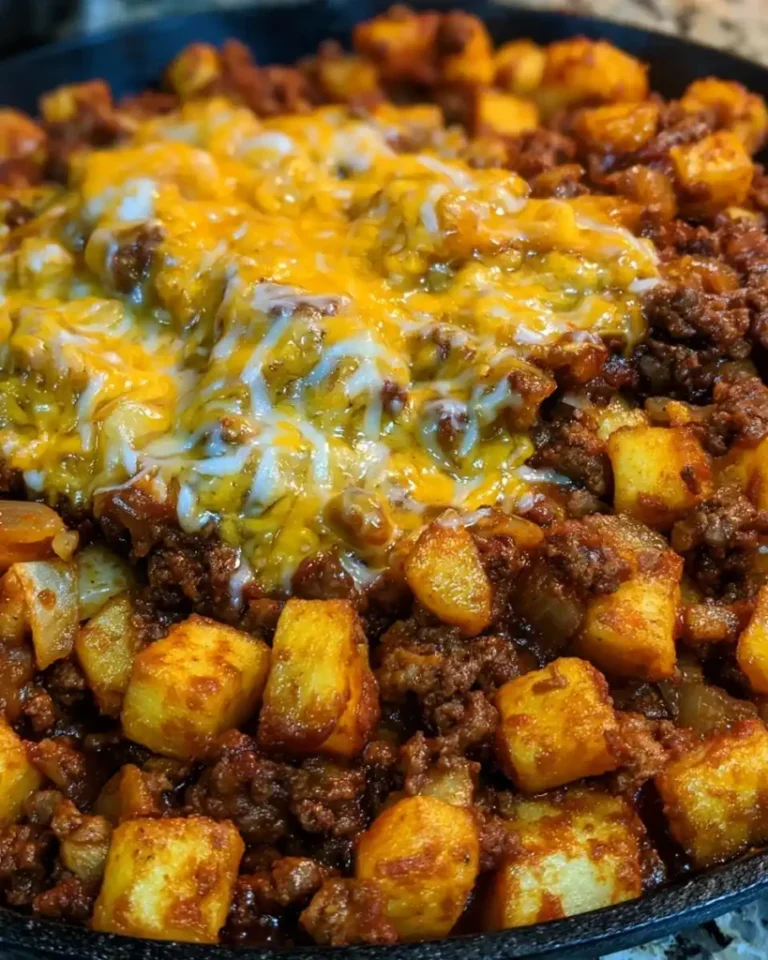
Sloppy Joe Potato Skillet
Ingredients
Method
- Peel the potatoes and cut them into roughly 2cm cubes.
- In a medium bowl, toss the diced potatoes with olive oil, salt, pepper, garlic powder, and paprika.
- Transfer the seasoned cubes to the air fryer basket in a single layer and cook at 400°F (200°C) for 20 minutes, shaking the basket at the 10-minute mark.
- In a large oven-safe skillet, heat over medium-high heat and add the ground beef and chopped onion.
- Break the beef into small, fine crumbles as it cooks.
- Cook for 7–8 minutes, stirring frequently, until the beef is browned and onion is softened.
- Add the minced garlic and stir for 60 seconds until fragrant.
- Season with salt, pepper, onion powder, and paprika.
- Add Worcestershire sauce, followed by tomato sauce, ketchup, BBQ sauce, and mustard, stirring after each addition.
- Reduce heat to medium-low and simmer for 8–10 minutes until sauce thickens.
- Once both potatoes and sauce are ready, fold the crispy potatoes into the skillet with the sauce gently.
- Spread mixture evenly and top with shredded cheddar cheese.
- Switch the oven to broil and place the skillet under the broiler for 2–4 minutes until cheese is melted and bubbly.
- Let it rest for 2 minutes before serving.