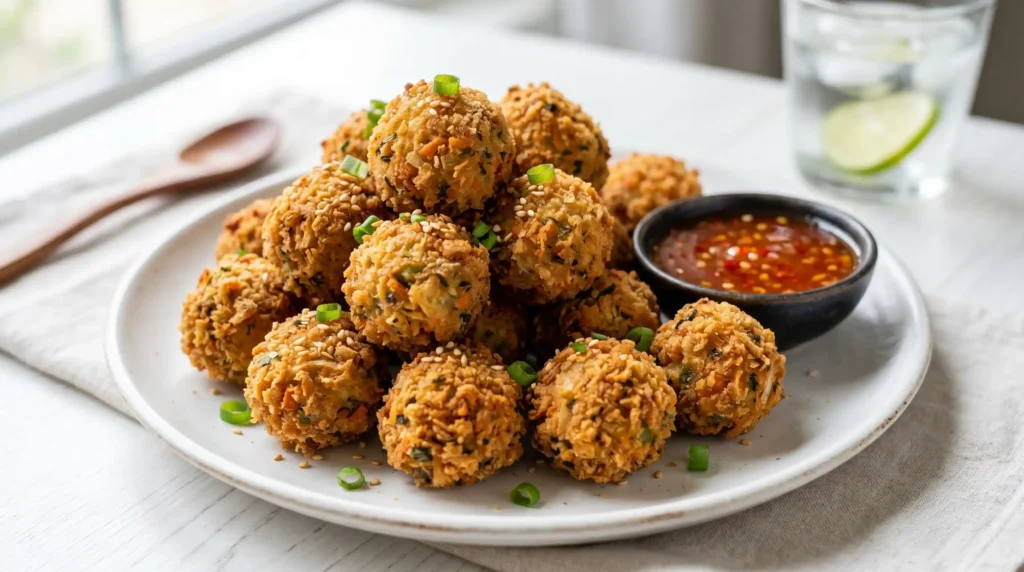
Street food in the Philippines is an entire culture on its own. And right in the middle of that culture sits one of the most underrated small business ideas you will ever come across –Veggie Balls Pangnegosyo. Affordable ingredients, high demand, and margins that actually make sense. Sound interesting?
I first tried selling these at a local school fair three years ago as a side hustle experiment. I expected to break even. Instead, I sold out in two hours and had people asking when I was coming back. That was all I needed to start taking this recipe seriously.
Whether you want to start a small food stall, sell on social media, or just make an impressive snack for the family, this recipe delivers. Let me walk you through everything from ingredients to frying tips to building a pricing strategy that actually works.
What Are Veggie Balls Pangnegosyo?
Veggie balls are crispy, bite-sized fried snacks made primarily from vegetables bound together with flour and seasoning. Think of them as a more economical, vegetable-forward version of fishballs or kikiam — but with a lower food cost and a broader appeal to health-conscious customers.
The term pangnegosyo means ‘for business’ in Filipino. It signals that this is not just a recipe for home cooking — it is a recipe specifically designed to be scalable, affordable to produce in bulk, and profitable enough to support a real income stream.
The combination of crispy exterior, savory filling, and the option to pair them with sweet, spicy, or vinegar-based dipping sauces makes these incredibly versatile. They work as street food, school canteen items, turo-turo offerings, or even packaged frozen products.
Why Veggie Balls Make Perfect Business Sense
Let’s talk numbers for a second. The main ingredients — cabbage, carrots, potatoes, and a few pantry staples — cost very little per batch. A single recipe yields 40-50 pieces. Sold at 5-10 pesos per piece at a street food stall, the profit margin on each batch is genuinely impressive.
Vegetables are also consistent in price and availability year-round compared to meat-based alternatives. You do not face the same supply chain volatility that hits pork or chicken prices. That consistency makes budgeting and pricing far more predictable for a new business.
IMO, the veggie angle also opens a market segment that fishballs miss entirely — customers who want meatless options. That includes students, budget-conscious families, and people choosing plant-based diets. You reach more customers with the same product.
Veggie Balls Pangnegosyo Ingredients
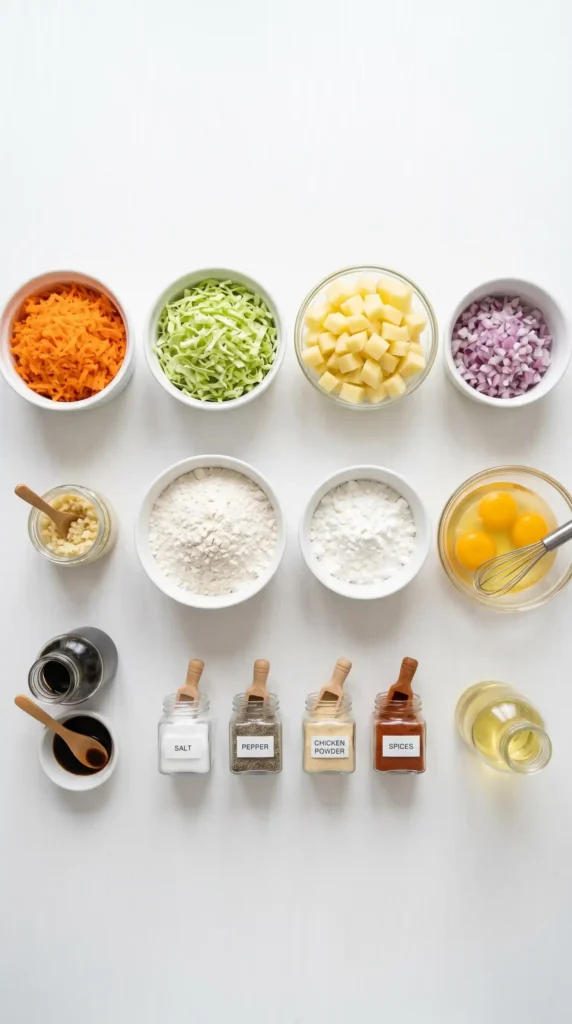
Every ingredient here is budget-friendly and easy to find in any palengke or grocery. The proportions below make one full batch of roughly 45 pieces. Scale up directly for larger batches.
Main Veggie Mixture:
- 2 cups cabbage, finely shredded and squeezed dry
- 1 cup carrot, finely grated
- 1 cup potato, grated and squeezed dry (about 1 medium potato)
- 1/2 cup spring onion (sibuyas dahon), finely chopped
- 1/2 cup onion, finely minced
- 4 cloves garlic, minced
- 2 stalks celery, finely chopped (optional but adds great flavor)
Binding and Seasoning:
- 1 cup all-purpose flour
- 1/4 cup cornstarch
- 2 eggs, beaten
- 1 tablespoon soy sauce
- 1 teaspoon salt
- 1/2 teaspoon ground black pepper
- 1/2 teaspoon garlic powder
- 1/2 teaspoon onion powder
- 1/2 teaspoon seasoning granules (Magic Sarap or Knorr Seasoning)
For Frying:
- Enough cooking oil for deep frying (about 2-3 cups depending on your pan)
Suggested Dipping Sauces (Pangnegosyo Style):
- Sweet sauce: banana ketchup mixed with a little sugar and water
- Spicy sauce: UFC or Mang Tomas with chili flakes
- Vinegar sawsawan: white cane vinegar with garlic, chili, and a pinch of salt
FYI — squeezing the moisture out of your cabbage and grated potato is non-negotiable. Excess water makes the mixture too loose to form into balls and causes dangerous oil splattering during frying. Squeeze hard and squeeze twice. You will thank yourself later.
How to Make Veggie Balls Pangnegosyo — Complete Step-by-Step
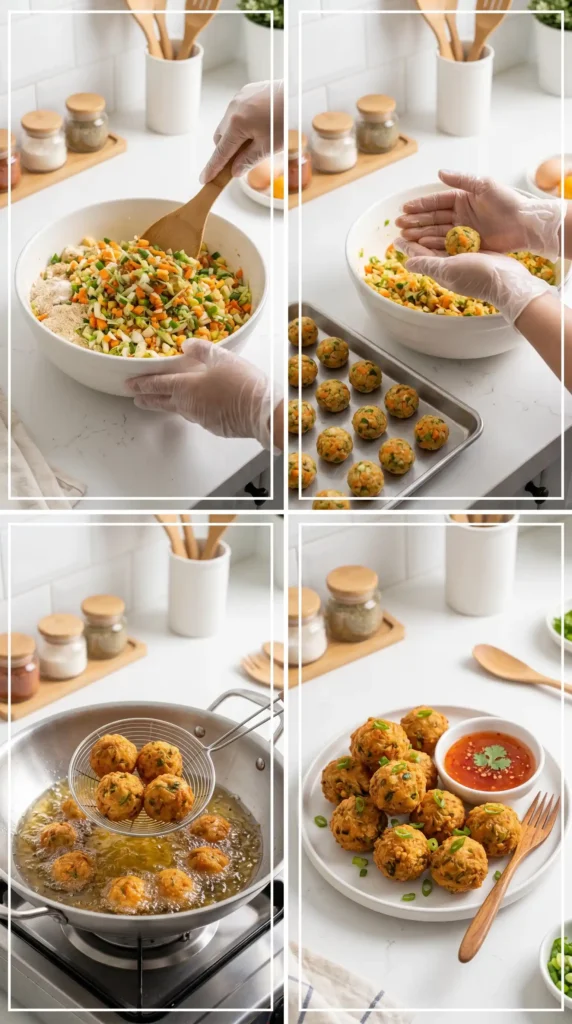
The process breaks into three clean stages: preparing the vegetables, mixing the batter, and frying. Each stage is straightforward but has specific details that separate a good batch from a great one. Read through everything before you start.
Stage 1 — Preparing and Drying the Vegetables
Start with the cabbage. Shred it as finely as you can — thin shreds blend into the mixture better and give a more uniform texture in the finished balls. Place the shredded cabbage in a clean kitchen towel or cheesecloth and squeeze firmly over the sink. Keep squeezing until no more water comes out. Set aside in a large mixing bowl.
Grate the carrot using the fine side of a box grater. You want small, thin shreds rather than thick grated pieces. Fine carrot integrates smoothly into the mixture and cooks through evenly during frying. Add the grated carrot directly to the bowl with the cabbage — no need to squeeze the carrot.
Peel the potato and grate it finely. Grated potato releases a significant amount of starchy water that will make your mixture sloppy if you leave it in. Place the grated potato in a clean towel and squeeze out as much liquid as possible — press hard and twist the towel. Add the squeezed potato to the mixing bowl.
Add the finely minced onion, minced garlic, chopped spring onion, and chopped celery (if using) to the bowl. These aromatics are the backbone of the flavor profile. Finely mincing everything ensures they distribute evenly throughout each ball rather than creating large chunks.
Mix all the vegetables together with a spoon or clean hands until they are evenly combined. At this stage the mixture will look loose and barely holding together — that is completely normal. The binding ingredients come next and will bring everything into a workable dough.
Stage 2 — Building the Mixture
Add the beaten eggs to the vegetable mixture and stir to combine. The eggs act as the primary binder holding everything together. Mix until every part of the vegetable mixture has contact with the egg.
Add the 1 cup of all-purpose flour and 1/4 cup of cornstarch to the bowl. The flour provides structure while the cornstarch contributes to the crispy exterior during frying. Add them gradually while mixing — this prevents lumps from forming and ensures even distribution.
Season the mixture with the soy sauce, salt, black pepper, garlic powder, onion powder, and seasoning granules. Mix everything thoroughly until you have a uniform, well-seasoned dough. Taste a tiny amount of the raw mixture and adjust seasoning now, before frying. Adding seasoning after frying is less effective.
Check the consistency of the mixture. It should hold its shape when you press it together firmly in your palm. If it feels too wet and keeps falling apart, add another tablespoon of flour and mix again. If it feels too dry and crumbly, add a teaspoon of water or one more beaten egg. The goal is a mixture that forms a ball without sticking excessively to your hands.
Let the mixture rest for 5 minutes. This short rest allows the flour to absorb the moisture from the vegetables fully and makes the mixture slightly easier to shape and handle. Cover the bowl loosely with plastic wrap while it rests.
Stage 3 — Shaping the Balls
Wet your hands lightly with water before shaping. This prevents the mixture from sticking to your palms and helps you form smooth, even balls. Scoop about 1 to 1.5 tablespoons of mixture per ball — this size is ideal for street food because it cooks evenly and feels satisfying to eat.
Roll each portion between your palms using firm, circular motions until you get a smooth, compact ball. Press the mixture together firmly as you roll — any loose or crumbly spots on the surface will open up during frying and cause the ball to break apart in the oil.
Place each formed ball on a clean plate or tray lined with parchment paper. Keep them in a single layer and make sure they do not touch each other — touching balls can stick together before frying. Repeat until you have used all the mixture. You should get approximately 40-50 balls from a single batch.
Stage 4 — Frying
Pour enough cooking oil into a deep pan or wok to submerge the balls at least halfway when they are dropped in. Heat the oil over medium-high heat. Test the temperature by dropping a tiny bit of the mixture into the oil — it should sizzle immediately and float to the surface within 2-3 seconds. If it sinks and stays at the bottom, the oil is not hot enough yet.
Fry the veggie balls in small batches of 8-10 at a time. Overcrowding the pan drops the oil temperature sharply, which causes the balls to absorb more oil and turn out greasy instead of crispy. Maintain space between them.
Fry each batch for about 4-5 minutes, turning them occasionally with a slotted spoon or spider strainer to ensure even browning on all sides. The balls are done when they turn a deep, even golden brown all over. The color is your guide — pale yellow means undercooked, dark brown means overdone.
Use a slotted spoon to lift the cooked veggie balls out of the oil and transfer them to a plate lined with paper towels. The paper towels absorb excess surface oil and keep the exterior crispier for longer. Let them drain for 1-2 minutes before serving or packaging.
Repeat the frying process for each remaining batch. Between batches, check that the oil temperature has returned to the correct level before adding the next set of balls. Keeping the temperature consistent produces uniform results across the entire batch.
Pricing Your Veggie Balls Pangnegosyo for Profit
This section is for everyone who plans to sell. Knowing your food cost is not optional — it is the foundation of any sustainable small business. Let’s work through the math together.
Estimating Your Food Cost Per Batch:
- Vegetables (cabbage, carrot, potato, onion, garlic, spring onion): approximately 30-40 pesos
- Flour, cornstarch, eggs, seasonings: approximately 20-25 pesos
- Cooking oil used per batch: approximately 15-20 pesos
- Total estimated food cost per batch of 45 pieces: approximately 65-85 pesos
Suggested Selling Prices:
- Street food stall (per stick of 3-4 balls): 10-15 pesos
- Solo piece with sauce: 5-7 pesos
- Small bag of 10 with sauce: 40-50 pesos
- Estimated revenue from one batch at 7 pesos/piece: approximately 315 pesos
- Estimated profit per batch after food cost: approximately 230-250 pesos
Those numbers work. With two batches per day at a busy street corner or school gate, you cover ingredient costs quickly and start generating real income. The key is consistency — same quality, same portioning, same sauce every single day.
Storing and Scaling Up Your Veggie Balls
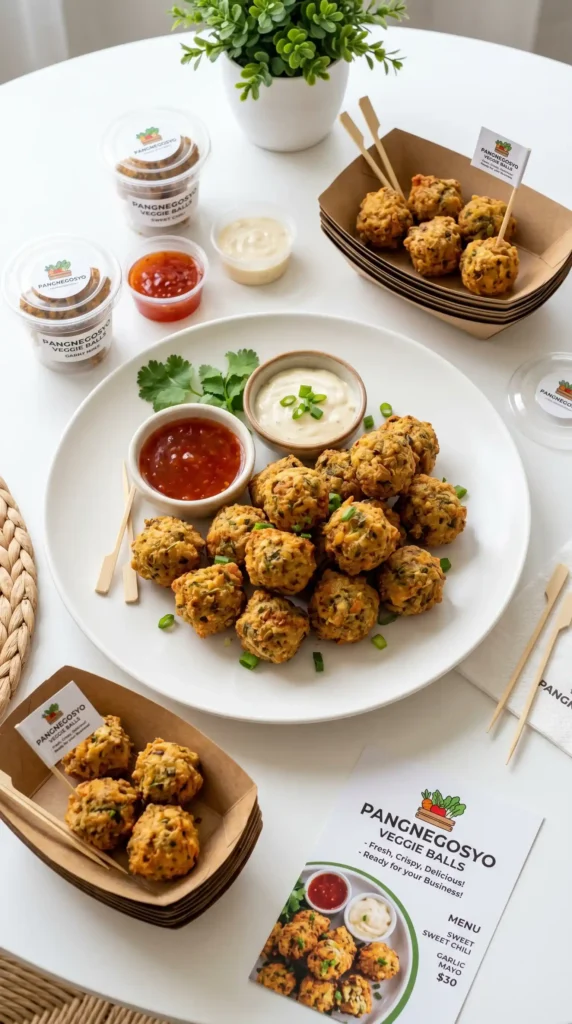
Refrigerating uncooked balls: Shape the balls and refrigerate them on a tray for up to 24 hours before frying. This is great for prepping the night before a busy selling day.
Freezing uncooked balls: Flash freeze shaped balls on a tray for 1 hour, then transfer to zip-lock bags. They keep for up to 1 month. Fry directly from frozen, adding 1-2 extra minutes to the frying time.
Scaling up: Double or triple the recipe directly — the ratios hold well. For large-scale production, invest in a small mixer to handle the mixing stage faster and more consistently across batches.
Frequently Asked Questions About Veggie Balls Pangnegosyo
Why do my veggie balls keep falling apart during frying?
This almost always comes down to excess moisture in the vegetable mixture or not enough binding agent. Squeeze the cabbage and potato much more firmly and let the mixture rest for 5 minutes after mixing so the flour absorbs the liquid. If balls still break, add another tablespoon of flour and one more egg to the mixture.
Can I add other vegetables to the recipe?
Yes, and it is a great way to use up whatever produce you have on hand. Finely grated zucchini, chopped malunggay leaves, diced mushrooms, or shredded green beans all work well. Just remember to squeeze out moisture from any high-water vegetables like zucchini before adding them to the mix.
Can I bake or air-fry these instead of deep frying?
You can, though the texture differs noticeably. For air frying, brush the balls lightly with oil and cook at 180 degrees Celsius for 12-15 minutes, turning halfway. For baking, use 190 degrees Celsius for 18-20 minutes. Both methods produce a less crispy exterior compared to deep frying, but work well for a healthier home version.
How do I keep the veggie balls crispy during selling hours?
Fry in small batches every 30-40 minutes rather than all at once. Freshly fried balls hold their crispiness much better than those sitting in a container for an hour. Use a wire rack instead of paper towels during selling — paper towels trap steam underneath and soften the exterior faster.
What is the best sauce to sell alongside veggie balls?
Sweet chili sauce is consistently the most popular option based on my own selling experience. Banana ketchup mixed with a little sugar and chili flakes is the most affordable to produce. Offering two sauce options — one sweet and one spicy — increases perceived value and gives customers a reason to buy more.
Final Thoughts on Veggie Balls Pangnegosyo
Veggie Balls Pangnegosyo tick every box a small food business needs: low ingredient cost, fast production, wide appeal, and genuinely delicious results. The recipe is straightforward once you get the moisture control right, and the business model practically builds itself around the numbers.
Squeeze your vegetables properly, season boldly, fry in small batches, and serve with a great sauce. Those four habits will set your veggie ball business apart from every other stall on the block. Start with one batch this weekend. Bring them to your family, your neighbors, your friends. Watch how fast they disappear. Then start counting how many batches you can sell per day. The math will motivate you more than anything I could say here
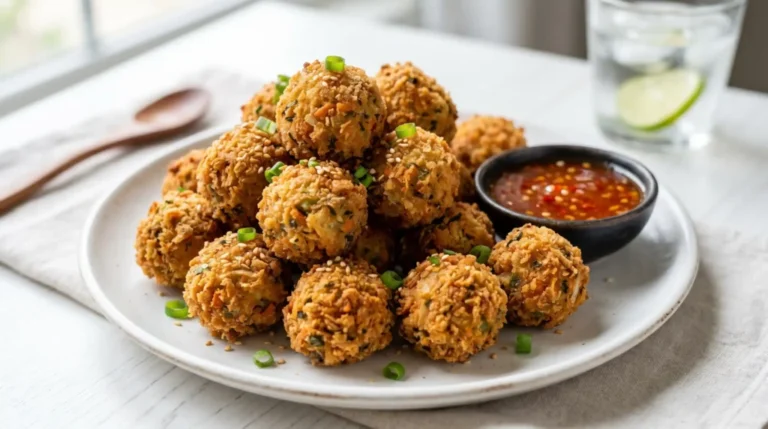
Veggie Balls Pangnegosyo
Ingredients
Method
- Shred the cabbage finely and squeeze it dry. Set aside.
- Grate the carrot and add it to the bowl with the cabbage.
- Peel and grate the potato, then squeeze it dry and add it to the bowl.
- Add minced onion, garlic, spring onion, and chopped celery (if using) to the bowl and mix well.
- Add beaten eggs to the vegetable mixture and combine.
- Gradually add flour and cornstarch while mixing.
- Season the mixture with soy sauce and other spices, mix thoroughly.
- Check consistency and let the mixture rest for 5 minutes.
- Wet hands lightly and scoop mixture to form balls.
- Roll between palms to shape and place on a tray.
- Heat oil in a deep pan to the right temperature.
- Fry veggie balls in small batches until golden brown, about 4-5 minutes.
- Transfer cooked balls to a paper towel to drain excess oil.