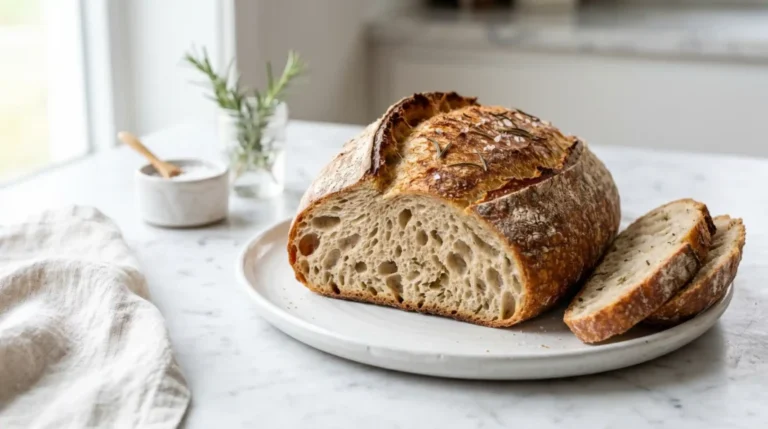
Ingredients
Method
Mix the Dough (Autolyse First)
- In a large mixing bowl, combine 450g flour with 290ml of the water. Stir until no dry flour remains. Cover with a damp towel and let rest for 30 to 45 minutes.
Add the Starter and Salt
- After the autolyse, add your 100g of active sourdough starter to the bowl. Drizzle in the remaining 35ml of water and squish everything together using your fingers.
- Work the starter fully into the dough and sprinkle in your 10g of salt, continuing to work it in for another 2-3 minutes.
Add the Rosemary
- Scatter your finely chopped fresh rosemary over the dough and fold it in gently. Cover the bowl again and let rest for 30 minutes.
First Stretch and Fold
- Wet your hand slightly. Stretch the dough upward, fold it over the center, rotate the bowl 90 degrees, and repeat for all four sides. Cover and rest for another 30 minutes.
Second and Third Stretch and Fold
- Repeat the stretch and fold process two more times, with 30-minute rests in between.
Shape the Dough
- Lightly flour your work surface and gently tip the dough out. Fold the edges toward the center and flip seam-side down. Drag gently to create a tight round boule shape. Let rest uncovered for 20 minutes.
Final Shape and Cold Fermentation
- Dust a banneton basket with flour. Re-shape the dough using the drag technique, then place it seam-side up into the basket. Cover loosely and refrigerate for 8 to 72 hours.
Preheat and Score
- One hour before baking, preheat your Dutch oven to 500°F (260°C). Remove the dough from the fridge and score the top of the loaf.
Bake the Bread
- Lower the dough into the preheated Dutch oven and bake for 27 minutes. Remove the lid, reduce temperature to 450°F (230°C), and bake for an additional 18-20 minutes until golden brown.
- Do not cut into it for at least 45 minutes.
Notes
Feed your starter 6-8 hours before mixing. Use a kitchen scale for accuracy. Do not skip the full cold ferment. Cool completely before slicing for the best texture.