Prep Time: 15 mins | Cook Time: 20 mins | Total Time: 35 mins | Servings: 4 (4 quesadillas)
The Quesadilla That Actually Earns the Word Steak
Most quesadillas are fine. You fold some cheese into a tortilla, press it in a pan, and call it dinner. Nobody complains. But when you add properly seasoned, seared steak, caramelized peppers and onions, and the right cheese blend, you stop making a quick meal and start making something worth talking about.
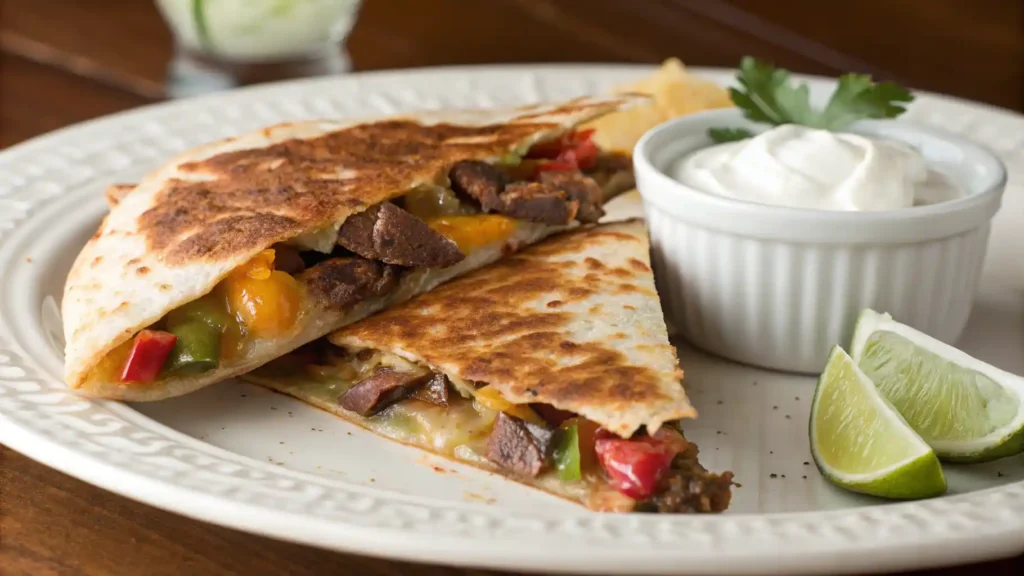
I made Steak and Cheese Quesadillas for the first time using leftover skirt steak from the night before. I expected something decent. What came out of the pan was one of the best things I had eaten that week. The crispy tortilla, the melted cheese, the tender steak, the sweet peppers. It worked on every level.
Steak and Cheese Quesadillas take about 35 minutes from start to finish and serve 4 people. They work as a weeknight dinner, a game-day snack, or a lunch that makes everyone at the table stop scrolling their phones. That last part is rarer than it sounds.
Have you ever made something with simple ingredients that tasted far better than the sum of its parts? This is that recipe. Let us make it properly.
Choosing the Right Steak Makes a Real Difference
Not all steak cuts work equally well in a quesadilla. You want something that cooks fast, slices thin, and stays tender even when pressed inside a hot tortilla. Three cuts consistently deliver the best results.
Best Steak Cuts for Quesadillas
- Skirt steak: The top choice. It has rich beefy flavor, cooks fast over high heat, and slices beautifully thin against the grain. It is also one of the more affordable cuts.
- Flank steak: Similar to skirt steak in flavor and texture. Slightly thicker, so give it an extra minute per side. Slice it very thin against the grain.
- Ribeye: Rich, well-marbled, and incredibly flavorful. More expensive than the other options, but if you want the most indulgent version of this quesadilla, ribeye delivers.
- Sirloin: A solid budget option. Less tender than the above cuts but works well if you slice it thin and do not overcook it.
IMO, skirt steak gives you the best flavor-to-cost ratio for this recipe. Always slice steak against the grain regardless of cut. Cutting with the grain leaves long muscle fibers intact and makes the meat chewy. Against the grain shortens those fibers and gives you tender, easy-to-eat pieces in every bite.
Full Ingredients List
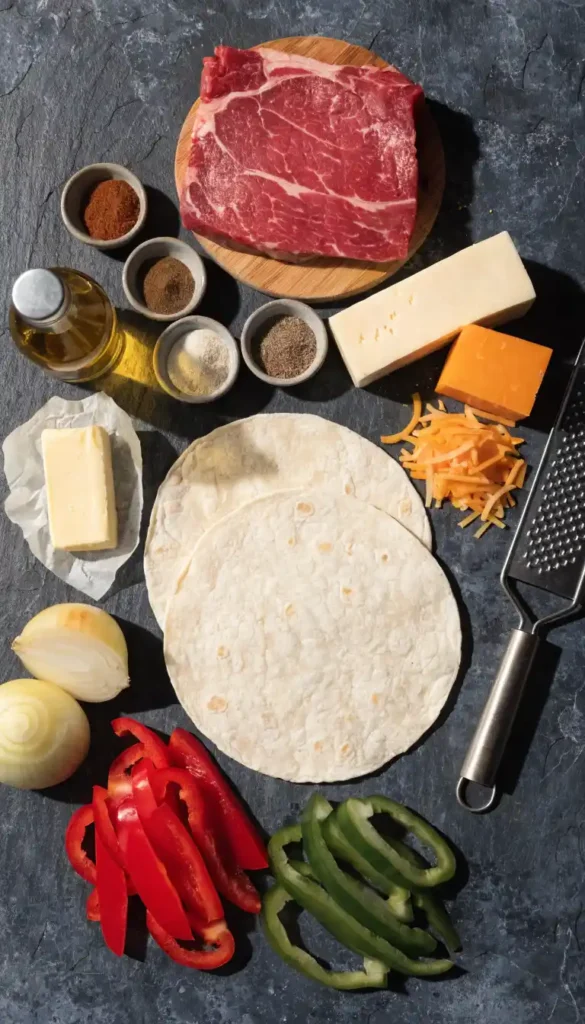
This recipe makes 4 large quesadillas and serves 4 people generously. All ingredients are standard grocery store items.
For the Steak
- 1.5 lbs (680g) skirt steak or flank steak
- 1 tablespoon olive oil
- 1 teaspoon garlic powder
- 1 teaspoon smoked paprika
- 1/2 teaspoon ground cumin
- 1/2 teaspoon onion powder
- 1/2 teaspoon black pepper
- 1/2 teaspoon salt
- 1/4 teaspoon cayenne pepper (optional for heat)
For the Peppers and Onions
- 1 large green bell pepper, thinly sliced
- 1 large red bell pepper, thinly sliced
- 1 large yellow onion, thinly sliced
- 1 tablespoon olive oil
- 1/2 teaspoon garlic powder
- 1/2 teaspoon salt
- 1/4 teaspoon black pepper
For the Quesadillas
- 4 large (10-inch) flour tortillas
- 2 cups shredded Monterey Jack cheese
- 1 cup shredded sharp cheddar cheese
- 2 tablespoons butter for the pan
For Serving
- Sour cream
- Fresh salsa or pico de gallo
- Sliced avocado or guacamole
- Fresh lime wedges
- Sliced jalapenos (optional)
How to Make Steak and Cheese Quesadillas: Full Step-by-Step
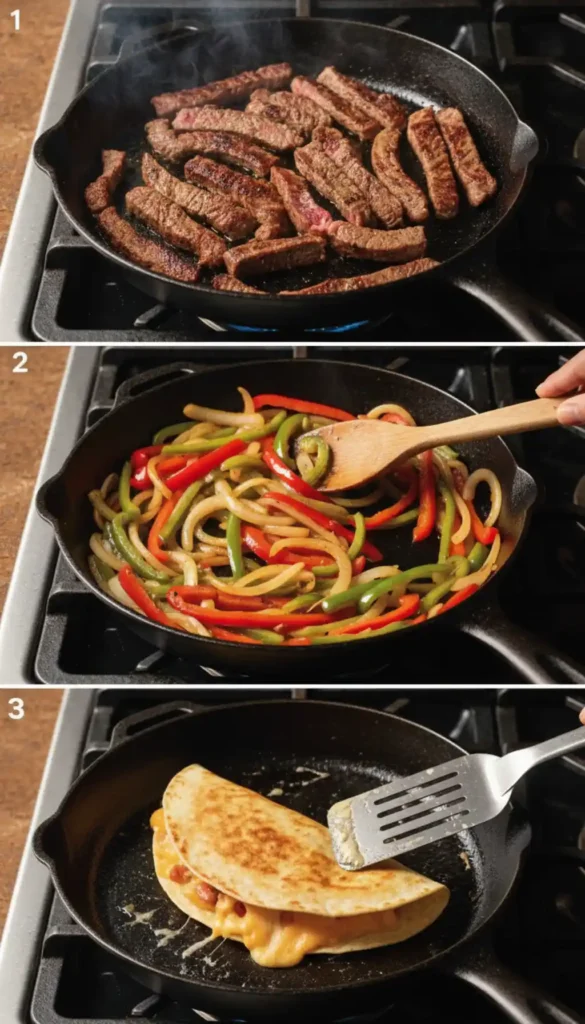
The process breaks into three parts: seasoning and searing the steak, cooking the peppers and onions, and assembling and pressing the quesadillas. Work through them in order and everything comes together efficiently.
Step 1: Season and Rest the Steak
Take the steak out of the refrigerator at least 15 to 20 minutes before you plan to cook it. Cold steak dropped directly into a hot pan creates uneven cooking, where the outside cooks much faster than the inside ever gets a chance to warm through. Letting it come closer to room temperature produces a more even cook from edge to center.
While the steak rests, mix the dry seasoning in a small bowl: garlic powder, smoked paprika, cumin, onion powder, black pepper, salt, and cayenne if you want heat. Drizzle the olive oil over both sides of the steak, then rub the seasoning blend evenly across every surface. Press the seasoning in gently with your hands so it adheres properly.
Let the seasoned steak sit at room temperature for the full 15 to 20 minutes. This rest period does two things: it allows the salt in the seasoning to start drawing out a small amount of moisture from the surface, which then reabsorbs back into the meat creating a more flavorful crust when it hits the pan. It is not a dramatic transformation but it is a noticeable one.
Step 2: Cook the Peppers and Onions
Heat a large skillet over medium heat and add the 1 tablespoon of olive oil. Once the oil shimmers, add the sliced onions first. Onions take longer to soften than peppers, so they go in first to get a head start. Stir them gently to coat with the oil and then let them cook mostly undisturbed.
Cook the onions for about 5 minutes, stirring every minute or two, until they soften and start to turn translucent at the edges. Add the sliced green and red bell peppers along with the garlic powder, salt, and black pepper. Stir everything together to combine.
Continue cooking the peppers and onions together over medium heat for another 6 to 8 minutes, stirring occasionally. You want the peppers to soften and develop some light color at the edges while the onions become sweet, jammy, and slightly golden. This is not a fast-sauté situation. Taking the time to properly soften and lightly caramelize the vegetables makes a significant difference in the final flavor of the quesadilla.
Once the peppers and onions look tender and have some color, remove them from the heat and transfer them to a bowl. Do not leave them in the hot pan or they will continue cooking from the residual heat and go soft and mushy before they make it into the quesadilla. Set the bowl aside and wipe out the skillet so it is ready for the steak.
Step 3: Sear the Steak
Increase the heat to medium-high and let the skillet get fully hot before the steak goes in. A properly preheated pan is the single most important factor in getting a good sear. You want the surface of the steak to cook rapidly when it makes contact with the pan, creating a browned crust rather than steaming against a lukewarm surface.
Place the seasoned steak flat in the hot skillet. You should hear a strong sizzle the moment it touches the pan. If the sizzle is weak or absent, the pan is not hot enough. Pull the steak back out, give the pan another minute to heat up, and try again.
Cook the steak for 3 to 4 minutes per side for medium, or 2 to 3 minutes per side for medium-rare. Resist the urge to move the steak around. Letting it sit undisturbed on each side allows the Maillard reaction to develop the brown, flavorful crust that gives this quesadilla its character. Moving it constantly breaks the sear and leaves you with gray, steamed meat instead.
Once cooked to your preferred doneness, transfer the steak to a cutting board and let it rest for 5 full minutes before cutting. Resting allows the juices to redistribute throughout the meat rather than running straight out when you cut it. A rested steak is noticeably juicier than one cut immediately after cooking. FYI, this step is worth every one of those five minutes.
After resting, slice the steak against the grain into thin strips, roughly 1/4 inch thick. Then cut those strips crosswise into smaller bite-sized pieces. Smaller pieces distribute more evenly inside the quesadilla and make every bite a good one rather than having all the steak bunched in the center.
Step 4: Assemble the Quesadillas
Mix the shredded Monterey Jack and sharp cheddar together in a bowl. Using two cheeses gives you better coverage and a more complex flavor than a single cheese alone. Monterey Jack melts smoothly and binds everything together. Sharp cheddar adds a pronounced, slightly tangy flavor that stands up well next to the seasoned steak.
Lay one large flour tortilla flat on your work surface. Spread a generous layer of the cheese blend across one half of the tortilla, leaving about half an inch of border at the edge. Add a layer of the cooked peppers and onions over the cheese, followed by a layer of sliced steak pieces.
Add another thin layer of cheese on top of the steak before folding the tortilla over. Cheese on both sides of the filling acts as the glue that holds the quesadilla together when you flip it. A single layer of cheese only on the bottom means the filling can shift and slide out when you flip. Two layers create a secure, sealed quesadilla.
Step 5: Press and Cook the Quesadillas
Heat the wiped-out skillet over medium heat and add 1/2 tablespoon of butter. Let the butter melt and foam, then place the folded quesadilla in the pan. Press it down gently with a wide spatula so the entire surface makes contact with the hot pan. Even contact means even browning across the whole tortilla.
Cook for 2 to 3 minutes on the first side without moving it. Peek at the underside by lifting one edge slightly. You want it a deep golden brown with no pale patches. The cheese inside should be starting to melt visibly at the edges.
Flip the quesadilla carefully using the wide spatula. Press it down again on the second side. Cook for another 2 minutes until the second side matches the color of the first. The whole cooking process for each quesadilla takes about 4 to 5 minutes total. Add fresh butter to the pan before each new quesadilla for consistent browning.
Transfer finished quesadillas to a cutting board and let them sit for 60 seconds before cutting. Cutting immediately causes the melted cheese to run out and the filling to spill. One minute of rest is all it takes for everything to settle. Cut each quesadilla into three or four wedges with a sharp knife or pizza cutter. Serve immediately. 🙂
Tips for Getting Perfect Steak and Cheese Quesadillas Every Time
- Always slice steak against the grain. This is non-negotiable. With-the-grain slices are chewy and difficult to eat inside a quesadilla. Against the grain makes every bite tender.
- Use butter not oil for the quesadilla pan. Butter browns the tortilla more evenly and adds a subtle richness that oil cannot replicate. Use medium heat so the butter does not burn.
- Do not overfill. More filling sounds better until the quesadilla will not close, the cheese does not melt evenly, and everything falls out when you flip it. Moderate amounts work better.
- Rest the steak. Five minutes. Every time. The difference in juiciness between a rested steak and an immediately-cut steak is obvious and significant.
- Freshly grated cheese melts better. Pre-shredded cheese contains anti-caking agents that make it clump and melt unevenly. Buy a block and grate it yourself for noticeably smoother melting.
Variations to Make It Your Own
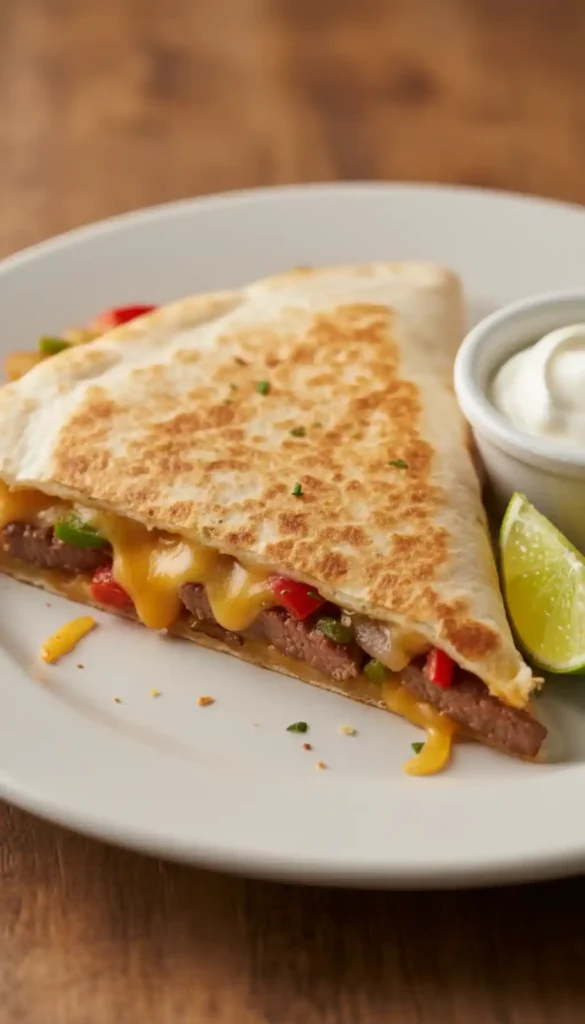
The base recipe is excellent as written. Here are a few ways to customize Steak and Cheese Quesadillas to suit different tastes or occasions.
- Add sliced mushrooms to the peppers and onions during cooking. They absorb the savory juices from the pan and add an earthy depth that pairs beautifully with the steak.
- Use pepper jack cheese instead of Monterey Jack for a spicier, more assertive cheese flavor that stands up boldly to the seasoned steak.
- Add a thin smear of chipotle mayo inside the tortilla before the cheese layer. It adds a smoky, creamy heat that ties all the flavors together.
- Swap the flour tortillas for spinach or whole wheat tortillas for a slightly healthier version that still tastes excellent when properly toasted.
Frequently Asked Questions
1. What is the best cheese for steak quesadillas?
Monterey Jack is the gold standard because it melts smoothly and evenly without becoming greasy or stringy. Sharp cheddar adds flavor. Pepper jack adds heat. Provolone is an underrated option that melts beautifully and has a mild, slightly sweet flavor that complements beef well. Avoid pre-shredded cheese whenever possible as the anti-caking coating prevents smooth melting.
2. Can I use leftover steak for this recipe?
Yes, and leftover steak often works even better because it has already rested and the flavors have developed further overnight. Slice it thin, bring it to room temperature before using, and add it cold to the quesadilla. The heat from the pan and the melting cheese will warm it through during the 4 to 5 minutes of cooking.
3. How do I prevent the quesadilla from falling apart when I flip it?
Three things help: do not overfill, use cheese on both sides of the filling as a binding agent, and make sure the bottom is fully golden and set before attempting the flip. A quesadilla that is golden on the bottom has a stable, firm surface to flip onto. Flipping too early, before it has set, is the most common reason quesadillas fall apart.
4. Can I make Steak and Cheese Quesadillas in advance?
You can cook the steak and the peppers and onions ahead of time and refrigerate them separately for up to 2 days. Assemble and cook the quesadillas fresh when you are ready to eat. Fully assembled and cooked quesadillas do not reheat well because the tortilla softens and loses its crispiness. Always cook them fresh from the assembled state for the best texture.
5. What temperature should I cook the steak to?
For quesadillas, medium to medium-well works best because the steak gets additional heat from the quesadilla cooking process. If you pull the steak at medium-rare, it will finish at medium by the time the quesadilla is done. Use a meat thermometer if you want precision: 130 to 135 degrees Fahrenheit for medium-rare, 140 to 145 for medium, directly off the skillet.
6. Can I cook this on an outdoor grill instead?
Yes. Grill the steak over high direct heat for 3 to 4 minutes per side. Grill the peppers and onions in a grill-safe skillet or foil packet. For the quesadillas themselves, use the grill on medium-low heat and watch them closely as grill temperatures vary widely. A cast iron skillet set on the grill grate works well for controlled quesadilla cooking.
Final Thoughts
Steak and Cheese Quesadillas earn their place in any regular meal rotation. The combination of properly seared, thinly sliced steak, caramelized peppers and onions, and a two-cheese blend inside a golden, buttery tortilla creates something that feels genuinely satisfying rather than just convenient.
Every technique in this recipe has a reason behind it. The resting period for the steak, the slow-cooked peppers and onions, the double cheese layer, the butter in the pan. Skip any of them and the results are fine. Follow all of them and the results are noticeably better.
Make these this week. Serve them with cold sour cream, fresh salsa, and lime wedges. Then put them in your regular rotation because once is never enough with a recipe this straightforward and this good.
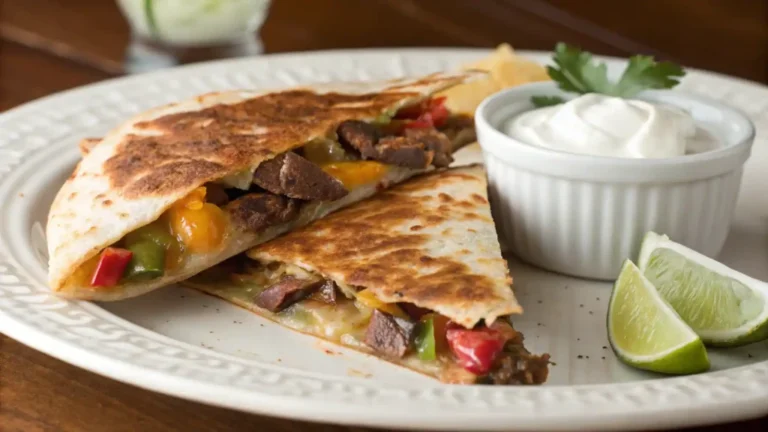
Steak and Cheese Quesadillas
Ingredients
Method
- Take the steak out of the refrigerator at least 15 to 20 minutes before cooking.
- Mix the dry seasoning in a small bowl: garlic powder, smoked paprika, cumin, onion powder, black pepper, salt, and cayenne (if using).
- Drizzle the olive oil over both sides of the steak, rub the seasoning blend evenly across the steak, and let it rest.
- Heat a large skillet over medium heat and add 1 tablespoon of olive oil.
- Add the sliced onions and cook for about 5 minutes until they soften.
- Add sliced peppers, garlic powder, salt, and black pepper. Stir and continue cooking for 6 to 8 minutes.
- Transfer the peppers and onions to a bowl once tender and set aside.
- Increase heat to medium-high and cook the seasoned steak for 3 to 4 minutes per side for medium.
- Let the steak rest for 5 minutes, then slice it against the grain into thin strips.
- Mix Monterey Jack and cheddar cheese together in a bowl.
- Lay one tortilla flat, add cheese, followed by cooked peppers and onions, and then steak.
- Add another thin layer of cheese before folding the tortilla over.
- Melt butter in the skillet over medium heat and add the folded quesadilla.
- Cook for 2 to 3 minutes until golden brown, then flip and cook for 2 more minutes.
- Allow finished quesadillas to sit for 60 seconds before cutting into wedges.