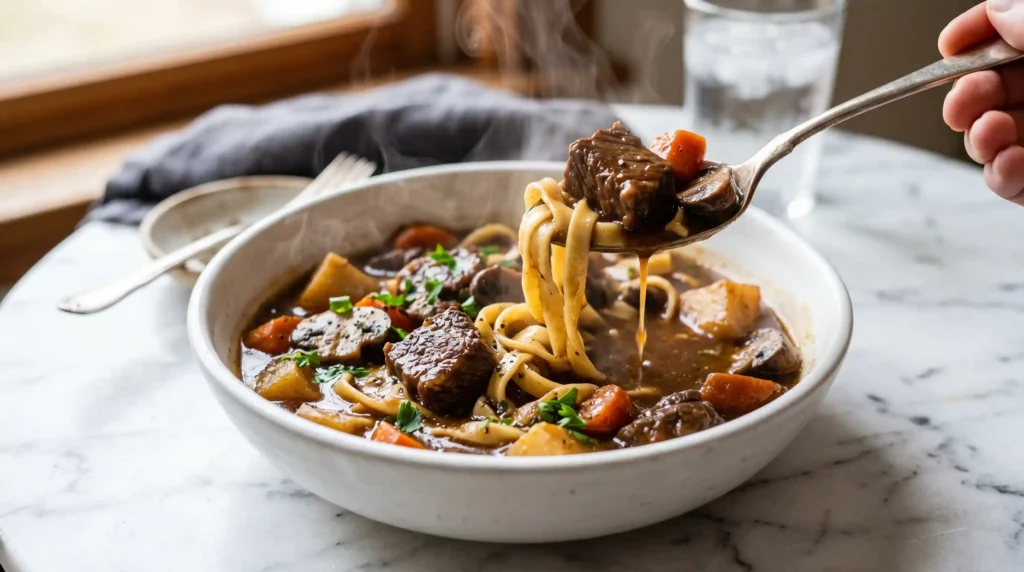
Some dishes exist purely to make you feel better about the world. Beef Stew Noodles is unquestionably one of them. A bowl of deeply braised beef in a rich, dark broth loaded with vegetables and wide egg noodles — thick enough to coat every surface, warm enough to change the temperature of an entire room. This is not just dinner. This is a statement that today was worth showing up for.
I first made this on a genuinely terrible day when I needed something that took time and attention and produced warmth. I seared the beef, built the broth slowly, and let the whole thing braise on the lowest heat for 90 minutes. By the time I added the noodles, the kitchen smelled extraordinary and the day felt manageable. That is the power of a properly made beef stew noodle bowl and I have believed in it ever since.
Have you ever made something that fixed the temperature of both the room and your mood simultaneously? This is that dish. Let us build it right.
Why This Beef Stew Noodles Recipe Hits Different From a Standard Stew
Standard beef stew is served over mashed potatoes or with a side of bread. This version adds the noodles directly to the braising liquid, where they absorb the beef broth, soak up the rendered fat, and become an inseparable part of the dish rather than an accompaniment to it. Every noodle tastes of the broth. Every bite of beef comes with broth-soaked noodle and tender vegetable. Nothing competes — everything belongs together.
The addition of noodles also makes this a complete, single-bowl meal that requires nothing on the side. No bread, no starch accompaniment, no extra preparation. Pull a bowl from the shelf, ladle in the stew, add the noodles, and sit down. That simplicity in serving matches the simplicity of the cooking process itself.
The key technical difference between this and mediocre beef stew is the initial sear. Properly searing the beef before braising creates the Maillard reaction — a deep, caramelised crust on the surface of each chunk of beef that contributes an enormous amount of the broth’s complexity. Skip the sear and you get a paler, less complex broth that tastes as though something is missing. IMO, the sear is the most important five minutes in this entire recipe.
What You Need
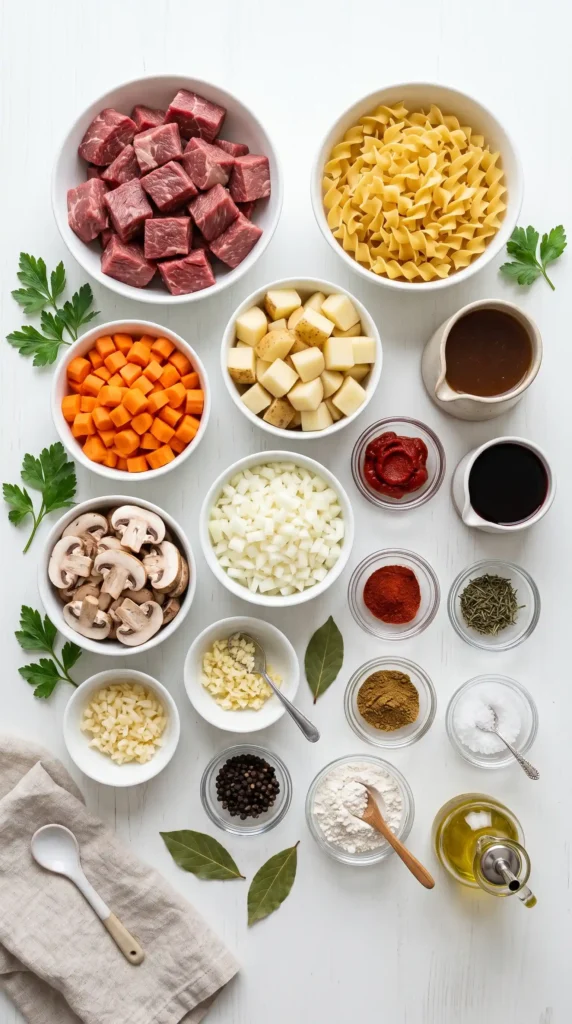
Nothing exotic. Everything straightforward. The beef chuck is the most important choice — do not substitute sirloin, tenderloin, or any lean cut. Chuck contains connective tissue that breaks down during the long braise into gelatine, which gives the broth its silky, slightly thick body. Lean beef becomes dry and tough during braising. Chuck becomes magnificently tender. These are not interchangeable results.
For the Beef and Sear
- 900g (2 lbs) beef chuck, cut into 4–5cm chunks
- 1 and 1/2 teaspoons salt
- 1 teaspoon black pepper
- 2 tablespoons neutral oil (for searing)
- 2 tablespoons all-purpose flour (for dredging the beef before searing)
For the Broth and Aromatics
- 1 medium yellow onion, diced
- 4 garlic cloves, finely minced
- 3 tablespoons tomato paste
- 1 tablespoon Worcestershire sauce
- 1 tablespoon soy sauce (for depth — not detectable as soy in the finished broth)
- 4 cups (960ml) beef broth, good quality
- 1 cup (240ml) red wine (Cabernet Sauvignon or Merlot) — or substitute additional beef broth
- 2 dried bay leaves
- 1 teaspoon dried thyme
- 1 teaspoon smoked paprika
- Salt and black pepper to taste throughout
For the Vegetables
- 3 medium carrots, peeled and cut into 2.5cm rounds
- 3 medium stalks of celery, cut into 2cm pieces
- 350g (about 3/4 lb) baby potatoes, halved — or regular potatoes cut into 3cm chunks
- 200g (about 7oz) cremini mushrooms, quartered
For the Noodles and Finish
- 200g (7oz) wide egg noodles
- 2 tablespoons fresh flat-leaf parsley, finely chopped
- 1 tablespoon unsalted butter (stirred in at the end for richness and gloss)
- Salt and pepper for final adjustment
Flour-Dredge the Beef Before Searing — Here Is WhyTossing the beef chunks in flour before searing does two things. First, the flour encourages a more even, consistent browning across the surface — plain wet beef can steam before it sears. Second, the flour that gets into the broth as the beef cooks acts as a natural thickener, giving the broth a slightly glossy, stew-like body rather than a thin soup consistency. FYI — this is a traditional French technique that has been used in braised beef dishes for centuries, and it works flawlessly every time.
How to Make Beef Stew Noodles Step by Step
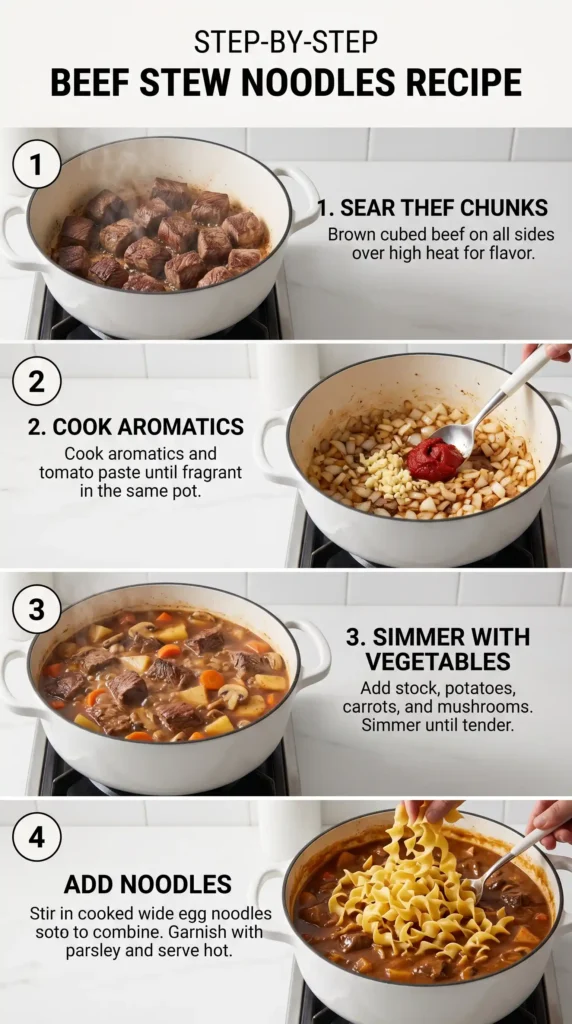
Three stages: sear the beef and build the broth base, braise with vegetables until fall-apart tender, then add the noodles and finish. Most of the cooking time is passive — the braise runs largely unattended while you do other things. Active work totals about 20 minutes. The braise requires 90 minutes of patience. Read through the full process once before starting and the timing will feel completely clear.
Step 1: Season and Flour-Dredge the Beef
Pat the beef chuck chunks completely dry with paper towels — this is essential for achieving a proper sear. Moisture on the surface of the meat creates steam when it contacts the hot oil, which prevents browning and produces pale, grey meat instead of the dark, caramelised crust you need. Season all sides of each beef chunk generously with the salt and black pepper.
Place the flour in a wide, shallow bowl or a large plate. Roll each seasoned beef chunk through the flour until lightly and evenly coated on all surfaces. Shake off any excess — you want a thin, even dusting, not a thick caked coating. Lay the floured beef pieces on a plate in a single layer as you go. Work through all the beef before the pan goes on the heat.
Step 2: Sear the Beef in Batches
Heat a large Dutch oven or heavy-bottomed pot over medium-high heat until very hot. Add the neutral oil and swirl to coat the base. Working in batches — two or three pieces at a time, never crowding the pan — add the floured beef chunks and sear undisturbed for 3–4 minutes per side until deeply browned and slightly crusted on the seared surface. This takes patience and self-restraint.
Do not move the beef until those 3–4 minutes are complete and the crust has formed. Moving it earlier tears the forming crust and produces unevenly browned, grey meat. The browned crust you see on each piece of beef after proper searing is the primary source of complexity in the finished broth — it releases into the liquid during braising and turns a simple broth into something extraordinary. Transfer each batch to a plate and continue with the remaining beef.
Step 3: Build the Broth Base
Reduce the heat to medium. In the same pot — do not clean it — add the diced onion and cook for 4–5 minutes until softened and golden at the edges, scraping up the browned bits from the beef searing as the onion releases moisture. Add the minced garlic and stir constantly for 60 seconds until fragrant. Add the tomato paste and stir for another 90 seconds, cooking the paste briefly in the rendered beef fat and onion oil.
Pour in the red wine or additional beef broth and stir vigorously, scraping the entire base of the pot to release every browned bit into the liquid. These stuck-on caramelised pieces are concentrated flavour — every one of them belongs in the broth. Let the wine simmer for 2 minutes until slightly reduced. Add the Worcestershire sauce, soy sauce, dried thyme, smoked paprika, and bay leaves and stir to combine.
Step 4: Braise Low and Slow
Return all the seared beef to the pot. Pour in the beef broth — the liquid should just barely cover the beef. If it does not quite reach, add a splash more broth or water until the beef is submerged. Bring the pot to a gentle simmer over medium heat, then reduce to the lowest heat your stove produces. Cover with a tight-fitting lid.
Braise the beef for 60 minutes on the lowest heat — barely simmering, not boiling. After 60 minutes, remove the lid and add the halved baby potatoes, carrot rounds, celery pieces, and quartered mushrooms. Stir gently to incorporate the vegetables into the broth. Cover and continue braising for another 30 minutes until the potatoes yield easily when poked with a fork and the beef tears apart at the lightest pressure from two forks.
If the broth looks thinner than you would like after the vegetables have cooked, remove the lid and simmer on medium heat for 8–10 minutes to reduce and concentrate the broth slightly before adding the noodles. The broth should look glossy and coat the back of a spoon cleanly rather than running off immediately. Taste and adjust the seasoning at this stage — it should taste deeply savoury, slightly rich, and well-rounded. Add more salt, a splash of Worcestershire, or a pinch of smoked paprika as needed.
Step 5: Add the Noodles and Finish
Remove the bay leaves from the pot. Add the wide egg noodles directly to the simmering stew — no need to pre-cook them. Stir gently to submerge the noodles in the broth. Cover and cook for 6–8 minutes, stirring occasionally, until the noodles are tender and have absorbed a significant amount of the broth. They should feel cooked but still have a slight firmness when bitten — they will continue absorbing broth as the stew sits.
Stir in the tablespoon of unsalted butter until fully melted into the broth — this adds richness and gives the broth a beautiful glossy sheen. Taste one final time and adjust seasonings. Ladle the Beef Stew Noodles into deep bowls, ensuring each bowl receives a generous portion of beef, vegetables, noodles, and plenty of the rich broth. Scatter the fresh parsley over each bowl and serve immediately.
The Right Simmer — And Why It Changes EverythingA vigorous boil toughens beef. The fibres contract rapidly, squeezing out moisture and producing a dry, chewy result regardless of how long you cook it. A lazy simmer — barely a bubble breaking at the surface every few seconds — keeps the muscle fibres relaxed as they slowly break down, producing beef that is genuinely fall-apart tender. If you see a rolling boil at any point during braising, immediately reduce the heat. Low and slow is the non-negotiable rule of braised beef.
Variations Worth Making
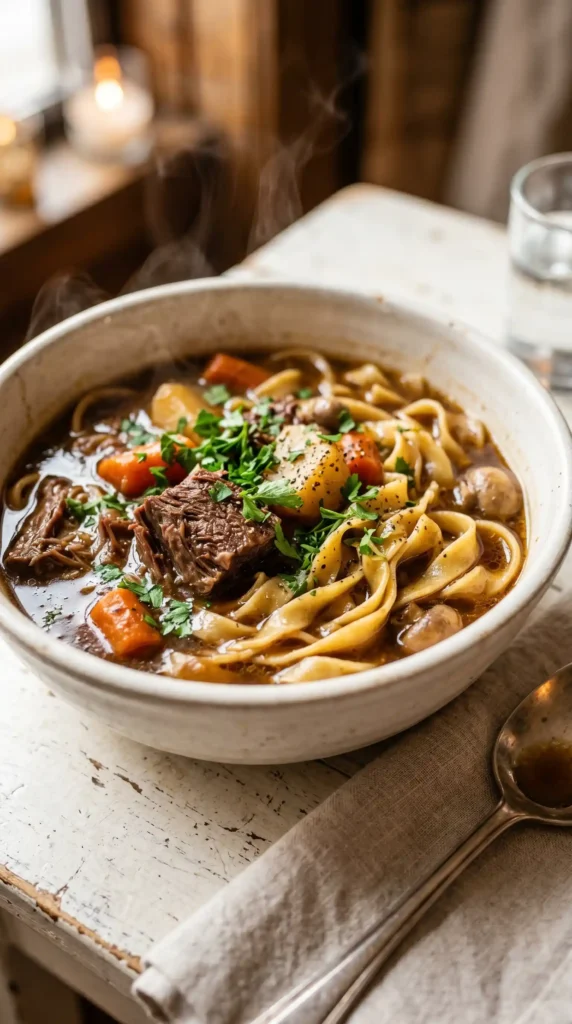
Asian-Inspired Beef Stew Noodles
Replace the red wine with 2 tablespoons of hoisin sauce and an extra splash of soy sauce. Add 2 tablespoons of fresh grated ginger, 1 tablespoon of sesame oil stirred in at the end, and 1 star anise pod to the braising liquid for a distinctive spiced warmth. Use ramen noodles or udon noodles instead of egg noodles. Top with thinly sliced green onions, a drizzle of chilli oil, and a soft-boiled egg halved over the bowl.
Tomato-Rich Beef Stew Noodles
Add one 400g can of crushed tomatoes to the broth along with the beef broth. The tomatoes give the broth a vibrant, slightly acidic character that brightens the richness of the beef and creates a deeper red colour throughout. Increase the garlic to 6 cloves and add a teaspoon of dried Italian seasoning. This version pairs particularly well with wider pasta such as pappardelle or broken lasagne sheets instead of egg noodles.
Instant Pot Version
Complete the searing and broth-building steps using the Instant Pot’s sauté function. Add all the broth and vegetables except the noodles, seal the lid, and pressure cook on high for 35 minutes with a natural pressure release of 15 minutes. Open, add the egg noodles, seal, and cook on high pressure for an additional 4 minutes with a quick release. The Instant Pot version produces an excellent result in roughly half the time, though the stovetop braise develops a slightly more complex broth flavour.
Storage and Reheating
Store leftover Beef Stew Noodles in an airtight container in the fridge for up to 4 days. The noodles continue absorbing broth during storage — the leftovers will look thicker and drier than the freshly made version. Reheat gently in a saucepan over medium-low heat with a splash of beef broth added to loosen the consistency back to a brothy stew rather than a thick, pasta-like dish. Stir gently throughout reheating to prevent the noodles from sticking together.
If you plan to make this ahead or know you will have leftovers, cook the noodles separately and store them in a separate container from the stew. Add fresh cooked noodles to each reheated serving. This prevents the noodles from absorbing all the broth and turning into an unpleasantly thick, gluey mass during storage. The beef, vegetables, and broth freeze well for up to 3 months — thaw overnight in the fridge and reheat with fresh noodles added at serving time.
Frequently Asked Questions
Can I use a different cut of beef instead of chuck?
Beef chuck is the ideal choice because its high collagen content melts into gelatine during the long braise, giving the broth body and the beef extraordinary tenderness. Brisket works similarly well and produces a slightly more robust flavour. Avoid lean cuts like round, sirloin, or tenderloin — they become dry, fibrous, and tough during braising regardless of time. The rule for braising is simple: more collagen and connective tissue equals better result. Chuck leads this category by a significant margin.
Do I have to use red wine? Can I skip it?
The wine is optional but worthwhile. It contributes acidity that balances the richness of the beef fat and broth, plus tannins and flavour compounds that add complexity to the overall broth. Replace it with the same volume of additional beef broth plus a tablespoon of red wine vinegar or balsamic vinegar — the vinegar compensates for the acidity the wine would have provided without adding an obvious vinegar flavour. The wine-free version tastes excellent; it is slightly less complex but still deeply satisfying.
Can I add the noodles at the beginning with everything else?
No. Egg noodles added at the beginning of a 90-minute braise will dissolve completely into the broth and disappear, leaving a starchy, thick paste rather than distinct noodles. They need to cook for only 6–8 minutes and should be added in the final stage of cooking when everything else is already done. This timing produces noodles that are tender and have absorbed the broth flavour without losing their structure or adding unwanted starch to the broth.
How do I make this dish gluten-free?
Replace the all-purpose flour dredge with a gluten-free 1:1 flour blend or cornstarch — either works for the searing step. Use certified gluten-free beef broth, Worcestershire sauce, and soy sauce (or substitute tamari, which is naturally gluten-free). Replace the egg noodles with certified gluten-free egg noodles or rice noodles added at the same stage in the same timing. The cooking process, technique, and flavour are all identical with these substitutions in place.
Can I make beef stew noodles in a slow cooker?
Yes. Complete the searing and broth-building steps on the stovetop first — do not skip the sear, which does not happen in a slow cooker. Transfer the seared beef, broth, and all aromatics to the slow cooker and cook on low for 7–8 hours or high for 4–5 hours. Add the vegetables in the last 2 hours on low or last 1.5 hours on high so they do not turn mushy. Cook the noodles separately and add them to each serving bowl rather than adding them to the slow cooker where they would overcook.
Final Thoughts
This Beef Stew Noodles recipe earns its place as one of the most reliably satisfying meals in existence. The deeply braised beef, the rich glossy broth, the tender vegetables, and the noodles that absorb every drop of flavour from that extraordinary liquid — everything works together toward a single, completely coherent result that warms you from the inside out.
It takes patience in the form of 90 minutes of low braising time. Every minute of that time contributes to the result. The broth deepens, the beef tenderises, the vegetables soften, and the entire pot develops a level of flavour that no shortcut version can replicate. That patience is the recipe.
Sear that beef until it is genuinely dark. Build that broth slowly and taste it as it develops. Add the noodles at the very end and let them drink everything in. Then serve it in the deepest bowl you own and accept that dinner tonight officially counts as something worth coming home for.
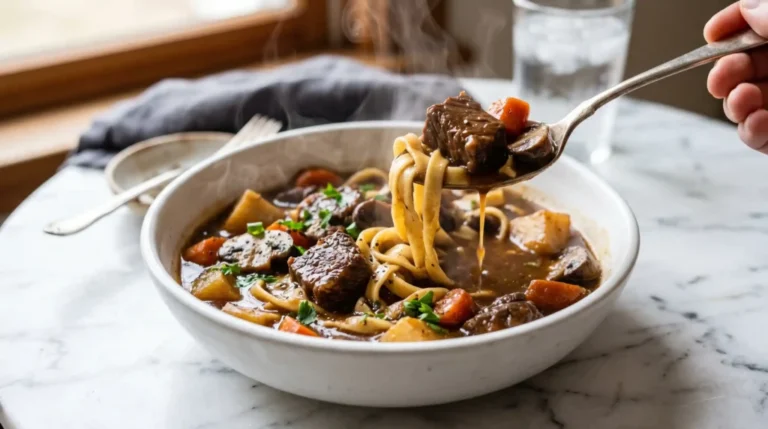
Beef Stew Noodles
Ingredients
Method
- Pat the beef dry with paper towels and season with salt and black pepper.
- Roll each seasoned piece in flour and set aside.
- Heat a large Dutch oven and add oil.
- Sear the beef in batches for 3-4 minutes per side until browned.
- Transfer seared beef to a plate.
- In the same pot, cook onion until softened.
- Add garlic, then tomato paste, and cook briefly.
- Pour in red wine or extra beef broth, simmer to reduce.
- Stir in Worcestershire, soy sauce, thyme, papikra, and bay leaves.
- Add the seared beef and broth, ensuring beef is submerged.
- Bring to a simmer, cover and braise for 60 minutes.
- Add vegetables and braise for an additional 30 minutes.
- Adjust seasoning as necessary.
- Remove bay leaves and add egg noodles.
- Cook for 6-8 minutes until noodles are tender.
- Stir in butter and serve with chopped parsley.