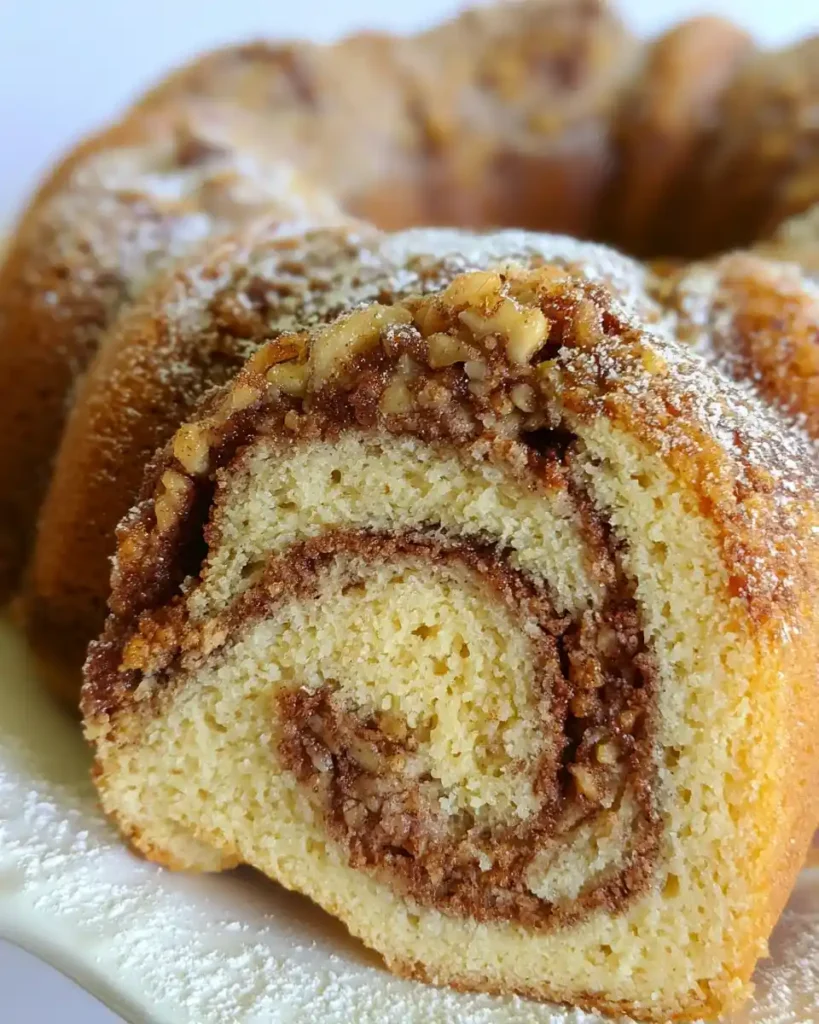
Bundt Coffee Cake With Cinnamon Swirl-A Bundt pan on the counter means something good is happening. It means someone decided the morning warranted more than toast, or the afternoon needed a reason to slow down, or the gathering deserved something impressive that arrived with minimum drama. Bundt Coffee Cake With Cinnamon Swirl covers all three of those occasions with a moist, sour cream-enriched batter that stays tender for days and a cinnamon-walnut swirl that runs through every single slice in a visible, aromatic spiral that makes cutting the first piece feel genuinely ceremonial.
I have made this cake for more brunches, potlucks, and casual weekday mornings than I can count, and it earns the same response every time — the moment it comes out of the Bundt pan and that cinnamon spiral is revealed through the golden-brown exterior, people start reaching for plates before the cake has finished cooling. The sour cream in the batter is the ingredient that makes this cake stay good for three days rather than drying out after one. The whisky in the optional shot is the ingredient that makes it interesting to adults at a brunch in a way that baked goods rarely are.
Have you ever made a cake that looked more difficult than it was and felt good about not correcting the assumption? This is that cake. Let us make it properly.
Why the Bundt Pan Makes This Coffee Cake Better Than a Standard Loaf or Round
The Bundt pan’s central tube creates a dramatically more even bake than solid round cake pans for thick batters. The tube conducts heat into the centre of the batter from the inside while the outer pan wall conducts heat from the outside — a thick coffee cake batter bakes from two directions simultaneously, producing an evenly cooked crumb throughout rather than a properly baked exterior with a slightly dense, underbaked centre.
The ring shape also means every slice contains the same ratio of cinnamon swirl to cake crumb — in a loaf format, end slices get more swirl than middle slices, which creates an inconsistent experience. In a Bundt, the spiral swirl runs continuously through the ring and every slice pulls through the same layered cross-section. This visual consistency also means the sliced cake looks beautiful on a plate regardless of which part of the ring it came from.
The surface area of a Bundt also maximises the amount of golden-brown crust relative to interior — more crust means more texture contrast in every bite. The fluted design of most Bundt pans adds even more surface detail and creates additional caramelisation at the ridges. IMO, the Bundt pan is one of the most underutilised pieces of baking equipment in most home kitchens, and this coffee cake is the definitive argument for owning one.
What You Need Bundt Coffee Cake With Cinnamon Swirl
The ingredients split into two groups: the cake batter and the cinnamon swirl. The batter uses standard cake ingredients with one significant upgrade — sour cream — and one optional one — whisky. The swirl uses three ingredients. The whole recipe relies on quality cinnamon, so use a fresh jar rather than whatever has been in the spice drawer since the previous administration.
For the Cake Batter
- 2 cups (250g) all-purpose flour
- 1 teaspoon baking soda
- 1/2 teaspoon kosher salt
- 1 cup (200g) granulated white sugar
- 1/2 cup (113g) unsalted butter, softened to room temperature
- 2 large eggs, room temperature
- 1 cup (240g) full-fat sour cream, room temperature
- 1 teaspoon pure vanilla extract
- 2 tablespoons whisky (optional) — bourbon or Irish whisky both work beautifully; the alcohol cooks off during the 70-minute bake and leaves a warm, slightly complex depth that coffee cake benefits from significantly
For the Cinnamon Swirl Filling
- 1 cup (100g) chopped walnuts — chop them to a medium dice rather than fine; large pieces provide texture, very fine pieces disappear into the batter
- 1/2 cup (100g) packed light brown sugar
- 2 teaspoons ground cinnamon — use Ceylon (true) cinnamon if available for a more complex, less harsh flavour than standard cassia cinnamon
Room Temperature Everything — The Instruction That Changes the Cake’s TextureCold butter cannot cream properly with sugar — it produces a lumpy, dense batter rather than the light, airy one that makes this cake tender. Cold eggs added to creamed butter cause it to curdle. Cold sour cream mixes unevenly. Pull the butter, eggs, and sour cream from the refrigerator at least 60–90 minutes before mixing. This single preparation habit produces a noticeably lighter crumb — the kind that holds together cleanly when sliced but feels tender and moist rather than dense when eaten. FYI — this is the most impactful instruction in the recipe that people most frequently skip.
How to Make Bundt Coffee Cake With Cinnamon Swirl Step by Step
Six stages: make the swirl mixture, prepare the pan and preheat, mix dry ingredients, cream butter and build the batter, layer everything in the pan, and bake. None of the stages requires advanced technique. The layering step is the most visually satisfying — watching the cinnamon swirl mixture disappear between batter layers knowing it will reappear as a spiral when the cake is sliced produces a specific kind of baking anticipation that few other recipes deliver.
Stage 1: Make the Cinnamon Swirl Mixture
Combine the chopped walnuts, packed light brown sugar, and ground cinnamon in a medium bowl. Break up any brown sugar clumps using a fork or your fingers — compacted clumps of brown sugar create dense, uneven pockets in the finished cake rather than an even, fine swirl of cinnamon and nut throughout each layer. Mix until every walnut piece is coated in the cinnamon-sugar mixture. Set aside. The swirl mixture can be made several days ahead and stored in an airtight jar at room temperature.
Stage 2: Preheat the Oven and Prepare the Bundt Pan
Preheat the oven to 150°C (300°F). The low baking temperature is intentional — the sour cream creates a very moist batter that benefits from a slower, gentler bake that allows the centre to cook through without the exterior darkening too aggressively. A higher temperature would produce a beautiful golden exterior with a slightly underbaked centre at the 70-minute mark.
Prepare the 9-inch Bundt pan thoroughly. Spray every surface — including all the ridges and the central tube — with baking spray, or brush with softened butter and dust with flour, tapping out any excess. Getting cake stuck in a Bundt pan after a 70-minute bake is the specific category of minor tragedy that makes bakers seriously reconsider their life choices. Use enough butter and flour to coat every surface, particularly in the ridges of a fluted pan where stuck cake is most likely to occur.
Stage 3: Mix the Dry Ingredients
In a large bowl, whisk together the flour, baking soda, and kosher salt until the baking soda is evenly distributed throughout the flour. Sifting or thorough whisking at this stage prevents pockets of concentrated baking soda from producing soapy-tasting spots in the finished cake. Set the dry mixture aside within easy reach for the combining stage.
Stage 4: Cream the Butter and Build the Batter
In a stand mixer bowl or large mixing bowl, beat the room-temperature softened butter and granulated sugar together on medium-high speed for 3–5 minutes until the mixture looks very pale — almost white — and feels noticeably airy. Properly creamed butter and sugar incorporates air that provides the cake’s lift and produces the open, tender crumb that makes a good coffee cake dramatically different from a dense, under-creamed one.
Add the eggs one at a time, beating for 20–25 seconds on medium speed after each addition before adding the next. After the second egg is fully incorporated, add the vanilla extract and the whisky if using. Beat briefly until combined. At this stage the batter may look slightly curdled — this is normal and will resolve when the dry ingredients go in.
Add the room-temperature sour cream to the bowl and mix on low speed until just incorporated — the sour cream is thick and needs a moment to fully blend in before you can increase the speed. Once combined, the batter should look smooth and creamy.
Now add the dry ingredients — flour, baking soda, and salt — in two or three additions on low speed, mixing just until each addition disappears into the batter before adding the next. Stop mixing the moment no dry flour streaks remain. Over-mixed coffee cake batter develops too much gluten and produces a tight, slightly tough crumb rather than the tender, open texture that sour cream cake should have. A gentle, minimal-mixing approach here is critical.
Stage 5: Layer the Batter and Swirl in the Bundt Pan
The layering sequence is what creates the visible cinnamon spiral in every slice. Work in three batter additions and two swirl additions:
1
First batter layer: Scoop one-third of the batter into the prepared Bundt pan. Spread it gently with a spatula to cover the base of the pan in an even layer. The batter is thick and may need a few strokes to reach the edges evenly.
2
First swirl layer: Scatter half of the cinnamon-walnut-brown sugar mixture evenly over the first batter layer. Distribute it as evenly as possible so the swirl appears consistently throughout the finished cake rather than concentrating in one section.
3
Second batter layer: Scoop another one-third of the batter over the first swirl layer. Spread gently — use a light hand so you do not displace the swirl mixture below.
4
Second swirl layer: Scatter the remaining cinnamon-walnut mixture evenly over the second batter layer.
5
Final batter layer: Add the last third of batter over the second swirl layer and spread evenly to cover the top of the pan. Smooth the surface level with the back of a spoon.
Stage 6: Bake, Cool, and Unmould
Place the assembled Bundt pan on the centre rack of the preheated 150°C (300°F) oven. Bake for 70 minutes without opening the oven door during the first 50 minutes. At the 70-minute mark, test for doneness by inserting a toothpick into the deepest part of the cake — it should come out with a few moist crumbs attached rather than wet batter. If wet batter appears, continue baking in 5-minute increments and test again.
Remove the finished cake from the oven and allow it to cool in the pan on a wire rack for 15–20 minutes. This cooling period allows the cake to set and pull slightly away from the pan walls — attempting to unmould immediately produces a cake that sticks and tears rather than releasing cleanly. After 20 minutes, place a serving plate or cake stand over the top of the pan and invert firmly in one confident motion. Tap the bottom of the pan gently if the cake does not release immediately. Allow the pan to sit over the inverted cake for 30 seconds before lifting it away.
The finished Bundt Coffee Cake With Cinnamon Swirl should emerge with a uniformly golden-brown exterior showing the Bundt’s ridged detail and the cinnamon spiral visible at the edges of the cake. Allow it to cool completely before slicing for the cleanest possible cut through the swirl layers. Dust with powdered sugar just before serving. :/
Variations Worth Making Bundt Coffee Cake With Cinnamon Swirl
Brown Butter Bundt Coffee Cake
For an even deeper flavour, consider browning the butter before incorporating it into the batter. Place the 1/2 cup of butter in a light-coloured saucepan over medium heat and cook, stirring frequently, until the milk solids turn golden brown and release a rich, nutty aroma, about 5–7 minutes. Allow the browned butter to cool completely and solidify before creaming it with the sugar. This extra step adds a complex caramelised richness that regular softened butter cannot match and pairs exceptionally well with the warm cinnamon swirl throughout the cake.
Maple Walnut Coffee Cake
Replace the granulated white sugar in the batter with an equal quantity of pure maple sugar, or replace 1/4 cup of the white sugar with 1/4 cup of maple syrup. Add 1/2 teaspoon of maple extract alongside the vanilla. In the swirl filling, replace the light brown sugar with maple sugar. The maple version produces a more complex, decidedly autumn-appropriate flavour that suits November and December brunches particularly well alongside strong coffee.
Storage Tips
Store the Bundt Coffee Cake wrapped in plastic wrap or in an airtight container at room temperature for up to 3 days. The sour cream in the batter prevents the cake from drying out the way butter-only cakes do — the day-two version is arguably better than the same-day version as the cinnamon swirl flavour continues to infuse through the surrounding crumb overnight. Refrigerate for up to 7 days or freeze individual slices for up to 3 months.
The cake actually tastes significantly better made a day ahead for the reasons described above. Bake it the evening before the gathering, allow it to cool completely, and store wrapped at room temperature overnight. Dust with powdered sugar in the morning before serving. This make-ahead approach also eliminates the day-of timing pressure entirely.
Frequently Asked Questions
Why does my Bundt cake stick to the pan?
Bundt pan sticking almost always results from insufficient pan preparation — missing spots in the ridges or flutes that do not receive butter or spray. Use softened butter applied with a pastry brush to reach every surface, including all ridges and the full height of the central tube. Dust thoroughly with flour and tap out any excess. A baking spray that contains flour (like Baker’s Joy) is the most reliable option for complex Bundt pan shapes. Also ensure the cake has cooled in the pan for 15–20 minutes before attempting to unmould — too-hot cakes are significantly more likely to stick.
Can I substitute the sour cream with something else?
Yes. Full-fat Greek yogurt is the best direct substitute and produces a nearly identical result — same tang, same moisture contribution, same fat content. Plain whole milk yogurt also works but produces a very slightly less rich result. Buttermilk can substitute in the same quantity but is thinner than sour cream, which slightly loosens the batter and may require an additional tablespoon of flour to maintain the correct consistency. Avoid non-fat versions of any dairy substitute — the fat in the sour cream is functional and contributes directly to the tender texture of the crumb.
Can I add a glaze to the finished coffee cake?
Yes — a simple powdered sugar glaze drizzled over the cooled Bundt adds both visual elegance and additional sweetness. Mix 1 cup of sifted powdered sugar with 2–3 tablespoons of whole milk, one teaspoon at a time, until the glaze reaches a thick but pourable consistency. Drizzle over the cooled cake using a spoon or piping bag. For a more flavoured glaze, substitute the milk with strong brewed coffee or vanilla-infused cream. Apply the glaze no more than 1 hour before serving so it stays glossy rather than absorbing into the cake surface.
Can I make this cake without walnuts?
Yes. Omit the walnuts and increase the brown sugar by 2 tablespoons in the swirl mixture to compensate for the missing volume and texture. The nut-free version produces a finer, more uniform cinnamon swirl without the walnut’s crunch — some people prefer this version for its more even texture. Pecans can substitute directly for walnuts in the same quantity and produce a slightly sweeter, milder-flavoured swirl that suits the coffee cake equally well. Almond slices are another excellent substitute that provide a different textural element throughout the swirl layer.
What should I do if my cake is still underbaked at 70 minutes?
Continue baking in 5-minute increments and test with a toothpick after each additional period. The toothpick should come out with a few moist crumbs — not wet batter — when the cake is done. Underbaking at 70 minutes can result from an oven that runs cooler than its dial setting, a very cold batter (if the sour cream was cold when added), or a pan that is slightly larger or smaller than 9 inches. An oven thermometer is the most reliable solution for consistent results across any oven — most household ovens are 10–25°F off their indicated temperature.
Final Thoughts
This Bundt Coffee Cake With Cinnamon Swirl earns its place in any regular baking rotation through consistent, generous results — a moist, tender sour cream crumb that stays good for three days, a cinnamon-walnut swirl that runs through every slice in a visible spiral, and a presentation that looks genuinely impressive despite requiring only basic technique. It suits casual weekday mornings, weekend brunches, and any gathering where something homemade communicates care without requiring an entire production.
Use room temperature dairy throughout. Cream the butter and sugar properly for the full 3–5 minutes. Prepare the Bundt pan meticulously. Bake at the low 300°F temperature for the full 70 minutes. Cool for 20 minutes before inverting. These five sequenced decisions produce a coffee cake that stays moist, slices cleanly, releases from the pan intact, and tastes exactly as good as a kitchen smelling of cinnamon for 70 minutes suggests it will.
Make it the evening before you need it and dust it with powdered sugar in the morning. Or make it the morning of and let the smell fill the house. Either way, IMO, cutting the first slice from a properly made cinnamon swirl Bundt is one of the most satisfying small moments available in home baking.