Servings: 10 to 12 slices | Prep Time: 20 minutes | Cook Time: 55 minutes | Total Time: 1 hour 15 minutes
You know that specific craving you get in autumn — the one that only an apple cider donut can fix? This Apple Cider Donut Loaf is the answer to that craving in loaf form. No hot oil, no donut cutter, no mess.
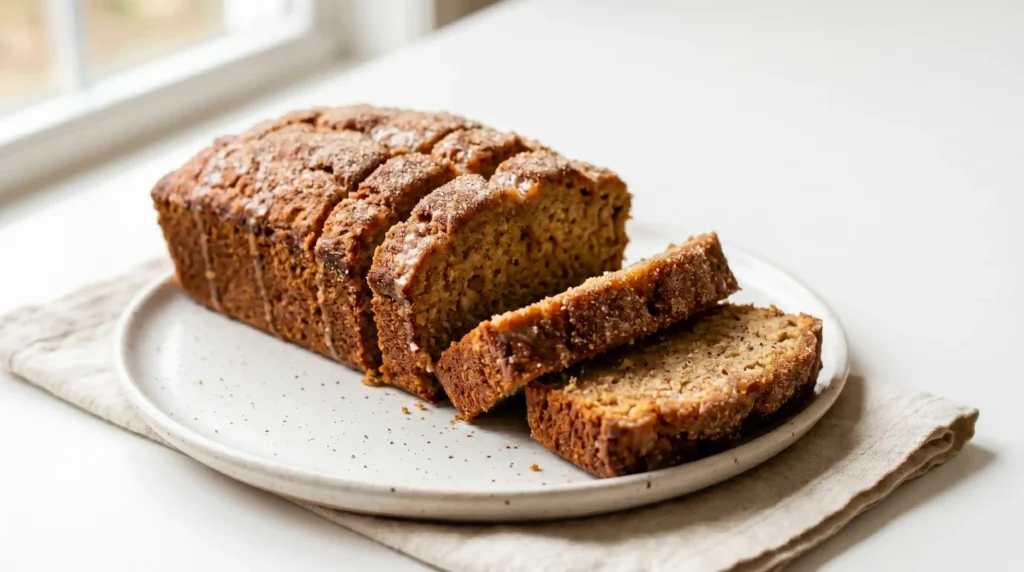
It has everything a classic apple cider donut delivers — the warm spice, the sweet cider depth, the cinnamon sugar crust — all baked into a tender, sliceable loaf. I made this for the first time on a rainy October morning and it completely replaced my usual weekend apple orchard run.
Why This Apple Cider Donut Loaf Works So Well
The magic here comes from reduced apple cider. Most apple quick breads use apple juice or applesauce and call it a day. This recipe simmers the cider down into a concentrated syrup that amplifies the apple flavor in a way nothing else can replicate.
That reduction step takes about 15 minutes and transforms ordinary cider into something with serious depth. Every bite tastes like the cider itself — warm, complex, and unmistakably fall. You can’t get that from a bottle of apple juice.
Add in the brown butter, warm spices, and cinnamon sugar topping and you have something that feels genuinely special.
Ingredients You’ll Need
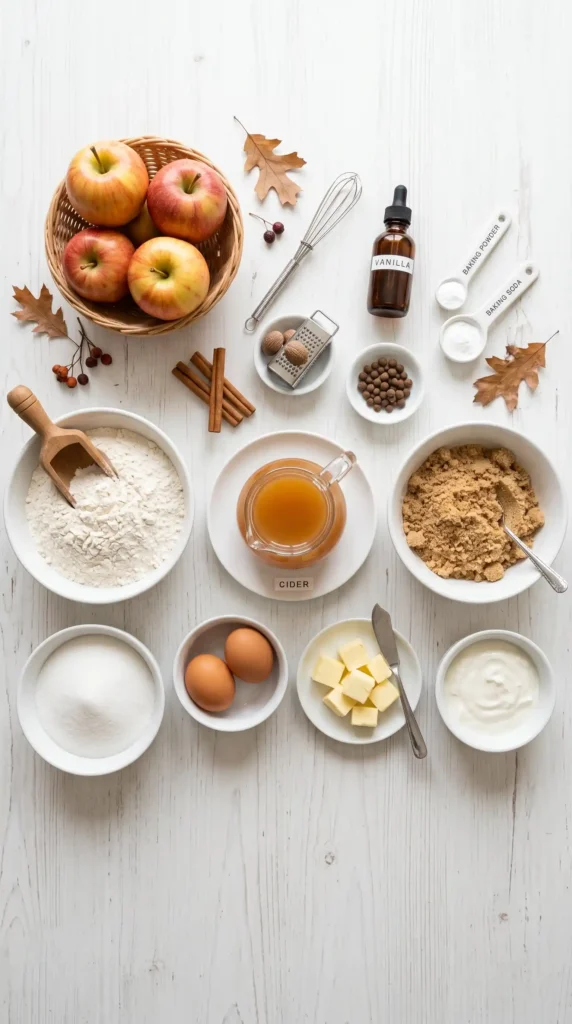
Everything here comes from a standard grocery store and your spice rack. No specialty items, no unusual techniques.
For the cider reduction:
- 2 cups fresh apple cider (not apple juice — cider has more depth)
Now For the loaf:
- 1 3/4 cups all-purpose flour
- 1 1/2 teaspoons baking powder
- 1/2 teaspoon baking soda
- 1 teaspoon ground cinnamon
- 1/2 teaspoon ground nutmeg
- 1/4 teaspoon ground allspice
- 1/2 teaspoon fine salt
- 1/2 cup (1 stick) unsalted butter
- 3/4 cup granulated sugar
- 1/4 cup packed light brown sugar
- 2 large eggs, at room temperature
- 1/2 cup sour cream, at room temperature
- 1 teaspoon pure vanilla extract
- 1/2 cup reduced apple cider (from the 2 cups above)
For the cinnamon sugar topping:
- 3 tablespoons unsalted butter, melted
- 1/3 cup granulated sugar
- 1 teaspoon ground cinnamon
Seventeen ingredients total, and you likely have most of them already.
How to Make Apple Cider Donut Loaf
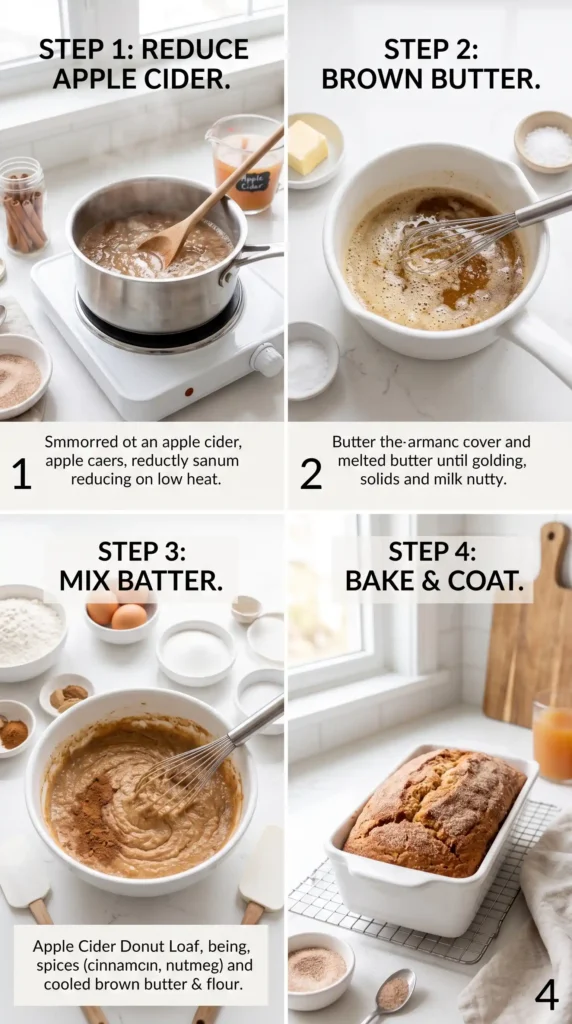
Step 1: Reduce the Apple Cider
Pour 2 cups of apple cider into a small saucepan and set it over medium heat. Let it come to a gentle boil, then reduce the heat to medium-low and let it simmer uncovered.
Stir it occasionally and watch the level in the pan. You’re cooking it down from 2 cups to roughly 1/2 cup, which takes about 15 to 18 minutes. The cider will darken slightly and smell deeply of apples and caramel.
Don’t rush this step by cranking the heat. High heat caramelizes the sugars too aggressively and can burn the reduction. Low, steady simmering gives you a smooth, concentrated cider syrup that makes the whole loaf taste extraordinary.
Once reduced, pour it into a small bowl or measuring cup and let it cool to room temperature before adding it to the batter. Hot liquid in batter scrambles the eggs — cool is the rule.
Step 2: Brown the Butter
While the cider cools, brown your butter. Add the 1/2 cup of unsalted butter to the same saucepan — no need to wash it — and melt it over medium heat.
Keep stirring as it melts and starts to foam. The foam will subside after a few minutes and you’ll see small golden bits forming on the bottom of the pan. The butter will smell nutty and rich, almost like toasted hazelnuts.
The moment it turns a medium amber color and smells deeply nutty, pour it immediately into a large mixing bowl. Those browned bits at the bottom carry enormous flavor — scrape every last one into the bowl.
Brown butter is optional but not really. It adds a depth and warmth that takes this loaf from good to the kind of thing people message you about afterward. Skip it only if you’re truly short on time.
Let the brown butter cool in the bowl for 10 to 15 minutes before adding the eggs.
Step 3: Preheat the Oven and Prep the Pan
While the butter and cider cool down, preheat your oven to 350 degrees Fahrenheit. Grease a 9×5 inch loaf pan thoroughly with butter or cooking spray, then line it with parchment paper leaving an overhang on the long sides.
The parchment overhang acts as handles for lifting the finished loaf out cleanly. Without it, you end up trying to pry a warm loaf out of a pan with a butter knife, which is a recipe for a broken loaf and some colorful language.
Set the prepared pan aside on the counter.
Step 4: Mix the Dry Ingredients
In a medium bowl, whisk together the flour, baking powder, baking soda, cinnamon, nutmeg, allspice, and salt. Whisk for about 30 seconds until the spices distribute evenly throughout the flour.
Pre-mixing the dry ingredients prevents pockets of baking powder or baking soda from sitting in one spot. Those pockets create uneven rising and sometimes a chemical aftertaste. A 30-second whisk solves both problems entirely.
Set the dry ingredient bowl aside.
Step 5: Mix the Wet Ingredients
Check that your brown butter has cooled to warm — not hot. Add both sugars to the bowl with the brown butter and whisk them together vigorously for about one minute. The mixture should look slightly pale and well combined.
Add the eggs one at a time, whisking after each addition until fully incorporated. The batter will look smooth and glossy after both eggs go in.
Add the sour cream and vanilla extract and whisk again until smooth. The sour cream adds moisture and a gentle tang that gives the loaf a tender, almost cake-like crumb. Don’t skip it or substitute it with yogurt that has a thinner consistency.
Finally, pour in the cooled apple cider reduction and stir to combine. The batter will look a warm amber color at this point and smell genuinely wonderful.
Step 6: Combine Wet and Dry
Pour the dry ingredients into the wet ingredient bowl. Use a rubber spatula or a wooden spoon to fold everything together with gentle, deliberate strokes.
Fold until you see no more dry flour streaks. Stop mixing the moment the batter comes together — overworking a quick bread batter activates gluten and produces a dense, rubbery texture instead of a tender crumb. Ten to twelve folds usually does it.
A few very small lumps in the batter are completely fine. They will smooth out during baking. You’re looking for combined, not perfect.
Step 7: Pour and Bake
Pour the batter into your prepared loaf pan and spread it into an even layer with your spatula. Tap the pan gently on the counter two or three times to release any air bubbles hiding in the batter.
Slide the pan into the center rack of your preheated oven. Bake at 350 degrees Fahrenheit for 50 to 60 minutes. Start checking at the 50-minute mark by inserting a wooden toothpick into the center of the loaf.
The loaf is done when the toothpick comes out with just a few moist crumbs attached — not wet batter, not completely clean. A few crumbs means perfectly baked. Clean means slightly overbaked. Wet means it needs more time.
The top should look deep golden brown and feel firm when you press it lightly. The edges will pull away slightly from the sides of the pan when it’s fully baked.
Step 8: Apply the Cinnamon Sugar Topping
This is the step that makes the Apple Cider Donut Loaf taste like an actual apple cider donut. Don’t skip it.
While the loaf cools in the pan for 10 minutes, melt the 3 tablespoons of butter for the topping and mix the 1/3 cup of sugar with 1 teaspoon of cinnamon in a small bowl.
After 10 minutes, use the parchment handles to lift the loaf out of the pan and set it on a wire rack. While it’s still warm — not hot — brush the top generously with melted butter. Use a pastry brush or just spoon it on and spread it.
Immediately sprinkle the cinnamon sugar mixture over the buttered top. Press it gently with your fingers so it adheres. Add a second coat of butter and cinnamon sugar if you want a thicker crust on top — and IMO, you always want the second coat.
Step 9: Cool and Slice
Let the loaf cool on the wire rack for at least 20 minutes before slicing. Cutting into a warm quick bread too early causes it to squash and look undercooked, even when it isn’t.
After 20 minutes, the crumb sets enough to slice cleanly. Use a serrated knife and slice with a gentle sawing motion rather than pressing down. Clean slices, every time.
Serve warm or at room temperature. Both are equally excellent — FYI, a slice warmed in the microwave for 15 seconds the next day tastes almost as good as fresh out of the oven.
Tips for the Perfect Apple Cider Donut Loaf
A few details that genuinely improve this bake:
- Use fresh apple cider, not apple juice — the difference in flavor after reduction is enormous.
- Cool the cider and butter completely before adding eggs — hot liquid scrambles eggs and breaks the batter.
- Don’t overmix the batter — fold until just combined and then stop.
- Apply the cinnamon sugar while the loaf is still warm — it sticks to a cool loaf very poorly.
- Use a light-colored loaf pan — dark pans absorb more heat and can overbrown the bottom before the center bakes through.
How to Store This Loaf
Wrap the cooled loaf tightly in plastic wrap and store it at room temperature for up to three days. The flavor actually deepens on day two, which feels almost unfair.
For longer storage, wrap individual slices in plastic wrap, place them in a freezer bag, and freeze for up to two months. Thaw overnight at room temperature or warm directly from frozen in a 325-degree oven for 12 minutes.
Do not refrigerate this loaf. The fridge dries out quick breads faster than anything else and the texture suffers significantly within a day.
Variations Worth Trying
Have you ever wondered how much mileage you can get out of one great base recipe?
- Apple cider glaze — skip the cinnamon sugar and drizzle a glaze made from powdered sugar and reduced cider over the top instead.
- Add chopped apples — fold 3/4 cup of finely diced peeled apple into the batter before baking for added texture.
- Maple version — replace 2 tablespoons of the granulated sugar with pure maple syrup for a richer, earthier sweetness.
- Mini loaf version — divide the batter into four mini loaf pans and reduce the bake time to 28 to 32 minutes.
- Muffin version — pour into a lined 12-cup muffin tin and bake for 18 to 22 minutes.
Frequently Asked Questions
Can I use store-bought apple juice instead of apple cider?
Technically yes, but the result will taste noticeably less complex. Apple cider contains more natural sugars, tannins, and apple solids than filtered juice. After reduction, those differences become even more pronounced. Use cider whenever possible for the full flavor payoff.
Why does my loaf sink in the middle?
Sinking usually means the batter was undermixed, the oven ran too hot and set the outside before the inside baked through, or the loaf came out of the oven before it fully set. Always confirm doneness with a toothpick at the center, not the edges.
Can I make this loaf without sour cream?
Full-fat plain Greek yogurt works as a direct substitute in the same quantity. It provides a similar tang and moisture level. Regular plain yogurt works too but produces a slightly less tender crumb due to its higher water content.
How do I know when my cider reduction is ready?
Measure it. Start with 2 cups and cook until it measures exactly 1/2 cup in a liquid measuring cup. The color should look darker than fresh cider — almost a warm amber — and it should coat the back of a spoon lightly when done.
Can I double the recipe?
Yes, easily. Double all the ingredients and divide the batter between two 9×5 loaf pans. Bake them side by side on the same rack and check at the 50-minute mark. Both loaves should bake in approximately the same time.
Final Thoughts
This Apple Cider Donut Loaf captures everything you love about a fall apple cider donut and translates it into something you can make on any weekend without a deep fryer or a trip to the orchard.
The reduced cider, the brown butter, the warm spice blend, and that cinnamon sugar crust all work together to make something that genuinely tastes seasonal and intentional. It’s not just a quick bread — it’s a whole autumn experience in loaf form.
Preheat your oven. Reduce that cider. Your kitchen is about to smell absolutely incredible.
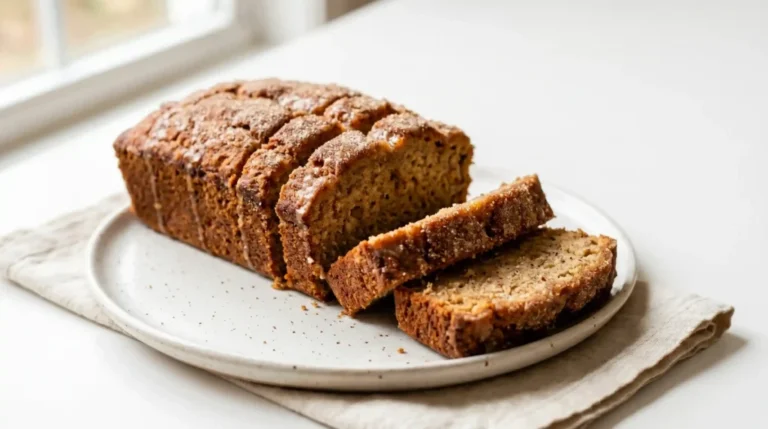
Apple Cider Donut Loaf
Ingredients
Method
- Pour 2 cups of apple cider into a small saucepan and set it over medium heat.
- Let it come to a gentle boil, then reduce the heat to medium-low and let it simmer uncovered, stirring occasionally until reduced to roughly 1/2 cup.
- Once reduced, pour it into a bowl or measuring cup and let it cool to room temperature.
- Add the 1/2 cup of unsalted butter to the same saucepan and melt over medium heat, stirring as it melts.
- Once it turns a medium amber color and smells nutty, pour it into a large mixing bowl and let it cool for 10 to 15 minutes.
- Preheat your oven to 350 degrees Fahrenheit.
- Grease a 9x5 inch loaf pan thoroughly with butter or cooking spray, then line it with parchment paper.
- In a medium bowl, whisk together the flour, baking powder, baking soda, cinnamon, nutmeg, allspice, and salt.
- Add both sugars to the bowl with the brown butter and whisk them together.
- Add the eggs one at a time, whisking after each addition until fully incorporated.
- Add the sour cream and vanilla extract, whisk again until smooth.
- Finally, stir in the cooled apple cider reduction.
- Pour the dry ingredients into the wet ingredients and fold gently until just combined.
- Pour the batter into the prepared loaf pan and bake at 350 degrees Fahrenheit for 50 to 60 minutes.
- Check doneness by inserting a toothpick into the center; it should come out with a few moist crumbs.
- While the loaf cools for 10 minutes, melt the topping butter and mix together with cinnamon and sugar.
- Brush the melted butter over the top of the loaf and sprinkle the cinnamon sugar mixture evenly.
- Let the loaf cool on a wire rack for at least 20 minutes before slicing.