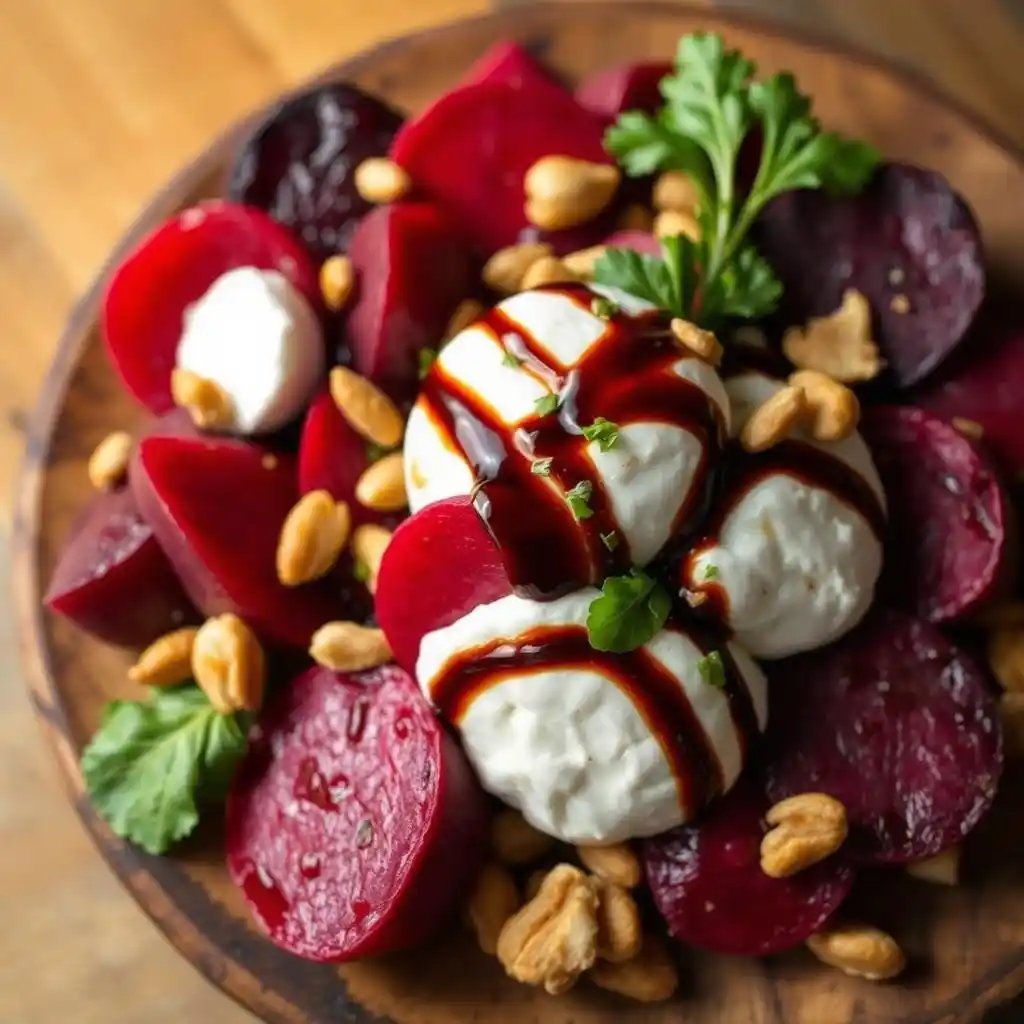
Some salads are just sad lettuce in a bowl. This one isn’t. Beet and burrata salad with pine nuts and balsamic is the dish I make when I want people to think I tried way harder than I did.
Servings: 4 Prep time: 15 minutes Cook time: 40 minutes (mostly hands-off roasting) Total time: 55 minutes
If you’ve never paired earthy roasted beets with creamy burrata before, you’re in for something good. Add crunchy pine nuts and a tangy balsamic drizzle, and this stops being a side dish. It becomes the thing everyone asks about.
What Makes This Salad Worth Making
This dish works because it plays with contrast on every level. Sweet beets meet rich, milky burrata. Crunchy pine nuts meet a sharp balsamic finish. Have you ever eaten something where every bite felt slightly different? That’s the whole appeal here.
I started making this after a summer trip through Italy, where a similar salad showed up at nearly every trattoria. IMO it’s one of those dishes that looks fancy but takes almost no real skill to pull off.
Why Beets and Burrata Actually Work Together
Beets bring a deep, earthy sweetness once roasted. Burrata brings soft, creamy richness that practically melts against warm beets. Together, they balance each other instead of competing, which is rarer in cooking than people admit.
- Roasted beets add natural sweetness and color
- Burrata adds creamy, rich contrast
- Toasted pine nuts add crunch and nuttiness
- Balsamic glaze ties every element together with acidity
Ingredients You’ll Need
Here’s your full shopping list for four servings. Nothing on here requires a specialty trip, aside from maybe the burrata.
- Fresh beets — 3 medium, trimmed
- Burrata cheese — 2 balls (about 8 ounces total)
- Pine nuts — 1/3 cup
- Extra-virgin olive oil — 3 tablespoons, divided
- Balsamic vinegar — 3 tablespoons
- Honey — 1 tablespoon
- Fresh arugula — 2 cups
- Salt — to taste
- Black pepper — to taste
- Fresh basil leaves — a small handful, for garnish
That’s genuinely it. Quality matters more than quantity with this recipe, so don’t skimp on the burrata.
Choosing the Right Beets and Burrata
Getting good results here comes down to picking solid ingredients, not fancy technique.
Which Beets Work Best
Red beets give you the classic deep color and a strong earthy flavor. Golden beets taste milder and won’t stain your cutting board pink, which is a real perk. Chioggia beets, the striped ones, look stunning but taste closer to golden beets.
- Red beets: bold flavor, deep color, will stain everything
- Golden beets: mild, sweet, no staining drama
- Chioggia beets: mild flavor, striking pink-and-white swirl pattern
What to Look For in Burrata
Good burrata should feel soft and slightly heavy for its size. The outer shell should look smooth and bright white, with no cracks or yellow patches. Give it a gentle squeeze; a slight jiggle means it’s fresh.
Buy burrata as close to serving day as possible, since it doesn’t keep well. Let it sit at room temperature for about 30 minutes before serving. Cold burrata just doesn’t have the same silky texture, and honestly, that’s the whole point of the cheese.
How to Make Beet And Burrata Salad With Pine Nuts & Balsamic
Let’s actually get into the kitchen now. I’ll break this down slower than most recipes bother to, because a couple of small steps make a real difference here.
Step 1: Roast the Beets
Preheat your oven to 400°F. Scrub the beets clean under running water, then trim off the tops and root ends. Wrap each beet loosely in foil, place them on a baking sheet, and roast for about 40 to 50 minutes.
You’ll know they’re done when a knife slides in with almost no resistance. Let them cool for about 10 minutes before handling, since hot beets are genuinely painful to peel. Slip the skins off with your fingers or a paper towel; they should come away easily.
Step 2: Slice the Beets
Once the beets have cooled enough to handle, slice them into rounds about a quarter-inch thick. Try to keep the slices even, since uneven pieces make the final plate look messy. If you’re using multiple beet colors, keep them separated until plating so the colors don’t bleed together.
Step 3: Toast the Pine Nuts
Add the pine nuts to a dry skillet over medium heat, with no oil needed. Stir constantly, because pine nuts go from perfectly golden to burnt in about fifteen seconds flat. This whole process takes just two to three minutes, so don’t walk away from the stove.
Pull them off the heat the moment they turn golden brown and smell nutty. Transfer them immediately to a plate to stop the cooking. Letting them sit in the hot pan will keep cooking them even after the heat’s off.
Step 4: Whisk the Balsamic Dressing
In a small bowl, whisk together the balsamic vinegar, honey, and two tablespoons of olive oil. Keep whisking until the mixture looks glossy and slightly thickened. Season with a pinch of salt and pepper, then taste it and adjust as needed.
If it tastes too sharp, add a touch more honey. If it tastes flat, add another splash of vinegar. This dressing should taste bold enough to stand up to the richness of the burrata.
Step 5: Build the Base
Spread the arugula across a large, shallow platter as your base layer. Drizzle it lightly with the remaining tablespoon of olive oil and a pinch of salt. This keeps the greens from tasting bare underneath everything else.
Step 6: Layer the Beets and Burrata
Arrange the sliced beets over the arugula in a loose, overlapping pattern. Tear the burrata open by hand right in the center of the platter, letting the creamy interior spill out naturally. Don’t slice burrata with a knife; tearing it looks far more appealing and rustic.
Step 7: Finish the Plate
Scatter the toasted pine nuts generously over the entire salad. Drizzle the balsamic dressing over everything in loose, uneven lines. Finish with torn basil leaves and one more light crack of black pepper.
Serve this salad immediately after assembling it. Burrata and dressed greens don’t hold up well sitting around, so timing genuinely matters here.
Serving Ideas That Work
This salad holds its own as a light lunch, but it also shines as part of a bigger spread. Here’s how I usually build a meal around it.
- Serve alongside crusty grilled bread for scooping up the burrata
- Pair with grilled chicken or shrimp for a heartier dinner
- Add it to a summer spread with other room-temperature dishes
- Serve as an elegant starter before a pasta course
Honestly, the grilled bread pairing is non-negotiable in my house. Watching that burrata soak into warm bread is genuinely one of life’s small joys.
Common Mistakes to Avoid
I’ve made every single one of these mistakes, so learn from my errors instead of repeating them.
- Slicing burrata with a knife: tearing it by hand keeps the texture intact
- Skipping the cooling step on beets: hot beets are nearly impossible to peel cleanly
- Walking away while toasting pine nuts: they burn shockingly fast
- Assembling too early: the salad wilts and loses its visual appeal within an hour
Storing Leftovers
Store any leftover roasted beets in an airtight container in the fridge for up to five days. Keep the balsamic dressing in a separate sealed jar, where it’ll last about a week. Toasted pine nuts stay fresh in an airtight container for roughly two weeks.
Don’t store the assembled salad as a whole. Burrata and dressed arugula both break down fast once combined, turning soggy and unappetizing within hours. Assemble only what you plan to eat right away, and keep components separate otherwise.
Frequently Asked Questions
What is beet and burrata salad made of? It’s built from roasted beets, fresh burrata cheese, toasted pine nuts, arugula, and a balsamic and honey dressing.
Can I boil the beets instead of roasting them? You can, but roasting brings out a deeper natural sweetness that boiling just doesn’t achieve. Roasting is worth the extra time.
What can I use instead of burrata? Fresh mozzarella works as a substitute, though it won’t have quite the same creamy, spreadable center that burrata offers.
Is this salad good for meal prep? You can prep the beets, dressing, and pine nuts ahead of time, but assemble everything with the burrata right before eating.
Can I make this salad vegan? Swap the burrata for a cashew-based cheese alternative and swap honey for maple syrup, and the salad still works well.
How do I keep beets from staining my hands? Wear disposable gloves while peeling and slicing, or just accept the slightly pink fingertips as a badge of honor.
What wine pairs well with beet and burrata salad? A crisp Sauvignon Blanc or a chilled Pinot Grigio both cut through the richness of the burrata nicely.
Final Thoughts
Beet and burrata salad with pine nuts and balsamic proves a simple dish can still feel special. Roasted beets, creamy burrata, crunchy pine nuts, and a sharp balsamic finish come together without needing complicated technique. Once you’ve made it, you’ll understand why it shows up on so many restaurant menus.
Grab a few beets this week and give it a real shot. Once that burrata spills open next to those warm, sweet beets, you’ll get why people fall for this salad every single time.
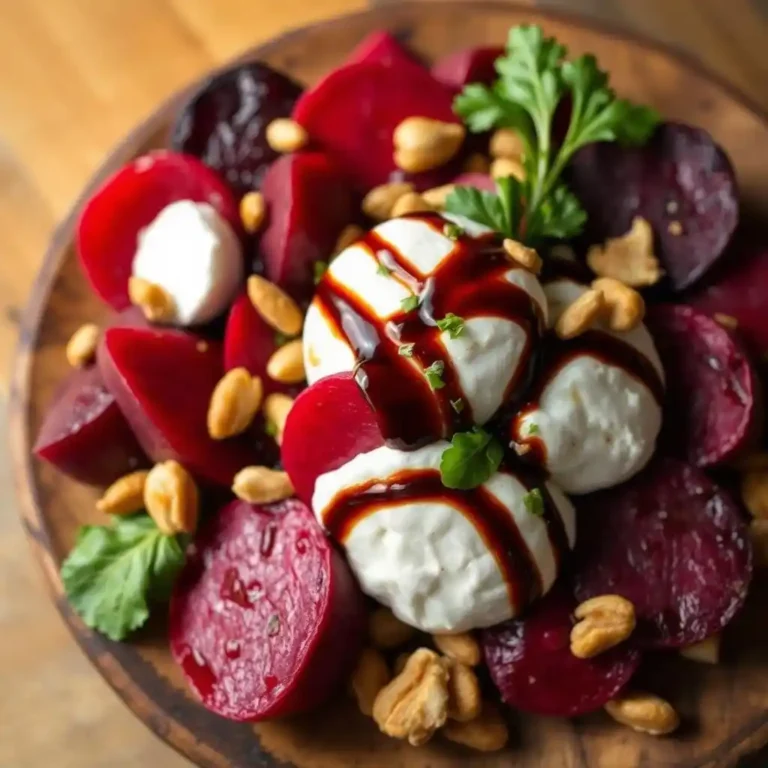
Beet and Burrata Salad with Pine Nuts and Balsamic
Ingredients
Method
- Preheat your oven to 400°F. Scrub the beets clean under running water, then trim off the tops and root ends. Wrap each beet loosely in foil, place them on a baking sheet, and roast for about 40 to 50 minutes.
- Let them cool for about 10 minutes before handling. Slip the skins off with your fingers or a paper towel.
- Once the beets have cooled, slice them into rounds about a quarter-inch thick.
- Toast the pine nuts in a dry skillet over medium heat, stirring constantly until golden brown and fragrant.
- In a small bowl, whisk together balsamic vinegar, honey, and 2 tablespoons of olive oil. Adjust seasoning with salt and pepper.
- Spread arugula across a large, shallow platter as your base layer.
- Arrange sliced beets over the arugula in an overlapping pattern.
- Tear the burrata open by hand in the center of the platter, allowing the creamy interior to spill out.
- Scatter the toasted pine nuts over the entire salad and drizzle with the balsamic dressing.
- Finish with torn basil leaves and a light crack of black pepper.