Servings: 12–16 | Prep Time: 20 minutes | Bake Time: 35–45 minutes | Total Time: ~1 hour 10 minutes
The Cake That Makes People Ask for the Recipe Every Single Time
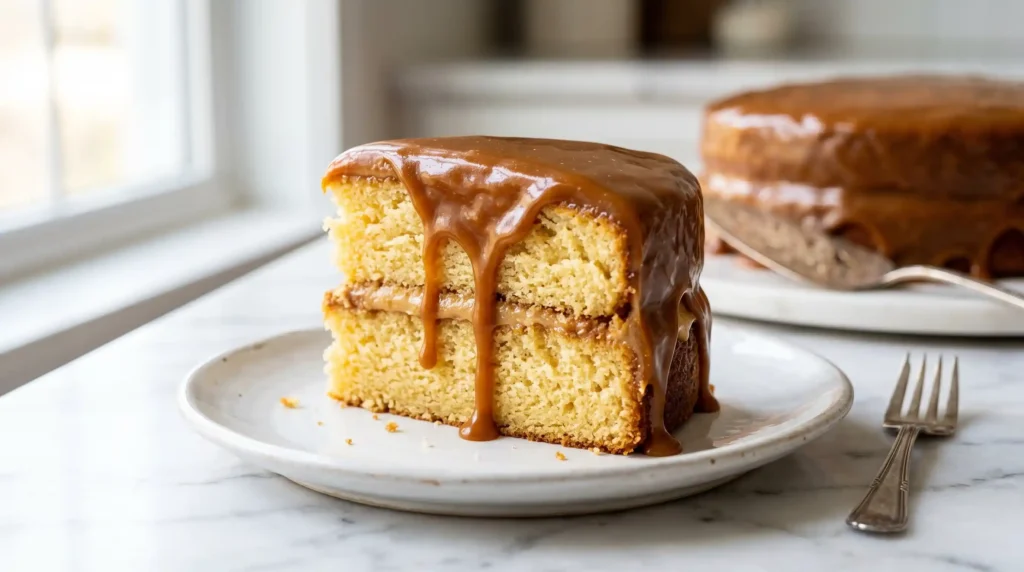
You know that moment at a potluck when someone’s dessert disappears before yours even gets touched? Yeah, this Buttery Buttermilk Cake With Caramel Icing is that dessert. It’s moist, rich, and has a caramel topping that makes people forget all other cakes exist.
I first made this for a family birthday. By the end of the night, three people had asked for the recipe. That doesn’t happen with a mediocre cake.
What Makes This Cake So Special?
Let’s be real — there are a million cake recipes out there. So what makes this one worth your Sunday afternoon? Two words: buttermilk and caramel.
Buttermilk gives the crumb a tender, velvety texture that regular milk just can’t match. And the homemade caramel icing? It soaks slightly into the warm cake and sets into this glossy, fudge-like layer. It’s almost unfair how good it tastes.
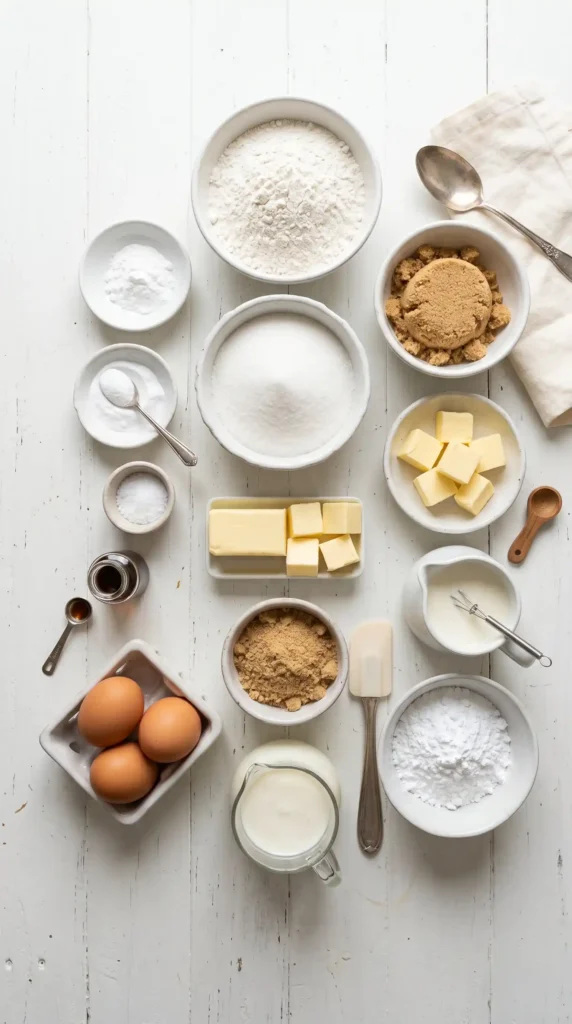
Ingredients You’ll Need
For the Cake
- 3 cups all-purpose flour
- 2 cups granulated sugar
- 1 cup unsalted butter, softened
- 4 large eggs
- 1 cup full-fat buttermilk
- 1 tsp baking soda
- 1 tsp baking powder
- ½ tsp salt
- 1 tbsp vanilla extract
For the Caramel Icing
- ½ cup unsalted butter
- 1 cup brown sugar
- ¼ cup whole milk
- 2 cups powdered sugar
- 1 tsp vanilla extract
Pro tip: Don’t skimp on the butter. This is not the recipe to swap in a “lighter” alternative. Full-fat everything is the game plan here.
Step-by-Step: How to Make Buttery Buttermilk Cake With Caramel Icing
Step 1: Prep Your Oven and Pan
Preheat your oven to 350°F (175°C). While it heats up, grease your baking dish thoroughly with butter or cooking spray. Then dust it lightly with flour, tapping out any excess.
You can use a 9×13-inch baking dish or a bundt pan — both work beautifully. The bundt pan gives you that gorgeous domed shape, while the baking dish is easier to serve from. Your call.
Step 2: Cream the Butter and Sugar
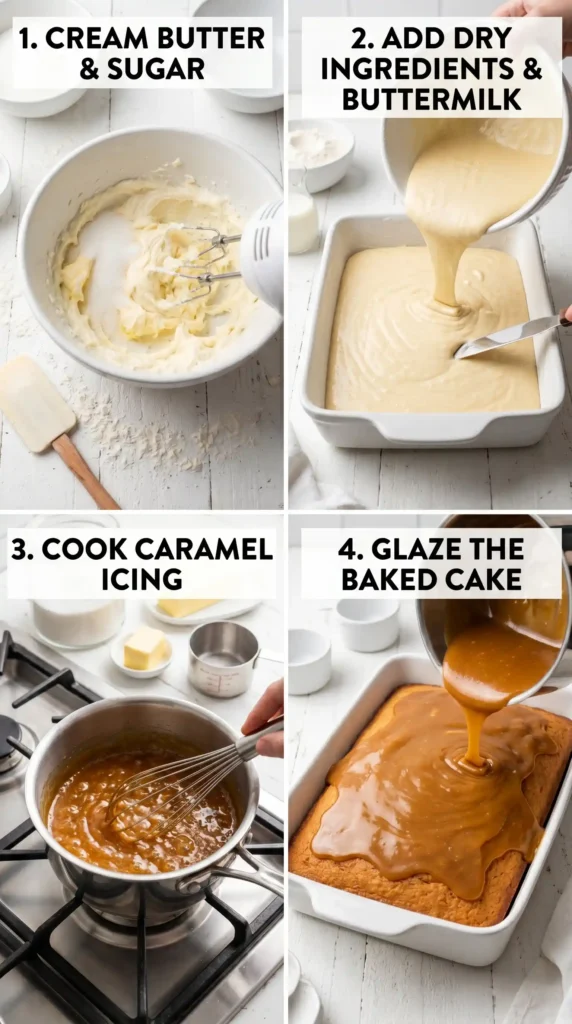
Place your softened butter and granulated sugar into a large mixing bowl. Using a hand mixer or stand mixer, beat them together on medium-high speed for 3 to 4 full minutes.
You’re not just mixing here — you’re building the foundation of your cake. The mixture should turn noticeably lighter in color and fluffy in texture. This step creates tiny air pockets that make the crumb soft and light. Don’t rush it.
Step 3: Add the Eggs One at a Time
Crack your eggs in one by one, mixing well after each addition before adding the next. This matters more than you’d think. Adding all four at once can break the emulsion you just built, leaving you with a dense, heavy batter.
Each egg needs about 20–30 seconds of mixing time to fully incorporate. You’ll see the batter get glossy and smooth as you go. That’s a good sign.
Step 4: Mix the Dry Ingredients
In a separate medium bowl, whisk together the flour, baking soda, baking powder, and salt. Whisking rather than just stirring makes sure everything is evenly distributed throughout the batter.
This step takes about 30 seconds but makes a real difference. Uneven leavening can cause your cake to rise unevenly or have dense patches. A quick, thorough whisk sorts that right out.
Step 5: Alternate the Dry Ingredients and Buttermilk
Now comes the part where things get satisfying. With your mixer on low, add about one-third of the dry mixture to the butter-egg bowl. Mix just until it starts to incorporate, then add half the buttermilk.
Repeat: another third of the dry mix, then the remaining buttermilk, then the final third of the dry mix. Finish by stirring in the 1 tbsp vanilla extract. The batter should look smooth, thick, and just slightly ribbony when you lift the beater.
Important: Don’t overmix at this stage. Overworking the batter develops gluten and makes the cake tough. Once you don’t see dry streaks, stop.
Step 6: Pour and Bake
Pour your batter into the prepared pan and spread it evenly with a spatula. Give the pan a gentle tap on the counter to release any large air bubbles trapped inside.
Slide it into the center rack of your preheated oven. Bake for 35 to 45 minutes, depending on your oven and the pan you used. A bundt pan may need closer to 45 minutes. Start checking at the 35-minute mark.
Your cake is done when a toothpick inserted into the center comes out clean or with just a couple of moist crumbs. Wet batter on the toothpick means it needs more time. A fully clean toothpick with no crumbs can mean it’s slightly over — aim for the sweet spot in between.
Step 7: Make the Caramel Icing
While the cake finishes baking (or while it cools for just 5 minutes), make the icing. Melt ½ cup unsalted butter in a medium saucepan over medium heat.
Add 1 cup brown sugar and stir everything together. Let this mixture come to a gentle boil, stirring constantly so it doesn’t burn. Once it’s bubbling, pour in ¼ cup whole milk and stir again. Let it boil for exactly 1 minute — set a timer.
Remove the pan from heat. Now whisk in 2 cups powdered sugar and 1 tsp vanilla extract. Work quickly — the icing thickens as it cools. Whisk until completely smooth with no lumps. It should be pourable but slightly thick, like a warm ganache.
Step 8: Ice the Cake While It’s Still Warm
This is the most important tip in this entire recipe — ice the cake while it’s still warm. Don’t wait until it’s fully cooled.
Pour the warm caramel icing over the warm cake slowly and evenly. The icing will sink slightly into the surface of the cake, creating this incredible, fudgy layer that you cannot replicate by icing a cold cake. Let it set for 15–20 minutes before slicing.
Tips for the Best Buttery Buttermilk Cake With Caramel Icing
- Use room-temperature butter and eggs. Cold ingredients don’t cream properly and can lead to lumpy batter.
- Full-fat buttermilk only. Low-fat versions don’t give you the same rich, tender texture.
- Don’t skip the boil on the caramel. That 1-minute boil sets the structure of the icing. Skip it and you’ll end up with a grainy, sugary mess.
- Pour icing immediately. The caramel sets quickly as it cools. If it gets too thick before you pour, reheat it gently over low heat for 30 seconds.
- Serve warm or at room temperature. This cake is absolutely delicious with a scoop of vanilla ice cream on the side.
Can You Make This Cake Ahead of Time?
Yes! This cake actually stores really well. FYI, the flavors deepen overnight as the caramel icing soaks further into the crumb. Cover it loosely with foil or plastic wrap and store at room temperature for up to 3 days.
For longer storage, refrigerate it for up to 5 days. Just bring it back to room temperature before serving — cold cake straight from the fridge loses some of that soft, tender texture.
You can also freeze it without the icing for up to 2 months. Thaw overnight in the fridge, then make fresh icing when you’re ready to serve.
Common Variations Worth Trying
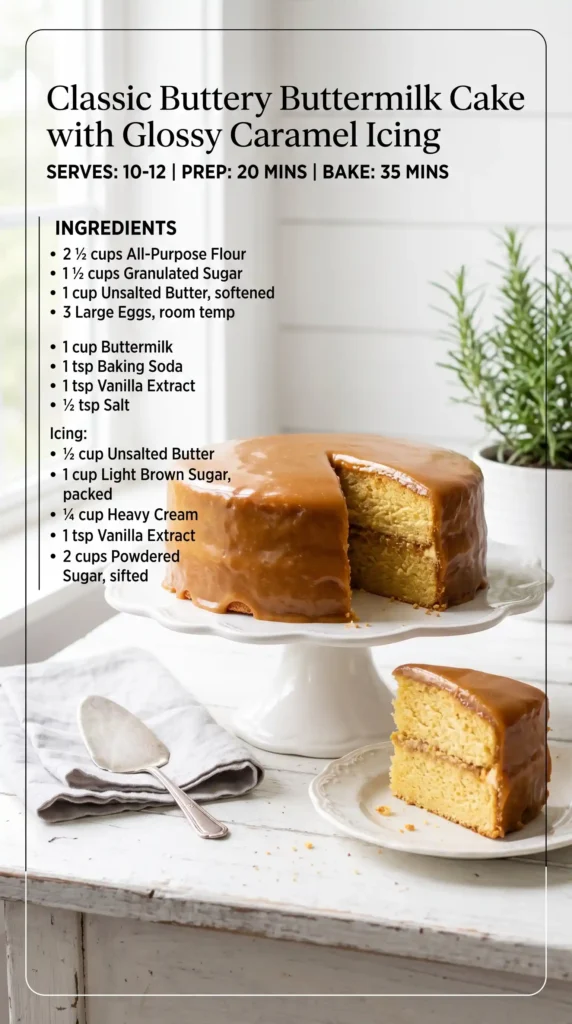
This base recipe is genuinely perfect as-is, but if you want to experiment, here are a few ideas:
- Add a pinch of cinnamon to the dry ingredients for a warm, spiced undertone.
- Stir in ½ cup chopped pecans to the batter for crunch.
- Top with flaky sea salt right after pouring the caramel icing — sweet and salty is always a winner.
- Brown the butter for the icing instead of just melting it. IMO, this takes the caramel flavor to a whole new level.
FAQs About Buttery Buttermilk Cake With Caramel Icing
Can I substitute buttermilk if I don’t have any?
Yes. Add 1 tablespoon of white vinegar or lemon juice to a measuring cup, then fill it up to 1 cup with regular whole milk. Stir and let it sit for 5 minutes. It won’t be quite as rich as true buttermilk, but it does the job in a pinch.
Why did my caramel icing turn out grainy?
Grainy icing usually means the sugar crystallized during cooking. Make sure you stir constantly while the butter and brown sugar are melting, and bring it to a proper boil before adding the milk. Also make sure your powdered sugar is fresh and free of lumps.
Can I use salted butter instead of unsalted?
You can, but then skip or reduce the ½ tsp of salt in the cake batter. Using salted butter everywhere without adjusting can make the finished cake taste overly salty, which would be a real shame given how good everything else is.
How do I know when the cake is done baking?
Use the toothpick test. Insert a clean toothpick into the very center of the cake — if it comes out clean or with just 1–2 moist crumbs, the cake is done. You can also gently press the center: a fully baked cake springs back when pressed lightly.
Can I make this in a bundt pan instead of a 9×13 pan?
Absolutely. A bundt pan works beautifully and gives the cake a more impressive presentation. Just make sure to grease every nook and cranny of the pan thoroughly. Baking time may increase by 5–10 minutes, so start checking at the 40-minute mark.
Final Thoughts
This Buttery Buttermilk Cake With Caramel Icing is the kind of recipe that earns its place in your regular rotation. It’s not fussy, it doesn’t require any fancy equipment, and it delivers every single time.
The tender, buttery crumb paired with that glossy caramel topping is genuinely hard to beat. Whether you’re baking for a gathering or just treating yourself (no judgment), this cake delivers. Now go make it — your oven is waiting.
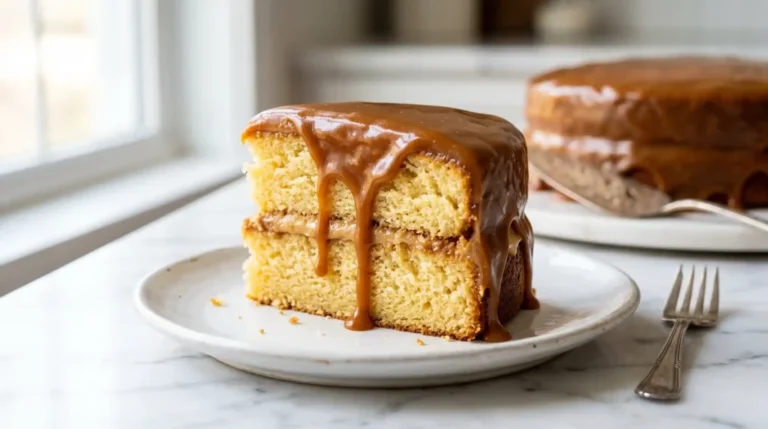
Buttery Buttermilk Cake With Caramel Icing
Ingredients
Method
- Preheat your oven to 350°F (175°C). Grease your baking dish thoroughly with butter or cooking spray and dust it lightly with flour.
- Cream softened butter and granulated sugar in a large mixing bowl on medium-high speed for 3 to 4 minutes.
- Add eggs one at a time, mixing well after each addition.
- Whisk together the flour, baking soda, baking powder, and salt in a separate bowl.
- With the mixer on low, alternate adding dry ingredients and buttermilk to the butter-egg mixture, finishing with dry ingredients.
- Pour batter into the prepared pan and tap gently to release air bubbles.
- Bake for 35 to 45 minutes, until a toothpick comes out clean or with a few moist crumbs.
- Melt ½ cup unsalted butter in a saucepan over medium heat. Add brown sugar and bring to a gentle boil, stirring constantly.
- Pour in whole milk and boil for exactly 1 minute. Remove from heat and whisk in powdered sugar and vanilla extract until smooth.
- Pour the warm caramel icing over the warm cake and let it set for 15-20 minutes before slicing.