There are meals that transport you somewhere better than wherever you currently are. Chicken Gyros are one of those meals. The moment that marinated chicken hits the hot pan and the kitchen fills with oregano, lemon, and garlic — you are no longer in your kitchen. You are at a street food stall somewhere in Athens, holding something wrapped in warm pita that makes you genuinely happy to be alive.
I spent years ordering gyros from restaurants and assuming I could never replicate what made them so good at home. Then I made this recipe and discovered two things: the marinade is the magic, and the marinade is genuinely simple. The restaurant version has no secret technique unavailable to a home cook. It has good ingredients, proper marinating time, and a very hot pan. That is the entire mystery solved.
Have you ever made something at home and thought — why did I ever pay someone else to make this? That is the chicken gyros moment. Let us build it from scratch.
What Actually Makes a Gyro a Gyro
Traditional gyros cook meat on a rotating vertical spit — the word gyros literally means “turn” in Greek. Street vendors shave thin slices off the outer surface of the rotating cone as they brown, layer them into warm pita, and add sauce, vegetables, and herbs. The home version cannot replicate the spit, but it can replicate everything that makes that meat taste exceptional: the marinade, the char, and the seasoning.
Chicken thighs are the correct cut for this recipe. Not chicken breasts. Thighs have more fat, more connective tissue, and more flavour — they stay juicy under the high heat that creates the char you need, while breasts dry out before the surface has a chance to caramelise properly. This is not negotiable for anyone who wants the authentic experience rather than a dry, pale approximation.
The tzatziki is equally non-negotiable. Bottled tzatziki exists and it is technically edible, but homemade tzatziki made with full-fat Greek yogurt, fresh cucumber, real garlic, and fresh dill tastes completely different — brighter, creamier, and more complex. IMO, making your own tzatziki takes ten minutes and upgrades the entire gyro experience from good to genuinely memorable.
What You Need
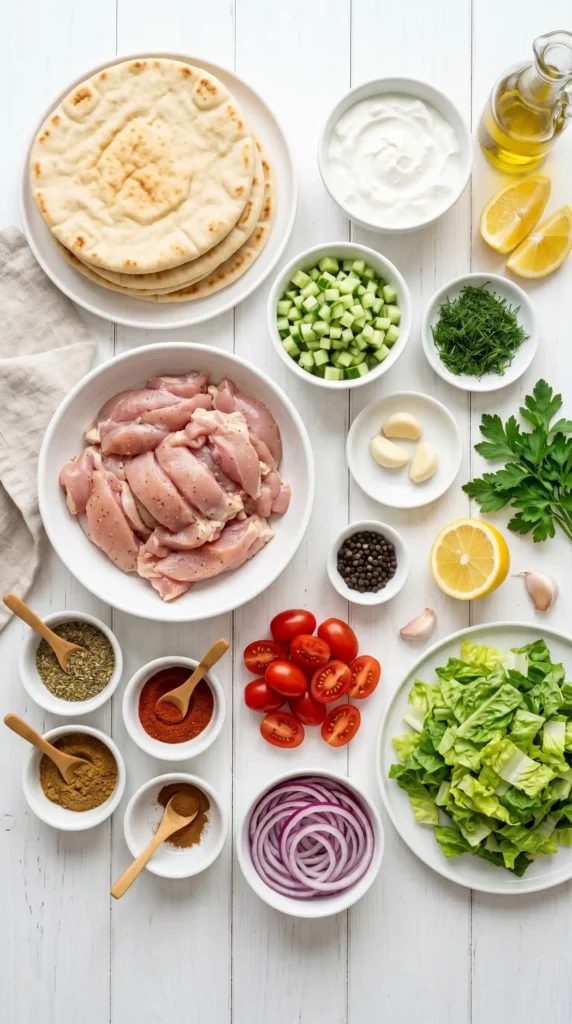
Three components: the marinated chicken, the tzatziki, and the gyro assembly ingredients. Make the tzatziki first so the flavours have time to develop while the chicken marinates. Everything is straightforward and uses ingredients available at any standard grocery store.
For the Chicken Marinade
- 700g (about 1.5 lbs) boneless, skinless chicken thighs
- 3 tablespoons olive oil
- 3 tablespoons fresh lemon juice (about 1 large lemon)
- 1 teaspoon lemon zest
- 4 garlic cloves, very finely minced or pressed
- 2 teaspoons dried oregano (Greek oregano if available — it is more intense)
- 1 teaspoon ground cumin
- 1 teaspoon smoked paprika
- 1/2 teaspoon ground coriander
- 1/2 teaspoon ground cinnamon (small amount, but transformative)
- 1 teaspoon salt
- 1/2 teaspoon black pepper
- 1/4 teaspoon cayenne pepper (optional)
For the Homemade Tzatziki
- 1 cup (240g) full-fat Greek yogurt
- 1/2 medium cucumber, grated and squeezed completely dry
- 2 garlic cloves, very finely minced
- 2 tablespoons fresh lemon juice
- 2 tablespoons fresh dill, finely chopped (or 1 teaspoon dried dill)
- 1 tablespoon extra-virgin olive oil
- 1/2 teaspoon salt
- 1/4 teaspoon white pepper
Now For the Gyro Assembly
- 4 large pita breads or flatbreads (23–25cm / 9–10 inch)
- 2 medium tomatoes, thinly sliced or diced
- 1/2 medium red onion, very thinly sliced
- 1 small head romaine lettuce or 2 cups shredded iceberg
- Fresh flat-leaf parsley, roughly chopped
- Lemon wedges for squeezing at the table
- Optional: sliced kalamata olives, crumbled feta cheese
The Cucumber in Tzatziki — Squeeze Out Every Drop of WaterGrated cucumber releases a significant amount of water. If you fold it into the yogurt without squeezing it first, the tzatziki becomes watery and thin within minutes of making it. Grate the cucumber onto a clean tea towel or several layers of paper towel, gather the edges, and twist the bundle firmly over the sink until no more liquid comes out. This takes 30 seconds and produces a thick, creamy tzatziki that holds its consistency properly. FYI — skip this and you get soup, not sauce.
How to Make Chicken Gyros Step by Step
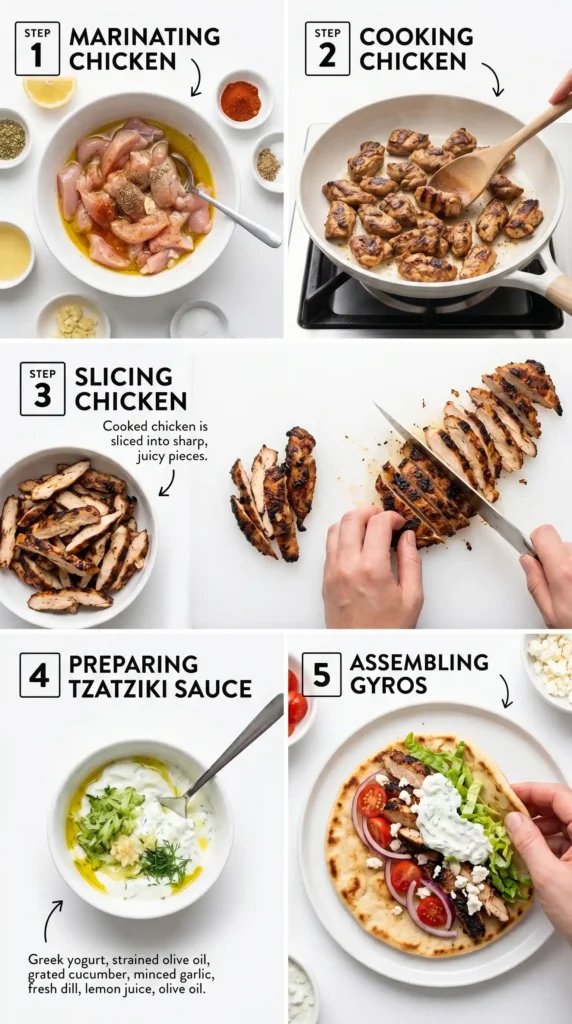
Four stages: make the tzatziki, marinate the chicken, cook the chicken, assemble the gyros. The tzatziki and marinade both benefit from time — make them first, let them sit, then cook and assemble. The entire active work is under 20 minutes; the rest is marinating and the tzatziki developing its flavour in the fridge. Read through once before starting for a smooth, organised cook.
Step 1: Make the Tzatziki
Grate the cucumber using the coarse side of a box grater directly onto a clean kitchen towel or several layers of paper towels. Gather the towel into a bundle and twist firmly over the sink to squeeze out as much water as possible from the cucumber — this may take two or three firm squeezes. The cucumber should feel almost dry when you open the towel.
Combine the full-fat Greek yogurt, squeezed cucumber, minced garlic, lemon juice, fresh dill, olive oil, salt, and white pepper in a bowl. Stir until fully mixed and uniform. Taste and adjust — it should taste tangy from the yogurt, fresh from the dill and lemon, and pleasantly garlicky. Cover and refrigerate while you prepare the chicken — a minimum of 30 minutes in the fridge allows the garlic to mellow slightly and the flavours to blend into something more cohesive and less sharp.
Step 2: Marinate the Chicken
In a large bowl or zip-lock bag, combine all the marinade ingredients: olive oil, lemon juice, lemon zest, minced garlic, oregano, cumin, smoked paprika, coriander, cinnamon, salt, black pepper, and cayenne if using. Stir the marinade vigorously until fully combined and evenly coloured from the spices. Taste a small amount — it should be bold, aromatic, slightly tangy, and fragrant. This marinade needs to be strong because it flavours the chicken all the way through during the soaking time.
Add the chicken thighs to the marinade and turn each piece to ensure thorough coating on all surfaces. Massage the marinade into the chicken using your hands, working it into any folds or crevices. Cover and refrigerate for a minimum of 30 minutes. Two hours produces noticeably better flavour penetration. Overnight produces exceptional results. The acid in the lemon juice also tenderises the chicken during marinating, producing a more tender, yielding texture after cooking.
Step 3: Cook the Chicken
Remove the chicken from the refrigerator and allow it to rest at room temperature for 10 minutes before cooking — cold chicken placed directly in a hot pan drops the pan temperature significantly and produces steamed, pale meat rather than a properly seared, charred result. Heat a large cast iron skillet, griddle pan, or heavy-bottomed frying pan over medium-high heat until genuinely very hot. Add a tablespoon of olive oil and swirl to coat.
Add the marinated chicken thighs to the pan in a single layer — do not overcrowd. If your pan cannot fit them all with space between each piece, cook in two batches. Crowding causes the chicken to steam rather than sear, and you lose the caramelised, slightly charred surface that gives gyros their characteristic flavour. Cook the first side for 5–6 minutes without moving — the chicken needs undisturbed contact with the hot surface to develop a proper crust.
Flip each thigh using tongs and cook the second side for 4–5 minutes until the chicken is cooked through — the internal temperature should read 74°C (165°F) at the thickest point. The finished chicken should look deeply golden-brown with dark, slightly charred patches on both sides — that char is not burning, it is flavour. Remove the cooked chicken to a cutting board and allow it to rest for 5 minutes. Resting allows the juices to redistribute throughout the meat rather than running out immediately when sliced.
Step 4: Slice the Chicken Correctly
After resting, slice the chicken against the grain into thin, 5mm strips. Slicing against the grain — cutting perpendicular to the direction the muscle fibres run — shortens those fibres and produces tender, easy-to-chew pieces. Slicing with the grain produces longer, chewier strips that require more work to eat. For gyros specifically, thinner slices are always better — they pile into the pita more evenly and deliver chicken in every bite rather than a few large chunks that fall out.
Step 5: Warm the Pita and Assemble
Warm the pita breads — either directly over a low gas flame for 20–30 seconds per side until lightly charred at the edges, in a dry skillet for 30 seconds per side, or wrapped in a damp paper towel in the microwave for 20–25 seconds. Warm pita is softer, more pliable, and folds without cracking. Cold pita cracks when you wrap it and loses structural integrity under the weight of the filling.
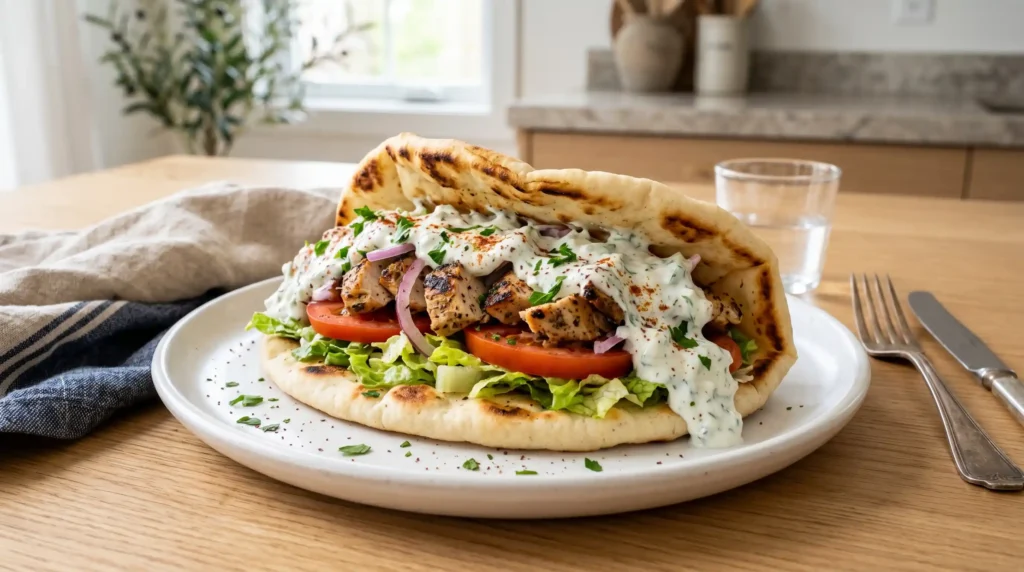
Lay each warm pita flat and spread a generous spoonful of tzatziki down the centre, leaving space at the edges. Layer the sliced chicken on top of the tzatziki — arrange it generously, slightly overlapping, so every bite contains chicken. Add sliced tomatoes, thinly sliced red onion, and shredded lettuce over the chicken. Scatter fresh parsley and any optional toppings. Fold the bottom third of the pita upward, then fold one side over the filling to create a wrap, leaving the top open for the full visual impact of the loaded Chicken Gyros. Serve with lemon wedges for squeezing over the top.
The Cinnamon in the Marinade — Trust It CompletelyIf the small amount of cinnamon in the marinade is making you nervous, understand this: it does not make the chicken taste sweet or dessert-like. At this quantity, cinnamon adds a warm, slightly exotic background note that is characteristic of authentic Greek and Middle Eastern spice blends. You will not identify it as cinnamon in the finished dish — you will identify it as “something that makes this taste authentic and exceptional.” :/
Variations Worth Making
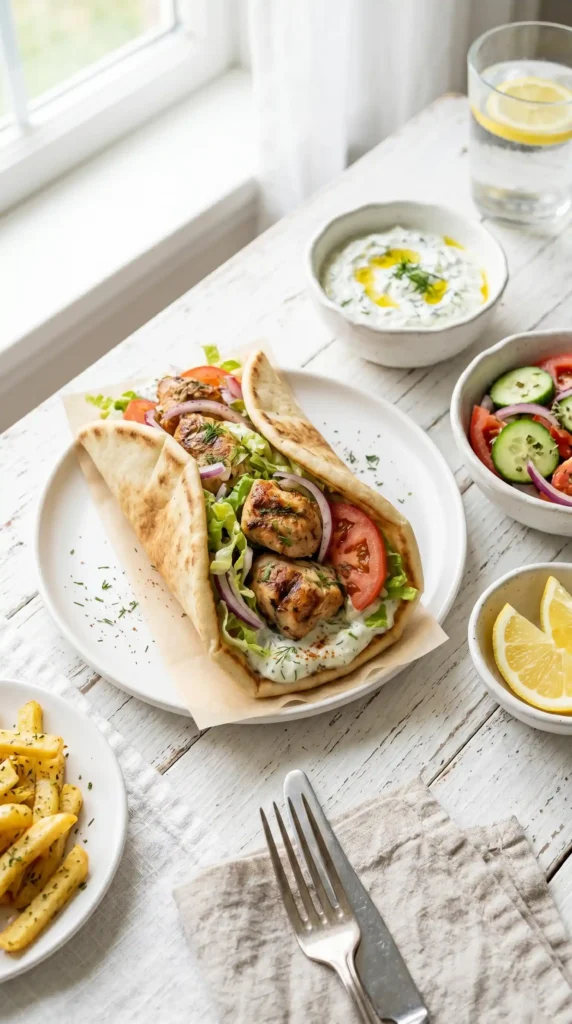
Grilled Chicken Gyros
Take the marinated chicken directly to an outdoor grill or indoor grill pan at medium-high heat. Grill for 5–6 minutes per side until char marks develop and the internal temperature reads 74°C. The grill version produces more pronounced smokiness and deeper char marks that look spectacular and add a flavour dimension the skillet version cannot match. For outdoor gatherings, the grilled version is the definitive choice.
Sheet Pan Chicken Gyros
Spread the marinated chicken thighs on a parchment-lined baking sheet and roast at 220°C (425°F) for 20–25 minutes until deeply golden at the edges and cooked through. Scatter sliced red onion and halved cherry tomatoes on the same tray — they roast alongside the chicken and develop a sweet, slightly charred flavour that you scoop directly into the pita with the chicken. The sheet pan method is the lowest-effort route and works brilliantly for batch cooking.
Chicken Gyros Bowl (No Pita)
Serve all the same components over a base of seasoned rice, couscous, or mixed greens for a gyros bowl instead of a wrap. Add 1/2 cup of hummus alongside the tzatziki for additional protein and creaminess. This format works particularly well for meal prep — the components keep separately in the fridge for up to 4 days and assemble in under two minutes from stored ingredients at any meal.
Storage and Make-Ahead Tips
The marinated raw chicken keeps in the fridge for up to 24 hours before cooking — the longer marinating time actually improves the flavour. Cooked chicken stores covered in the fridge for up to 4 days and reheats well in a hot skillet for 2–3 minutes to restore the char on the exterior. The tzatziki keeps covered in the fridge for up to 5 days — it improves on days two and three as the flavours deepen.
All the assembly components — the sliced vegetables, chopped parsley, and tzatziki — can be prepped up to 24 hours in advance and stored separately in the fridge. Assembling gyros takes under two minutes when everything is already prepped and waiting. This make-ahead approach makes chicken gyros ideal for weeknight dinners where active cooking time is limited but quality still matters.
Frequently Asked Questions
Can I use chicken breasts instead of chicken thighs for gyros?
You can, but the result will be noticeably less juicy and less flavourful than thighs. Chicken breasts are leaner and contain less fat, which means they dry out quickly under the high heat required to develop a proper char. If you choose to use breasts, pound them to an even thickness of about 1.5cm before marinating to ensure they cook evenly, and monitor carefully — they can go from perfectly cooked to overcooked in under a minute at high heat.
How long should I marinate the chicken for the best flavour?
A minimum of 30 minutes gives noticeably better flavour than unmarinated chicken. Two hours produces a more deeply penetrated, complex flavour throughout the entire thigh rather than just the surface. Overnight produces the richest result — the spices fully permeate the meat and the lemon acid tenderises the texture noticeably. Do not exceed 24 hours with this particular marinade, as the acid in the lemon juice will begin to break down the protein structure too aggressively and make the meat mushy rather than tender.
What is the difference between a gyro and a shawarma?
Both use meat cooked on a vertical rotating spit and served in flatbread with sauce and vegetables. Gyros use Greek seasonings dominated by oregano, lemon, and garlic, and typically serve with tzatziki in pita. Shawarma uses Middle Eastern spice blends featuring heavier use of cumin, turmeric, cinnamon, and allspice, and typically serves with tahini or garlic sauce in flatbread. The cooking technique is identical — the spice profile and sauce are the defining differences between the two.
What type of pita works best for chicken gyros?
Thick, soft Greek-style pita — sometimes labelled “gyro bread” or “flatbread pita” — works best because it is pliable enough to fold without cracking and thick enough to hold the filling without tearing. Thin Lebanese-style pita works as well and produces a crispier texture when warmed directly over a flame. Avoid pocket pita (the kind with a slit for stuffing) — it does not fold or wrap correctly for a gyro format and produces a much less satisfying result.
Can I make chicken gyros for a crowd?
Yes, and this is one of the best recipes for entertaining groups. Marinate double or triple the chicken quantity. Cook in batches in the skillet — keep cooked batches warm in a 95°C (200°F) oven on a wire rack while subsequent batches cook. Serve all the components separately on a table and let guests assemble their own gyros. Self-assembly works beautifully for parties of 8–12, requires no individual plating, and lets each person control their own topping quantities.
Final Thoughts
These Chicken Gyros deliver the full street food experience — the bold spiced char on the chicken, the creamy garlicky tzatziki, the fresh vegetables, and the warm pita — in 65 minutes at home. The marinade is the key, the chicken thighs are non-negotiable, and the tzatziki is worth making from scratch every single time. Those three decisions make all the difference.
This recipe works for fast weeknight dinners, for casual gatherings, for meal prep, and for any evening when you want something that tastes like genuine effort without requiring it. That is a remarkable combination of qualities for a recipe that costs less than one restaurant gyro per serving.
Marinate those thighs tonight. Make the tzatziki first. Get that pan as hot as your stove will allow. And accept the fact that you will never pay takeout prices for gyros again because yours will consistently be better. That is the outcome this recipe delivers. IMO, it is one of the best outcomes any recipe can produce.
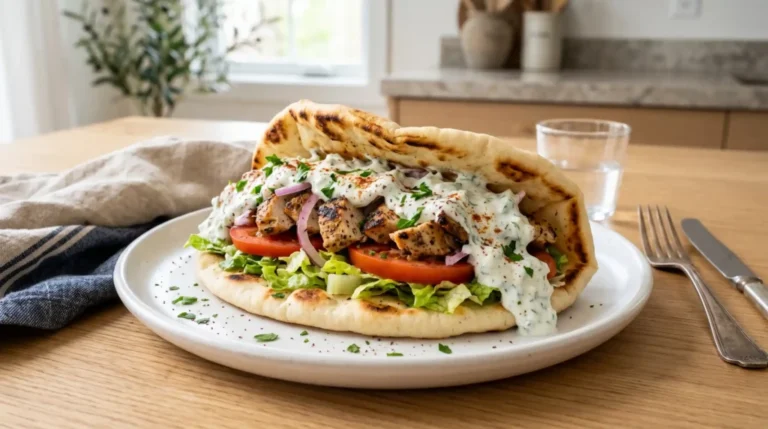
Chicken Gyros
Ingredients
Method
- Grate the cucumber and squeeze out the water, then combine with yogurt, garlic, lemon juice, dill, olive oil, salt, and white pepper to make tzatziki. Refrigerate for at least 30 minutes.
- In a bowl or bag, combine marinade ingredients: olive oil, lemon juice, zest, garlic, oregano, cumin, smoked paprika, coriander, cinnamon, salt, black pepper, and cayenne if using. Add chicken, coat thoroughly, and refrigerate for at least 30 minutes, ideally overnight.
- Allow the marinated chicken to come to room temperature for 10 minutes before cooking. Heat a skillet over medium-high heat and add olive oil.
- Add chicken thighs to the hot pan in a single layer, cook for about 5-6 minutes on one side without moving, then flip and cook for another 4-5 minutes until done.
- Remove chicken from the pan and let it rest for 5 minutes before slicing it against the grain into thin strips.
- Warm the pita breads, then spread tzatziki down the center of each.
- Layer sliced chicken, followed by tomatoes, red onion, and lettuce. Add parsley and any optional toppings.
- Fold the pita to create a wrap and serve with lemon wedges.