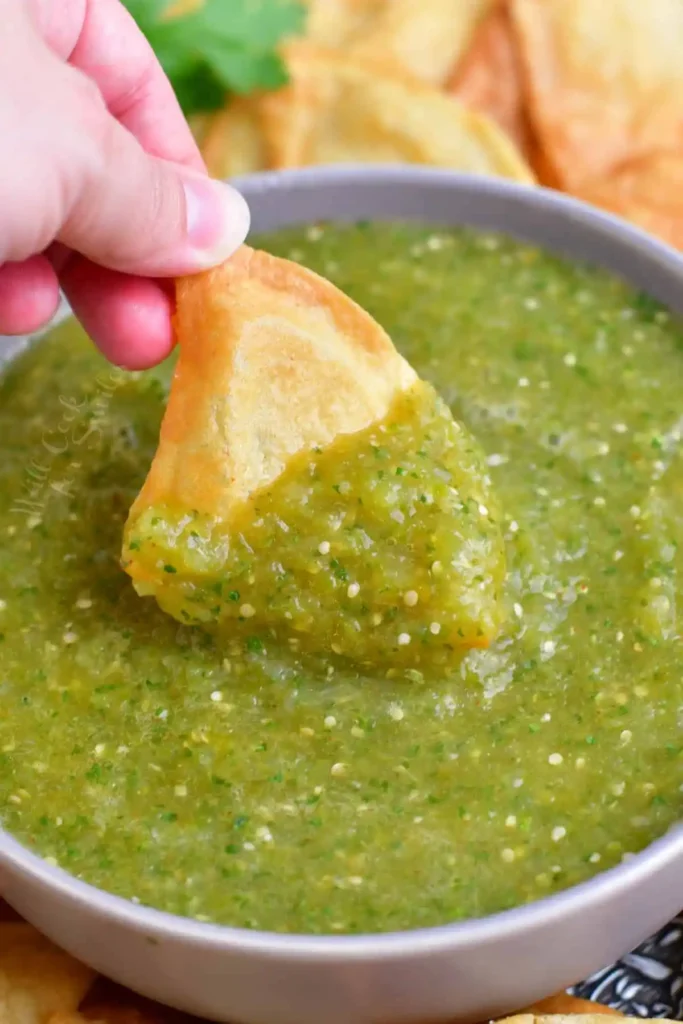
Still buying salsa verde from a jar? I get it, it’s convenient, but you’re missing out on something way better. Homemade salsa verde takes twenty minutes and ruins store-bought jars for you forever.
Servings: about 2 cups (8 servings) | Prep Time: 15 minutes | Cook Time: 8-10 minutes | Total Time: about 25 minutes
What Actually Is Salsa Verde?
Salsa verde is a bright green salsa built around tomatillos instead of tomatoes, blended with chilies, garlic, and cilantro. It originated in Mexico and has since landed on tables everywhere, from taco trucks to fancy restaurants. Have you ever wondered why it tastes so different from red salsa? That tangy tomatillo base is the answer.
What You’ll Need: Ingredients
Here’s your shopping list for a batch that makes about two cups, enough for a party appetizer.
- Tomatillos, husked and rinsed – 1 pound
- White onion, quartered – 1/2 medium
- Jalapeño peppers – 2
- Garlic cloves, unpeeled – 3
- Fresh cilantro, roughly chopped – 1/2 cup
- Lime juice – 2 tablespoons
- Salt – 1/2 teaspoon
- Ground cumin – 1/4 teaspoon
- Water (as needed for consistency) – 2-4 tablespoons
One quick note: tomatillos are not baby green tomatoes, no matter how much they look like it. They’re actually closer to gooseberries, which explains that papery husk wrapped around each one.
Prepping Your Tomatillos The Right Way
Tomatillos come wrapped in a husk that needs to come off before anything else happens. Peel it away completely, then rinse the tomatillos well under running water. This step matters more than it sounds like it should.
That sticky film covering tomatillos is a natural protective coating, and it doesn’t rinse off in two seconds. Give them a proper scrub so your salsa doesn’t end up with an odd tackiness nobody asked for.
Getting The Broiler Ready
Turn your broiler to high and slide the oven rack to the center position, roughly six to eight inches from the heat source. Let it preheat for a few minutes before anything goes in. A properly hot broiler is what gets you those blistered, charred spots that make roasted salsa taste incredible.
Step-By-Step: How To Make Salsa Verde
Ready to actually make this? Here’s every step laid out so nothing feels confusing.
Step 1: Arrange The Vegetables On A Baking Sheet
Spread the tomatillos, onion quarters, jalapeños, and unpeeled garlic cloves across a rimmed baking sheet in a single layer. Give everything a little breathing room so it roasts evenly instead of steaming. This part takes about two minutes, tops.
Step 2: Roast Under The Broiler
Slide the tray under the hot broiler and roast for 8 to 10 minutes, checking frequently. You’re watching for blistered, blackened patches on the tomatillos and peppers, and softened, slightly charred onion. Pull the garlic out a few minutes early since small cloves burn faster than everything else.
Step 3: Cool Slightly And Peel The Garlic
Let everything sit for a few minutes once it comes out of the oven, just until you can handle it comfortably. Squeeze the roasted garlic cloves out of their skins, since roasted garlic slides right out with barely any effort. IMO, this is oddly satisfying every single time.
Step 4: Add Everything To The Blender
Transfer the roasted tomatillos, onion, jalapeños, and peeled garlic into a blender or food processor. Toss in the fresh cilantro, lime juice, salt, and cumin on top. Don’t skip the lime juice here, it balances the tangy tomatillo flavor beautifully.
Step 5: Blend Until Smooth
Pulse the blender in short bursts until the salsa turns smooth, with no big chunky bits left floating around. Add water one tablespoon at a time if the mixture feels too thick to pour easily. Taste it, then adjust salt or lime juice until it tastes exactly right to you.
Step 6: Taste And Adjust The Heat
Give your salsa a taste test before calling it finished. Too mild for your liking? Blend in a pinch of cayenne or leave the jalapeño seeds in next time around.
How To Control The Spice Level
Salsa verde’s heat level is completely in your hands, and adjusting it is easier than you’d think. Here’s how to dial it up or down.
To keep it mild:
- Use young jalapeños with smooth, dark green skin
- Remove the seeds and inner membranes completely before roasting
To turn up the heat:
- Leave the jalapeño seeds in, since that’s where most of the spice hides
- Swap in a spicier pepper like serrano, habanero, or red chili pepper
- Blend in an extra pinch of cayenne or chili powder
Jalapeños actually sit pretty low on the spice scale compared to their reputation. If you want salsa that genuinely brings the heat, reach for something spicier instead.
Storing And Freezing Your Salsa Verde
Pour cooled salsa verde into a glass jar or another airtight container, then refrigerate it right away. It keeps well for up to a week when stored properly. FYI, pouring out portions instead of dipping a spoon straight into the jar keeps it fresher longer.
Freezing works great too if you make a big batch. Portion the salsa into freezer bags, press the air out, seal, and label each one with the date. Lay the bags flat on a baking sheet until frozen solid, then stack them however you like. Frozen salsa verde holds its quality for up to three months, and thaws best slowly in the refrigerator overnight.
Frequently Asked Questions
Is tomatillo the same thing as a green tomato? No, tomatillos are a completely different fruit, related more closely to gooseberries than tomatoes. They grow inside a papery husk and have a tangier, brighter flavor than any unripe tomato.
Do I have to roast the tomatillos first? Roasting isn’t technically required, but it makes a huge difference in flavor and texture. Cooking softens the skin, mellows the acidity, and adds a smoky depth that raw salsa verde just doesn’t have.
How spicy is salsa verde normally? It depends entirely on how you build it, since jalapeños alone land on the milder end of the spice scale. Removing seeds keeps things gentle, while leaving them in or swapping peppers cranks up the heat considerably.
Can I make this salsa verde ahead of time? Absolutely, and honestly the flavor gets even better after sitting in the fridge for a few hours. Make it a day ahead for parties without any loss in quality.
What can I serve with salsa verde besides chips? It’s fantastic drizzled over tacos, eggs, grilled chicken, or enchiladas. Try it as a marinade base too, since that tangy, roasted flavor works well on more than just tortilla chips.
Final Thoughts
Salsa verde earns its spot as one of the easiest, most rewarding sauces you can make at home, especially once that broiler gets those tomatillos properly charred. Roast, blend, taste, and adjust, that’s genuinely the whole process.
Make a batch this week, and don’t be shocked when the jarred stuff starts collecting dust in your fridge door.
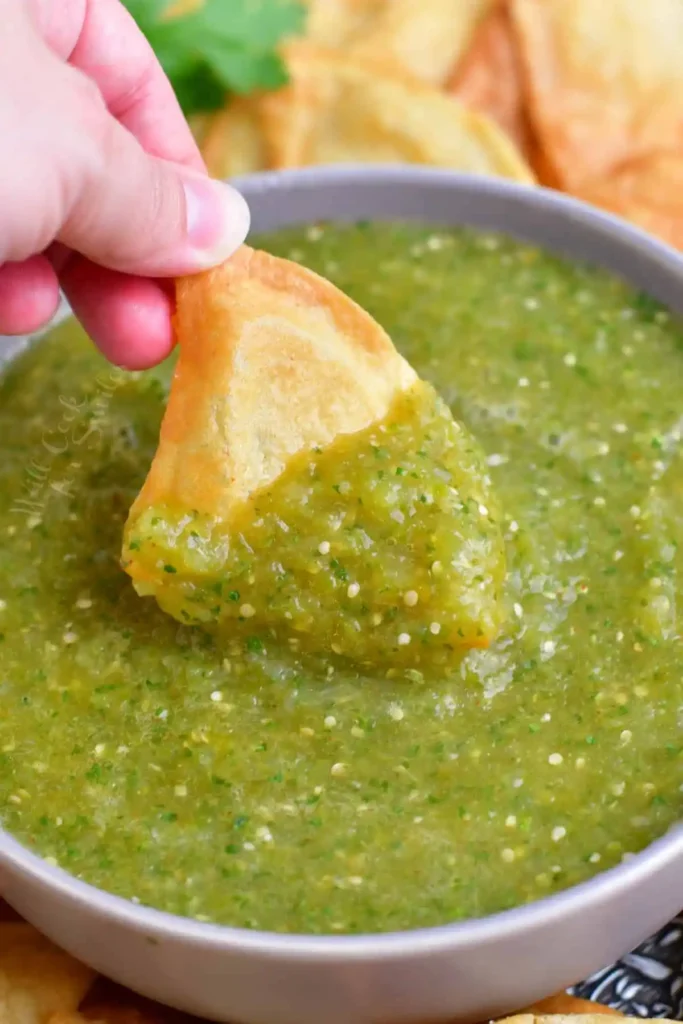
Salsa Verde
Ingredients
Method
- Preheat the broiler to high and arrange the oven rack to the center position.
- Spread the tomatillos, onion quarters, jalapeños, and unpeeled garlic cloves across a rimmed baking sheet in a single layer.
- Roast under the broiler for 8 to 10 minutes, checking frequently for blistered spots and softening of the vegetables.
- Remove the garlic cloves a few minutes early to prevent burning.
- Let the roasted vegetables cool slightly, then squeeze the roasted garlic out of its skin.
- Transfer all roasted ingredients to a blender. Add cilantro, lime juice, salt, and cumin.
- Blend until smooth, adding water as needed for desired consistency.
- Taste the salsa verde and adjust the seasoning or spice level as desired.