Servings: ~20 cookies | Prep Time: 20 minutes | Chill Time: 2 hours | Total Time: ~2 hours 30 minutes
Okay, real talk — the first time I heard “Crème Brûlée Cookies,” I thought someone was just trying to sound fancy at a bake sale. But then I tried one. And yeah, I was fully converted. These cookies are buttery, crispy-topped, and creamy in the center — everything you love about classic crème brûlée, but way more portable.
What Are Crème Brûlée Cookies, Exactly?
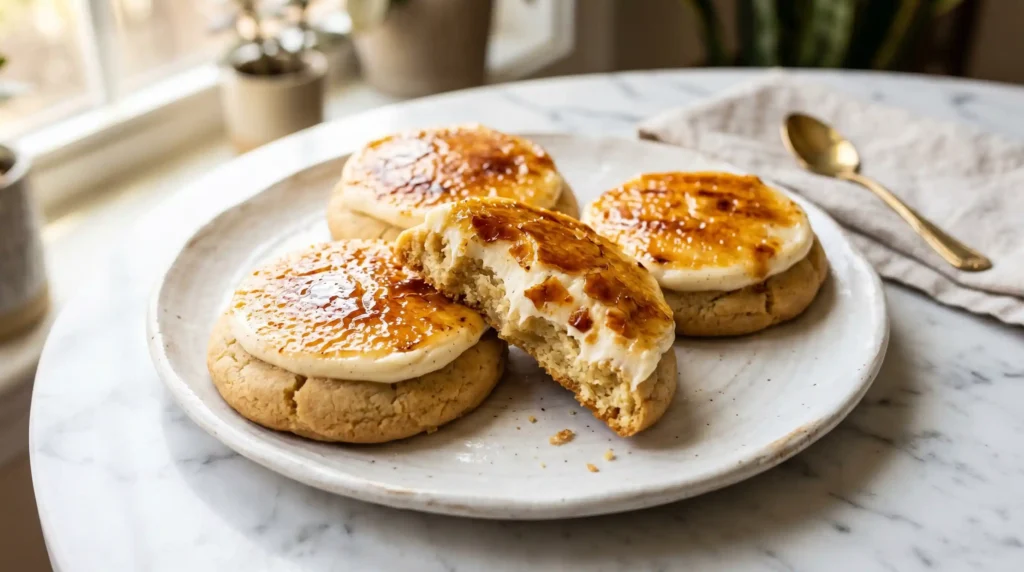
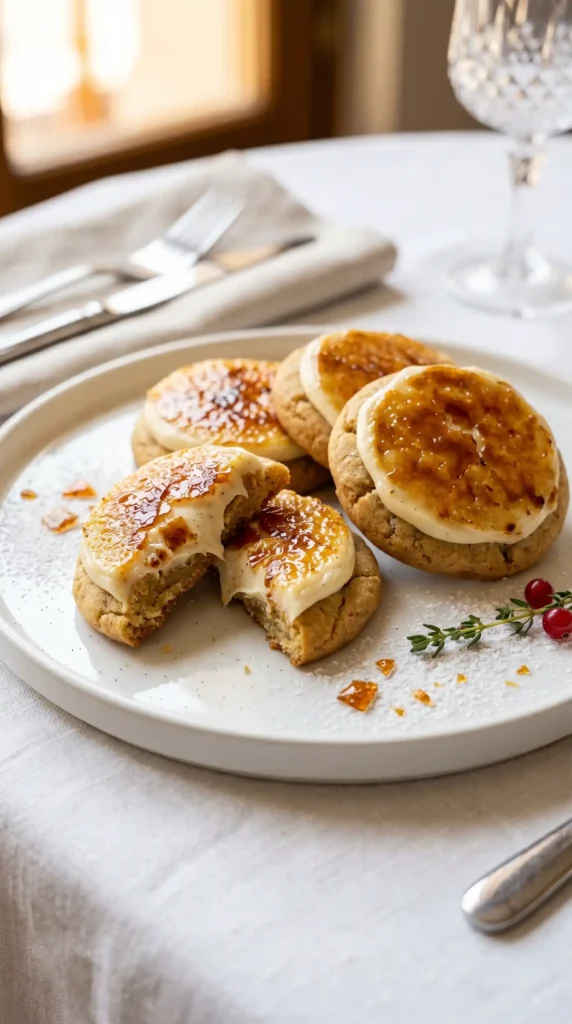
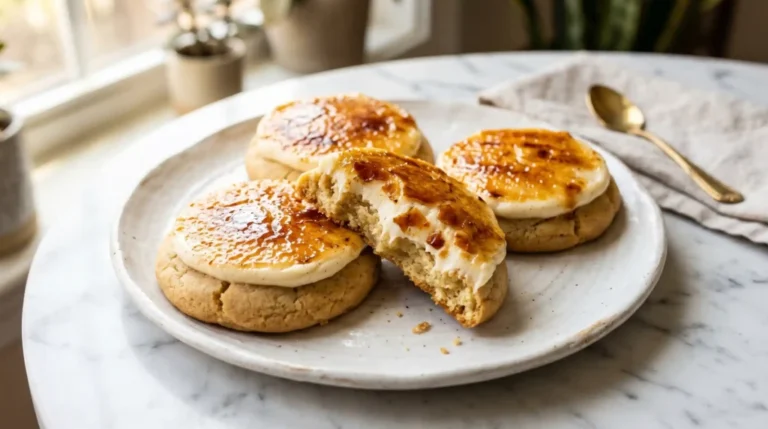
Think of your favorite soft sugar cookie. Now imagine it has a cream cheese frosting center and a caramelized sugar crust on top. That’s the magic here.
Crème Brûlée Cookies borrow the signature torched-sugar crust from the classic French dessert. The result is a cookie with a satisfying crackle when you bite through the top. They’re honestly kind of ridiculous — in the best way possible.
Ingredients You’ll Need
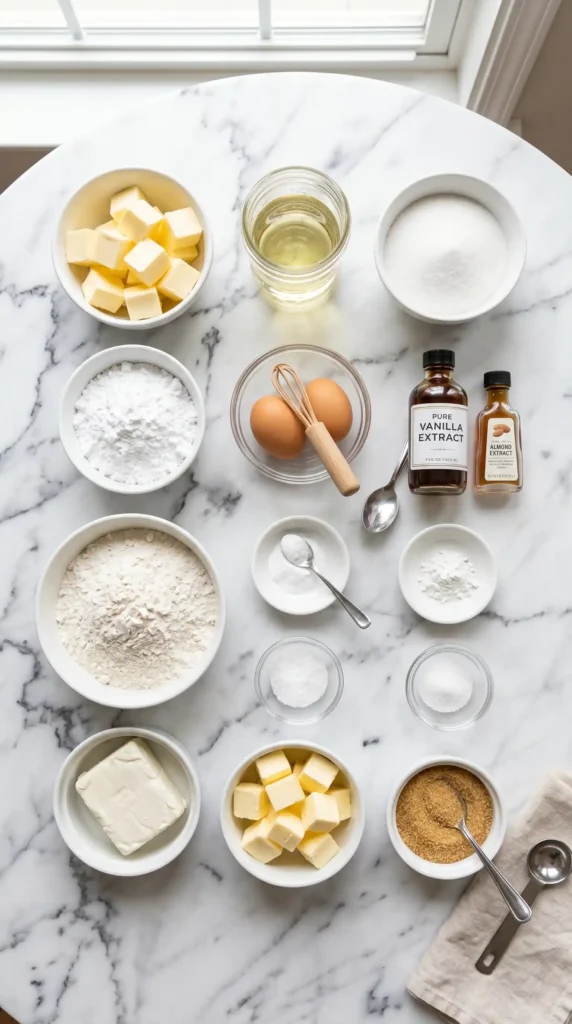
Here’s the full ingredient list. Don’t skip anything — every item plays a role.
For the Cookie Dough:
- ½ cup unsalted butter, room temperature
- ½ cup canola or vegetable oil
- ½ cup granulated sugar
- ½ cup confectioners’ sugar
- 1 large egg
- 1 teaspoon vanilla extract
- 1 teaspoon almond extract
- 2 ¼ cups all-purpose flour
- ½ teaspoon baking soda
- ½ teaspoon cream of tartar
- ½ teaspoon salt
For the Cream Cheese Frosting:
- one 8-ounce block cream cheese, softened
- 6 tablespoons unsalted butter, softened
- 2 ½ to 3 cups confectioners’ sugar, or as desired
For the Brûlée Topping:
- Granulated sugar — about ½ to 1 teaspoon per cookie
Why This Recipe Actually Works
You might wonder — why butter AND oil? That combo is the secret weapon here. Butter gives flavor; oil gives moisture. Together, they produce a cookie that stays soft in the middle while the edges get slightly crisp.
The cream of tartar is another unsung hero. It stabilizes the dough and gives the cookies a subtle tang that cuts through the sweetness. IMO, leaving it out is not an option.
The almond extract is subtle but important. It adds depth and makes the flavor feel more “fancy bakery” than “grocery store cookie aisle.” Trust the process on this one.
How to Make Crème Brûlée Cookies
Step 1 — Cream the Butter, Oil, and Sugars
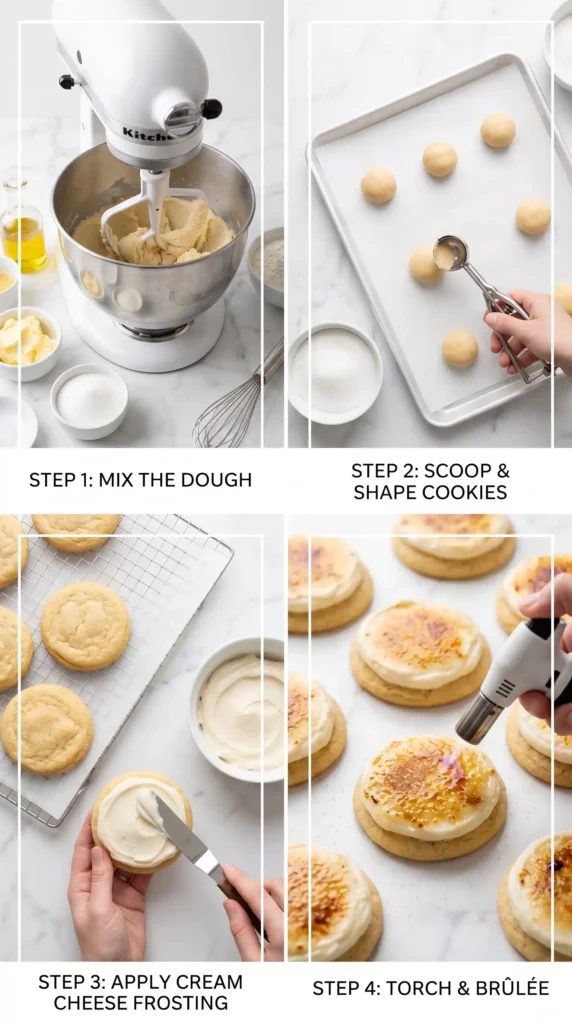
Start by adding your ½ cup unsalted butter, ½ cup canola oil, ½ cup granulated sugar, and ½ cup confectioners’ sugar into the bowl of a stand mixer fitted with the paddle attachment.
Beat everything together on medium-high speed for a full 4 minutes. You want the mixture to look creamy, pale, and well-combined — not grainy or separated. This step builds the foundation for the entire cookie texture.
Don’t rush this. Creaming properly means more air in the dough, which means a lighter, more tender cookie later on.
Step 2 — Add the Egg and Extracts
Crack in your 1 large egg, then pour in 1 teaspoon vanilla extract and 1 teaspoon almond extract.
Beat until everything is fully combined. Scrape down the sides of the bowl halfway through — you don’t want any eggy streaks hiding at the bottom. The batter will look smooth and slightly glossy at this point.
The almond extract is doing a lot here. It’s not overpowering, but it gives the cookies a warm, almost-nutty background note that makes people ask “what’s in these?” every single time.
Step 3 — Add the Dry Ingredients
Now add your 2 ¼ cups all-purpose flour, ½ teaspoon baking soda, ½ teaspoon cream of tartar, and ½ teaspoon salt directly to the bowl.
Switch the mixer to low speed and beat until the flour is just incorporated. Over-mixing at this stage develops gluten, which makes cookies tough instead of tender. Stop as soon as no dry streaks remain.
The dough will feel soft but not sticky. If it looks too wet, that’s totally normal — it firms up beautifully in the fridge.
Step 4 — Scoop, Roll, and Flatten
Use a 2-tablespoon cookie scoop to portion out approximately 20 equal-sized mounds of dough. Roll each mound between your palms into a smooth ball.
Then press each ball down to about halfway flat — not pancake-flat, just slightly flattened. You want a thick disk shape that holds its form while baking and gives you enough surface area for the cream cheese topping later.
Try to keep them all roughly the same size so they bake evenly. Uneven cookies are the #1 culprit behind some burnt and some underdone on the same tray. FYI, consistency here genuinely matters.
Step 5 — Refrigerate the Dough
Place your shaped dough rounds onto a parchment-lined baking sheet or plate. Cover tightly with plastic wrap and refrigerate for at least 2 hours — up to 7 days if you’re prepping ahead.
Chilling is non-negotiable. Cold dough spreads less, holds its shape better, and develops a deeper, more complex flavor. Think of it as the dough “resting” and getting ready to perform.
If you try to bake these straight from mixing, they’ll spread too much and lose that thick, chewy center you’re after. Patience is an ingredient here, as dramatic as that sounds.
Step 6 — Bake the Cookies
Preheat your oven to 350°F (175°C). Line your baking sheets with parchment paper.
Place the chilled dough rounds about 2 inches apart. Bake for 10 to 12 minutes, until the edges are just set but the centers still look slightly underdone. They’ll continue to set as they cool.
Pull them out when they look a little underbaked — that’s exactly right. Overbaked sugar cookies turn hard and dry fast.
Step 7 — Make the Cream Cheese Frosting
While the cookies cool completely, make your frosting. Beat together the 8-ounce block of softened cream cheese and 6 tablespoons softened unsalted butter until smooth and fluffy — about 2 to 3 minutes.
Add your confectioners’ sugar gradually, starting with 2 ½ cups. Taste as you go and add more if you prefer a sweeter, stiffer frosting. The frosting should hold its shape when spooned but still be spreadable.
Don’t use cold cream cheese or butter — they’ll leave lumps that won’t smooth out no matter how long you mix. Room temperature is the key.
Step 8 — Frost and Brûlée the Cookies
Spoon or pipe a generous dollop of cream cheese frosting onto the center of each completely cooled cookie. Spread it into an even layer, leaving a small border around the edge.
Sprinkle about ½ to 1 teaspoon of granulated sugar evenly over the frosting on each cookie. Then, using a kitchen torch, move the flame in slow, circular motions over the sugar until it melts and turns a deep amber color.
The caramelized crust will harden within about 30 seconds. Let it set before serving, or the top will still be a bit sticky. Serve within a few hours of brûléeing — the crust loses its crunch if it sits too long.
Tips for Perfect Results Every Time
- Chill the dough overnight for the best flavor development.
- Cool cookies completely before frosting — warm cookies melt the cream cheese.
- Use a kitchen torch, not the oven broiler, for the brûlée top. The broiler is too uneven.
- Don’t skip cream of tartar — it gives these cookies their unique texture.
- Almond extract makes a big difference; use real extract, not imitation.
Can You Make These Ahead?
Absolutely — and honestly, you probably should. The cookie dough keeps refrigerated for up to 7 days. You can also bake and freeze the plain cookies (without frosting) for up to 3 months.
Frost and brûlée right before serving. The sugar crust absorbs moisture from the cream cheese over time and goes soft. For the full crackle effect, do the torching last-minute.
Storage Instructions
- Plain baked cookies (unfrosted): room temperature in an airtight container for up to 5 days.
- Frosted cookies (before brûléeing): refrigerate for up to 3 days.
- Brûléed cookies: best eaten the same day for maximum crunch.
Frequently Asked Questions
Can I make Crème Brûlée Cookies without a kitchen torch? You can try the broiler, but it’s risky — the sugar caramelizes unevenly and you can scorch the frosting fast. A small kitchen torch is inexpensive and worth every penny if you plan to make these more than once.
Why do my cookies spread too much during baking? Almost always, this comes down to skipping the chilling step or using butter that was too soft or melted. Make sure your dough is properly chilled and your butter was at room temperature (not melted) when you made the dough.
Can I skip the almond extract? Yes, you can substitute with an extra teaspoon of vanilla extract. The flavor will be slightly more one-dimensional, but still delicious. Almond extract just adds that extra “what IS that?” quality.
Can I make the cream cheese frosting less sweet? Start with just 2 cups of confectioners’ sugar and taste. The tanginess of the cream cheese balances a lot of the sweetness, so you have some flexibility here.
How do I get a smooth, even brûlée crust? Make sure the sugar layer is even — no thick clumps in one spot. Hold the torch about 2 to 3 inches away and keep it moving constantly. Stopping in one place scorches the sugar instead of caramelizing it evenly.
My brûlée crust went soft — what happened? Humidity and time are the enemies of your caramel crust. Once the torch-melted sugar sits on the frosting, it slowly pulls in moisture. Brûlée and serve within an hour or two for the best texture.
Final Thoughts
Look — if you’re still on the fence about making Crème Brûlée Cookies, just know that these are genuinely one of the most impressive things you can bring to any gathering. They look complex, but the process is straightforward once you go through it once. The chill time does the heavy lifting.
Give them a shot this weekend. Your future self — the one cracking through that sugar crust — will thank you.
Crème Brûlée Cookies
Ingredients
Method
- Cream the Butter, Oil, and Sugars: In a stand mixer, combine butter, canola oil, granulated sugar, and confectioners' sugar. Beat on medium-high for 4 minutes until creamy.
- Add the Egg and Extracts: Mix in the egg, vanilla extract, and almond extract until fully combined.
- Add the Dry Ingredients: Gradually incorporate the flour, baking soda, cream of tartar, and salt on low speed until just combined. Do not over mix.
- Scoop, Roll, and Flatten: Use a cookie scoop to form 20 balls and flatten each slightly.
- Refrigerate the Dough: Place dough rounds on a parchment-lined baking sheet, cover, and chill for at least 2 hours.
- Bake the Cookies: Preheat oven to 350°F (175°C). Bake for 10-12 minutes until edges are set.
- Make the Cream Cheese Frosting: Beat cream cheese and butter until smooth, gradually add confectioners' sugar.
- Frost and Brûlée the Cookies: Frost cooled cookies and sprinkle with granulated sugar. Use a torch to caramelize the sugar.